




The Features Desk · The War File
NATO EMERGENCY: WAR GOES GLOBAL
What do you call it when Russian cruise missiles land on NATO soil, a Russian warship sinks off Libya, Iran trades fire with the American fleet, a NATO border slams shut, and Chinese hackers are caught inside American systems, all inside one week? Brussels calls it a consultation. On Monday, Tim Pool asked the plainer question out loud: if this is not World War 3, what would be?
November 23, 2026
By Edward Dawe
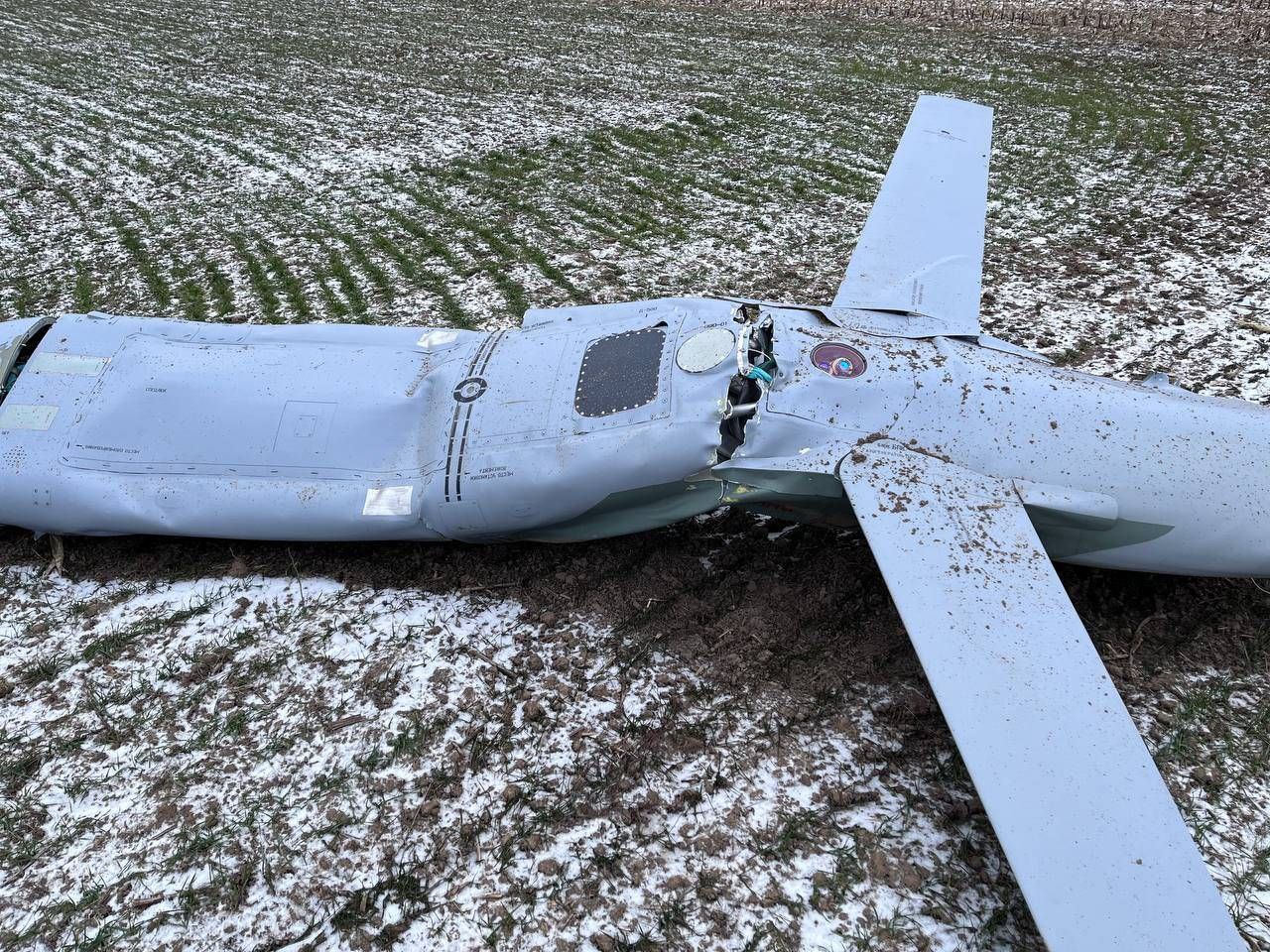
BRUSSELS, November 23, 2026. The North Atlantic Council, NATO’s top decision body, sat in emergency session on Monday because three Russian cruise missiles are lying in pieces in Polish fields. The missiles came down on Friday, November 20, in southeastern Poland, near Nowy Lipowiec, Rudnik nad Sanem and Molodycz, during a mass Russian strike on Ukraine. Polish prosecutors have now taken the debris apart and read the markings: Kh-101 cruise missiles, manufactured in the fourth quarter of 2026 at a plant in Dubna, 140 kilometers south of Moscow. Not strays from the last war. Fresh production, weeks old, on the soil of a NATO member.
Poland’s prime minister, Donald Tusk, did not reach for the accident theory. He called the incursion a deliberate provocation by Moscow, timed to the Coalition of the Willing exercises then running near Nowa Deba, with one missile down less than 100 kilometers from the exercise ground. NATO Secretary General Mark Rutte flew to Warsaw on Saturday and pledged the alliance would defend “every inch of Polish territory.” In Berlin on Monday he repeated it in centimeters. And on Monday Poland sent its deputy defense minister and the head of its military counterintelligence service to Brussels with a list: more surveillance over the eastern flank, more F-35s stationed in or near Poland, AWACS radar aircraft on station, and reinforcements under Operation Eastern Sentry, the eastern defense mission stood up in September 2025. Russia, asked about missiles with Russian factory markings lying in Polish fields, has said nothing at all.
KEY POINTS
- Three Russian Kh-101 cruise missiles came down in southeastern Poland on November 20, 2026; Polish prosecutors identified the debris as Kh-101s built in Dubna in the fourth quarter of 2026. No injuries and no damage to critical infrastructure were reported.
- The North Atlantic Council met in emergency session in Brussels on November 23 at Poland’s request. Warsaw asked for more surveillance, additional F-35s, AWACS coverage and Eastern Sentry reinforcements.
- Poland did NOT invoke Article 4 of the NATO treaty. It requested consultations and assets instead. That fact is stated here in plain words because half the internet is already saying otherwise.
- The same week: the Russian corvette Merkury sank at its dock in Benghazi, Libya, after sea drone hits; Iran and US forces traded fire around Bahrain for the fourth time in about a week; Estonia voted to close its road border with Russia from December 1; and US authorities disrupted a Chinese hacking plot against NASA and the Justice Department and sanctioned Chinese cyber actors.
- Russia’s Foreign Ministry, on November 23, accused Estonia of hostile actions “on the verge of triggering open war.” Moscow has not commented on the missiles in Poland.
THE MISSILES HAVE A NAME AND A BIRTH DATE
The first reports out of Poland said two missiles and a drone. The debris told a cleaner story. Investigators recovered propulsion and guidance parts at the crash sites, and the Lublin District Prosecutor’s Office confirmed the weapons were Russian Kh-101s, the air launched cruise missile NATO calls the AS-23 Kodiak, rolled off the line in Dubna in the last quarter of this year. Polish F-16s and Swedish Gripens were in the air during Friday’s attack and Patriot batteries guarding strategic sites were switched on. Nothing was shot down. Polish authorities said the weather was too bad for the precision an intercept needed. A brand new Russian cruise missile crossed into a NATO country, flew its route, and came down intact enough to read, and the alliance’s air defense watched it land.
THE WORD THEY WILL NOT SAY
Here is the sentence the official story is built to avoid, so The Info Soldier prints the fact next to it. Poland did not invoke Article 4, the treaty clause a member uses when its security is threatened and it wants the alliance formally on the record. Warsaw asked for consultations and hardware instead, and no joint communique was expected out of Monday’s meeting. Missiles land on alliance soil, and the machinery produces a meeting, a shopping list, and a pledge about inches and centimeters delivered after the fact. Tim Pool put the question his audience was already asking on Monday’s Timcast: nobody in authority wants to say “World War 3,” and he compared the moment to the opening of the Civil War, a war that was underway before anyone in charge would call it one. The vocabulary is the tell. Incursion. Provocation. Consultation. Every word in the official dictionary is chosen to keep the one word that matters off the page.
A WARSHIP AT THE BOTTOM IN LIBYA
While the council talked in Brussels, the second Russian warship in two days sat on the bottom an ocean away. The Steregushchiy class corvette Merkury, commissioned in May 2023, capsized and sank at its dock in Benghazi, Libya, after two sea drone hits, only the bow above water, with ten minor injuries reported by Reuters. The Associated Press reported the drone boats were launched from a Ukrainian run base in western Libya, more than a thousand miles from the front lines, and that at least four more were intercepted. Ukraine has not officially claimed the strike. Russia has not commented. A Russian warship sunk by drone boats off North Africa, a second Russian ship hit the day before, and the war’s map now has to be redrawn to include a coastline most briefings never mentioned. The full Merkury file is on this site: “Sea drones sank a Russian warship.”
FIRE IN THE GULF
The third front never cooled. On November 21, Iran’s Revolutionary Guard ran a combined missile and drone operation against Bahrain, the island that hosts the headquarters of the US Navy’s Fifth Fleet, claiming two American Patriot radars hit. A US official told CBS News it was the fourth attempted attack on US forces in Bahrain in about a week, and that no US forces were damaged. Bahrain said falling debris set a civilian industrial facility on fire and two people were injured, one critically. On Sunday, President Trump posted the week’s arithmetic himself: Iran “has launched more drones and missiles in the last week than at any time for over a year,” and “they’ve all been knocked down, and done no damage.” Iran’s army separately claimed its air defenses fired on a US F-16 over the Gulf on Friday and forced an emergency landing. CENTCOM answered on Saturday that the claim is false and every American fighter in the region is safe and accounted for. Two governments, two stories, one exchange of fire that neither side is any longer bothering to call an incident. The full Gulf file is on this site: “Three carriers in the Gulf.”
THE BORDER SLAMS SHUT
The fourth front closed with a signature. After a foiled arson attack on Threod Systems, an Estonian defense drone maker, on the night of November 14, an attack Tallinn attributes to Russia’s GRU with eight people detained, the Estonian government decided on November 20 to close every road border crossing with Russia from December 1, for at least six months: Narva, Koidula and Luhamaa go dark, rail freight alone still rolls. Moscow called it a new Iron Curtain. On Monday, Russia’s Foreign Ministry summoned Estonia’s charge d’affaires and accused the NATO member of hostile actions “on the verge of triggering open war.” Read that phrase again. The Kremlin’s own diplomats are now the ones saying the words “open war” out loud, about a border crossing closure, while Brussels holds itself to “consultations.”
THE QUIET FRONT
The fifth front makes no noise at all. On November 11, the US Justice Department announced it had disrupted a plot by Chinese hackers targeting multiple executive agencies, NASA and the Justice Department itself among them. On November 12, the Treasury sanctioned Chinese companies and individuals for cyber operations against American critical infrastructure, including Wuhan Xiaoruizhi Science and Technology Company. Palo Alto Networks’ Unit 42 has reported a China linked actor running an autonomous AI penetration framework called Cairn against universities and defense manufacturers, and on November 19 Broadcom rushed out a patch for a critical VMware vCenter flaw that Mandiant says a China nexus group has been exploiting since September. No missiles, no communiques, no emergency sessions. Just the steady, documented work of getting inside the systems the other four fronts depend on.
THE INFO SOLDIER’S VERDICT
Lay the week out on one page and count the fronts. Missiles on NATO soil, answered with a meeting. A warship sunk off Libya, answered with silence. Fire traded with Iran around the Fifth Fleet’s headquarters island, answered with competing press statements. A NATO border closing under threat of “open war,” answered with a protest note. Chinese operators inside American agencies, answered with a sanctions list. Alex Jones told his audience for years that the world war, when it came, would not arrive with a declaration; it would creep in as a hundred deniable incidents, each one too small to answer, until the circuit closed all at once. The receipts for that warning now arrive weekly, in prosecutors’ debris reports and foreign ministry statements, in the governments’ own words. The Info Soldier’s verdict is in: the war is not coming. By every measure except the vocabulary, it is here, and the only people still pretending otherwise are the ones paid to hold the dictionary. The practical word is the one this site always ends on. Stock food and survival supplies for months, not weekends, keep water and a way to cook with the grid down, and hold some physical gold, because when the circuit closes, paper promises are the first casualty and the shelves empty before the statements do.
Sources: NPR, November 23, 2026. Reuters, November 20 and 23, 2026. CNN, November 15, 2026. Estonian Ministry of Foreign Affairs, November 20, 2026. Lublin District Prosecutor’s Office findings as reported November 22 to 23, 2026. CBS News, November 2026. CENTCOM statement, November 21, 2026. US Department of Justice, November 11, 2026. US Treasury Department, November 12, 2026. Mandiant and Broadcom advisory, November 19 to 20, 2026. Reuters and the Associated Press, November 22, 2026. Timcast, November 23, 2026.