




The Features Desk · The Gulf File
THREE CARRIERS IN THE GULF: IRAN STRUCK BAHRAIN, AND THE INVASION QUESTION IS BACK
Iran struck the island that hosts the Fifth Fleet's headquarters for the third time in nine days, tankers are sinking in a strait rated SEVERE, and the largest US airpower deployment in the region since the Iraq War is stacked in the Gulf while Washington debates the size of the next blow.
November 22, 2026
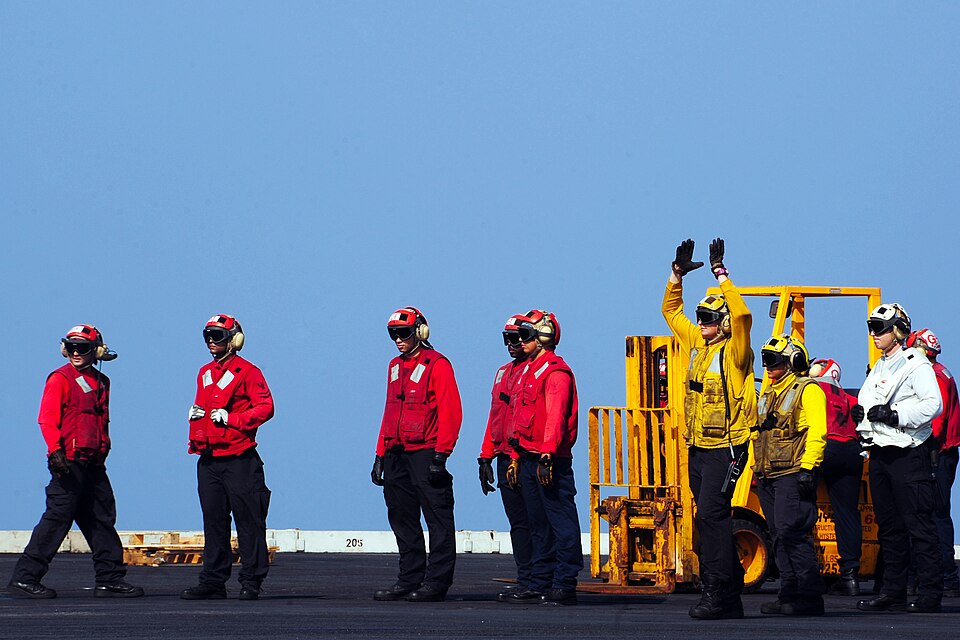
MANAMA, Bahrain, November 22, 2026. On November 21, Iran launched a combined missile and drone attack on Bahrain, the island kingdom that hosts the headquarters of the United States Navy's Fifth Fleet. Bahrain's Defence Force said its air defenses intercepted several incoming targets, and falling debris set a civilian industrial facility on fire, with video showing a multi story industrial building engulfed in flames at night over Sitra Island, home to the Bapco oil facilities. Bahrain's Interior Ministry confirmed two people injured: a Bahraini citizen with disabilities, in stable condition, and a Pakistani resident, in critical condition. Bahrain issued two security warnings that day telling residents to move to the nearest safe location. It was Bahrain's third drone or missile attack in recent days, after strikes claimed on November 13 and November 17.
The war that began on February 28 never actually stopped. It changed tempo, it changed headlines, and on Saturday it landed on the island where the American fleet keeps its headquarters.
KEY POINTS
- On November 21, 2026, Iran launched a combined missile and drone attack on Bahrain; debris set a civilian industrial facility ablaze on Sitra Island and two people were injured. It was Bahrain's third attack in nine days.
- The IRGC claimed it hit two Patriot radars at US positions; a US official told CBS News there was no damage to US personnel or facilities. Bahrain invoked Article 51 and the GCC Joint Defence Agreement.
- Three US carriers, George H.W. Bush, George Washington, and Theodore Roosevelt, are in the Middle East at once for only the second time since 2003, with about 50,000 to 53,000 US personnel and more than 120 aircraft in the region.
- The IAEA's November 13 report puts Iran's 60 percent enriched uranium stockpile at 440.9 kilograms and says the agency cannot conclude there has been no diversion of nuclear material; analysts judge a full scale ground invasion is not under serious consideration, with a special operations raid on the uranium the credible ground scenario.
TWO STORIES OF ONE ATTACK
The claims diverge, and The Info Soldier prints them side by side with the names attached. The IRGC Aerospace Force, through Sepah News on November 21, said it conducted a combined missile and drone operation against US military positions at the Al-Riffa and Awali (Sakhir) bases and that two radars belonging to US Army Patriot batteries were hit, in retaliation for alleged US drone airspace violations and an earlier attack on a radar installation on Iran's Hengam Island. A US official told CBS News the attacks caused no damage to US military personnel or facilities. Iranian state media separately claimed a US Fifth Fleet interceptor crashed on Sitra and caused the fire.
What is not contested: missiles and drones were fired at the kingdom that hosts Naval Support Activity Bahrain in Manama's Juffair district, the headquarters of the Fifth Fleet and US Naval Forces Central Command. Bahrain's Foreign Ministry condemned the attack, invoked Article 51 of the UN Charter and the GCC Joint Defence Agreement, and called on the UN Security Council to act. Saudi Arabia, the UAE, Qatar, and the Arab Parliament condemned it as well. The headquarters island of the American fleet is taking fire for the third time in nine days, and the argument in Washington is about whether the radar story is true.
THE STRAIT IS BURNING
The same week, the tanker war in the Strait of Hormuz reached its highest tempo since mid October. Four tankers were hit within 13 nautical miles of Khasab, Oman, over three days. The ADNOC tanker Navig8 Messi was struck on November 17, with one crew member missing and 11 injured. The cargo ship Betul 8 sank on November 16 and the LPG tanker Gas Husky sank on November 17. One maritime analyst counted 15 attacks or piracy incidents in seven days, the highest weekly level since mid October. Transits fell 15 percent week on week. War risk insurance has jumped from 0.10 to 0.25 percent of hull value before the war to 3.5 to 7.5 percent now, and the Joint Maritime Information Center rates the Hormuz threat level SEVERE.
Iran's navy said a tanker hit a naval mine. The IRGC says the strait is closed by Tehran's order and that the US recommended routes are “full of mines.” The US naval blockade of Iranian ports has been in force since April. Two blockades now occupy the same narrow water, each side mining the other's story, while the oil the world runs on squeezes through a corridor where a tanker sinks every other day.
THREE CARRIERS
The American answer is stacked in the Gulf in steel. On November 15 and 16, USS Theodore Roosevelt arrived, joining USS George H.W. Bush and USS George Washington: three US aircraft carriers in the Middle East at once, only the second time since the 2003 invasion of Iraq. With them are 13 destroyers, two cruisers, an amphibious ready group with about 2,000 Marines, roughly 50,000 to 53,000 US personnel in the region, and more than 120 aircraft positioned since February, the largest US airpower deployment in the region since the Iraq War.
Three carriers is not a patrol posture. It is the force structure of a major air campaign with a reserve, assembled in the same weeks that the Fifth Fleet's headquarters island is being struck. The fleet is not there to watch the strait burn. Fleets this size are arguments, and everyone in the region can read them.
THE INVASION QUESTION, ANSWERED PLAINLY
The Info Soldier puts the invasion question in print because the public is asking it, and prints the analysts' answer with it. Analysts who track the deployment, in CommandEleven's risk dossier citing AEI and RANE analysts, judge a full scale ground invasion “neither realistic nor under serious active consideration.” There is no 1991 or 2003 style troop massing, and Iran, mountainous and armed, would take hundreds of thousands of troops to occupy. The credible ground scenario in the analysis literature is narrower and uglier: a limited special operations raid to seize Iran's highly enriched uranium, labeled here as analyst reporting, not an official announcement.
President Trump, asked by the New York Post, kept every door open at once: “I don't have the yips with respect to boots on the ground... I say, 'Probably don't need them,' (or) 'if they were necessary.'” That is the invasion question as Washington actually holds it: not planned, not ruled out, and sized somewhere between a raid and a campaign.
THE STRIKE PUSH
What is actively being pushed, as reported by the New York Times on November 18 and 19, is air power. Prime Minister Netanyahu is pressing Trump to approve a renewed joint US Israeli air campaign of four to seven days against Iranian missile launchers, drone facilities, and IRGC installations. Israeli officials have also proposed nuclear facilities and energy infrastructure. Trump has not agreed to the broader list and has made no final decision. B-1 and B-2 bombers in the United States are reportedly on 96 hour notice. On November 19, CENTCOM commander Admiral Brad Cooper met IDF Chief of Staff Lieutenant General Eyal Zamir and Mossad Director Roman Gofman in Israel.
Trump speaks in two voices, sometimes in the same day. He warned Iran the US is “locked and loaded” over Pickaxe Mountain, a facility linked to Iran's nuclear program: “If something does not work out, I would not hesitate.” He also said on Saturday, November 21, that he had plans for a “permanent” deal preventing an Iranian nuclear weapon, called the war “militarily is effectively over,” and posted: “We don't need a deal with Iran. Those days have long since passed. We've got their money, Hundreds of Billions of Dollars, and we've got their Strait!” Secretary of State Marco Rubio, on November 10, supplied the doctrine underneath: there is “no need for major combat operations” because the economic pressure is working and “is going to get even worse.”
IRAN'S ANSWER, AND THE FILE NOBODY CAN SEE
Tehran's replies are not ambiguous. Mohsen Rezaei, secretary of Iran's Supreme National Security Council, warned on November 11 that if US aircraft bomb Iran from any base, “even one located in a European country,” Iran will strike those bases: “No safe distance. No safe heaven. No immunity.” He said Iran has removed the 2,000 kilometer restriction on its missile ranges. Deputy Foreign Minister Kazem Gharibabadi answered the blockade in kind: “Iran is not Cuba that you can blockade, nor is it Venezuela that you can force to surrender.” The International Crisis Group's Ali Vaez named the geometry of the moment: Washington and Tehran are in a “perilous game of chicken, convinced that striking first may be safer than waiting to be struck.”
And underneath the exchange sits the file that drives it. The IAEA's confidential November 13 report says Iran's stockpile of uranium enriched to 60 percent stands at 440.9 kilograms, a short step from weapons grade. The agency has lost continuity of knowledge over that stockpile for a year and a half, does not know the status of the Isfahan Fuel Enrichment Plant, and “is not able to conclude that there has been no diversion of declared nuclear material.” The IAEA Board meets the week of November 23. Treasury Secretary Scott Bessent claims the embargo will shrink Iran's economy 25 percent by March 2027. A Qatari delegation held talks in Tehran on Friday night, November 21, while the missiles were being readied. Diplomacy and launch preparations now run on the same clock, in the same hours.
THE INFO SOLDIER'S VERDICT
Line the week up end to end. The Fifth Fleet's headquarters island struck for the third time in nine days. The strait mined, burning, and rated SEVERE, with insurance at thirty times its peacetime price. Three carriers in the Gulf for only the second time since 2003. Bombers on 96 hour notice, an ally pressing for a four to seven day air campaign, a president saying the war is effectively over in one breath and locked and loaded in the next, and 440.9 kilograms of 60 percent uranium that the world's inspectors cannot account for. The only question left in Washington is not whether. It is size: a raid, a week of bombing, or the thing nobody will name.
Wars in this condition do not de escalate themselves; they wait for a miscalculation, and the Gulf is currently manufacturing opportunities for one every few days. Stock food and survival supplies while the shipping lanes still run, because the day the strait closes in earnest, the price of everything that floats arrives at your store within the week. Prepare for the war they say is over. The carriers say otherwise.
Sources: Bahrain Defence Force and Interior Ministry statements, November 21, 2026; IRGC Aerospace Force via Sepah News, November 21, 2026; CBS News; Joint Maritime Information Center Hormuz threat assessments; U.S. Navy deployment reporting, November 2026; CommandEleven risk dossier; The New York Times, November 18 to 19, 2026 (labeled as reported); IAEA confidential report, November 13, 2026; statements of President Donald Trump, Secretary of State Marco Rubio, Mohsen Rezaei, and Kazem Gharibabadi.