




Special Report · The Freedmen File
THE OTHER TRAIL OF TEARS
The government’s own 1835 census of the Cherokee Nation counted 16,542 Cherokee and 1,592 enslaved Black people living under Cherokee law. When the Army marched the tribes west, the enslaved marched with them, driving the wagons, tending the stock and digging the graves. The schoolbook version of the Trail of Tears has one set of victims in it. The census has two.
November 27, 2026
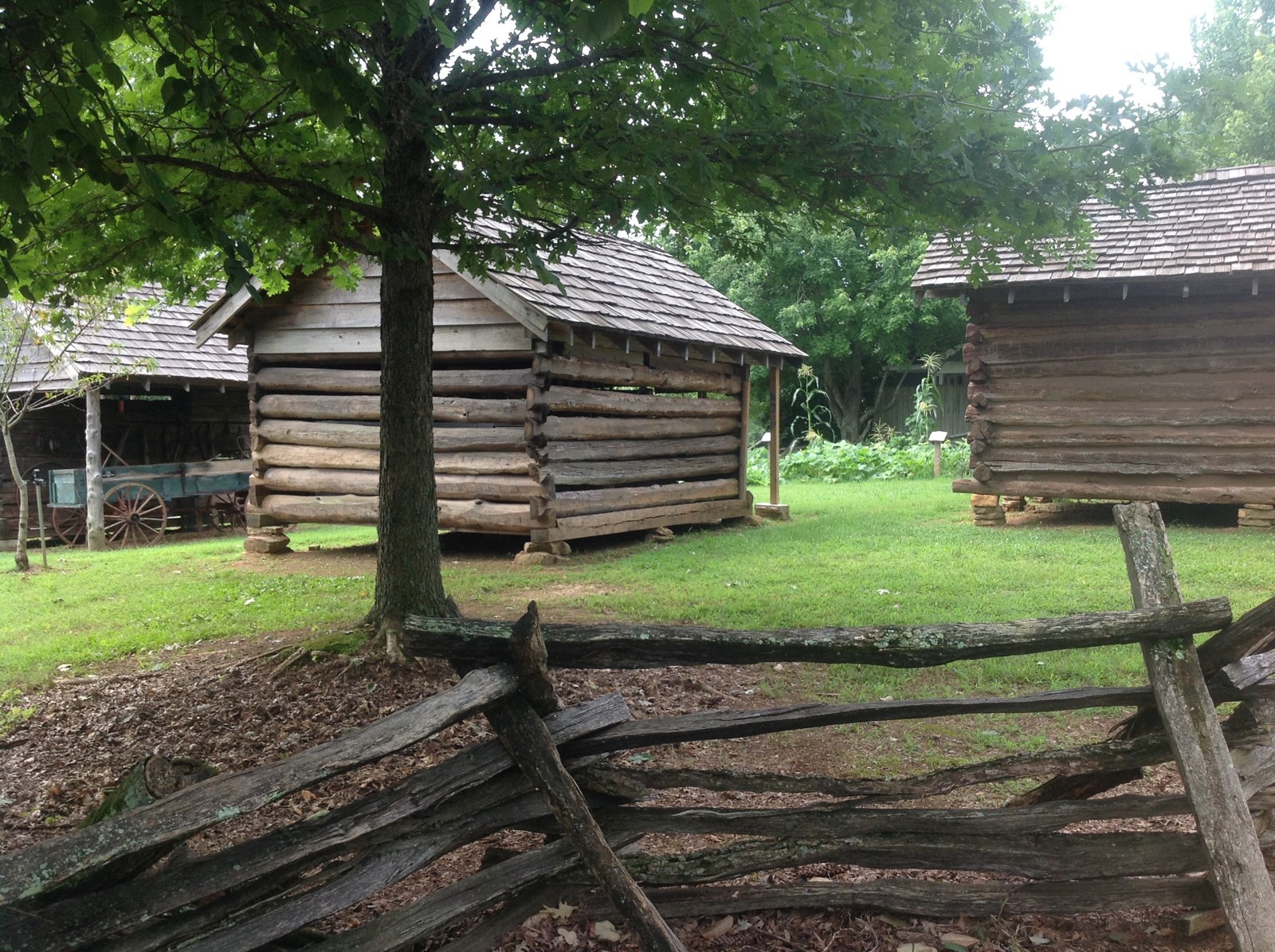
TAHLEQUAH, OKLAHOMA, November 27, 2026. Start with the document the textbook skipped. In 1835 the United States government took a census of the Cherokee Nation, the count it needed before it could force the Cherokee out of Georgia, Tennessee and the Carolinas. The clerks wrote down 16,542 Cherokee citizens and 201 intermarried whites. Then they wrote down a third number, and it is the number this report is about: 1,592 enslaved African Americans, held as property inside the Cherokee Nation, on the eve of the Trail of Tears. They were not a footnote to the removal. They were marched west in it, roughly 1,500 of them on the Cherokee road alone, and at least 175 of them died on it, by the count historians have been able to rebuild. Across all five removals, about 70,000 Native people were driven west, and roughly one person in ten in the removal parties was an enslaved Black man, woman or child who belonged to somebody in the line.
Ask why you never heard that in school and you get to the real story. The plantation system inside the Five Tribes was not an accident of history. Washington designed it, sold it to the tribal elite as the price of survival, profited from the land hunger it created, then used the slavery it had planted as the excuse to seize more land in 1866, and then spent the next 160 years refusing to enforce the rights of the Freedmen it had written into its own treaties. Every step of that is in the federal record. The names are in the census rolls. The receipts never went away. They were just never assigned as homework.
THE KEY POINTS
What the census says and the textbook does not
- The 1835 Cherokee census counted 1,592 enslaved people held by 207 Cherokee families, about 7.4 percent of all Cherokee households, with the 12 largest planters holding 54 percent of the enslaved between them.
- Enslaved people walked the Trail of Tears in every removal. About 1,500 accompanied the Cherokee detachments, driving wagons, herding livestock, cooking and burying the dead. At least 175 enslaved people died in transit in the Cherokee removal alone.
- The biggest slaveholder in Indian Territory was a Choctaw planter. Robert M. Jones held about 230 people in the 1860 census, by some estimates 500, across six plantations worked on the Red River, while serving as the Choctaw delegate to the Confederate Congress.
- Slavery in Indian Territory outlived the Thirteenth Amendment. The amendment did not reach the sovereign tribal nations. Slavery there ended only with the treaties of 1866, dictated by Washington after the Civil War.
- The fight over the Freedmen is still in court in 2026. The Cherokee Nation fully recognizes its Freedmen today. Muscogee Freedmen won at their own Supreme Court in 2025 and are still waiting on a federal judge. Chickasaw Freedmen were never adopted at all.
WASHINGTON SOLD THE PACKAGE
None of this began in secret. After the Revolution, the young United States ran what it openly called a “civilization” program for the southern tribes. Federal agents like Benjamin Hawkins among the Creeks and Return J. Meigs among the Cherokee preached one package: the plow, the loom, the fenced plantation, and enslaved labor to work it. A tribal leader who took the package got trade goods, annuities and praise in Washington as a “progressive.” A leader who refused got marked as an obstacle. The mixed-ancestry planter class that ran the Cherokee, Choctaw, Chickasaw and Creek governments by the 1820s was, in large part, the program’s graduating class.
The numbers climbed exactly the way the program intended. The Cherokee held 583 enslaved people in 1809. By the 1835 census the count was 1,592. The 1833 census of the Creek Nation counted 22,694 people and 902 enslaved. And the tribal governments wrote slavery into law themselves. The Cherokee passed their first slave code in 1819, added patrol laws in 1824, and wrote a constitution in 1827 that barred Black people, enslaved or free, from office and from voting. On December 2, 1842, with removal already behind them, the Cherokee Council passed a law ordering free Black people who were not citizens out of the nation entirely. This was not a custom drifting in from Georgia. It was statute, debated and enacted by tribal legislatures, protecting a planter class that sat inside those same legislatures.
THE MASTERS
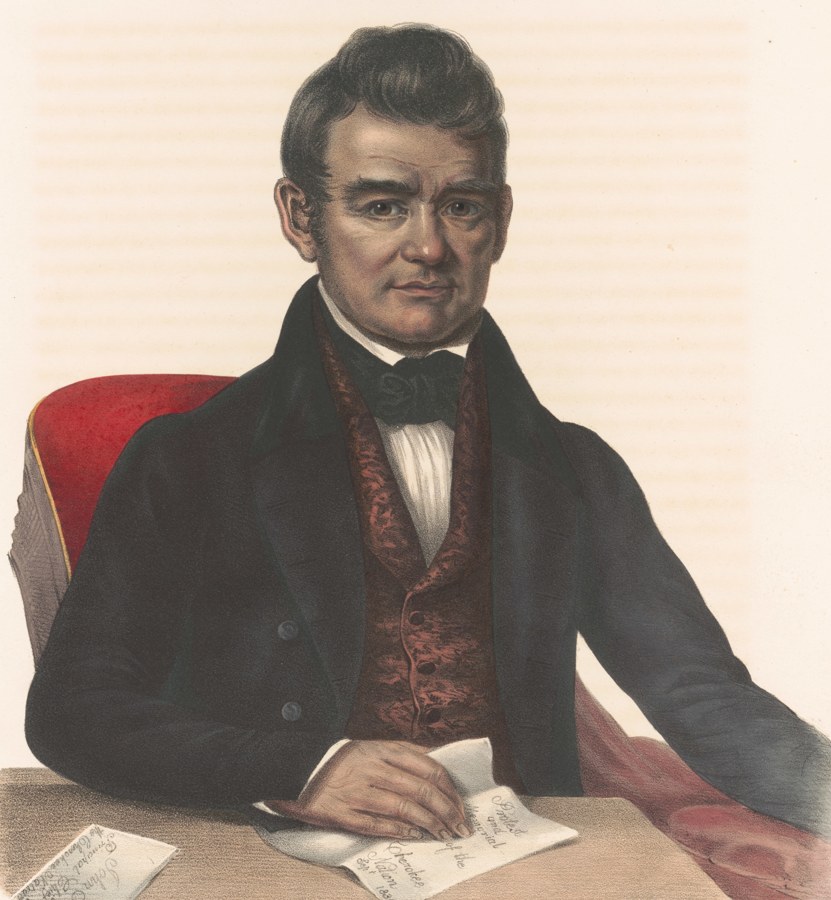
The names at the top of the rolls are the names in every Cherokee history book, printed for other reasons. James Vann built the brick house at Spring Place, Georgia, in 1804, ran a plantation of about 1,100 acres at Diamond Hill with a ferry, a tavern and racehorses, and ranked among the largest slaveholders in the nation. His son Joseph inherited the operation, lost the house to Georgia, rebuilt across the line in Tennessee, and when removal came he took about 200 enslaved people west with him, one of the largest single coffles on the road. Principal Chief John Ross, the man who fought removal in Washington for a decade, held at least 20 enslaved people when the detachments formed. Major Ridge, Stand Watie and Elias Boudinot, the men of the Treaty Party, were slaveholders. The institution was not at the edge of Cherokee politics. It was Cherokee politics, on both sides of the removal fight.
West of the Mississippi the scale only grew. The Choctaw planter Robert M. Jones built an empire on the Red River out of slave trading profits: six plantations including Rose Hill near Doaksville, Lake West at about 5,000 acres and Rocky Comfort at about 10,000 acres, a string of some 28 stores, steamboats, and about 230 enslaved people counted in the 1860 census, with some estimates running to 500, which made him the largest slaveholder in Indian Territory and one of the largest in the South. He sat in Richmond as the Choctaw delegate to the Confederate Congress while his fields were worked by people he owned. The Chickasaw Colbert family held well over a hundred enslaved people along the Washita. By 1860, on the eve of the Civil War, the federal census counted about 2,511 enslaved people in the Cherokee Nation, 2,349 in the Choctaw, 975 in the Chickasaw and 1,532 in the Creek, with the Seminole figure estimated near 1,000. That is roughly 15 percent of the Cherokee population, 14 percent of the Choctaw, 18 percent of the Chickasaw and 10 percent of the Creek held in bondage. Per capita, parts of Indian Territory held people in slavery at rates that stood comparison with the cotton states.
THE WALK
Then came the road itself, and this is where the second set of victims disappears from the mural version of the story. The enslaved did not ride through removal as cargo only. They were the labor force of the removal. They drove the wagons and the ox teams. They herded the horses and cattle that fed the detachments. They cooked, they cut wood, they raised and struck the camps, they nursed the sick, and when the dying started in earnest in the winter of 1838 and 1839, they dug a share of the graves along the road from the Tennessee River to Indian Territory. They did it in chains of circumstance no less real for being legal: an enslaved driver who ran was not escaping to freedom, he was running from one jurisdiction of slavery into patrol country, and the detachments traveled under guard.
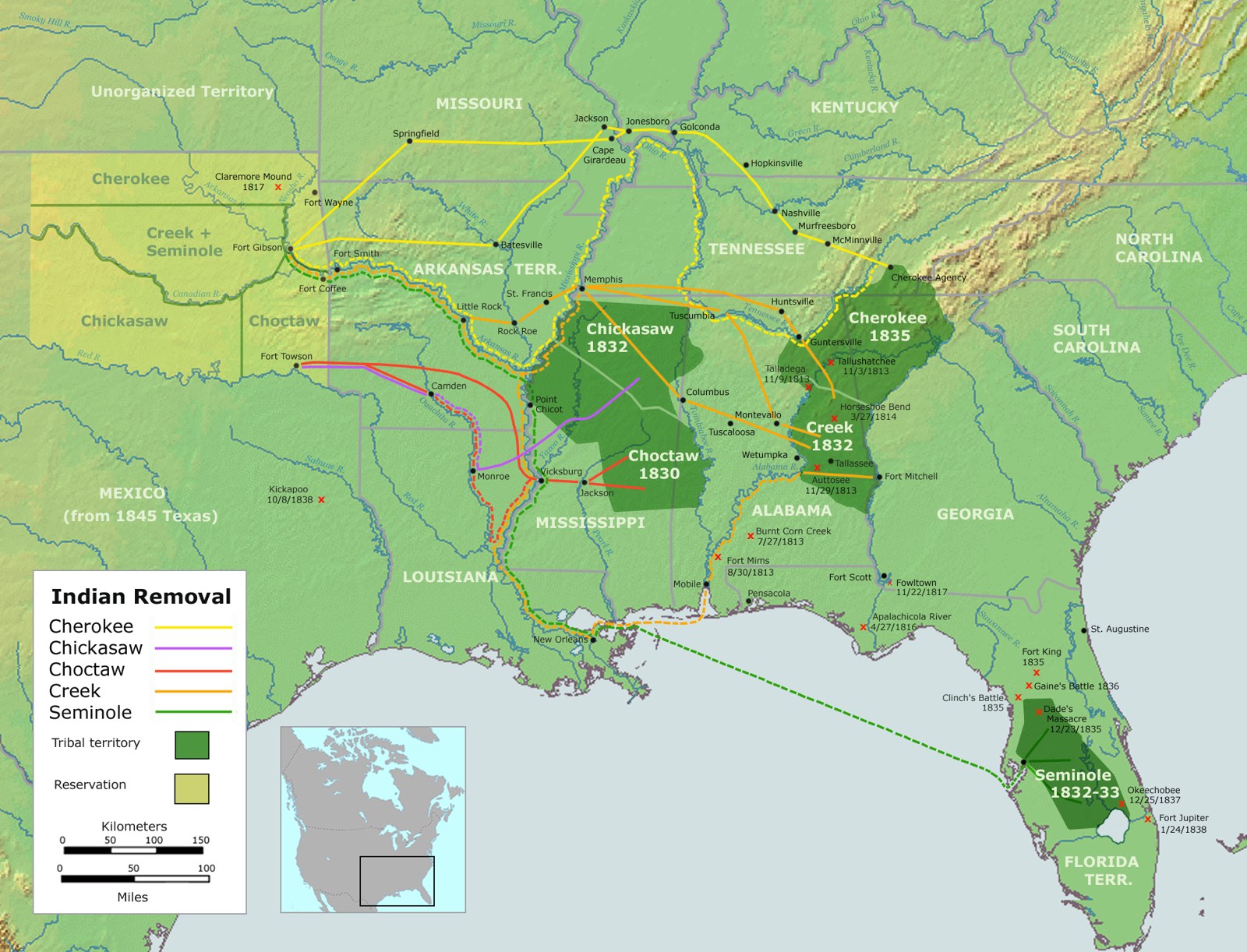
The Cherokee removal moved about 15,500 Cherokee citizens in thirteen detachments, most of them organized by Ross’s own government after the Army’s first roundups through the stockades. About 1,500 enslaved people went with them. At least 175 enslaved Cherokee-owned people are documented to have died in transit, and the honest word is “documented,” because the detachment rolls counted property the way quartermasters count property, when they counted it at all. The Choctaw removal of 1831 to 1834, the Creek removal of 1836, when thousands of Creek citizens were marched in chains after the Creek War, the Chickasaw removal and the two Seminole wars of removal all carried enslaved people west on the same terms. Roughly 70,000 Native citizens were removed in the whole operation. Roughly one in ten of the human beings on those roads was enslaved. The trail had two nations walking it, and only one of them got the memorial highway markers.
THE REVOLT THEY BURIED DEEPER
If the enslaved had accepted the story the textbooks later wrote for them, there would be no record of November 15, 1842. That morning, at Webbers Falls in the Cherokee Nation, more than 25 enslaved people, most of them held by Joseph Vann, locked their masters in their cabins, took guns, horses and supplies, and ran for Mexico, where slavery was abolished. Enslaved Creeks joined them on the road until the party numbered more than 35. When slave catchers grabbed a fleeing family of eight, the party turned, attacked, and killed the catchers James Edwards and Billy Wilson to free them. The Cherokee Nation sent a militia of 87 men under Captain John Drew, who caught the party on November 28, seven miles north of the Red River. Five of the freedom seekers were executed. Vann put the survivors to work crewing his steamboats, human property set to hauling freight on the Arkansas River. The Oklahoma Historical Society keeps the entry. Almost nobody has ever been assigned to read it.
THE SEMINOLE EXCEPTION
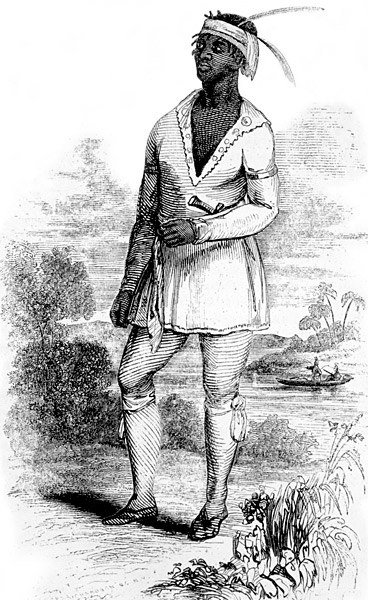
One of the five nations ran the system differently, and the difference proves the rule. Among the Seminole, Black people lived in their own armed towns, paid an annual tribute in produce to the chiefs who claimed them, carried weapons, governed themselves, and could not be sold at a master’s whim. It was a relationship of vassalage, not the chattel slavery of the Cherokee and Choctaw plantations, and everyone at the time understood the difference, including the slave catchers of Florida, who treated the Black Seminole towns as stolen property waiting to be recovered. The fight to retake them helped drive the Second Seminole War, one of the most expensive wars the young republic ever fought. Under leaders like John Horse, called Gopher John, Black Seminoles fought as allies and interpreters, were removed west on the same ships and roads, and in 1849 John Horse and the Seminole chief Wild Cat founded Wewoka in Indian Territory as a town where Black people could live beyond the reach of the catchers. When slave raiders kept coming anyway, many Black Seminoles crossed into Mexico in 1850 and took up arms as border guards for the Mexican government, free men with guns, hired to keep their former hunters out.
SLAVERY OUTLIVES THE CONFEDERACY
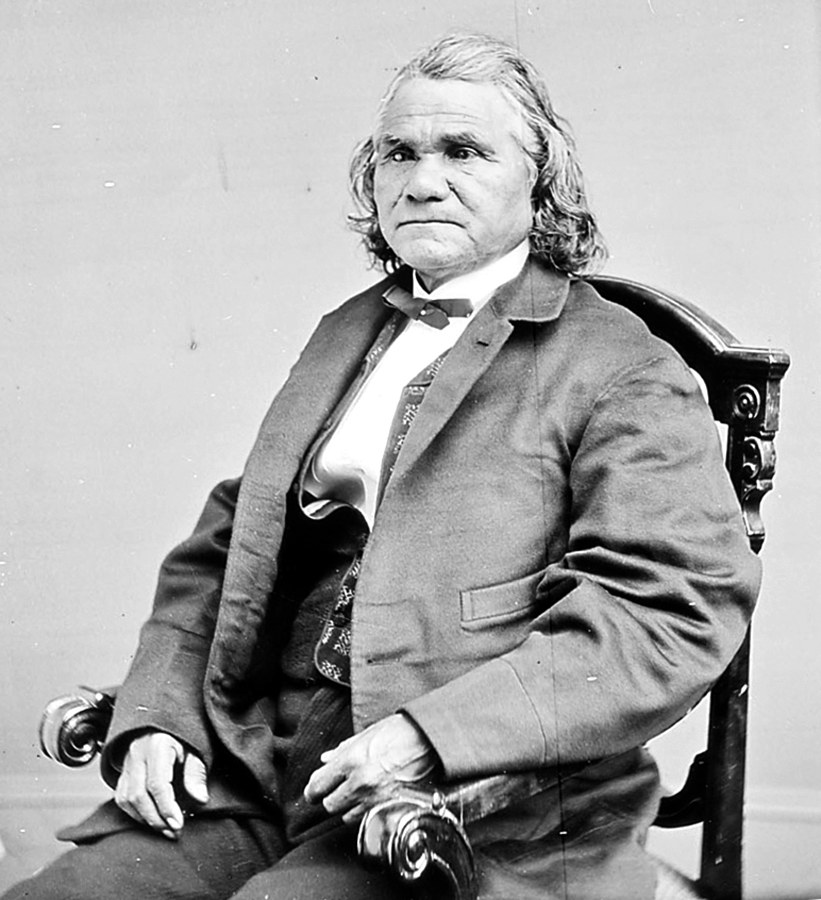
The Civil War split the nations the way it split the states. The Five Tribes signed alliances with the Confederacy, and the Cherokee split into warring factions. Stand Watie, slaveholder and Treaty Party man, rose to brigadier general and became, on June 23, 1865, at Doaksville in the Choctaw Nation, the last Confederate general to surrender, two and a half months after Appomattox. The Cherokee council under Ross had abolished slavery in February 1863, the only one of the five nations to do it during the war. And in the war’s first winter, thousands of Creeks and Seminoles who wanted no part of the Confederacy, led by Opothleyahola, fled toward Kansas in the flight remembered as the Trail of Blood on Ice. Hundreds of enslaved and free Black people fled with them, choosing a winter road and Confederate pursuit over the plantations. About one in ten of the refugees died within three months of reaching Kansas.
Here is the legal fact that reframes the whole timeline. The Thirteenth Amendment, ratified in December 1865, abolished slavery in the United States, but the Supreme Court’s own doctrine said the tribal nations were sovereign and outside it. The amendment did not free a single person in Indian Territory. Slavery remained perfectly legal on land that sits inside the modern state of Oklahoma until the summer of 1866, when Washington dictated new treaties to the five defeated nations and abolished it by treaty, a year after it ended everywhere else in the republic. The last legal slavery in America did not die at Appomattox or in the amendment. It died in Indian Territory, on paper Washington wrote.
The Official Account
The standard account, as carried in school curricula and park interpretation, presents removal as a tragedy inflicted on the Five Tribes by the United States, full stop: the nations are the victims of the story, and slavery enters it, if at all, as a Southern institution the tribes were caught beside. Tribal governments today answer the Freedmen question as a matter of sovereignty: citizenship is for each nation to define, and the 1866 treaties, they argue, must be read as the nations understand them. Federal courts have split the difference for 160 years, enforcing the treaties in one decade and deferring in the next. The Info Soldier prints the official account here in full because the documents below it are stronger.
THE PAPER TRAIL THEY SIGNED
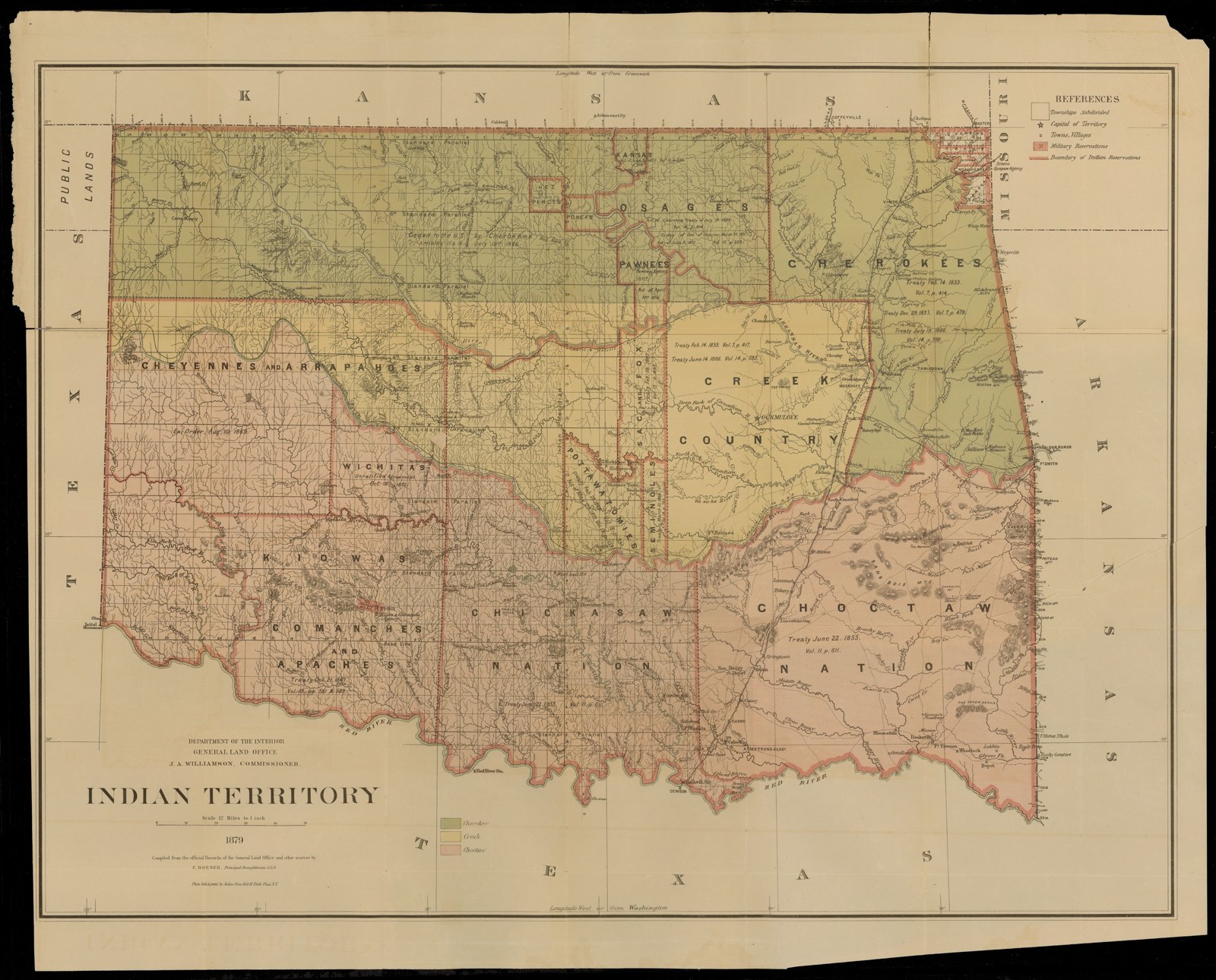
The treaties of 1866 did two things at once, and you are meant to remember only one of them. They abolished slavery in the five nations, and in the same documents they took land: the Choctaw and Chickasaw ceded the Leased District in the west, the Cherokee ceded their Kansas lands and accepted the coming settlement of other tribes on their soil, and every nation accepted railroad rights of way across what was left. Slavery, the institution federal agents had spent forty years teaching the tribal elite to build, became Washington’s stated reason the defeated nations had to be punished with cessions. The arsonist billed the house for the fire.
For the Freedmen, the treaties wrote specific promises. The Cherokee treaty granted the Cherokee Freedmen all the rights of native Cherokee. The Choctaw and Chickasaw treaty gave those two nations a choice: adopt their Freedmen as citizens within two years, with 40 acres of land each, funded out of a $300,000 federal payment, or watch the money revert and the Freedmen remain under Washington’s care. The Choctaw adopted their Freedmen in 1883. The Chickasaw legislature never adopted theirs at all, and so the Chickasaw Freedmen, people born on Chickasaw land to people the Chickasaw had held as slaves, were left citizens of no nation on earth, a fact the United States Supreme Court itself noted in 1903 while declining to fix it. When the Dawes Commission enrolled the nations a generation later, it wrote the Freedmen onto separate rolls of their own, no blood quantum recorded, an administrative label that followed their descendants for a century and counting.
THE FIGHT IS STILL ON
Do not let anyone tell you this is ancient history, because the dockets are warm. In 2007 the Cherokee Nation voted to strip citizenship from about 2,800 Freedmen descendants. On August 30, 2017, a federal court in Washington ruled that the 1866 treaty guaranteed Cherokee Freedmen citizenship rights and always had. On February 22, 2021, the Cherokee Nation’s own Supreme Court struck the words “by blood” from its citizenship law, and today the Cherokee Nation is the only one of the five that fully recognizes its Freedmen, a fact its current leadership states with pride. The Muscogee Freedmen won the same argument at home: a tribal district court ruled for plaintiffs Rhonda Grayson and Jeffrey Kennedy in September 2023, and on July 23, 2025, the Muscogee Supreme Court affirmed it, five to zero. The Muscogee Chief answered with an executive order pausing citizenship cards anyway. More than 4,000 Freedmen descendants have applied. A federal lawsuit filed in July 2026 sits fully briefed in Oklahoma City, waiting on a judge.
The Seminole Freedmen were voted out in the year 2000 under a blood rule that excluded about 1,200 people, until the Interior Department refused to recognize a Seminole government that excluded them and a federal court ruled in 2022 that the Freedmen bands, the Caesar Bruner and Dosar Barkus bands, had kept their membership and voting rights all along. The Choctaw Freedmen were adopted in 1883 and then written out again by a 1983 constitution that required blood descent. The Chickasaw Freedmen are still waiting for an adoption their nation has owed them, on paper, since 1866. Congress noticed eventually: in 2021 a House committee threatened to withhold federal housing funds from four of the five nations over the treaty obligations, and in July 2022 the Senate Indian Affairs Committee held an oversight hearing where Cherokee Freedmen descendant Marilyn Vann told the senators, on the record, that the United States signed these promises and has spent 160 years declining to enforce them.
THE INFO SOLDIER’S VERDICT
Read the sequence back and the pattern names itself. Washington’s agents sold plantation slavery to the tribal elite as civilization. Washington’s land hunger turned the plantation South’s expansion into removal, and the enslaved walked the same road carrying the baggage. Washington’s victory in 1866 turned the slavery it had planted into the pretext for the next land cession. And Washington’s courts and Congresses then spent sixteen decades enforcing the land clauses of the 1866 treaties to the last acre while treating the freedom clauses as a suggestion. The tribes made their own choices inside that machine, and the slave codes and the census rolls carry tribal signatures as well as federal ones. This report hides neither set of signatures. That is exactly why the enslaved had to be written out of the schoolbook version. A Trail of Tears with two sets of victims and one architect is a story about power. A Trail of Tears with one set of victims is a story you can put on a postage stamp.
The people are not lost. They are in the 1835 census, in the detachment rolls, in the Dawes applications, in the treaty articles and in the court filings of 2026, named, counted and still, in four nations out of five, waiting at the window. The Info Soldier’s verdict: the other Trail of Tears is not a hidden history. It is a filed one. It was simply never in the version they handed you, and now you know whose handwriting is on both.
Sources for this report: the 1835 Census of the Cherokee Nation (the Henderson Roll); the 1833 Creek census; the Preliminary Report on the Eighth Census, 1860; Michael F. Doran, “Negro Slaves of the Five Civilized Tribes,” Annals of the Association of American Geographers (1978); the Oklahoma Historical Society’s Encyclopedia of Oklahoma History, entries “Slave Revolt of 1842” and “Jones, Robert M.”; National Park Service, Trail of Tears National Historic Trail and Fort Scott National Historic Site; the treaties of 1866 (14 Stat. 769, 799); Choctaw Nation v. United States, 318 U.S. 423 (1903); Cherokee Nation v. Nash (D.D.C., August 30, 2017); the Cherokee Nation Supreme Court ruling of February 22, 2021; the Muscogee (Creek) Nation Supreme Court ruling of July 23, 2025; BlackPast.org, “The African American Experience in the Cherokee Nation”; Associated Press reporting on Freedmen citizenship, June 2025; and the United States Senate Committee on Indian Affairs oversight hearing of July 27, 2022.