




Special Report · The Polar File
THE CONTINENT THEY LOCKED DOWN: WHAT ADMIRAL BYRD FOUND AT THE BOTTOM OF THE WORLD
November 22, 2026
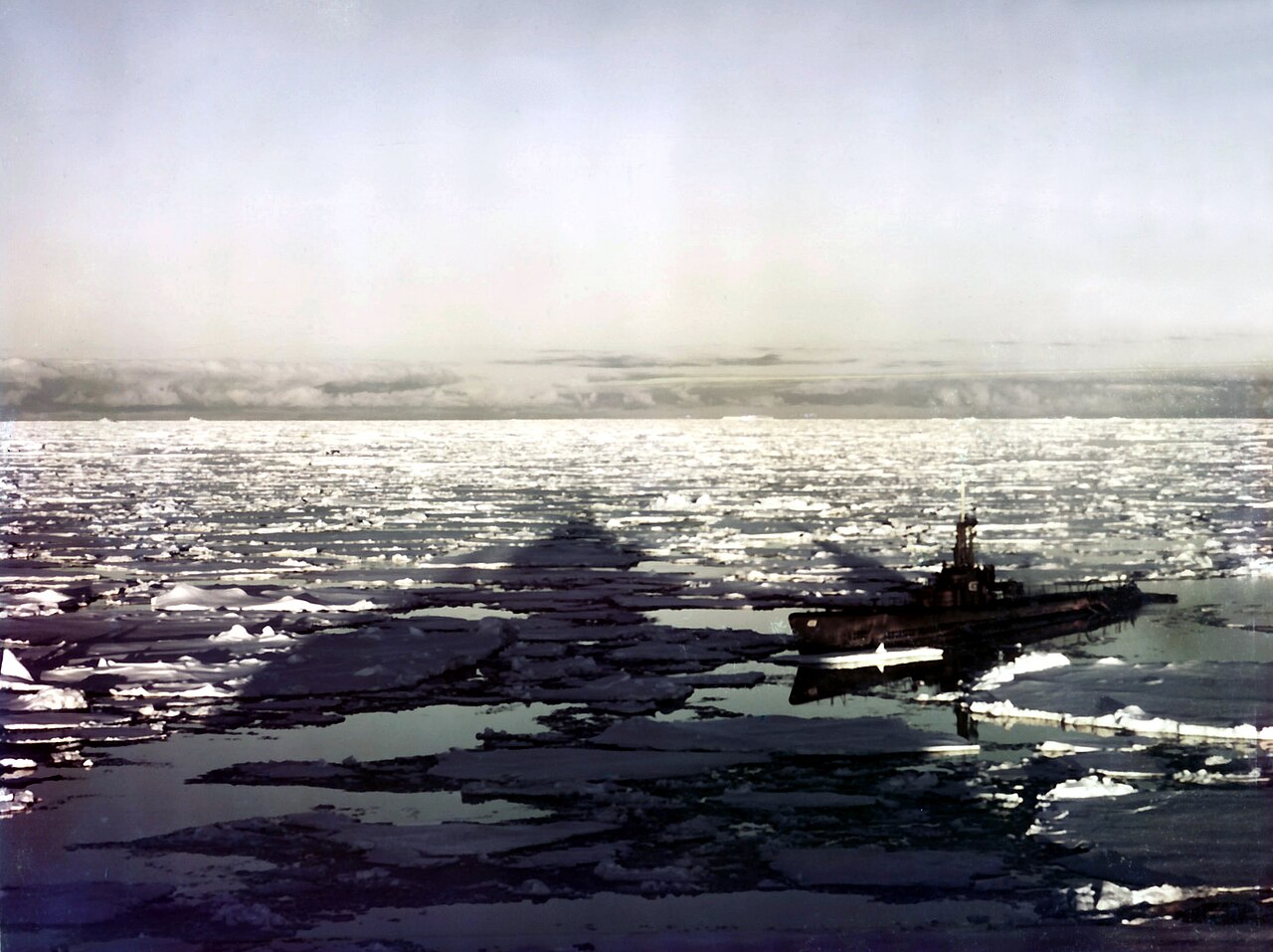

ANTARCTICA, November 22, 2026. In August 1946, fifteen months after the Second World War ended, the United States Navy sent the largest expedition in Antarctic history to the bottom of the world. Operation Highjump put roughly 4,700 men, 13 ships, an aircraft carrier, a submarine, and dozens of aircraft into the ice under Rear Admiral Richard E. Byrd, the most famous polar explorer alive. The stated mission was training and research. The expedition was built to last into the following year. It came home in late February 1947, months early. The Navy’s explanation was the onset of the Antarctic winter. Every word of that paragraph is documented. What the expedition found down there has been argued about ever since, and the arguing starts from a record that is stranger than the official summary of it.
The Documented Spine
Start with what nobody disputes. Highjump was a military operation on a wartime scale, mounted in peacetime, against a continent with no enemy on it. Its ships fanned out along the coast, its aircraft photographed thousands of miles of shoreline, and its commander was a man who had been flying over the poles for twenty years. The only deaths were mundane and on the record: on December 30, 1946, a patrol seaplane crashed in a whiteout and killed three airmen. No battle, no mystery in the casualty list. And then, in late February, the fleet turned for home ahead of schedule, and the official reason given was weather, in a region where the expedition had been provisioned and equipped to overwinter.
Then there is what Byrd said when he got back. On March 5, 1947, aboard the command ship USS Mount Olympus, Byrd gave an interview to the International News Service that ran in the Chilean newspaper El Mercurio. It is a real interview, in a real newspaper, and it is not a comfortable read. Byrd warned that the United States had to prepare its defenses against hostile aircraft coming over the polar regions, that in a new war the country could be attacked by planes flying over one or both poles, and that the time had ended when Americans could take refuge in their isolation. The standard reading is that he meant Soviet bombers, and in 1947 that reading made sense. But note the wording that later attached itself to the interview in English translation, in which Byrd supposedly spoke of flying objects that could cross from pole to pole at incredible speed. That wording is a doctored translation. The Spanish original says airplanes. The Info Soldier prints the correction because the correction is part of the record, and because a story this big does not need a rigged translation to be worth reading carefully.
The Expedition Before The Expedition
Germany got there first, and that is documented too. In December 1938 and January 1939, the German ship Schwabenland worked the coast of Queen Maud Land, launching Dornier flying boats that photographed the interior, took more than 16,000 aerial pictures, and dropped aluminum darts marked with swastikas to stake a claim the Reich called Neuschwabenland. No base was built. No shore occupation followed. Berlin never even filed the formal territorial claim. The expedition is real, the photographs are real, and the darts are real. What Germany wanted with an Antarctic coastline in the last winter before the war is a question the file answers only with the paperwork of a survey.
And the war’s last chapter wrote one more strange line into the record. In July and August 1945, weeks after Germany’s surrender in Europe, two German submarines, U-530 and U-977, surfaced in Argentina and surrendered there. That is documented fact, established in naval records on two continents. Where those boats had been, and why they chose Argentina, has been speculated about for eighty years. The speculation is not evidence. The surrender is.
The Diary That May Not Exist
Here is the claim at the center of the polar file, printed as the claim it is. A text circulates, attributed to Byrd, describing a flight on February 19, 1947, northward into an opening in the ice, over green valleys and a shining city, where a figure called the Master warned him about humanity’s new atomic weapons and sent him back to the surface world. It is the most famous document in the whole polar literature. It is also, on the checkable record, impossible as written: on February 19, 1947, Byrd was in Antarctica with Highjump, half a world from the North Pole, and no manuscript in his hand has ever been produced, authenticated, or archived. The diary surfaced decades after his death, through publishers, not through his papers.
The Info Soldier does not print the diary as fact, and it does not need to. A forged or embellished diary attached to a real man is itself a familiar instrument: it discredits the questions around him by tying them to a document that cannot survive inspection. The questions survive anyway, because they were never standing on the diary. They are standing on a fleet.
The Lockdown
Whatever did or did not happen in 1947, what happened next is a matter of treaty law. On December 1, 1959, twelve nations signed the Antarctic Treaty, in force from 1961, and it remains one of the most unusual documents in international law. Antarctica is reserved for peaceful purposes. Every territorial claim, including the ones staked with swastika darts, is frozen in place, neither recognized nor denied. Military bases and weapons testing are banned. And in exchange for that lockdown, the treaty hands inspectors from the signatory nations complete freedom of access, at any time, to any area of the continent. The standard reading is that this is arms control working as intended, science protected by law. The Info Soldier notes only the shape of it: an entire continent, the size of the United States and Mexico combined, placed under a permanent international regime within fourteen years of the largest military expedition ever sent there, an expedition that came home early and whose commander warned, on the record, about the poles.
The smaller mysteries file themselves under the same heading. In 2016, satellite photographs of a pyramid shaped peak in the Ellsworth Mountains went around the world as a lost structure. Geologists identify it as a nunatak, a mountain ridge sharpened by ice and wind, and their explanation is printed here because it is the official one and because the photograph, on its own, proves nothing either way. A mountain that looks like a pyramid is a mountain that looks like a pyramid. The continent does not need it.
The Question Left Open
Strip this file to what holds up and here is what remains. A wartime scale fleet went to an empty continent months after the war ended and left early. Its commander warned publicly about attack over the poles, and someone later doctored his words to make the warning sound stranger than it was. Germany had surveyed the same coastline before the war and two of its submarines finished the war in Argentina. A diary that cannot be authentic became the most famous text in the file, and it has spent decades making the documented parts look as shaky as itself. And the continent at the center of all of it sits under a treaty that freezes every claim and watches every mile of ice, forever.
The Info Soldier’s position is the one the record supports: the possibility is real, the paperwork is real, and the official story, that there is nothing here worth a second look, is the one claim in the file that the documents do not back. What is at the bottom of the world that required a fleet, a warning, and a lockdown is a question the governments of the world answered with a treaty instead of an explanation. Readers can decide for themselves which of those two things a treaty is.