




Special Report · The Saucer File
FOO FIGHTERS, PAPERCLIP, AND THE BELL: WHAT THE NAZI UFO FILES ACTUALLY SHOW
November 22, 2026
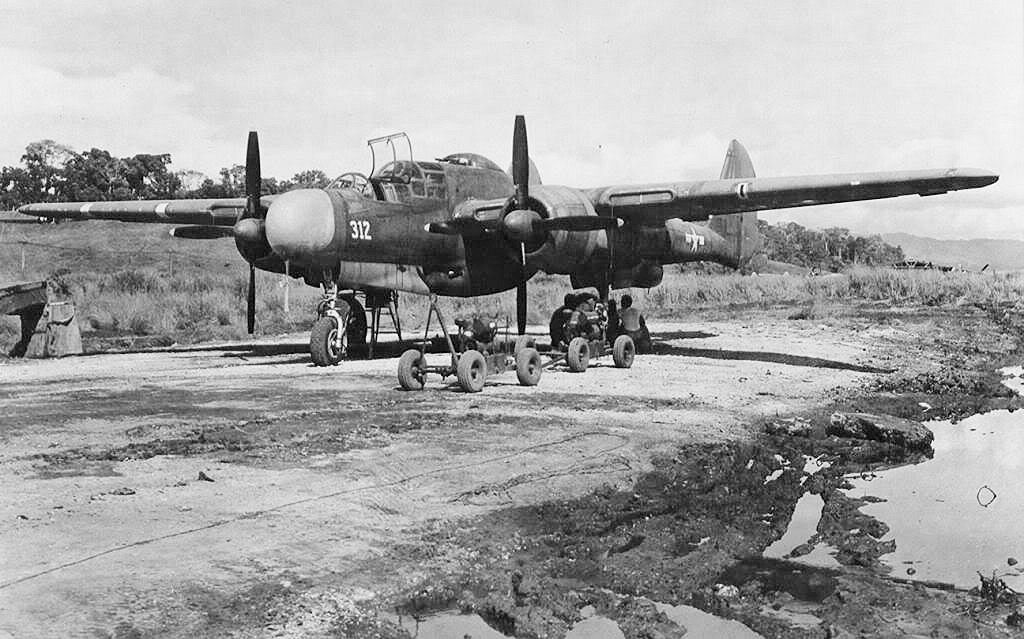

WASHINGTON, November 22, 2026. The Nazi UFO story is usually told two ways, and both ways serve somebody. In the first, it is a carnival: flying saucers built by the SS, secret bases, channelled blueprints from the stars. In the second, it is a punchline, proof that anyone who asks about wartime aerospace secrets is a crank. The documented record supports neither performance. What the record actually shows is stranger and more useful: Allied aircrews formally reported glowing objects pacing their aircraft over Europe in the last winter of the war and were never given an explanation; the saucer story that followed has a birthday, in print, in 1950; and the United States government then imported the Third Reich’s aerospace establishment wholesale, sanitized its files, and classified the results for decades. This report separates the three layers, because only one of them is legend.
The Layer That Is Documented: Foo Fighters
From late 1944, Allied aircrews over Europe reported balls of light that paced their aircraft, followed their maneuvers, and could not be outrun or shaken. These were not bar stories. The reports were formally logged, including by the 415th Night Fighter Squadron, which recorded roughly fourteen incidents in its own operations record. SHAEF, the Allied high command, issued a press release on the phenomenon on December 13, 1944. The aircrews called them foo fighters. Intelligence officers took the reports seriously enough to work them: the fear was a German secret weapon, and no German weapon matching the reports was ever found, in the air or in the captured files afterward. The official suggestions that settled over the file later, static electricity, ice crystals, combat fatigue, were never demonstrated, and the men who filed the reports were not satisfied with them. The Info Soldier scores the foo fighters the way it scores any wartime file: named units, dated logs, an official press release, and no explanation that closes the case. Something was in the sky over the Reich in the last winter of the war, flying formation with American night fighters, and the official record of the United States government says so.
The Layer With A Birthday: The German Saucer Story
The claim that Germany built flying discs does not come from wartime records. It comes from newspapers, and it can be dated. In March 1950, the Italian engineer Giuseppe Belluzzo told the press that disc aircraft had been designed in Italy and Germany in 1942. Days later, a former Luftwaffe pilot named Rudolf Schriever told Der Spiegel he had designed a disc that could hover and fly. In 1953, Georg Klein claimed a disc built by Schriever and others had flown at Prague in February 1945. That is the entire foundation: three men, three press claims, in the 1950s, none of them supported by drawings that could fly, by witnesses who could be checked, or by anything in the enormous surviving archive of the Reich Air Ministry, which the Allies captured and combed. The famous extras arrived even later. The word Vril comes from an 1871 novel by Edward Bulwer-Lytton, and no Vril Society appears anywhere in German records; the Haunebu blueprints, with their diameters and crew counts and performance figures, trace to fringe writers of the 1980s and 1990s, not to any wartime document. The Info Soldier prints this layer plainly, because printing it plainly is what the carnival version cannot survive. The disc blueprints are literature. What they are literature about is the next layer.
The Layer That Is One Source Deep: The Bell
Die Glocke, the Bell, is the most famous object in the whole file: a bell shaped device of rotating cylinders and a mercury like substance, tested in Silesia under SS General Hans Kammler, lethal to the men around it, vanished at the war’s end. Here is its provenance, stated in full. The entire story traces to one source, the Polish journalist Igor Witkowski, whose 2000 book said he had been shown transcripts of the interrogation of an SS officer named Jakob Sporrenberg. No other researcher has ever seen those transcripts. No archive holds them. No physical evidence of the device exists, and no wartime document mentions it. Kammler is real: he ran the SS construction empire, he controlled the V-2 program’s production and the underground factories, and his death in May 1945 rests on testimony that has never produced a body the public record can close on. The Wenceslas Mine in Silesia is real. The Bell, as a documented object, is not. The Info Soldier will not pretend otherwise. It notes instead what the Bell story is built around: a real SS general running real wonder weapon programs whose files and fate disappear into the same fog as everything else Kammler touched, and a postwar market that filled the fog with a machine.
The Layer Nobody Argues About: Paperclip
Now the scandal that needs no embellishment, because it is in the government’s own files. Operation Paperclip brought roughly 1,600 German scientists, engineers, and technicians to the United States after the war. Their dossiers were sanitized by the Joint Intelligence Objectives Agency, paperclipped clean of Nazi affiliations, in direct tension with President Truman’s directive excluding ardent Nazis. Wernher von Braun, a former SS officer whose V-2 was built by slave labor, became the architect of the Saturn V and the public face of the American moon program. This is not a theory. It is the documented mechanism by which the Third Reich’s aerospace establishment changed employers. Files were classified. Careers were laundered. The American public was told it had defeated the Reich’s rocket program; in operational terms, it had hired it, housed it at Fort Bliss and Huntsville, and kept its records under seal for a generation. Whatever Germany’s wartime aerospace program had or had not achieved, the United States government made certain that the full record of it would be read in Washington first and in public, if ever, last. That is the soil the saucer stories grow in, and it is real soil.
The Night Washington Watched
The file does not end in 1945. On the nights of July 19 and 20 and again July 26 and 27, 1952, radar operators at Washington National Airport and Andrews Air Force Base tracked unknown targets over the capital, aircrews reported lights, and F-94 jets were scrambled, in the most famous radar visual case in the American record. The Air Force’s explanation, delivered at the largest Pentagon press conference since the war, was temperature inversions. The radar controllers who had worked the scopes disputed, on the record, that what they tracked behaved like weather. Seven years after Paperclip began, objects the Air Force could not identify flew over the capital in two consecutive weekends, and the official answer and the operators’ testimony have never been reconciled. The Info Soldier does not claim those objects were German. It claims the question of what flew over Washington in 1952 is still open in the primary record, and that a government which had just absorbed the Reich’s aerospace establishment under classification had every institutional reason to close it with a weather report.
The Kecksburg Footnote
On December 9, 1965, a fireball crossed several states and something came down in the woods near Kecksburg, Pennsylvania, where residents reported a rapid military recovery operation. NASA’s later position attributed the event to the reentry of a Soviet satellite, Kosmos 96, while acknowledging gaps in the record. In the fringe literature, Kecksburg’s acorn shaped object is routinely identified with the Bell, on the strength of a resemblance between witness descriptions and a story published thirty five years later. Resemblance is not a chain of custody, and The Info Soldier prints the link as what it is: the weakest joint in the whole file, two mysteries leaned against each other for support.
THE INFO SOLDIER’S VERDICT
The verdict lands where the documents land. The carnival version fails: no wartime disc, no Vril Society, no Bell in any archive, and a saucer story that begins in 1950s newspapers. The punchline version fails harder, because it has to explain away the parts that are in the record: combat aircrews whose reports the high command logged and publicized and never explained; an SS wonder weapon empire whose chief vanished into an unclosed file; a transfer of 1,600 Reich specialists into American programs with their dossiers washed by the importing government itself; and unidentified objects over the capital seven years later, closed with an explanation the men on the scopes rejected. A subject does not accumulate that much official paper by being nothing. The noise around the Nazi UFO file, the novels, the channelled blueprints, the acorn arithmetic, does the same work noise always does in these files: it gives the official world a ridiculous version to point at, so the documented version never has to be answered. The Info Soldier points at the documented version. The foo fighters were real. Paperclip was real. The classification was real. Start there, and the file is not a joke. It is an indictment with a punchline taped over it.