




Special Report · The Drug Law File
DUI 24/7: THE DRUG LAWYER AND THE LAW THAT CONVICTS PATIENTS WHO ARE NOT HIGH
November 22, 2026
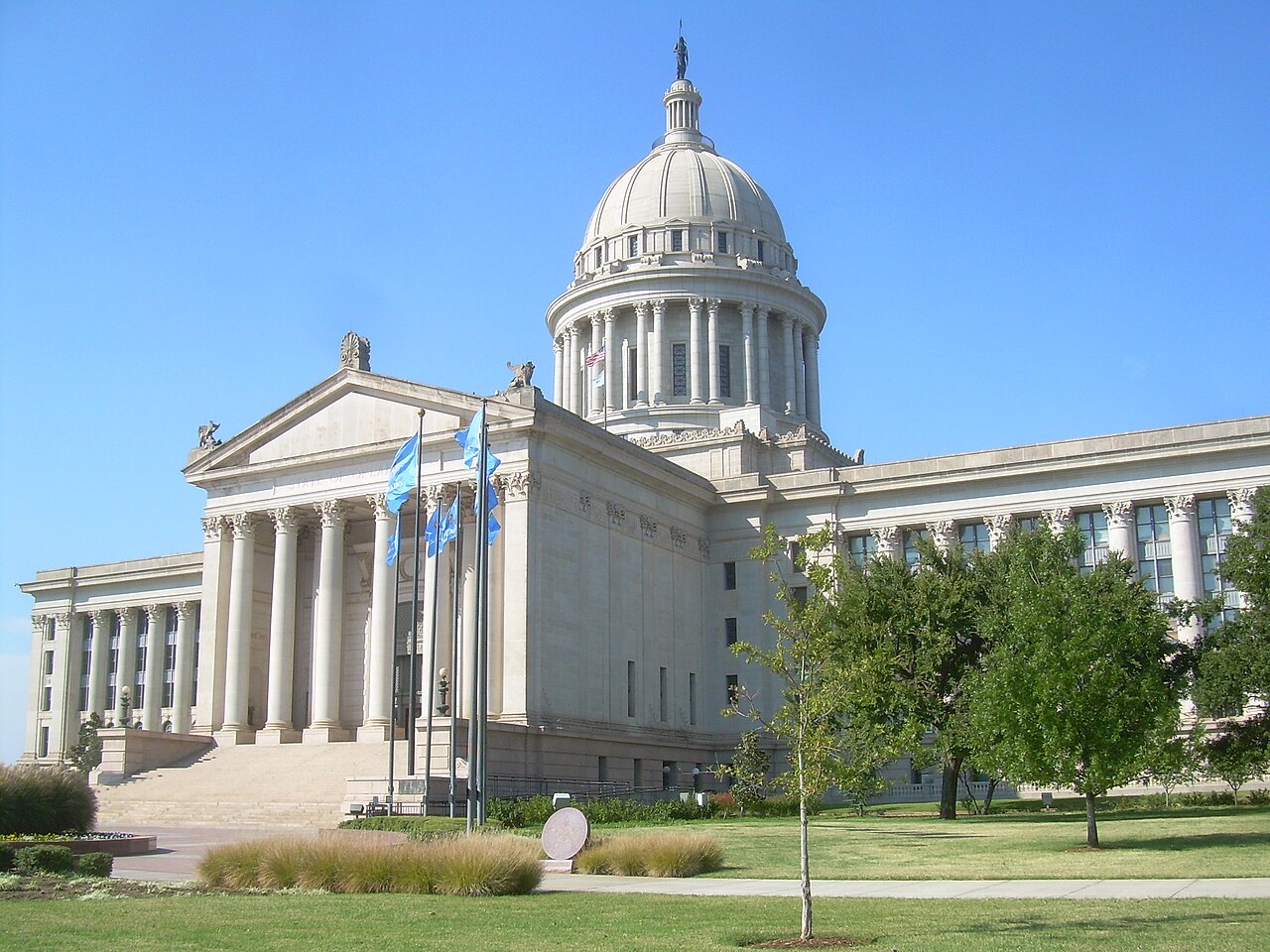

OKLAHOMA CITY, November 22, 2026. Oklahoma has built a DUI law that does not require the state to prove a driver was impaired, does not set any measurable limit for the substance it targets, and expressly strips licensed medical marijuana patients of the defense that their use was lawful. Under Title 47, Section 11-902(A)(3) of the Oklahoma statutes, it is a crime to drive with any amount of a Schedule I controlled substance, or its metabolites or analogs, in your blood, saliva, urine, or any other bodily fluid. Any amount. A metabolite is what your body leaves behind after the substance is long gone, including inactive residue that produces no effect at all. The statute does not ask whether you were high. It asks whether a laboratory can find a trace, and in Oklahoma, the trace is the crime. This report is about that law, and about the Oklahoma City lawyer who has spent a career telling anyone who will listen exactly what it does.
The Law, In Its Own Words
Read the machine part by part. Subsection (A)(3) makes it unlawful to drive, operate, or be in actual physical control of a vehicle with any amount of a Schedule I substance or one of its metabolites in any bodily fluid. There is no number. Oklahoma has written no per se THC limit, no nanogram threshold a driver can stay under, and under (A)(3) the state need not prove the substance rendered the driver incapable of safe driving; a neighboring subsection, (A)(4), requires exactly that proof for other substances, which shows the legislature knew how to write an impairment standard when it wanted one. For marijuana, it did not want one. Then subsection (B) closes the last door: being lawfully entitled to use the substance shall not constitute a defense. Oklahoma licenses medical marijuana patients through a state program, takes their fees, and then, in the same statute book, tells those patients their license is worthless the moment a metabolite test comes back. Oklahoma expanded this metabolite liability in 2013. The first offense is a misdemeanor, with everything a DUI conviction carries: license, livelihood, and record.
The detection windows turn the statute from strict into something else. Chad Moody, the Oklahoma City defense lawyer known as The Drug Lawyer, lays them out in public, on the record: THC can be detected for up to about 12 hours in blood, about 24 hours in saliva, more than 30 days in urine, and up to 90 days in hair, including inactive metabolites that remain long after any impairment has ended. Run those numbers through the statute and the result is the sentence Moody hands out on business cards to patients: DUI 24/7. A licensed patient who uses medicine legally on the first of the month and drives stone sober on the thirtieth is, under the text of Oklahoma law, committing the same offense as a man driving drunk, because the law has defined the offense as a laboratory result.
The November Lockdown
On November 1, 2026, the last statutory argument closed. Senate Bill 1257 took effect and moved THC itself into Schedule I. Previously, marijuana sat in Schedule I while THC was listed in Schedule III, a drafting gap defense lawyers had argued for years kept a THC only test result outside the reach of (A)(3). The Attorney General sold SB 1257 as closing a trafficking loophole. Its practical effect is on drivers: the argument that the substance in the patient’s blood was not, as a matter of statutory classification, the substance the DUI law names, is gone. House Bill 3018, which would have excluded marijuana from the any amount driving offense, did not pass. The legislature was offered the exit and declined it, in the same session, in full view of what the law does to the state’s own licensed patients. Oklahoma’s medical marijuana program is one of the largest in the nation by enrollment. Every one of those patients drives under a statute that presumes the trace is the crime.
Moody’s comment on SB 1257, given to KOCO 5 News this month, deserves print at full size: “even inactive metabolites in your system from 30 days ago, the law presumes you’re guilty.” He has called Oklahoma’s drug DUI laws “nonsensical” in print, and his full sentence on the standard is the cleanest summary of it ever offered: “As long as it (the law) is written that way, it will make any medical marijuana user who drives within 30 days, any detectable amount, automatically DUID.” Automatically. That is not a defense lawyer’s flourish. It is a reading of the statute, and nobody in the legislature has stood up to say the reading is wrong.
The Drug Lawyer
Chad Moody has been licensed in Oklahoma since 1999 and is a lifetime member of the NORML Legal Committee. His practice, by his own listing, is half marijuana law and half criminal defense. He trademarked the marijuana leaf, built his practice under the name The Drug Lawyer, and has been the state’s most visible marijuana law gadfly for decades: he ran for Governor of Oklahoma in 2014 on a God, Grass and Guns ticket, and in 2015 he projected a 100 foot marijuana leaf onto the State Capitol for April 20. The theater is deliberate and it is not the whole file. The same lawyer who projects leaves onto the capitol has spent the same decades in Oklahoma courtrooms working the statute line by line, and his public position on the DUI law has never moved: a standard that convicts on residue rather than impairment is not a traffic safety law. It is a status offense with a steering wheel. His warning to patients, printed on the cards he distributes, is the title of this report, because after November 1 it is also a literal statement of Oklahoma law: DUI 24/7.
How The Rest Of The Country Writes It
Oklahoma’s standard is an outlier, and the comparison is documented. Washington and Montana set a per se limit of 5 nanograms of delta-9 THC per milliliter of blood: a bright line, debatable as science, but a line a driver can know. Colorado’s 5 nanogram figure creates only a permissible inference of impairment, which the state must still support. Illinois sets 5 nanograms in blood and 10 in other bodily substances; Ohio and Nevada use their own low thresholds. Roughly 27 medical cannabis states and the District of Columbia take the majority approach: the state must prove the driver was actually impaired, and the mere presence of THC is not enough. California, with the largest cannabis market on earth, has no THC number at all. And the AAA Foundation for Traffic Safety, no friend of impaired driving, has stated the scientific problem plainly: quantitative THC thresholds are arbitrary and unsupported by science as measures of impairment, because THC blood levels do not track impairment the way alcohol does. Oklahoma looked at that landscape and chose the one standard cruder than any number: zero, measured in metabolite, weeks after the fact, with the lawful use defense deleted by statute.
THE INFO SOLDIER’S VERDICT
A DUI law that requires no impairment, sets no limit, counts inactive residue for a month and more, and forbids the defendant from answering that the state itself licensed his medicine is not a highway safety statute that went too far. It is a trap built into the traffic code, and since November 1, 2026, the trap has no drafting error left to escape through. The state sells the license with one hand and writes the presumption of guilt with the other, and the same legislature that was handed a bill to fix it let the bill die. The Info Soldier’s verdict is the one the statute’s own text delivers: in Oklahoma, a patient does not have to be high to be convicted of driving high. He has to have been a patient, sometime in the last month, and then driven to work. The Drug Lawyer’s business card is the most honest summary of Oklahoma law ever printed. It fits on a card because the law, for the people it catches, really is that short: DUI 24/7.