




Special Report · The McVeigh File
MCVEIGH WAS SHEEP DIPPED
November 24, 2026
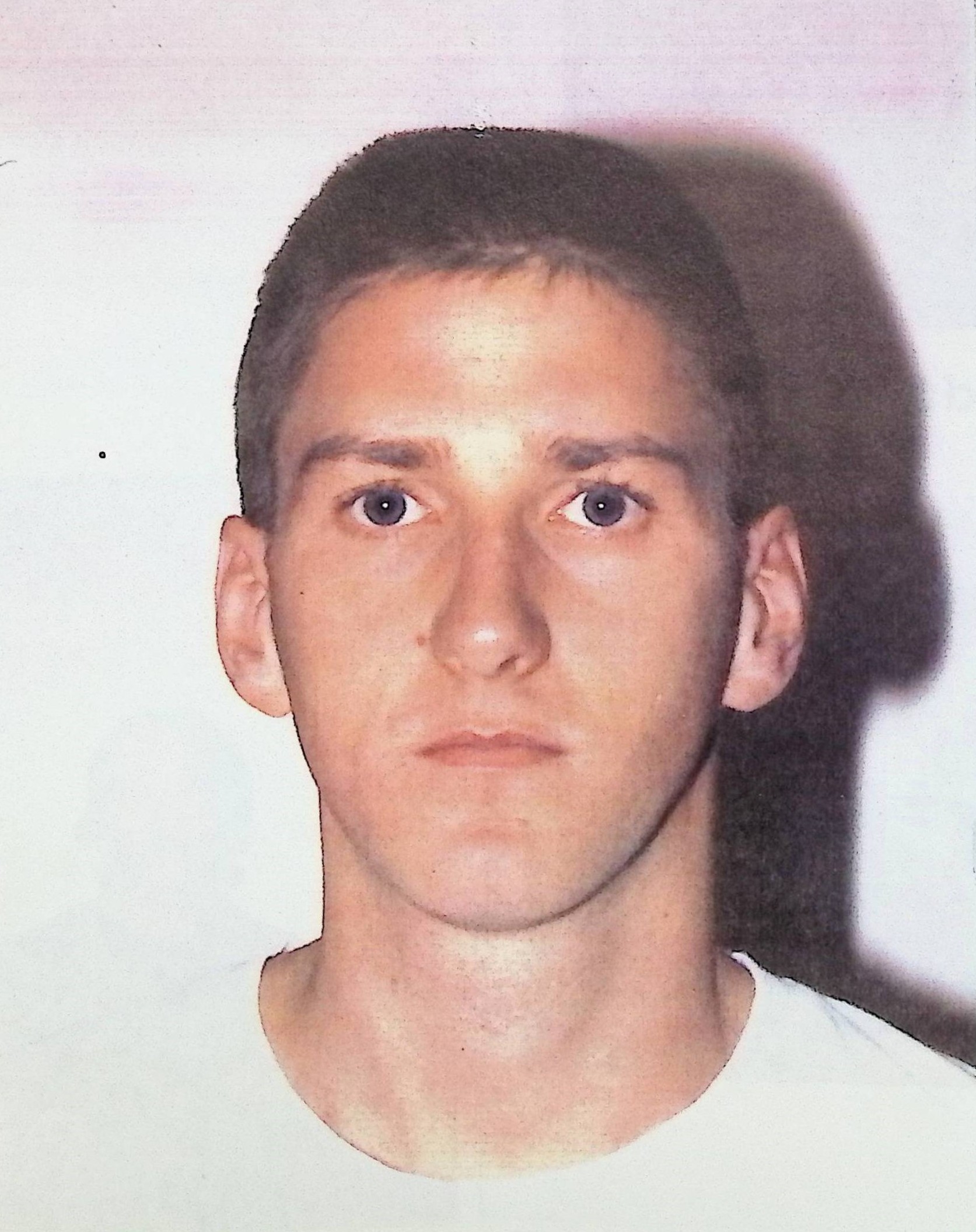
OKLAHOMA CITY, November 24, 2026. Start with the sentence the government never wanted read out loud, written by the bomber himself eighteen months before the Murrah Building came down. In a letter to his sister dated October 20, 1993, Timothy McVeigh described arriving at Fort Bragg for Special Forces training, being pulled out of a formation of 400 men with nine others, and being asked to “volunteer” for secret work: flying drugs into the United States for the CIA and working “hand-in-hand w/civilian police agencies to ‘quiet’ anyone whom was deemed a ‘security risk.’” His words for the job: “We would be gov’t-paid assassins!” Then the warning: “Do not spread this info, Jennifer, as you could (very honestly, seriously) endanger my life.” The letter is real. The New York Times published it in 1998. The question this report answers is the one the Times would not touch: what if he was telling the truth?
KEY POINTS
- The claim: McVeigh wrote to his sister in October 1993 that the Army pulled him out of Special Forces selection at Fort Bragg with nine other men and recruited him for covert work at home and abroad. He told the same story to Terry Nichols in December 1992, before he wrote the letter, and to a fellow death row inmate years later.
- The practice: “Sheep dipping” is not a theory. It is a documented Army process, described in print in 1973 by Col. L. Fletcher Prouty, the Air Force colonel who ran liaison for CIA special operations at the Joint Chiefs, and used to sneak 48 airmen into Laos as fake Lockheed civilians during Vietnam.
- The corroboration: the FBI’s own files, pried loose by attorney Jesse Trentadue, document PATCON, the Bureau’s infiltration of the very movement McVeigh moved in, ATF warnings from inside Elohim City that were filed and ignored, and Director Louis Freeh’s own teletype placing McVeigh on the phone to Elohim City, hunting a second conspirator, two weeks before the blast.
- The erasure: 24 witnesses saw a second man. The FBI declared him a hallucination. The surveillance tapes that would settle it are still missing, the defense file is still sealed, and the one man who could answer questions was executed without the standard autopsy, in front of a witness who reported he was still breathing.
The story they sold you
Here is the official account, printed the size it deserves. A decorated Gulf War veteran, embittered by a failed Special Forces tryout, quits the Army in 1991, drifts through gun shows nursing a grudge over Ruby Ridge and Waco, builds a fertilizer bomb with an old Army buddy, parks it beside the Alfred P. Murrah Federal Building on April 19, 1995, and murders 168 people, 19 of them children in a daycare. He is caught 90 minutes later driving a car with no license plate. He confesses to two hometown reporters, is convicted in three and a half weeks, and is executed on June 11, 2001. Case closed. That account is not false in its furniture. McVeigh was a soldier, he did rent the truck, he was in the cab that morning, and he never denied the bombing. What the account cannot survive is the paper trail around its central character: because the man in the middle of it kept telling people, in writing, years before the crime, that he had never really left the Army at all.
What “sheep dipped” actually means
The phrase is not internet slang. It comes out of the Army’s own closet. Colonel L. Fletcher Prouty spent 1955 to 1964 as Chief of Special Operations for the Joint Chiefs of Staff, the man who procured the supplies, equipment and logistics for CIA covert operations worldwide. In his 1973 book The Secret Team, Prouty explained the process in plain language: “‘Sheep-dipped’ is an intricate Army-devised process by which a man who is in the service as a full career soldier or officer agrees to go through all the legal and official motions of resigning from the service. Then, rather than actually being released, his records are pulled from the Army personnel files and transferred to a special Army intelligence file. Substitute but nonetheless real-appearing records are then processed, and the man ‘leaves’ the service.” The dipped man builds a civilian life as his cover, Prouty wrote, down to changing his status at his bank. The government used it at scale: barred by the 1962 Geneva accords from stationing troops in Laos, the Air Force sheep dipped 48 of its own personnel and deployed them to run a bombing radar site as “civilian employees” of Lockheed, in the operation history records as Project Heavy Green. Hold that definition in mind, because it explains the trap in the McVeigh file. A sheep dipped man’s paperwork is supposed to look exactly like a discharge. Demanding his discharge papers as proof he was out is demanding the cover story as proof there was no cover.
The letter
Now the document. McVeigh’s Army record, on the surface, is the record of a star. He enlisted in 1988, became a Bradley fighting vehicle gunner with the 1st Infantry Division at Fort Riley, fought in Desert Storm, came home with a Bronze Star, made sergeant from private in about two years, and served on the security force guarding General Norman Schwarzkopf. In 1991 he got the assignment he wanted most: a tryout for the Green Berets at Fort Bragg. The official story says the tryout broke him. Physically drained after months in the Gulf, in worn-out boots, he withdrew on the second day of the 21-day assessment with a written statement, “I am not physically ready,” and the failure soured him into the drifter who would become a terrorist. That is the story his biographers were told, and it is the story the prosecution needed: a failure, nursing a grudge. But in October 1993, writing to the one person he trusted, McVeigh gave a different reason for everything that followed. He asked his sister to explain how a non-drinking, super-successful soldier, accepted into Special Forces, could come home and abruptly announce he was leaving the service. Then he answered his own question: “It all revolves around my arrival at Ft. Bragg for Special Forces. We all took intelligence, psychological, adeptness, and a whole battery of other tests. (Out of a group of 400). One day in formation, ten (10) Social Security numbers were called out (no names) and told to leave formation. Mine was one.” The ten, he wrote, were told they had scored highest on the tests that mattered, and were asked to “volunteer” for “work for the government on the domestic, as well as international, front.” The briefings, he said, covered helping the CIA fly drugs into the country to fund covert operations, and military “consultants” working with civilian police to “quiet” anyone deemed a security risk. Read the letter against Prouty and the fit is exact: a hand-picked man, pulled from a formation by number, not name, given a public exit from the service and a private set of orders. And note what the establishment did with the document when the New York Times finally printed it in 1998, three years after the bombing. The whole claim, a soldier’s written account of being recruited as a government assassin, was answered in a single parenthetical aside: “(The Government has always denied such activities.)” That is not reporting. That is a relay doing its job.
He kept telling the same story
A lie told to impress a little sister in 1993 would be one thing. McVeigh told the story where there was nothing to gain, to people who could only be hurt by hearing it. Terry Nichols, under oath in a 2007 declaration given to attorney Jesse Trentadue, stated: “In December of 1992, Timothy McVeigh told me that while he was serving in the U.S. Army, he had been recruited to carry out undercover missions.” December 1992. Ten months before the letter, in private, to the man who would become his co-defendant. Nichols’ declaration went further, into the bombing itself: McVeigh, furious at a change of targets, let slip the name of the man directing him, “a high-ranking FBI official who was apparently directing McVeigh in the bomb plot. The name McVeigh let slip was Larry Potts,” the FBI’s lead man at Ruby Ridge, who was promoted to Deputy Director weeks after the bombing and put in charge of the investigation into it. On death row, McVeigh told fellow inmate David Paul Hammer the same account with the same architecture: recruited at Fort Bragg by a handler he called “The Major,” told to wash out of Special Forces selection on purpose, and run as an independent operative from 1992 straight through April 19, 1995. Hammer also says McVeigh expected the favor returned at the end: “The Major” would infiltrate the execution team and swap the lethal drugs for ones that feign death. Hammer is one witness and his account is labeled here as his. But notice the government’s behavior toward both men who repeated McVeigh’s story. After Hammer discussed it on Alex Jones’s program, he was thrown into lockdown and cut off from his own attorneys. After Nichols gave his declaration, a federal judge blocked Trentadue from deposing him. And in McVeigh’s own trial, Judge Richard Matsch sealed defense discovery documents that the producers of the documentary A Noble Lie, who were allowed into the defense archive at the University of Texas by lead counsel Stephen Jones, say document the connections. The defense had three and a half weeks. The jury never saw the file. You are not supposed to see it either.
The parts clerk
There is one piece of claimed corroboration on videotape. In August 1993, filmmaker Bill Bean was scouting locations at Camp Grafton, North Dakota, a National Guard training center that taught explosives and demolitions, a year and a half after McVeigh’s supposed discharge. In the motor pool, Bean filmed two soldiers parking an armored vehicle and asked the driver his job. The man froze, then answered: “I’m nobody, I’m just a parts clerk.” Bean is certain the man was Timothy McVeigh. He took the tape to Professor Michael Blomgren of the University of Utah’s speech pathology department, who compared the voice with McVeigh’s 60 Minutes interview and reported an 86 percent match; Bean says Blomgren was prepared to testify in court that the voice was McVeigh’s. Camp Grafton denies McVeigh was ever on the base, and the tape is presented here for exactly what it is: a claim with an expert analysis attached, not a settled fact. But sit with the question it raises. What was a discharged, embittered drifter doing, if Bean and Blomgren are right, parking armor at a demolitions training center in the summer of 1993, the same summer he wrote to his sister that the Army had never let him go?
PATCON: the net he was swimming in
Suppose McVeigh was dipped and run as a domestic operative. The obvious question is, run into what? The answer surfaced out of a brother’s grief. Salt Lake City attorney Jesse Trentadue began suing the FBI after his brother Kenneth died in a federal cell in Oklahoma City in August 1995, hanged, said the government, in a suicide the family has never accepted. Years of Freedom of Information Act litigation pried loose the Bureau’s own paperwork on an operation called PATCON, “Patriot Conspiracy”: a long-running FBI undercover program infiltrating the militia and patriot movement, the precise circles the “civilian” McVeigh now moved in. The FBI first described PATCON as a small matter of stolen night-vision goggles in Alabama. Its own documents showed PATCON groups numbered across the country. Then one of the operation’s top undercover men came to Trentadue, a volunteer who had infiltrated 23 groups over nearly a decade believing he was fighting hate, and told him he had the pieces but had not assembled the picture: the agenda, he said, was to infiltrate and incite the movement to violence so the Justice Department could crush it. He told Trentadue that Ruby Ridge was a PATCON operation, that Waco was a PATCON operation, and that while he was not personally in Oklahoma City, other PATCON members were. That is an informant’s account, and The Info Soldier labels it as one. What is not an account but a document is the paper the Bureau was forced to surrender about the compound at the center of the web, and the phone call McVeigh made to it.
Elohim City and the call
Elohim City was a white separatist compound in the hills of eastern Oklahoma, hard against the Arkansas line. Its chief of security was Andreas Strassmeir, a former lieutenant in the German Army with military intelligence training, the son of a chief of staff to Chancellor Helmut Kohl, living in the United States illegally. Inside the compound from September 1994 sat Carol Howe, a paid informant for the Bureau of Alcohol, Tobacco and Firearms, reporting to her handler in the ATF’s Tulsa office. Howe’s reports, filed before the bombing, warned that Strassmeir and others at Elohim City were talking about blowing up federal buildings, and named targets and dates. The warnings went into a file. Nothing was done with them. Now the phone records, the hardest paper in the case. On April 5, 1995, two weeks before the blast, a call was placed from a motel room rented to Timothy McVeigh in Kingman, Arizona, using his prepaid calling card, to Elohim City. Seconds earlier, the same card had called a Ryder truck rental agency to check payload capacities. The FBI’s Director, Louis Freeh, wrote it up himself in a January 1996 teletype: McVeigh had called Elohim City on a day he “was believed to have been attempting to recruit a second conspirator to assist in the OKBOMB attack.” The people who answered at the compound said the caller asked for Strassmeir, who was not there, and left a message: “Tell Andy, I’m on the way.” The Bureau’s director knew the bomber had phoned the compound’s German security chief hunting for a partner, a fact established by the government’s own records, and the public story remained two men and a truck. As for Strassmeir, the FBI never interviewed him. Director Freeh’s teletypes show the Bureau tracking his whereabouts and his travel plans in real time while his name stayed blacked out of the documents released to the public, and in January 1996 he was allowed to leave the country for Germany. Danny Coulson, who commanded the FBI’s evidence collection at the bomb site, has said publicly that he believes Strassmeir is one of the redacted names, and that not all of McVeigh’s cohorts were charged. One more witness belongs in this section, labeled as her account: Jane Graham, a federal employee who survived the blast, said that days before the bombing she saw men in coveralls in the Murrah Building’s parking garage placing putty on the columns and stringing wire between it, and that she later picked Strassmeir out of photographs as one of the men, standing over the plans. Putty on columns and wire is how demolition men string C4 with det cord. Graham’s account was never part of any trial.
The second man they erased
The lone wolf story requires McVeigh to have been alone in the truck, and the record refuses to cooperate. Danny Coulson again, the FBI’s own man: “We know there were 24 people that were interviewed by the FBI, that said they saw Mr. McVeigh on April 19th with someone else. They had no reason to make it up.” Twenty-four witnesses, interviewed by the Bureau itself, described the second man the FBI sketched and named John Doe No. 2. Attorney General Janet Reno went on camera to warn that he “remains at large” and “should be considered armed and extremely dangerous.” Two months later the FBI called off the manhunt and announced that John Doe No. 2 had never existed. The Bureau’s eventual explanation was that all those witnesses had confused the bomber’s companion with an innocent soldier who rented a truck at the same Kansas shop the day after. Oklahoma City’s own News Channel 4 reported something the Bureau has never answered: sources who had seen the surveillance tapes said McVeigh was not the last man out of the Ryder truck, that a second man sat in the cab after him and may have been the one who set the bomb off. The tapes themselves, which in any normal prosecution would be the centerpiece exhibit, were never shown at trial. For years the FBI said it could not find them. When Trentadue’s lawsuits finally forced tapes out in 2009, the footage cut away at the critical seconds, and a federal judge later ruled the Bureau had still not proven it had searched properly. The coverup corollary applies in its purest form: the missing tape is not evidence the second man was imaginary. It is the fingerprint of the people who needed him to be. The physics points the same way. On the morning itself, live broadcasts reported second and third explosive devices found inside the building and defused, reports the government later folded into a story about inert training aids. Brigadier General Benton K. Partin, a retired Air Force weapons designer, reported to Congress that the damage pattern, columns sheared with the signature of contact charges while a nearer column stood intact, could not have been produced by the truck bomb alone. Sam Cohen, the inventor of the neutron bomb, put it flatly: it was “absolutely impossible” for a fertilizer truck to do that damage. And when FBI crime lab supervisor Dr. Frederic Whitehurst blew the whistle on the Bureau’s evidence handling, the Justice Department’s own Inspector General confirmed the lab had botched the Oklahoma City work, down to misidentifying the explosive itself. A government that cannot identify the bomb, cannot find the tapes, and cannot see the second man its own witnesses described is not investigating. It is editing.
The execution that closed the file
Even the ending was managed. McVeigh’s execution was set for May 16, 2001, and was delayed only because the FBI was forced to admit, days beforehand, that it had withheld thousands of documents from his defense, the same defense whose remaining files sit under seal to this day. He was executed on June 11, 2001. What happened at Terre Haute departs from federal practice in ways that have never been explained. Autopsies are standard after federal executions; McVeigh asked for none, and in an unusual agreement, none was performed. A media witness, Susan Carlson of WLS-AM radio in Chicago, reported that McVeigh “appeared to be still breathing or what appeared to be shallow breathing, even after being pronounced dead, and his eyes remained open.” Prison officials admitted they used a decoy hearse to move the body. Janie Coverdale, who lost two grandsons in the daycare and watched the execution as a victims’ witness, said McVeigh was covered from toe to neck, that she could see no IV lines, and that she does not know one way or another whether he was executed. This report does not ask the reader to conclude that Timothy McVeigh is alive. It asks the reader to notice that the government arranged the one proceeding that could have settled the question, his death, so that it settled nothing: no autopsy, a covered body, a decoy hearse, and a witness pool left guessing. For a sheep dipped asset, that is not an ending. It is an exit, or the perfect simulation of one, and either way it was staged by the same institution that wrote his cover story in 1991.
What the bombing bought
Follow the harvest, because operations are run for a reason. The patriot and militia movement, the very milieu PATCON was built to penetrate and incite, was destroyed in the public mind in a single morning, tarred forever with a daycare full of dead children. The Bureau of Alcohol, Tobacco and Firearms, reeling from Ruby Ridge and Waco, got to stand before the cameras as a victim. And in Washington, Senator Joe Biden’s Omnibus Counterterrorism Act, introduced two months before the bombing and dying in committee as a civil liberties outrage, was suddenly, in the New York Times’ words the day after the blast, one of the surest bets in Washington. It passed the next year as the Antiterrorism and Effective Death Penalty Act of 1996, signed by President Clinton with the bombing invoked at the signing. Biden himself later boasted that his bill was the core of what became the PATRIOT Act. A crime that delivers the exact legislation its investigators’ bosses had already written, destroys the exact movement its undercover program was built to incite, and buries, in the rubble of one particular federal building, files that multiple witnesses watched agents carry out before the rescue work was even finished, is a crime whose official explanation deserves to be read the way this site reads all of them: as a claim, tested against the record, and found to be a cover story with a body count.
THE INFO SOLDIER’S VERDICT
The verdict turns on a sequence no official account has ever explained away. A star soldier is pulled out of a formation by his Social Security number and offered secret work, and says so in writing, to his sister, with a warning that repeating it could get him killed. He tells the same story a year earlier, in private, to the friend he trusts most. He tells it again on death row. His handlers’ world, PATCON, Elohim City, the informants, the warnings filed and ignored, the German security chief tracked out of the country under the FBI director’s own signature, is not alleged. It is documented, in the government’s own teletype traffic, pried out of the Bureau one lawsuit at a time. Alex Jones said in the 1990s, when saying it cost something, that Oklahoma City was a government operation run through cutouts, and he put the witnesses on the air, including the death row inmate who was locked down for repeating what McVeigh told him. Jones was right, 100 percent, period, and the FOIA releases since have done nothing but march in his direction. Sheep dipping exists precisely so that men like McVeigh can be disowned: the discharge papers are the product, the drifter is the packaging, and the lone wolf is the label pasted over both. Timothy McVeigh was not a lone wolf who wandered out of the Army and into history. He was dipped, run, and left holding the entire crime while the second man in his truck was declared a mirage and the tapes that could name him were lost by the finest investigative agency on Earth. Believe the paperwork if you want. The Info Soldier believes the letter.
Principal source: James Corbett, “The Secret Life of Timothy McVeigh,” The Corbett Report, Episode 305, May 11, 2015, https://corbettreport.com/episode-305-the-secret-life-of-timothy-mcveigh/ and “OKC - A Conspiracy Theory,” The Corbett Report, April 2015, https://corbettreport.com/okc-a-conspiracy-theory/ Also: Col. L. Fletcher Prouty, The Secret Team (1973); McVeigh letter excerpts, The New York Times, July 1, 1998; Nichols declaration (2007) and PATCON records obtained by attorney Jesse Trentadue; FBI Director’s teletype, January 4, 1996.