




Special Report · The Denver File
UNDERGROUND CITIES: THE AIRPORT THAT SHOULD NOT EXIST, AND THE TUNNELS THEY ARE FINALLY OPENING
November 22, 2026
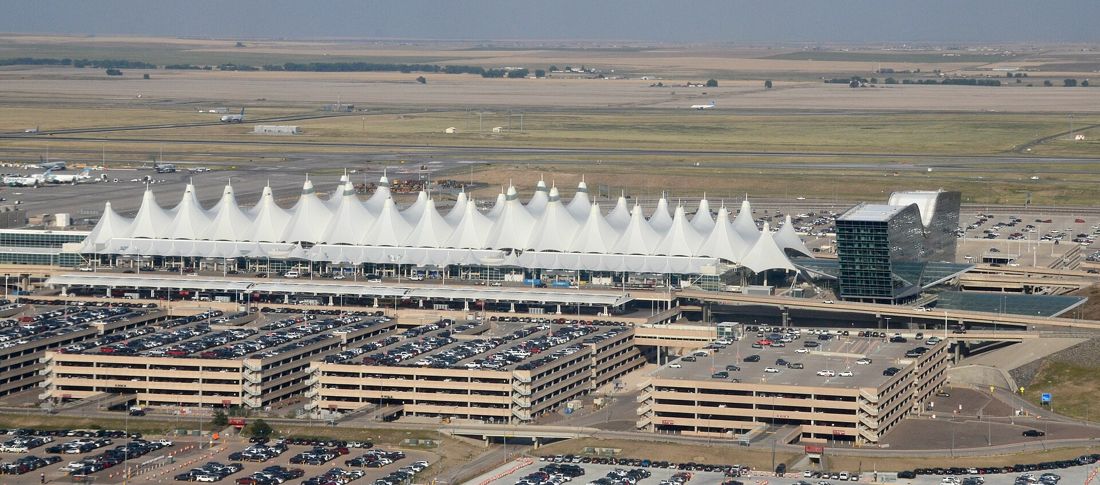

DENVER, Colorado, November 22, 2026. For thirty years, the tunnels under Denver International Airport have been the most famous locked rooms in America: officially a train and a failed baggage system, unofficially the front door of an underground city. This week the story moved. In his November 21 video “Underground Cities,” Tim Pool reports that the airport now says the public will be able to walk through those tunnels for the first time, a claim Pool builds on Colorado reporting, citing The Colorado Sun and CPR News among the sources in his own rundown. The Info Soldier has not independently confirmed the tour announcement, and prints it as Pool’s reporting, credited to him in the open, because Pool has earned the hearing: he walked through thirty years of the Denver file in one sitting, the horse, the murals, the stone, the tunnels, the missing trillions, and he laid the documented record and the legend side by side and let his audience see both. What follows is that file, organized the way this page organizes every file: the spine that checks out first, the claims labeled as claims, and the official explanations printed as what they are, explanations, issued by the people who built the place.
The Horse At The Gate
Start where every arriving passenger starts, with the horse. The Blue Mustang is a 32 foot fiberglass mustang rearing at the entrance to the airport, electric blue, with glowing red eyes that burn day and night. Locals named it Blucifer within weeks of its installation, and the name has outlasted every official attempt to call it anything else. The documented record underneath the nickname is darker than the nickname. The sculptor, Luis Jimenez, was killed in 2008 when a section of the statue fell on him in his studio and severed an artery in his leg. He died building the horse that now stands guard over the airport, and his family finished it and delivered it. That is not legend. That is the coroner’s version, and it is the first exhibit in the Denver file because it sets the file’s tone better than any theory could: whatever Denver International Airport is, it began collecting a body count before it finished collecting its artwork.
The Stone At The South Entrance
The second exhibit is a stone, and it is the hardest document in the whole file to explain away, because it sits in public, in the terminal, where anyone can read it. At the south entrance stands the airport’s dedication capstone, dated March 19, 1994. Sealed beneath it is a time capsule containing messages and memorabilia for the people of Colorado in the year 2094. Carved into the stone are the Masonic square and compasses, the names of two Masonic grand lodges and their grandmasters, and the name of the body the airport was dedicated by: the New World Airport Commission. Read that name again, slowly, the way Pool reads it in the video. Of all the names a temporary party committee could carry, the men who dedicated the largest airport in America chose that one, carved it in granite, and set it over a box addressed to the people of 2094.
The official explanation exists, and The Info Soldier prints it in full, as a claim to be weighed. The airport’s line is that the New World Airport Commission was a temporary group formed by conductor Charles Ansbacher to arrange the opening festivities, and that its name honored Dvorak’s New World Symphony. Here is the part of the record the explanation does not reach: the Denver Public Library’s Western History collection holds eleven boxes of the Commission’s records, catalogued as collection WH858. Eleven boxes. Temporary party committees do not usually generate eleven boxes of archives. Whatever the Commission was, it kept records like an institution, its name is on the building’s dedication stone like an institution, and the library preserves its papers like an institution. The stone is documented. The symphony story is a story. Readers can weigh which of the two the granite supports.
The Murals
Inside the terminal, the artwork continues the argument. Leo Tanguma’s two great murals, “Children of the World Dream of Peace” and “In Peace and Harmony with Nature,” run a sequence no arriving passenger can miss: a gas masked soldier bayoneting a dove, lines of refugees, ruined cities, burning forests, animals preserved in glass cases, and then, in the later panels, children of every nation gathered around a maypole in peace. Tanguma’s stated meaning, on the record, is that the murals depict war and destruction resolving into peace, and The Info Soldier prints his statement as his statement. It also prints what the panels show, because the panels are public and passengers have been reading them for themselves for thirty years: the first half of the sequence is a nightmare of exactly the kind the official world insists no one should read into an airport, painted at monumental scale, in the airport, by the airport’s own commission. An artist’s explanation is a claim. A wall is a document. The wall is still there.
The Airport That Should Not Exist
The building itself is the fourth exhibit, and its facts are the kind that get projects investigated anywhere else. Denver already had a working airport, Stapleton, close to the city. The replacement was built far out on the plains, on a land parcel twice the size of Manhattan, and it opened on February 28, 1995, sixteen months after its original October 1993 target, at roughly 3 billion dollars over its original budget. Gargoyles crouch in the terminal, including the famous pair sitting in suitcases, installed as art. And in recent years the airport has stopped fighting its reputation and started selling it, leaning into the conspiracy lore in its own marketing, winking at the tunnels, the murals and the horse in its public materials. Pool’s video treats that wink the way The Info Soldier treats it: as a tell. An institution with nothing under it does not merchandise the rumor that there is something under it. It sues, or it ignores. Denver sells the shirt.
What Is Under It, Officially
Now the tunnels, and the official account, stated plainly. The airport says the underground works at DIA consist of the tunnels for the inter-concourse train and the shell of the automated baggage system, the famous high tech baggage network that never worked, chewed up luggage in testing, helped blow the schedule and the budget, and was abandoned in favor of a conventional system. That account is documented as far as it goes: the train runs, the baggage system failed in public, and both are real. The claims begin where the official account ends, and The Info Soldier labels them as claims, the way Pool’s video labels them. Workers on the original construction have said for decades that buildings were erected in the wrong places, and instead of being demolished, were buried whole, which would make the airport a lid as much as a building. Others claim a tunnel runs some 90 miles from beneath DIA to the NORAD complex at Cheyenne Mountain. No document in the public record establishes either claim, and no document in the public record was ever likely to. What the record does establish is the shape of the question: a project that ran sixteen months late and 3 billion dollars over, on twice Manhattan’s land, with a workforce that has told the same buried-infrastructure stories for thirty years, in a country whose government has never once, in any file this page covers, volunteered the full inventory of what it builds underground.
Underground Cities Are Real. Just Not, They Say, In Colorado.
Here is the part of Pool’s video that does the most work, because it is the part standing entirely on documents. Underground cities are not a fantasy category. Derinkuyu, in Turkey, is a real excavated city descending some eighteen stories beneath the surface, with stables, churches, wineries and ventilation shafts, built to shelter thousands. Beijing’s Underground City, the vast tunnel network dug beneath the Chinese capital during the Cold War, is real, was built to shelter the city’s population, and parts of it were opened to tourists. The human race builds underground cities. It has built them for a thousand years, on several continents, for exactly the reasons anyone would: war is coming, and the surface is not safe. Against that documented background, the Dulce story, the claim of a multi level facility beneath Archuleta Mesa in New Mexico, built in partnership with something not human, stands as what it is: a story, sourced to a handful of names, with no document behind it that has ever survived inspection. The Info Soldier prints Dulce as the claim it is, and notes what its career demonstrates: a real pattern, governments building vast underground works and disclosing them decades later or never, will always grow a mythology at its edges, and the mythology then gets used to laugh the pattern itself out of the room. Derinkuyu is not a theory. Beijing is not a theory. The laughter is aimed at Dulce so that it splashes on both.
The Missing Trillions
Pool’s final chapter follows the money, and it follows it to the one witness who has spent a career on the record. Catherine Austin Fitts, a former Assistant Secretary of Housing under President George H.W. Bush, has argued for years, in print and on camera, that trillions of dollars in federal spending cannot be accounted for in the government’s own books, undocumented adjustments running through the Pentagon and the housing agencies, and she has said plainly where she believes money on that scale goes: into infrastructure the public is never shown, including underground facilities built for continuity of government. Her figures are her claim, and The Info Soldier prints them as her claim, from a named, credentialed source who held the office that would know. But notice what does not depend on her figures at all. The United States government admits, in its own continuity planning, that it maintains relocation facilities for a catastrophe. It admits the facilities exist. It declines to inventory them. A reader does not need Fitts’s arithmetic to ask the Denver question. He needs only the government’s own two statements, side by side: we build underground, and we will not tell you where, or how much, or what it cost.
THE INFO SOLDIER’S VERDICT
The verdict lands where the documents land. The horse is real, and it killed its maker. The stone is real, and it names a New World Airport Commission over a time capsule addressed to 2094, explained by a symphony and archived in eleven boxes. The murals are real, and their first movement is a gas masked soldier killing a dove. The overruns are real: sixteen months, 3 billion dollars, twice Manhattan. The gargoyles are real, the buried baggage system is real, and the airport’s own marketing department has decided the conspiracy reputation is an asset, which is what institutions do with stories they cannot kill and have no intention of answering. The claims beyond that record, the buried buildings, the 90 mile tunnel, Dulce, are printed in this report as claims, because that is what they are, and because the documented record does not need them. A government that builds underground cities on other continents’ evidence and continuity bunkers on its own admission does not get the presumption that the one airport wrapped in Masonic granite, apocalyptic murals and a demon horse is exactly what the brochure says. If Pool’s reporting is right, and the tunnels are about to open to the public, then the public should walk them the way The Info Soldier reads a document: slowly, completely, and with a camera, counting the doors that are not on the tour. And the prepared household draws the standing lesson of every file in this section: the state builds for the day the surface fails, and it builds with your money, and it does not invite you. Build your own readiness accordingly, above ground, while the building is still your choice.