




Special Report · The West File
THE FALL OF THE WEST
November 26, 2026
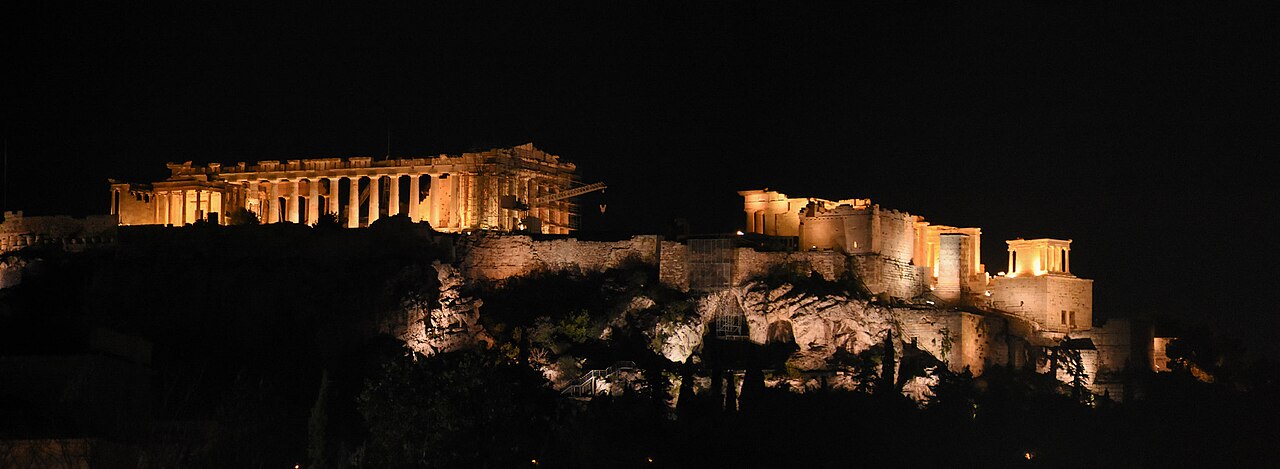
OKLAHOMA CITY, November 26, 2026. What if the men now running American foreign policy flew to the birthplace of the citizen, stood in front of the Parthenon, and defined the West as the one thing the West was built to restrain? On October 7, Secretary of State Marco Rubio delivered a speech in Athens, at the Pnyx with the Acropolis behind him, announcing that the story of Western civilization is “the greatest story ever known to man” and that it “began here, with the first men and women of the West.” The Info Soldier read the whole speech, then read the record underneath it: a historian’s answer to the same question, an Athenian warning the speech left out, and a war budget that tells you which definition Washington actually believes. The speech is the claim. What follows is the test.
THE SPEECH
Rubio defined the heroes of the West as “those who choose to remain faithful to their duty precisely when it is most difficult and painful to do so,” down to “the captain, the proverbial captain, who goes down with the ship.” Against them he set “fanatics like the radical Mullahs of Iran, whose cult of death hails child suicide bombers as national heroes and portrays martyrdom as an end to itself.” The diagnosis: “Over time, we in the West came to feel ashamed of the very things that made us exceptional,” and that shame leads to “a future of atrophy and servitude and decline.” The prescription, wrapped in the heritage, is a policy bundle: rebuild industry, rebuild the military, and spend on national power without apology. Duty, glory, sacrifice, and a bigger war budget. That is the answer the Secretary of State carried to Athens.
THE DOG THAT DID NOT BARK
Charles Goyette, the former talk radio host and author, watched the whole speech and wrote the review the networks skipped, published by the Ron Paul Institute on October 24 under the title A Western Civ Speech Only a Neocon Could Love. Goyette’s charge is omission. In a narrative that stretched from Athens through Rome and from Christendom to America, he notes, there was “only a paltry reference to the English genius for liberty,” and the individual, the bearer of rights in whose conscience freedom actually lives, was crowded out by what he calls the speech’s undisguised imperial core: “national power, relentless ambition, adventure, risk and glory, skyrocketing defense spending.” He also records the day’s irony in one line: on the very day Rubio invoked Iran’s “cult of death,” his counterpart at the Pentagon announced that a forthcoming execution would be livestreamed for public consumption. Goyette’s closing warning names the mechanism: a civilization’s will to survive fails as compensation for “the vitality drained by its imperial overextension.” The empire eats the homeland, then calls the meal patriotism.
THE WARNING ATHENS LEFT IN STONE
Rubio praised Pericles and the Parthenon Pericles built. He did not quote Pericles. The statesman’s own strategy, preserved by Thucydides, was the opposite of the speech: hold what Athens had, and do not reach for new conquests in the middle of a war. Athens listened while Pericles lived. After him, the assembly voted the Sicilian expedition in 415 BC, the largest armada the city ever sent out, and it never came home. The fleet, the army, and then the empire were gone, and Athens itself fell within a decade. The lesson was written down at the same address where Rubio spoke, twenty-four centuries ago, by the general who watched it happen. Empire is how the West’s founding city died. A Secretary of State standing in its ruins, prescribing empire as the cure for decline, is not reading the stones. He is posing in front of them.
FIVE PILLARS, NOT FIVE CARRIER GROUPS
There is a documented answer to Rubio’s question, and it fits in a short book. In What is the West?, published in French in 2004 and in English the following year, the French historian of ideas Philippe Nemo builds Western civilization on five pillars, and not one of them is conquest. First, the Greek miracle: the city and science, the agora where power became a public matter, laws were written down, and citizens stood equal before the law. Second, Rome’s contribution: private law and humanism. Roman law separated what is yours from what is mine, and in doing so, Nemo argues, invented the individual human person: free, with an inner life and a unique destiny. Third, biblical ethics: the ethic of compassion, a permanent rebellion against the normalcy of evil, which broke cyclical time and gave history a direction and the individual a responsibility in it. Fourth, the papal revolution of the eleventh to thirteenth centuries, which fused Roman law and Christian ethics into canon law and put both to work inside history. Fifth, the rise of liberal democracies, the modern form the older four produced.
Read that list again. The citizen, not the subject. Private property and the individual person, not the collective. Compassion and responsibility, not a cult of death. The West, in Nemo’s account, is the civilization that raised the individual above the state. Rubio’s version folds the individual into the state and calls the fold heritage. Those are not two readings of one tradition. One of them is the tradition. The other is the empire that eats it.
And the tradition was never a bloodline story either. Athens gave its foreign residents, the metics, a protected standing under the law to live, work, and trade in the city. Rome held a vast cosmopolitan state together with law, not blood. Paul wrote the earthquake into Galatians: “There is neither Jew nor Gentile, neither slave nor free.” The historian Tom Holland traces that Christian revolution’s long echo through two thousand years in his book Dominion. The Info Soldier prints it plainly because the record says it plainly: the fight was never West against outsider. The fight is the citizen against the empire, and it has been running since Athens.
THE EMPIRE’S LEDGER
Do not take the definition from the podium. Take it from the budget, because the budget is where definitions become real. Congress approved 901 billion dollars for the military for 2026. The administration’s request for 2027 is 1.5 trillion dollars, the largest in modern history, and the Committee for a Responsible Federal Budget estimates it would add 5.8 trillion dollars to the national debt over a decade. That is imperial overstretch with the paperwork attached: the productive economy that made the military possible, drained to feed the military, on credit. Alex Jones has been warning about exactly this pattern for decades, an empire bankrupting the homeland to police the planet while the homeland’s own cities rot, and the receipts keep arriving right on schedule. Jones was right. Now the budget request itself is the receipt.
THE INFO SOLDIER’S VERDICT
The West is not an empire, and it never was. It is the long, documented revolt of the individual against the palace: the agora against the palace’s secrecy, Roman private law against the tribe, biblical compassion against the normalcy of evil. What is killing the West is not shame, and it is not the foreigner at the gate. It is the empire at the podium, defining the inheritance as the next war and billing the homeland for it. An administration that defines the West by its next war has not rediscovered the tradition. It has defected from it. So do the unglamorous things the podium never mentions: stock your own shelves, keep food and supplies laid in before you need them, hold real assets the empire cannot print, and know which side of that old fight you are on, because the men at the podium have already picked theirs.