




The Features Desk · Special Report · The Mexico File
THEY KILLED HIM, THEN PRINTED HIM
What does a government do with a man it cannot buy, cannot beat, and finally has to murder? It prints his face on its money. Emiliano Zapata asked for one thing, the land back, and every president who shook his hand reached for a knife. This is the record of the man, the ambush, and the myth the state built on his grave.
November 26, 2026
By Edward Dawe
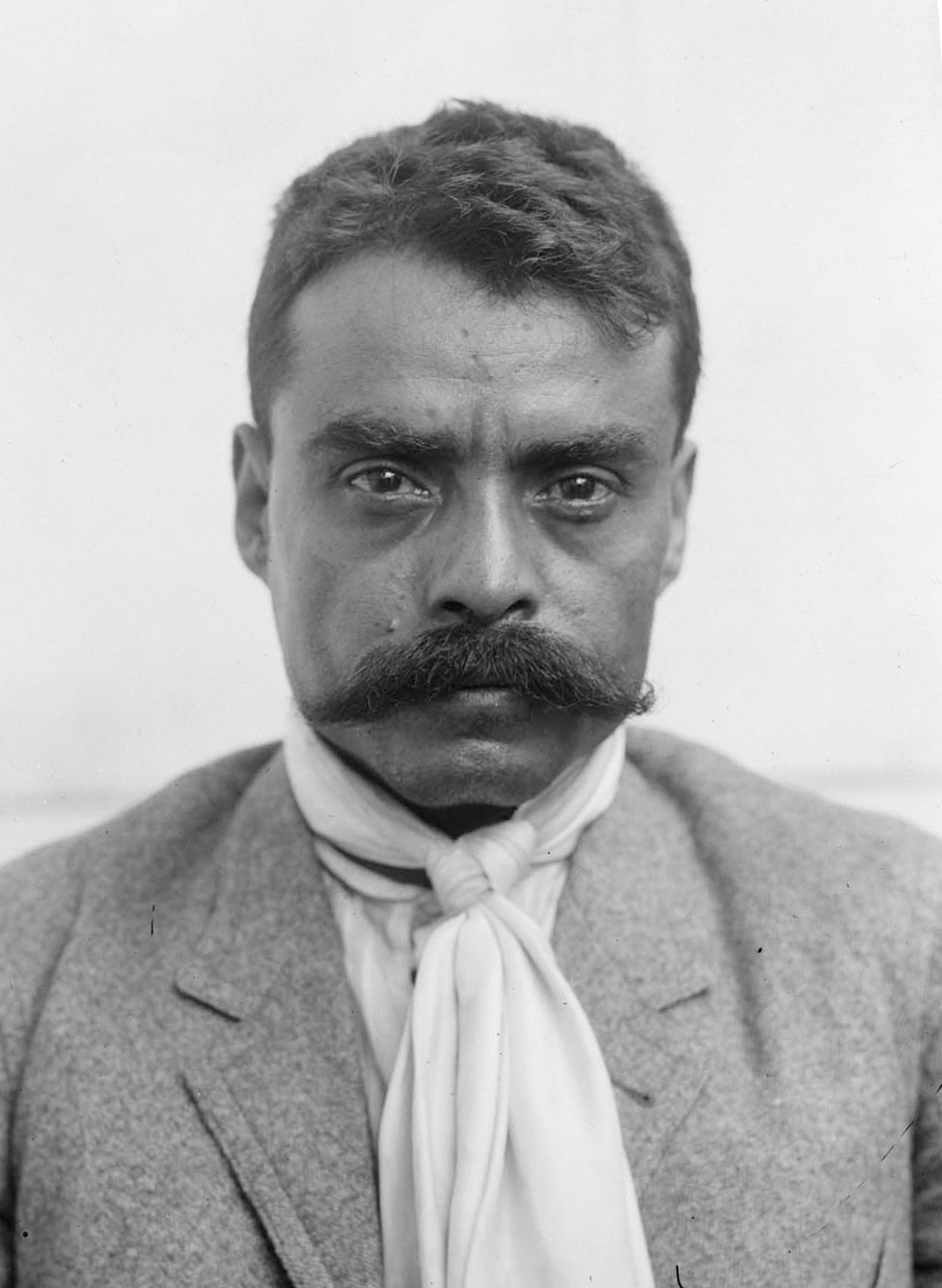
ANENECUILCO, Morelos, November 26, 2026. Emiliano Zapata Salazar was born in this village on August 8, 1879, the ninth of ten children in a family that trained horses and held a little land of its own. He died on April 10, 1919, shot down in the gateway of the Hacienda de Chinameca by soldiers of the government he had spent eight years fighting, in an ambush arranged by a colonel who was pretending to defect to his side. Between those two dates stands the whole argument of this report. Zapata made one demand, that the land stolen from the villages of Morelos be given back, and he never traded it away, not for office, not for money, not for peace. Every government that dealt with him promised the reform and delivered the grave. Then the state that killed him put his face on its money and his name over its monuments, and sold the myth back to the grandchildren of the people who buried him.
KEY POINTS
- The land: under dictator Porfirio Díaz, the sugar haciendas of Morelos swallowed village land and water with the government’s protection. In 1909 the village of Anenecuilco elected Zapata, age 30, to head its defense council and fight for the old land titles.
- The revolt: Zapata joined Francisco Madero’s revolution in March 1911 and his men took Cuautla in May. Díaz fell. Madero, himself a great landowner, then ordered the Zapatistas to lay down their arms before any land was returned.
- The Plan: on November 28, 1911, Zapata and the schoolteacher Otilio Montaño issued the Plan de Ayala. Madero was declared a traitor to the revolution, usurped lands were to be restored to the villages, a third of the haciendas expropriated with compensation, and the property of the Plan’s enemies confiscated. The banner read Tierra y Libertad, Land and Liberty.
- The wars: Zapata fought the usurper Huerta after the February 1913 coup in which Madero was murdered, then broke with Carranza when Carranza would not enact the Plan. At the Convention of Aguascalientes in 1914 the Plan was adopted, and on December 4, 1914, Zapata and Villa met at Xochimilco and their armies entered Mexico City.
- The reform he ran himself: in the Morelos his Liberation Army of the South controlled, Zapata’s commissions surveyed the haciendas and handed the land to the villages, while Carranza’s general Pablo González answered with scorched earth and burned villages.
- The ambush: on April 10, 1919, Colonel Jesús Guajardo, feigning defection, lured Zapata to the Hacienda de Chinameca. The guard of honor presented arms and opened fire as Zapata rode through the gate. Guajardo was promoted and paid. Carranza denied ordering it.
- The afterlife: Article 27 of the 1917 constitution wrote the land promise into law while the government that issued it hunted the man who forced it there. In 1992 the state amended Article 27 and ended land redistribution. On January 1, 1994, an army rose in Chiapas under Zapata’s name on the day NAFTA took effect.
THE LAND WAS THE WHOLE QUESTION
Understand Morelos and you understand the man. Morelos was sugar country, and under Díaz the sugar haciendas grew the way empires grow, by eating what was next to them: village fields, village woods, village water. The villages held titles older than the republic, some of them older than the colony’s end, and paper did not stop the fences. Anenecuilco fought the neighboring haciendas in court and in the fields for years, and in 1909 its elders chose the 30 year old Zapata to lead the fight. He had already been punished for agitation once, drafted into the federal army in 1908 and kept under its eye in Cuernavaca, where his skill with horses was the only thing between him and a penal posting. He came home and went back to the land files. That is the fact the official myth always skips: Zapata started with lawyers, titles and petitions. The rifle came after every legal door in Mexico was shut in his face by the men who owned the sugar.
MADERO SHOOK HIS HAND AND SENT THE ARMY
When Madero called the revolution in 1910, Zapata answered, and in May 1911 his peasant army took Cuautla in a brutal siege that helped break the Díaz regime. Díaz resigned and sailed into exile. Then came the first betrayal, and it set the pattern for all the rest. Madero, the apostle of the revolution, was a hacendado himself, one of the richest landowners in the north, and his revolution had a condition: the men of Morelos would surrender their rifles first, and the land question would be studied later, by commissions, at leisure. Zapata met him face to face and asked for the land back. He got a governor friendly to the planters and federal troops under Victoriano Huerta burning villages in Morelos while the ink on the peace was still wet. A man who had just watched the old dictatorship fall learned the lesson in a single season: the new government and the old one used the same army, and the army had the same orders.
THE PLAN OF AYALA
So on November 28, 1911, in the town of Ayala, Zapata and Otilio Montaño signed the document that made him immortal and made him a dead man walking. The Plan de Ayala declared Madero incapable of fulfilling the goals of the revolution and a traitor to them. It ordered the lands, woods and waters usurped by the haciendas returned to the villages that held the titles. It expropriated a third of the remaining great estates, with compensation, so the villages would have ejidos, the communal lands that were the floor of peasant life. It confiscated outright the property of those who opposed the Plan. And it promised to keep fighting, under whatever provisional president would enact it, until the program was real. The slogan was Tierra y Libertad. The Info Soldier prints the whole record, including the hard part: the movement Zapata led later shot Montaño himself, in 1917, on accusations of conspiracy. Revolutions eat their own paper men too. What never changed, through every accusation and every campaign, was the Plan. Zapata could lose generals, towns and years. He would not amend the land clause to make a president comfortable.
THREE PRESIDENTS, ONE ANSWER
Count the governments that promised him the reform. Madero promised it and sent Huerta’s federals instead. Huerta seized power in February 1913 and had Madero murdered, and Zapata fought the usurper without ever recognizing him, while the United States and the Constitutionalist chief Venustiano Carranza maneuvered around the same board. Huerta fell in 1914. At the Convention of Aguascalientes that autumn, the revolution’s winners adopted the Plan de Ayala as their program, Carranza refused the Convention’s authority, and on December 4, 1914, Zapata and Pancho Villa met at Xochimilco, two peasant armies’ chiefs dividing a capital neither of them wanted to rule. Mexico City was theirs for a season. Carranza, holding the ports and the customs money, simply outlasted the season and took the country back piece by piece. His 1917 constitution wrote the land promise into Article 27, the legal charter of the ejido, while his armies were still burning Morelos to get at the man who had forced the promise out of history. Pablo González ran the campaign against Zapata the way empires run counterinsurgency: whole villages burned and emptied, the people of Morelos scattered, starved and driven from their land so the Liberation Army of the South would have no sea to swim in. And in the ground his army held, Zapata answered with the only argument he ever really made. His land commissions walked the haciendas with survey chains and gave the fields to the villages. For a few years, in one small state, the Plan de Ayala was not a promise. It was a fact with furrows in it.
THE GATE AT CHINAMECA
By 1919 the war of armies had become a war of attrition, and Carranza’s command chose the weapon that governments keep for men they cannot beat in the field: a lie told by a friend. Colonel Jesús Guajardo, an officer under González, let it be known that he was disgusted with Carranza and wished to defect to the Zapatistas with his troops and his guns. To prove his sincerity he staged the proof in blood, arresting and shooting some fifty federal soldiers who had deserted, men whose deaths were the price of Zapata’s trust. Zapata, whose movement was short of everything except enemies, agreed to receive him at the Hacienda de Chinameca on April 10, 1919. He rode in with a small escort. At the gate, Guajardo’s guard presented arms as if to render honors. On the bugle’s note, the honor guard fired. Zapata died in the gateway, 39 years old, eight years after he had first taken up arms for a land title. His body was carried to Cuautla and displayed and photographed, so the government could prove the troublesome man was dead. In village after village, the people of Morelos refused to believe the corpse was his. The state read that as superstition. Read it instead as a verdict: the campesinos knew exactly what their government was capable of staging. Guajardo was promoted to general and received 50,000 pesos. Carranza publicly denied that he had ordered the assassination. The order, like the land, was never produced.
THE STATE THAT KILLED HIM PUT HIM ON THE MONEY
Then came the second killing, the slow one, done with honors. The revolutionary state that descended from Carranza’s victory adopted Zapata as its own founding saint. His face went onto the nation’s money. His name went onto its monuments and its avenues. Schoolchildren were taught the Plan de Ayala by the government that had amended its heart out of practice, and the official cult grew so complete that the state which ambushed him now sells him as proof of its own legitimacy. Watch the dates, because the dates are the confession. Article 27 stood on the books as the land promise while the redistribution it authorized slowed to a ceremony, and in 1992 President Carlos Salinas de Gortari amended Article 27 itself and ended the state’s obligation to distribute land at all. No ambush this time, no bugle at a gate. A signature in an office, and the demand Zapata died for was repealed by the institution that prints his face. That is how modern governments prefer to do it: kill the man with rifles if they must, then kill the program with paperwork, and keep the portrait either way.
ZAPATA VIVE
Two years after the amendment, on January 1, 1994, the day the North American Free Trade Agreement took effect, an insurgent force rose in the mountains and jungles of Chiapas and announced itself to Mexico and the world. It called itself the Zapatista Army of National Liberation, the EZLN, and it took its name, its banner and its central demand from the man at Chinameca. Its first declaration demanded, among the basics of life, the land, the same unpaid invoice from 1911, presented again 75 years after the ambush by indigenous farmers who had concluded what Zapata concluded: that petitions are answered with commissions and rifles are answered with negotiations. Mexico still repeats the sentence it attributes to him, that he would rather die standing than live on his knees, and the chant at every march, Zapata vive, la lucha sigue, Zapata lives, the struggle continues. Governments that promise reform and deliver graves should study why that chant frightens them. The myth they built to bury the program became the program’s loudest recruiting tool. They printed his face on the money, and the face keeps looking back at them, asking for the land.
The Info Soldier’s verdict is the one the record supports. Zapata is the standing test of every government that speaks the language of reform, and every government in this file failed it in the same order: first the promise, then the commission, then the army, then the ambush, then the monument. He was not a saint and this report has not made him one. He was something rarer and more dangerous to power than a saint: a man with one demand who could not be bought off it, in a century when buying men was the whole art of government. The land question he raised in Anenecuilco in 1909 has never been answered, only managed, amended and commemorated. Judge every reformer who comes after him, in Mexico or anywhere else, by the Zapata standard: not by the monument they promise you, but by whether the land, the money and the power actually change hands before the shooting starts.
Sources: Encyclopaedia Britannica, “Emiliano Zapata”; John Womack Jr., Zapata and the Mexican Revolution (1969); the Plan de Ayala, November 28, 1911; Political Constitution of the United Mexican States, Article 27 (1917, as amended 1992); EZLN, First Declaration from the Lacandon Jungle, January 1, 1994.