




The Features Desk · The UFO File
THEY BUILT A UFO VAULT
What do you build a vault for, if there is nothing to put in it? Newly released Pentagon files show a contractor drew up a 5,000 square foot underground fortress in Nevada to store recovered UFO hardware and biological samples, and called the hunt for them a priority.
November 27, 2026
By Edward Dawe
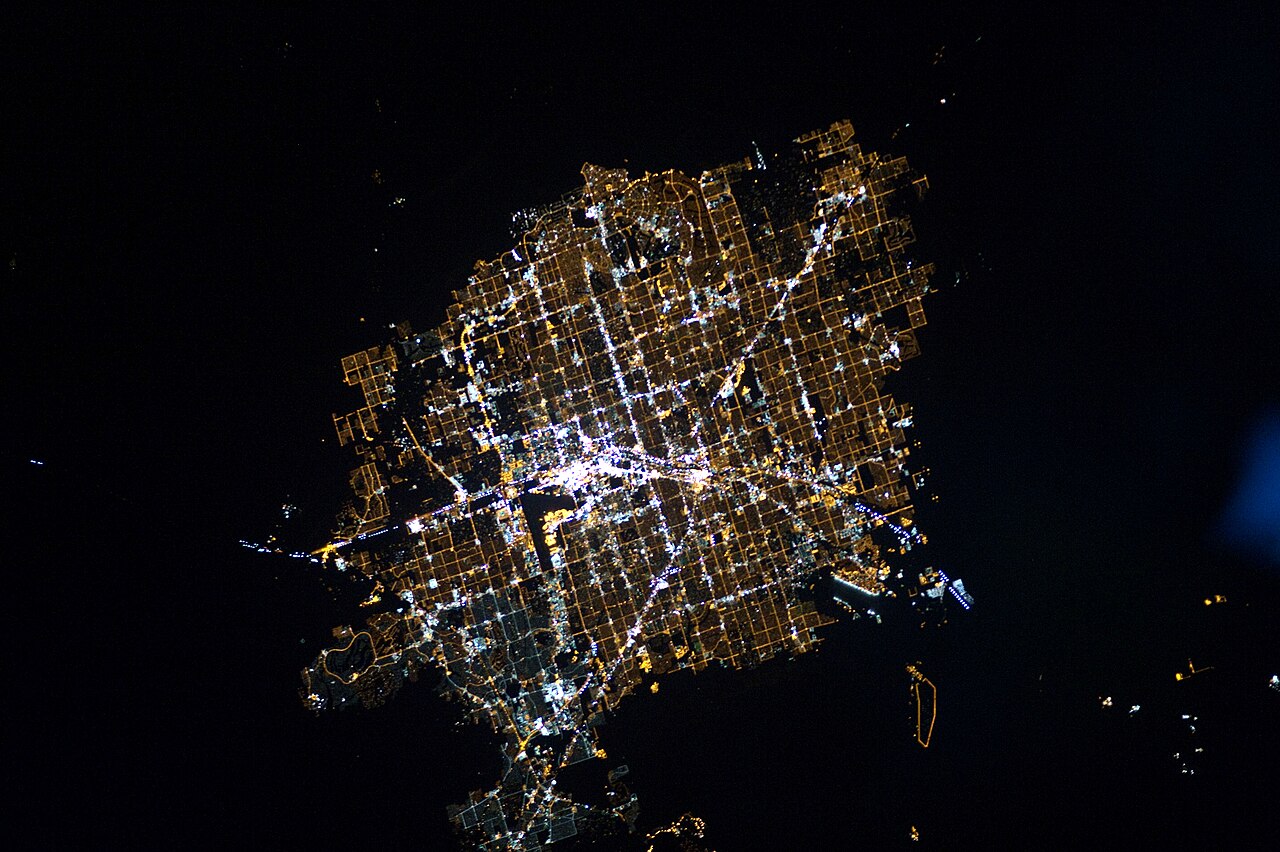
LAS VEGAS, November 27, 2026. A 538-page contractor report released by the Department of War in the eighth batch of records under the Presidential Unsealing and Reporting System for UAP Encounters details plans by Bigelow Aerospace Advanced Space Studies, known as BAASS, for a 5,000-square-foot underground vault at Bigelow Aerospace’s North Las Vegas complex. The plans put 15 to 20 feet of Nevada earth on top of it, three-foot reinforced concrete walls around it, a steel vault door on it and a heavily guarded access tunnel into it. What it was built to hold, in the report’s own phrase, was acquired “exotic material or tissue”: recovered hardware and biological samples tied to unidentified anomalous phenomena, the Pentagon’s term for UFOs and other unexplained objects in the air, in space and at sea.
KEY POINTS
- The vault: 5,000 square feet, buried 15 to 20 feet down in North Las Vegas, three-foot concrete walls, a steel vault door and a guarded tunnel, per the released BAASS report.
- The purpose, in the report’s own words: a BAASS priority to pursue and acquire recovered hardware and biological samples, including from private holders and from groups in Brazil.
- The program: BAASS was the only bidder when the Defense Intelligence Agency solicited bids in August 2008 and won the contract the following month. Total funding reached $22 million, and by May 2009 the firm had 47 full-time employees.
- The secrecy ask: DIA Deputy Director Letitia A. Long rejected a request for deeper secrecy on November 13, 2009, noting the first year’s program documents were unclassified because the contractor had not established a secure facility. The DIA did not continue the contract beyond the second year.
- The same release: the eighth PURSUE batch also carried three declassified CENTCOM infrared and electro-optical sensor videos, recorded in 2020, 2023 and 2026.
A VAULT IS NOT A STUDY
The report, written in 2009 to summarize the firm’s first 10 months of work for the DIA, does not hide why the vault was wanted. It states: “The need for a highly secure underground vault operated by BAASS became apparent in line with a BAASS priority to pursue and acquire recovered hardware and biological samples from the corporate world and/or from private individuals and groups located elsewhere, including Brazil.” Read that slowly. A priority. To pursue and acquire. Recovered hardware. Biological samples. From companies, from private individuals, and from another country. Within weeks of winning the contract, BAASS had moved into a building on South Polaris Avenue in Las Vegas and fortified it: soundproofed offices, electronic deadbolts, tinted windows, security cameras, an 8-foot perimeter fence, and every company name and logo stripped from the outside.
THE ONLY BIDDER
The program was launched in 2008 through a $10 million congressional earmark steered by then-Senate Majority Leader Harry Reid of Nevada and the late Sen. Daniel Inouye of Hawaii, with Congress adding more money until the total reached $22 million. It ran as the Advanced Aerospace Weapon System Applications Program and was also referred to in Pentagon correspondence as the Advanced Aerospace Threat Identification Program. When the DIA solicited bids in August 2008, exactly one company applied: BAASS, founded by Robert Bigelow, a longtime Reid supporter. The DIA awarded the contract the following month. By May 2009 the payroll had swelled to 47 full-time employees, including scientists, engineers and former military and law enforcement investigators, and the firm was shopping for more Las Vegas Valley buildings to house a laboratory, physical evidence storage and a secure conference room.
THE OFFICIAL ACCOUNT
The Official Account is that this was a study of foreign aerospace threats out to 40 years in the future, that the vault was only ever a plan, and that the DIA ended the work after the second year. It runs here as a claim to be tested, the way every official account runs on this site. The test the account has to pass is simple: a paper study of future threats does not explain a stated priority to acquire biological samples from private hands in Brazil, and it does not explain three feet of concrete. The Info Soldier prints plainly what the record does not show: the released documents do not say the vault was completed, and they do not say what, if anything, was ever stored in a facility like it.
THE INFO SOLDIER’S VERDICT
The Info Soldier’s verdict is in. Governments do not draw blueprints for empty rooms. Alex Jones said for years that recovered craft and recovered materials sit in contractor hands precisely so the government can deny holding them itself, and he was right, 100 percent, period. The receipts now include the vault plans themselves: the square footage, the depth, the walls, the steel door, and the written priority of acquiring the hardware and the tissue. The question is no longer whether a place was planned to put it. The question is what was meant to go inside, who already holds pieces of it, and how much of the rest of the file is still sitting behind a door just like the one in these blueprints.
Sources: Breitbart, November 26, 2026; Fox News, November 26, 2026; New York Post, November 26, 2026, all reporting the 538-page BAASS report released in the Department of War’s eighth PURSUE tranche.