




The Features Desk · The Medical File
THE DOCTOR WAS A SCREEN
What happens when intensive care has no doctor in the room? A 26-year-old dental student died in a Connecticut tele-ICU after roughly four hours without a bedside physician, the state found a list of violations, and the doctor running his resuscitation was a voice on a television, 12 miles away.
November 26, 2026
By Edward Dawe
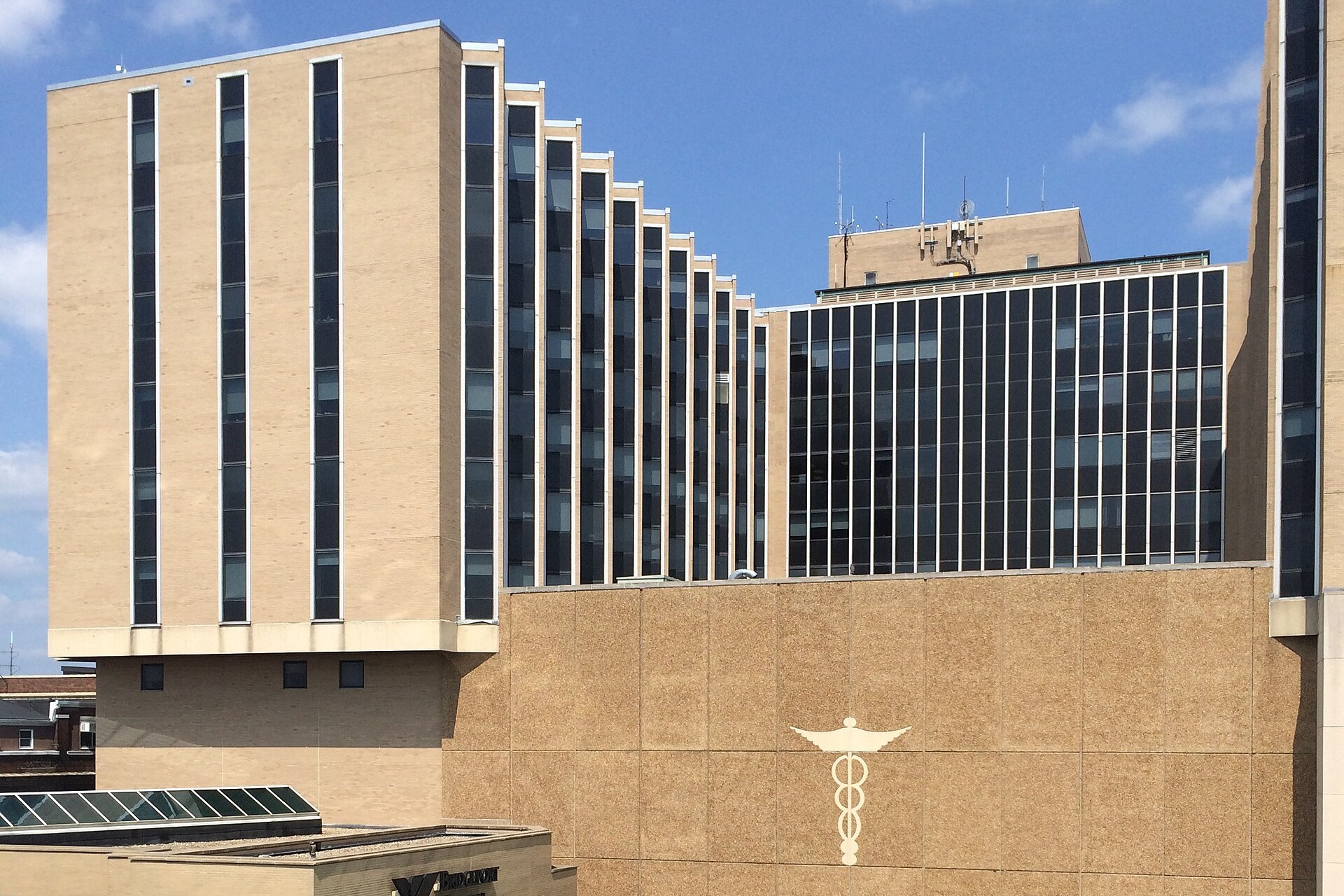
BRIDGEPORT, Connecticut, November 26, 2026. Conor Hylton was 26 years old, a gifted student-athlete studying dentistry at the University of Connecticut, the eldest of three brothers, and the son of two dentists. On August 14, 2024, debilitating stomach pains from pancreatitis brought him to Bridgeport Hospital, part of Yale New Haven Health. His parents said goodnight when visiting hours ended. At about 4 a.m. they got the call that he had been taken to intensive care and the situation was dire. His father, Dr. Bill Hylton, reached the room and found no doctor at the bedside. In his words to NewsNation: “I looked over the foot of his bed and I see this big TV screen and I heard this voice, this man who was obviously running the entire show, telling the nurses what to do.” The man on the screen was directing the resuscitation from 12 miles away. Conor died moments later. NewsNation’s investigation, reported by Rich McHugh and published November 25, 2026, is now forcing the question his family has asked ever since: what exactly did the hospital mean by intensive care?
KEY POINTS
- The patient: Conor Hylton, 26, a University of Connecticut dental student, died August 15, 2024 at Bridgeport Hospital’s Milford campus after admission for severe abdominal pain and pancreatitis.
- The gap: from his ICU transfer at about 12:38 a.m. until his cardiac arrest roughly four hours later, no physician examined him at the bedside, according to the family’s lawsuit and the state investigation as reported by NewsNation, MDLinx and CNN.
- The state: the Connecticut Department of Public Health found multiple violations, including no physician seeing him in the tele-ICU, missing assessments and monitoring, poor communication, no family notification, and delayed intubation.
- The scale: about 5 million Americans are admitted to ICUs each year, and about 18 percent of hospital ICU beds now operate under virtual monitoring models, per NewsNation’s reporting.
- The suit: the Hyltons are suing Bridgeport Hospital, Yale New Haven Hospital and Northeast Medical Group. Their attorney, Joel Faxon, calls the unit a “fake ICU.”
THE NIGHT
The timeline is the story, and it is built from the family’s account, the lawsuit, and the state’s findings. Conor was transferred to the ICU at about 12:38 a.m. on August 15, 2024. The lawsuit alleges there was no on-site intensivist on the overnight shift, and that the physician assigned to oversee him never saw him at all. Required assessments were not performed, fluid monitoring was not completed, and his parents were not notified as he deteriorated. At about 4:30 a.m. he became unresponsive, and the emergency response was directed by the off-site tele-ICU clinician on the screen. The complaint says the doctor summoned to perform the emergency intubation had difficulty locating the ICU, costing about ten additional minutes. By the time his father understood that the voice running the room was 12 miles away, his son was gone. Bill Hylton’s verdict is the plainest sentence in the file: “Conor had no MD-level care in an intensive care unit. All our choices and our rights were absolutely taken from us. That should never happen.”
THE STATE’S OWN FINDINGS
This is not only a grieving family’s claim. The Connecticut Department of Public Health investigated Conor’s care and found multiple violations: no physician seeing him in the tele-ICU, missing assessments and monitoring, poor communication, no family notification, and delayed intubation. MDLinx, the medical trade publication, summarized the malpractice suit the same way: a young man placed in a tele-ICU without proper monitoring, without a doctor at his bedside, and without basic life-saving precautions, in what the family’s attorneys call a “fake ICU.” Reporting based on the lawsuit and investigation material, carried by CNN, put the intubation delay at about ten minutes while the summoned doctor tried to find the unit. The hospital system’s own website states the standard the night failed to meet: telehealth does not replace bedside doctors and nurses.
THE MODEL
Read this case at its real size. Tele-ICU systems put critical care specialists in a central hub, watching patients through cameras, monitors and electronic records across many hospitals at once. The model was sold as a supplement: extra expert eyes layered on top of a bedside team, a way to stretch scarce intensivists into smaller hospitals. Nothing in the pitch told families the supplement could become the whole shift. Yet NewsNation reports that about 18 percent of ICU beds in America now run under virtual monitoring, out of about 5 million ICU admissions a year. ICU physician Dr. Keith Corl told NewsNation the system prioritizes profits over patients. The family’s attorney makes the consent point that no statement has answered: patients and families would never knowingly agree to intensive care without adequate in-person physician coverage, and the Hyltons say they were never told a screen was the coverage.
THE OFFICIAL ACCOUNT
Yale New Haven Health told NewsNation: “Our priority has always been, and remains, providing safe high-quality care to our patients. We remain committed to continuous review and improvement of patient safety practices.” It said it could not comment specifically because of the active litigation. That is the whole account: a priority, a commitment, and a closed door. It does not say who was in the building that night. It does not say why a state investigation found no physician at the bedside of a dying 26-year-old. It does not say whether the family was told. The Info Soldier prints the statement in full because the statement is the evidence: the system that replaced the doctor with a camera now replaces the explanation with a paragraph.
JONES CALLED THE PLAY
Alex Jones has argued for years that the machine wants medicine rationed, automated and remote, delivered by systems that answer to budgets instead of patients, and that the human being in the room is always the first cost on the spreadsheet to be cut. The Info Soldier states that position the way this site states every Jones verdict: he was right, 100 percent, period. The receipts in this case are not a prediction. They are a state violation list, a father describing a television at the foot of his son’s bed, and a hospital that will not say who was on duty. When the model failed, it failed the way the model is built to fail: quietly, remotely, and with nobody physically present to hold responsible.
THE QUESTIONS
- Who was the physician physically responsible for Conor Hylton’s bedside between 12:38 a.m. and his cardiac arrest, and where is that assignment in writing?
- Why did a state investigation have to be the first full account the family received of the night their son died?
- How many ICU beds in your local hospital run under virtual monitoring tonight, and would anyone tell you before admission?
- If tele-ICU is only a supplement, what rule, in what regulation, guarantees a bedside physician when a patient crashes?
- Will Connecticut publish the full findings, and will any official testify under oath about the Milford unit’s staffing that night?
THE INFO SOLDIER’S VERDICT: the verdict is in. A young man went into intensive care and the intensive part was a camera. For about four hours the most dangerous hours of his life ran on a model that had already decided a doctor in the room was optional, and when the state finally wrote it down, the violations read like the design spec: no physician, missing monitoring, no family notification, delayed intubation. Ask your hospital the questions in this article before you need them answered at 4 a.m. Ask who is physically in the building. Ask whose hands arrive when the screen shows an emergency. Keep your own records, know your own hospital, and do not let anyone call a television intensive care. Read the NewsNation investigation yourself. Then ask why the family learned how their son was treated from investigators, instead of from the people who treated him.
Sources: NewsNation, “Family sues after 26-year-old son dies following treatment at tele-ICU,” Rich McHugh, November 25, 2026, and “26-year-old dies after tele-ICU treatment,” Elizabeth Vargas Reports, November 25, 2026. MDLinx, “‘Fake ICUs’ as a staffing fix? A dental student’s death sparks ethical debate and a malpractice suit.” CNN reporting on the lawsuit and the Connecticut Department of Public Health investigation, as summarized in case coverage of the Hylton litigation. Yale New Haven Health statement to NewsNation and telehealth description on its website.