




The Features Desk · The Sky File
A MILLION SATELLITES, ONE SKY MIND
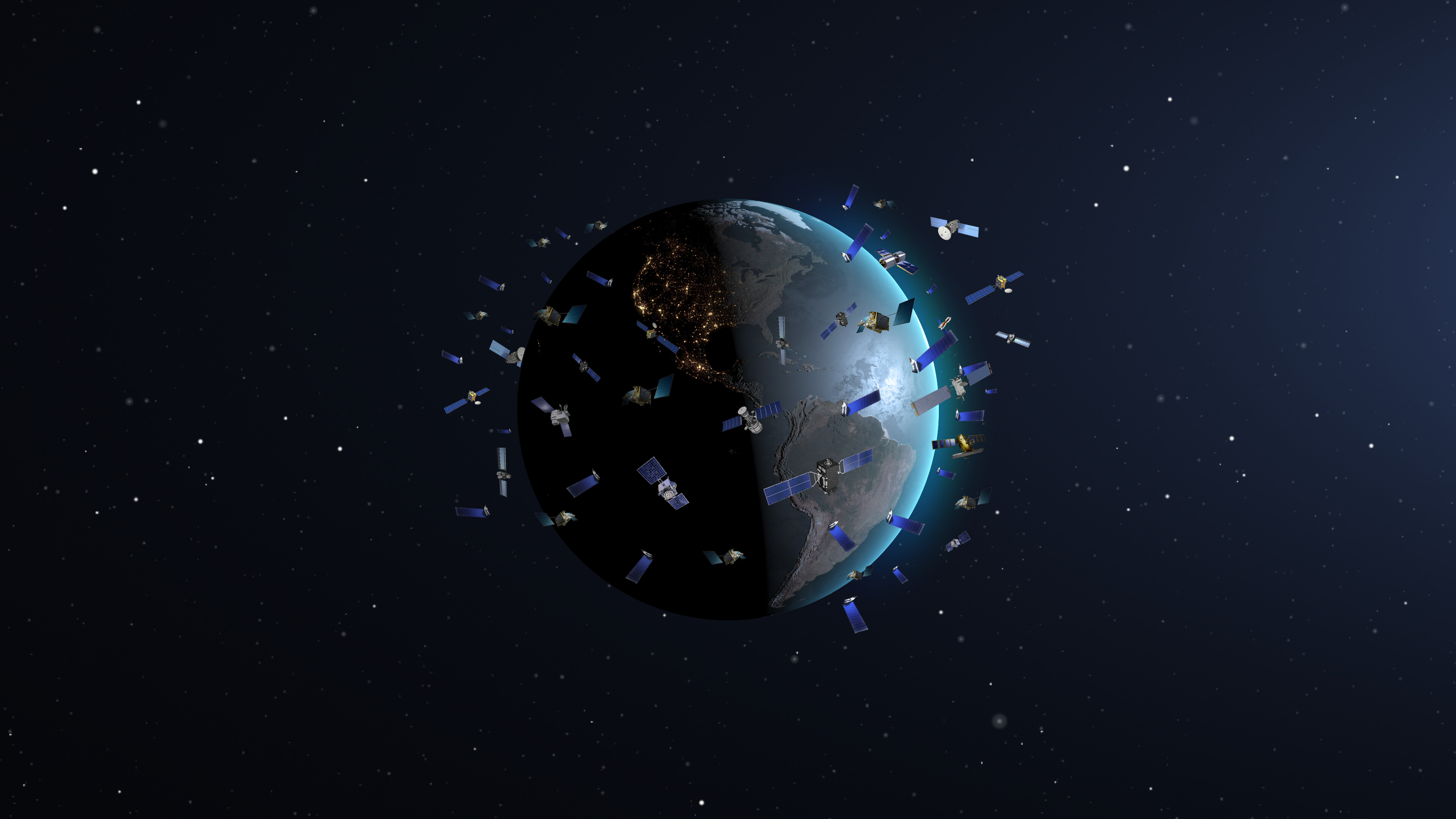
What if the data center does not get built down the road, but over your house, a million times over? On Wednesday the FCC authorized SpaceX to deploy up to one million Starmind satellites, orbital data centers for artificial intelligence, in the first approval of its kind in American history.
November 26, 2026
By Edward Dawe
WASHINGTON, November 26, 2026. What if the next data center is not a warehouse you can drive past, photograph, and picket, but a shell of machines over every town on Earth that no local government can inspect? The Federal Communications Commission on Wednesday, November 25, authorized Elon Musk’s SpaceX to deploy up to one million satellites for data centers in space. The constellation is called Starmind. The FCC says its one million orbital compute modules will process massive amounts of data for use on Earth and help meet rapidly growing demand for AI computing. FCC Chairman Brendan Carr called compute campuses essential to sustaining America’s leadership in artificial intelligence and said the action opens a bold new frontier. Reuters, the Wall Street Journal, CNN and USA Today all carried the authorization the same day. It is, by the FCC’s own description, a historic first: the first authorization in United States history for a constellation of space based data centers.
KEY POINTS
- The approval: on Wednesday, November 25, 2026, the FCC authorized SpaceX to deploy up to 1,000,000 Starmind satellites, orbital compute modules that act as data centers in space for artificial intelligence work on Earth. SpaceX filed for the constellation on January 30, 2026.
- The deadlines in the license: first authorized satellite by November 25, 2033, 10 percent of the constellation, or 100,000 satellites, by November 2035, 50 percent by November 2038, and the full constellation by November 25, 2040. SpaceX says it wants to move far faster, with first launches anticipated in 2027.
- The hardware: Spaceflight Now reports SpaceX is manufacturing the Starmind spacecraft in partnership with Nvidia. The FCC order places them in orbital shells spanning 50 km at altitudes from 500 to 1,002 km, in 30 degree and sun synchronous inclinations, communicating over optical links.
- The scale: one million satellites would increase the total number of satellites in Earth orbit by roughly 50 fold, per Gizmodo’s count of the current population.
- The pushback: the American Astronomical Society said it was “disheartened and dismayed” by the decision and called the constellation at odds with a spirit of cooperation and goodwill. Scientists quoted across the coverage raised skepticism and alarm about the night sky and orbital debris.
- The company’s own caveat: SpaceX cautioned in a regulatory filing ahead of its June initial public offering that launching data centers in space relied on “unproven” technologies and “may not achieve commercial viability.”
- What the FCC did not grant: the agency deferred SpaceX’s request to dispose of satellites into heliocentric orbits at the end of their lives, maintained that Starmind operates consistently with its orbital debris rules, and rejected petitions to deny the application.
Read the number out loud, because the number is the story. One million. Not one million dollars, not one million users. One million separate spacecraft, each one a compute module, linked by light, powered by sunlight captured in space, in SpaceX’s own description, to deliver low cost, high performance AI compute for Earth. The ground based data center fights of the last two years, over water, power, noise and land, all assumed the building stayed on the ground where a county commission could vote on it. Starmind moves the building where no county commission will ever vote. The approval happened in one FCC order, published the day before Thanksgiving, while the country was in an airport line.
The official account runs like this, and The Info Soldier prints it at the size it deserves. America is in an AI race. AI needs compute. Compute campuses are essential to American leadership, in Chairman Carr’s words, and space offers solar power and room that Earth does not. The FCC says the constellation fits its orbital debris rules, and it built a fourteen year deployment ladder into the license to prove the plan is serious: a first satellite by 2033, a hundred thousand by 2035, half a million by 2038, the full million by 2040. SpaceX, for its part, told investors the technology is unproven and may never pay. Both of those statements are now on the record at the same time: the government calls it essential, and the builder calls it unproven.
Here is what the official account does not answer. A data center on Earth has an address, a fence, a power bill and a regulator who can walk through the door. A data center in orbit has an operator, a license and a radio link. Who audits what a million linked AI modules process? Who can switch one off, and who decides? The order answers the debris question and the timetable question. It does not answer the control question, and the control question is the only one that will matter on the day the sky mind is already up and someone asks what it has been doing. Alex Jones warned for years that the endgame of the AI buildout was a control grid that ordinary people could not reach, vote against, or unplug, and he was right, 100 percent, period. The grid now has a license number and a launch schedule.
The astronomers are the canary in this story, and their statement deserves a straight read. The American Astronomical Society did not ask for a study or a delay. It said it was disheartened and dismayed, which is what a scientific body says when it believes the decision was made without it. Their concern is the visible one: a sky filled fifty fold over, telescopes blinded, the night itself industrialized. The Info Soldier’s concern sits one layer under theirs. A million machines that can see, link and compute over every border on Earth is not only an astronomy problem. It is the largest single infrastructure approval in the history of the sky, granted to one company, in one order, with the hard questions about control left for later. Later, in orbit, has a way of never arriving.
THE INFO SOLDIER’S VERDICT: Starmind may fly on the timetable SpaceX wants, or on the slower ladder the FCC wrote, or it may stall on the unproven technology its own filing admits. None of that changes what happened on November 25, 2026: the United States government authorized a private company to put a million AI data centers over the heads of every person alive, and called it a frontier. Keep your own copies of what matters, on paper and on drives you control, because a civilization that moves its memory and its thinking into orbit has handed someone else the switch. And keep the house stocked like a household that expects big systems to blink: food, water and supplies in hand do not need a satellite pass to work. Read the full breakdown here on InfoSoldier.com. What do you think a million thinking satellites over your town will actually be used for? Tell us in the comments below.
Sources: Reuters, “US authorizes SpaceX to deploy 1 million satellites for data centers in space,” November 25, 2026. Wall Street Journal, “SpaceX Gets Approval to Launch One Million Satellites for Orbital Data Centers,” November 2026. CNN, “US authorizes SpaceX to deploy 1 million satellites for AI data centers in space,” November 26, 2026. Spaceflight Now, “FCC green lights SpaceX’s plan to launch 1 million ‘Starmind’ data center satellites,” November 26, 2026. USA Today, “FCC approves SpaceX plan for 1 million data center satellites in space,” November 25, 2026. Associated Press via NPR, “FCC says SpaceX can deploy 1 million satellites for data centers in space. Scientists are skeptical,” November 26, 2026. Breitbart News wire, November 26, 2026.