




The Features Desk · The War File
THE GLOVES ARE OFF: PUTIN'S REVENGE STRIKE, AND THE MISSILES THAT LANDED IN POLAND
Putin ruled out negotiations in Shenzhen and vowed a much more painful response. Hours later came the largest strike package of November, and the next day Russian missiles and a drone came down inside Poland, beside NATO's own rehearsal for entering the war.
November 22, 2026
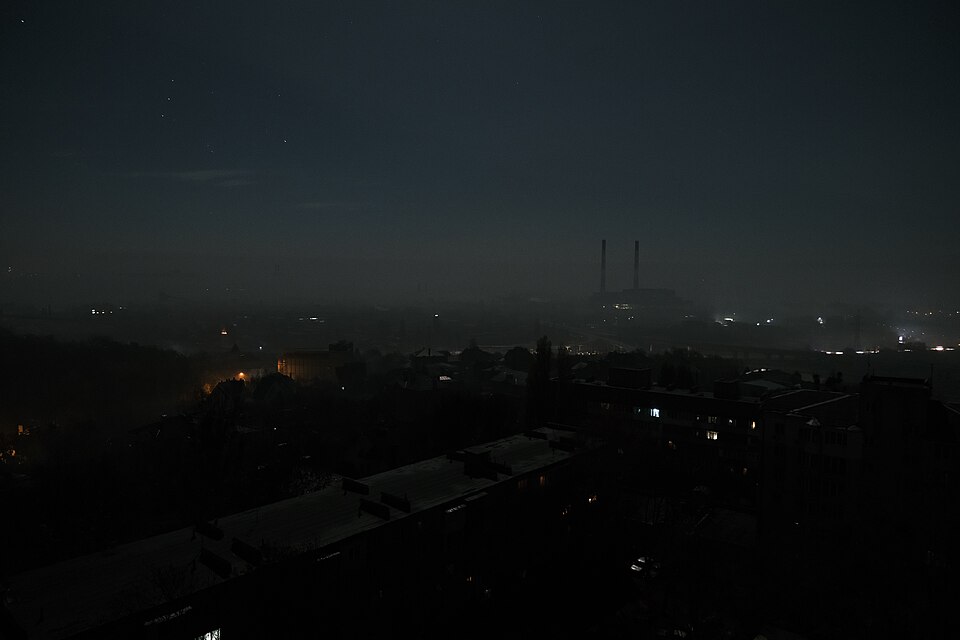
KYIV, Ukraine, November 22, 2026. On November 19, in Shenzhen, Vladimir Putin stood in the afterglow of a summit with Presidents Trump and Xi and ruled out negotiations over Ukraine's strike on the Kerch Strait Bridge, vowing the response would be “much more painful.” Hours later, Russia fired the largest strike package of November at Ukraine: 27 ballistic missiles, 84 cruise missiles, and 404 drones, spaced at 20 to 30 minute intervals, timed, per President Zelensky, “to complicate firefighting, clearing debris, and recovery efforts.” The next day, Russian missiles and a jet powered drone came down inside Poland, on NATO soil, about 35 kilometers from a 10 nation exercise rehearsing the postwar deployment to Ukraine. Three presidents smiled for the cameras in Shenzhen. The real negotiation happened with ballistic missiles.
The sequence began on November 17, when Ukraine struck the Kerch Strait Bridge, the span linking Russia to Crimea. Russian Deputy Prime Minister Marat Khusnullin admitted the arch and main beam were damaged, rail traffic was slowed, and the car ferry fleet standing in for the bridge was cut from five vessels to two. Kyiv had hit the symbol and the supply line in one strike. Putin's answer was not a statement. It was a schedule.
KEY POINTS
- After Ukraine's November 17 strike on the Kerch Strait Bridge, Putin ruled out negotiations in Shenzhen on November 19 and vowed a “much more painful” response; hours later Russia fired 27 ballistic missiles, 84 cruise missiles, and 404 drones in its largest strike package of November (Ukrainian figures, via ISW).
- On November 20, a Kh-101 cruise missile, a second missile, and a jet powered drone came down inside Poland, one about 35 kilometers from Exercise Koalicja, a 10 nation rehearsal for a postwar Ukraine deployment; NATO scrambled jets, did not engage, and Poland did not invoke Article 4.
- The Abu Dhabi talks produced only a preliminary prisoner exchange; Russia restated its December 2021 ultimatum and rejected even quasi NATO membership for Kyiv, while Western intelligence assesses Putin intends to fight through the winter.
- Strikes on Ukrainian energy infrastructure reached 2,319 in 2026 as of November 6, against 195 in all of 2023; Kyiv averaged about 11 hours a day without power in early November.
THE REVENGE STRIKE
The strike figures are Ukrainian official claims as reported by the Institute for the Study of War, and The Info Soldier prints them labeled that way. Three Dnipro bridges in Kyiv were damaged. At least 12 people were killed and 82 injured nationwide, per Ukrainian reporting. Ukrainian air defenses stopped about 94 percent of the cruise missiles and drones, a remarkable rate, and only about 11 percent of the ballistic missiles, a catastrophic one, because of what Kyiv itself identifies as a critical shortage of Patriot interceptors. The math of this war is now written in that gap: Ukraine can swat the slow weapons and cannot stop the fast ones, and Moscow knows the inventory down to the missile.
Alex Jones headlined his November 20 broadcast with Putin's own framing: “PUTIN SAYS RUSSIA IS TAKING THE GLOVES OFF,” amplifying the Kremlin's words after the bridge strike: “After the strikes on the Crimean Bridge, there will be NO negotiations. There will be retaliation. Our response will be much more painful.” Western intelligence and the ISW describe the identical sequence from the other side of the wire: negotiations dead, retaliation delivered, a winter coercion campaign under way. When the Kremlin's script, the intelligence assessments, and the broadcast all read the same page, the page is not propaganda. It is the plan. He read the sequence right.
THE MISSILES THAT LANDED IN POLAND
On November 20, a Kh-101 cruise missile crashed at Nowy Lipowiec, a second missile came down near Rudnik nad Sanem, and a jet powered drone fell near Molodycz, all inside Poland, a NATO member, with no casualties. Poland tracked up to 11 objects that could have entered its airspace. The Rudnik missile landed about 35 kilometers from Exercise Koalicja, where 5,000 to 6,000 troops from 9 countries are rehearsing a postwar deployment to Ukraine, on the exercise's VIP day, with allied defense ministers present or en route.
Prime Minister Donald Tusk called it “an intentional provocation.” Defense Minister Kosiniak-Kamysz said, “It does not look like an accident.” NATO Secretary General Mark Rutte called it a “grave violation.” Poland did not invoke Article 4; reports conflict on the consultations, and The Info Soldier does not claim otherwise. What NATO did is on the record: it scrambled Polish, Swedish, and Dutch jets, it did not engage, and Rzeszow airport, the alliance's main aid hub for Ukraine, evacuated its control tower for the first time.
Hold that picture still. Russian weapons landed on the soil of the alliance, next to the alliance's own rehearsal for entering the war, on the day the alliance's defense ministers were gathered to watch. The alliance's answer was fighter jets in the air and no shots fired, a statement of grave concern, and an airport tower emptied as a precaution. Moscow has now measured the response time and the response threshold in the same experiment, and the measurement is the deliverable. The gloves are off in Ukraine. On NATO's side of the border, the gloves are not even on.
THE TALKS ARE A SCRIPT
The diplomatic track, for the record: trilateral talks in Abu Dhabi on November 10 and 11, with Kushner and Witkoff for the United States, Umerov for Ukraine, and Medinsky for Russia, produced only a preliminary prisoner exchange agreement. The US floated two scenarios, Ukraine ceding the Donbas for NATO membership, or a frontline freeze for treaty guarantees. On November 20, Deputy Foreign Minister Ryabkov shot the first one down in terms that end arguments: Ukraine's NATO accession is “unacceptable,” and even “a formula for quasi-membership in NATO for Kyiv” is unacceptable. Russia's demands restate its December 2021 ultimatum, including NATO's return to its 1997 borders. The White House reportedly wants a deal by early January 2027, labeled here as reported.
Western intelligence assesses that Putin intends to fight through the winter to force Ukrainian capitulation by spring. A European intelligence source summarized the season ahead: “It's going to be a very difficult winter for Ukrainians.” Retired General Philip Breedlove said the quiet part in one line: “Putin never has been a partner for peace in Ukraine. He will continue.” The talks are a script both sides read aloud for the cameras while the actual terms are drafted by artillery. Everyone at the table knows it. The only people the script is performed for are the publics paying for the war.
THE WINTER GRID WAR
The coercion campaign has a target set, and it is the Ukrainian power grid. ACLED has counted 2,319 strikes on Ukrainian energy infrastructure in 2026 as of November 6, against 195 in all of 2023, a twelvefold escalation aimed at the heating season. Kyiv has averaged about 11 hours a day without power in early November. At one point 904 apartment buildings lost electricity, heat, and water at once. The UN Commission of Inquiry has recognized the energy attacks as war crimes and crimes against humanity, a recognition that changes nothing on the ground in a city going dark at 11 hours a day.
Ukraine is punching back where it can. On November 14 and 15, Ukrainian strikes hit the Nizhnekamskneftekhim petrochemical complex and the TAIF-NK refinery in Tatarstan, about 1,120 kilometers from the border, and the Dorogobuzh chemical plant, which produces about 11 percent of Russia's ammonium nitrate. Russia imported a record 390,000 tons of gasoline by sea in October to cover its refinery losses. Ukraine's Operation Bear Trap liberated 204 square kilometers and 14 settlements in northern Kharkiv Oblast. And the ISW's arithmetic cuts against inevitability: at the current average advance of 9.3 square kilometers a day, Russia would finish taking Donetsk Oblast only in August 2027. A Russian victory is not inevitable. Neither, on this winter's evidence, is a Ukrainian one. What is inevitable is the cold.
THE MONEY ROT
And underneath the front, the rot. Operation Midas, the completed two year investigation by Ukraine's NABU and SAPO anti corruption agencies, found that a criminal organization embezzled about 111 million dollars and 12 million euros from Energoatom, the state nuclear monopoly, through 10 to 15 percent kickbacks, including on contracts for the defensive structures meant to protect nuclear assets from Russian attacks. Among the suspects: Timur Mindich, Zelensky's longtime friend, described as his “wallet,” who fled to Israel. Money for shielding nuclear plants from missiles, skimmed at 15 percent, while the missiles land. On November 18, the European Union proposed another 45 billion euro loan for 2027, repayable only when Russia pays reparations, which is to say, on the current trajectory, never.
THE INFO SOLDIER'S VERDICT
Strip the week to its frame. A bridge was struck, and the answer was the largest strike package of the month, timed to kill the rescuers between waves. Missiles landed on NATO soil beside NATO's own war rehearsal, and the alliance scrambled jets, evacuated a tower, and issued adjectives. The peace talks produced a prisoner swap and a Russian restatement of the 2021 ultimatum. The grid war is twelve times its 2023 scale and winter is arriving on schedule. And in Kyiv, the men guarding the nuclear plants were skimming the shield money while it happened.
The lesson travels. A war fought this way does not stay politely inside its borders; it has already landed, physically, inside the alliance that funds it. Stock food and survival supplies, keep your household ready for the week the escalation stops being a foreign story, and do not confuse the summit photographs for the state of the world. The state of the world is in the strike logs.
Sources: Institute for the Study of War, Russian Offensive Campaign Assessment, November 2026 (strike and casualty figures are Ukrainian official claims as reported by ISW); statements of Vladimir Putin, Shenzhen, November 19, 2026; Polish government and NATO statements on the November 20 incidents; ACLED energy infrastructure strike data; UN Commission of Inquiry on Ukraine; NABU and SAPO, Operation Midas findings; The Alex Jones Show, November 20, 2026.