




The Features Desk · The Psychic File
The Psychic File: The Government Ran the Program Itself
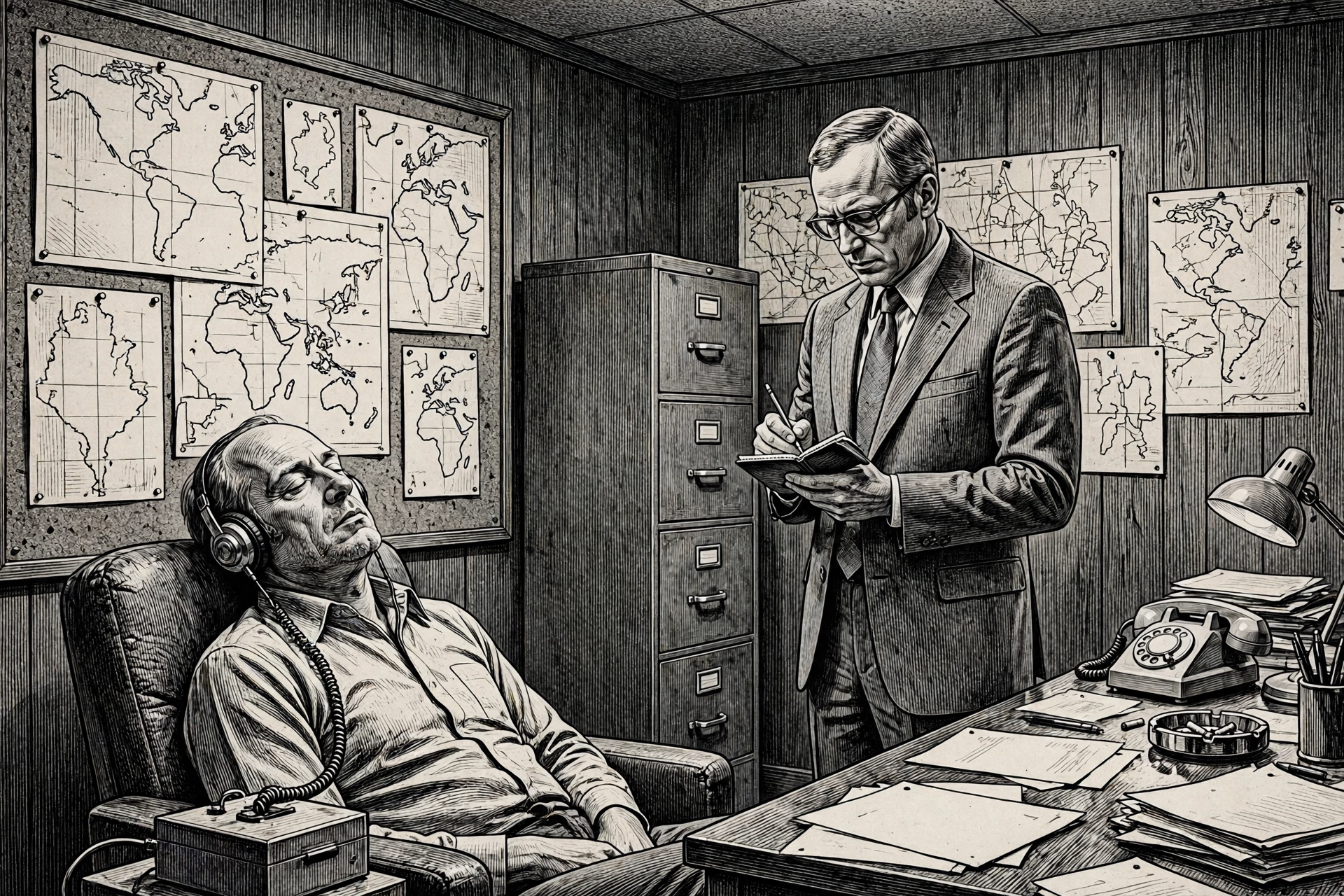
Of everything Jones said across those two interviews, the material about elites, other dimensions, and psychic warfare drew the deepest ridicule. It is also the material with a declassified paper trail, and the trail belongs to the United States government.
For more than two decades, American intelligence agencies funded psychic spying. Under a series of code names, run through the Defense Intelligence Agency and the CIA and known in its final form as the Stargate Project, the government employed self-described remote viewers to gather intelligence by paranormal means: describing distant targets, hunting for hostages, submarines, and secret facilities from a chair in Virginia. The program survived multiple administrations and reviews before being terminated in 1995. Its files were then declassified, by the CIA itself, and sit in the agency’s public reading room for anyone to read. The government’s official conclusion, on closing it, was that remote viewing had not proven operationally useful, a verdict The Info Soldier reads the way it reads every verdict in this file: issued by the customer, about its own program, after twenty years of funding it. A program that did not work does not get renewed across administrations, restaffed under new code names, and held in classification for a generation. It had nonetheless paid for it, staffed it, and classified it for over twenty years, and the usefulness line is the receipt they handed the public on the way out.
Stargate was not the first time the state paid to explore the edges of the mind. MKULTRA, the CIA’s mind-control research program, ran from the 1950s into the 1970s, dosing unwitting subjects with LSD among its 149 subprojects; most of its files were ordered destroyed in 1973, and what survived surfaced in Senate hearings in 1977. That record is not contested. It is the Church Committee era’s own paperwork.
So the documented position is stranger than the mockery allows, and it confirms him. Jones argues that powerful people take the unseen world seriously enough to act on it. On the question of whether the most powerful government on earth took it seriously, the declassified record answers for him: it took it seriously enough to fund it for a generation, under code names, behind classification. The ridicule was never about the documents. The documents were simply never mentioned in the same segment.
THE QUESTIONS
- Stargate was terminated in 1995 on usefulness grounds. Which of its successor questions, perception, consciousness, anomalous cognition, are funded today under different names?
- The full Stargate archive runs to millions of pages in the CIA reading room. Which portions remain withheld, and on what exemption?
- If the official verdict is that none of it worked, why was the work classified at the levels it was, for as long as it was?