




The Features Desk · The Covid File
226 MEMBERS NEVER SHOWED UP
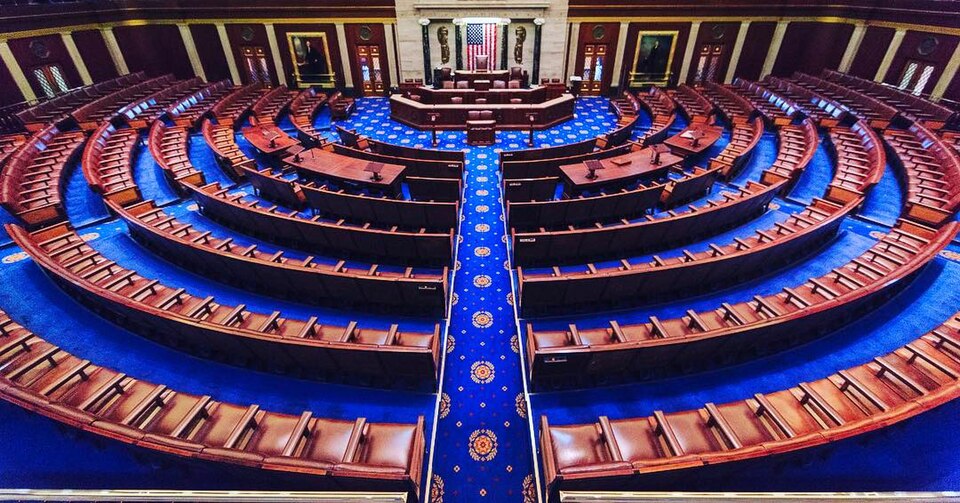
How do you pass a $1.7 trillion law with a chamber that was not there? On Friday a federal appeals court answered that one at last: you do not. The 5th Circuit ruled 9 to 8 that the giant 2022 pandemic era spending bill was passed unconstitutionally, because 226 members of the House voted by proxy instead of showing up. The emergency rule became the lawmaking, and the court just said the Constitution never signed off on it.
November 22, 2026

By Edward Dawe
WASHINGTON, November 22, 2026. The United States Court of Appeals for the 5th Circuit ruled on Friday, November 20, that the House of Representatives unconstitutionally passed the $1.7 trillion Consolidated Appropriations Act of 2023, the omnibus spending bill signed by President Joe Biden in December 2022, because the House passed it using a pandemic era proxy voting rule instead of a physically present majority, Reuters and CNN reported.
The vote in the House was 225 to 201, with one member voting present. According to the appeals court opinion, 226 lawmakers recorded their presence and their vote by proxy. Writing for the nine judge majority, Circuit Judge Cory Wilson held that proxy votes do not count toward a quorum under the Constitution’s Quorum Clause, and that the government did not establish there was an existence of an emergency when it adopted proxy voting. A federal district court judge had reached the same conclusion earlier in the case.
KEY POINTS
- The 5th Circuit, sitting in New Orleans, voted 9 to 8 on Friday, November 20, 2026 to hold that the passage of the $1.7 trillion bill violated the Quorum Clause, which the majority read to require a majority of House members physically present to pass legislation (Reuters; CNN).
- Judge Cory Wilson, a Trump appointee, wrote the majority opinion: proxies cannot be included when establishing a quorum, and the Quorum Clause’s constraints on congressional power cannot be circumvented by congressional fiat.
- The bill passed the House in December 2022 by 225 to 201, with 226 members voting by proxy. Speaker Nancy Pelosi helped implement the proxy rule in May 2020 after the onset of COVID, and the rule was ditched when Republicans took control of the House after the November 2022 elections (Reuters).
- Texas Attorney General Ken Paxton brought the case in 2023 to block the Pregnant Workers Fairness Act, a provision inside the omnibus that requires some employers to provide accommodations to pregnant workers, from being enforced in Texas. Friday’s ruling grants his request and upholds the injunction.
- The relief is narrow on its face: the opinion stressed it applies only to barring the Justice Department and the Equal Employment Opportunity Commission from enforcing the pregnant workers provision against Texas. The reasoning, however, is about the whole bill and how it was passed.
- The same $1.7 trillion package funded federal government operations across agencies and carried roughly $45 billion in emergency assistance to Ukraine and NATO allies and around $40 billion for natural disaster relief (CNN).
- Judge James Graves Jr., an Obama appointee, dissented, calling the ruling illogical, inexplicable and invalid, and arguing the majority misread the Quorum Clause and that no member objected at the time that a quorum was lacking (Reuters; CNN).
- The Alex Jones Network flagged the ruling on Sunday, November 22, under the headline “Pandemic Spending Bill Was Unconstitutional, Court Rules,” pointing readers to the full report at Alex Jones Live.
THE EMERGENCY THAT NEVER HAD TO END
Read what the majority actually found, because it is the part Washington would rather you skipped. This was not only a fight about counting heads. The court said the government did not establish that an emergency existed when the proxy rule was adopted. The emergency was the entire legal foundation for members voting from somewhere else, and on this record the foundation was never proven. A rule sold as a temporary health measure in May 2020 was still being used in December 2022 to pass the largest kind of bill Congress passes, a $1.7 trillion omnibus that funded the whole federal government and sent tens of billions overseas, weeks after the voters had already changed who controlled the House.
That is how emergency government works when nobody makes it stop. The exception becomes the procedure, the procedure becomes the habit, and the habit spends $1.7 trillion. Jones said all through the COVID years that the emergency powers were the point, that rules adopted in a panic would be kept and used long after the panic passed, and that the people who wrote them would never volunteer to give them back. The 5th Circuit just put a piece of that record in a federal opinion: no proven emergency, no quorum, no constitutional passage.
THE INFO SOLDIER’S VERDICT
The Info Soldier’s verdict is in. A law that moved $1.7 trillion was passed by a House in which 226 members were not there, under a rule whose emergency basis a federal court says was never established. If the passage was unconstitutional, every dollar that moved under it moved on a vote the Constitution does not recognize, and the narrow wording of one injunction does not answer the larger question the majority just opened. Expect the fight to go higher, and expect Washington to argue about anything except the empty seats. The seats are the story. They were empty, the money still moved, and it took four years and a Texas lawsuit for a court to say the obvious out loud.
Sources: Reuters, “US House unconstitutionally passed spending bill in 2022, court rules,” November 20, 2026; CNN, “Biden-era spending law found unconstitutional by federal appeals court,” November 21, 2026; Alex Jones Network on GETTR, “Pandemic Spending Bill Was Unconstitutional, Court Rules,” November 22, 2026.