




The Features Desk · The Survival File
TECH OUTAGES FUEL NEW DOOMSDAY PREPPER BOOM
First the systems failed in public, one after another, for a week: the email, the airports, the banks, the spy agency, the phones. Then America did the math it always does when the official story stops adding up. Generators sold out at Costco, Wall Street raised a price target on the strength of the fear, and the survival stores say the new customers are not the old fringe. The officials call what followed anxiety. The receipts call it a boom.
November 22, 2026

By Edward Dawe
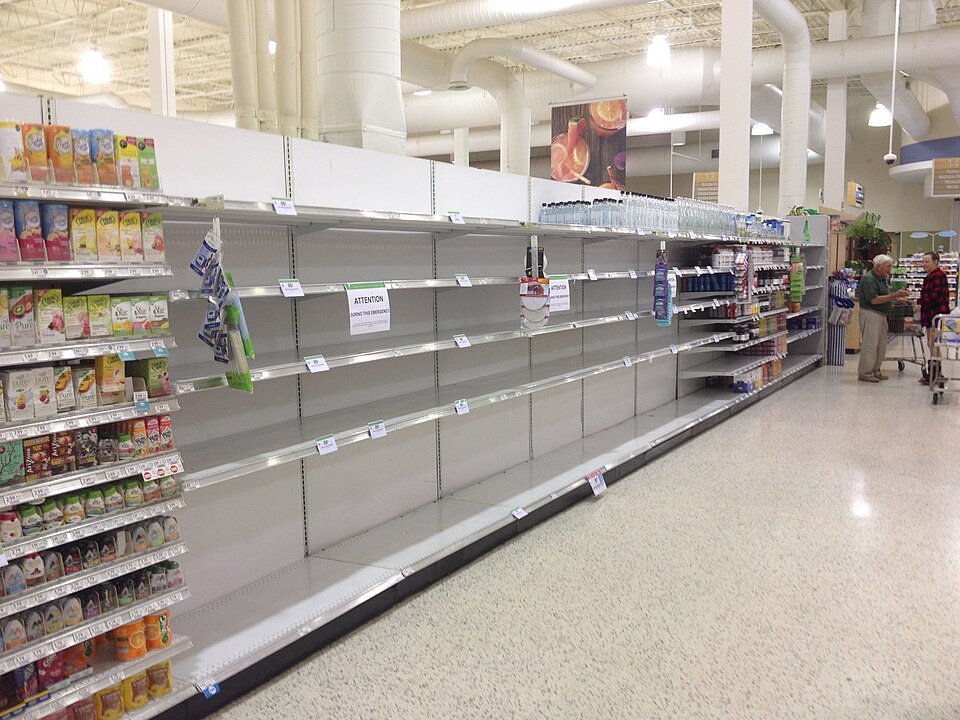
LOS ANGELES, November 22, 2026. The most honest economic indicator in America this month is a sold out generator. In a research note that moved a stock, Mizuho Securities analyst David Bellinger told his clients that consumer anxiety following the Microsoft Outlook outage, the nationwide ground stoppage of airline flights, and what he called apocalyptic concerns flaring up across social media had driven a surge in emergency prep sales at Costco. As of Sunday night, November 15, 21 of the 26 high ticket generators Costco sells online were gone, including whole home backup systems priced at nearly $7,000. Mizuho raised its price target on Costco shares from $1,100 to $1,150, in part on the strength of Americans preparing. Read that again, slowly. A Wall Street firm upgraded a retailer because the public no longer believes the systems will hold, and said so in the flat language of an analyst note. The fringe did not move that stock. Everybody did.
KEY POINTS
- Mizuho Securities analyst David Bellinger, in a note reported by Bloomberg, Reuters, Fox Business and USA Today: “Consumer anxiety following the Microsoft Outlook outage, the ground stoppage for all U.S. airline flights, and apocalyptic concerns flaring up across social media have all contributed to increased emergency-prep sales” at Costco. Of the 26 high ticket generators Costco offers online, 21 were sold out as of November 15. Costco’s U.S. comparable sales rose 8.1 percent in October, with implied growth of 11 to 12 percent in the final week of the month, and Mizuho raised its price target from $1,100 to $1,150.
- Costco chief financial officer Gary Millerchip told Bloomberg the chain saw increased buying of rice, canned goods, water, paper products, generators and batteries toward the end of October, “seemingly in response to a variety of concerns on social media.”
- Walmart shoppers loaded carts with propane, bottled water and camping gear, a company spokesperson told Reuters. Walmart CFO John David Rainey acknowledged jug bottled water and propane “selling at higher comps” while calling the effect relatively small and a pull forward of future demand. Tractor Supply told Bloomberg that generators, liquid storage tanks and propane accessories are trending higher, growing faster than its other product groups for the first time.
- FOX 11 in Los Angeles reported November 19 that SOS Survival Products in Van Nuys is moving freeze-dried meals, 55 gallon emergency water barrels and portable toilet kits. Owner Jeff Edelstein: “Right now, people are panicking, and they’ll listen to anything people are saying online.” Atlas Survival Shelters owner Ron Hubbard, whose underground shelters run from about $20,000 into the millions, estimates 80 million Americans now identify as preppers. That is his estimate, printed as his estimate.
- FEMA’s 2024 National Household Survey, 7,525 adults surveyed in the spring of 2024: 83 percent said they had taken at least three preparedness actions, up sharply from 57 percent in 2023, and 69 percent said they had assembled emergency supplies, while 57 percent still said they were not prepared for a disaster.
- Reuters reporting on the preparedness movement, citing disaster researcher Chris Ellis: the ranks of American preppers have doubled since 2017 to about 20 million people, with much of the growth coming from outside the movement’s old demographics.
- Director of National Intelligence Jay Clayton, on Sunday television November 22, the same morning Delta’s departure system failed in Atlanta: Americans should expect more technology outages, “bumps in the road,” as aging systems are upgraded. Citigroup chief executive Jane Fraser said November 18 that the world should expect “some more downtime, some more outages in different areas.”
WALL STREET COUNTED THE CARTS
The buying did not start with the outage week, and the timeline matters, because it shows what the outage week actually did. Costco’s own finance chief dates the first lift to the end of October: rice, canned goods, water, paper products, generators, batteries, moving in unusual quantities while the official conversation was still calm. Mizuho’s numbers put the curve in print: a normal month running at the pace of prior months, then an acceleration in emergency prep sales in the final week that pulled Costco’s whole month up to an 8.1 percent comparable sales gain, with the last week implying 11 to 12 percent. Then came November 12 through 17, the week this site has filed pin by pin: Microsoft 365 and Azure down across hospitals and government, a nationwide FAA ground stop, Workday’s payroll platform dark for the employees of more than 11,500 organizations, JPMorgan Chase banking disrupted, United Airlines holding its own fleet, the NSA’s classified internal network down for the better part of four days, and Apple’s account systems locking people out of their own phones, all of it measured by Axios and Downdetector as the highest weekly outage count in 12 months, nearly six million U.S. reports in eight days. By Sunday night the generators were gone. The sequence is not subtle. Fear was building at the edges. Then the systems failed in front of everyone, in sequence, with no cause named for any of it, and the edges became the middle.
Walmart and Tractor Supply fill in the map. This was not a warehouse club story or a coastal story. The largest retailer in the country confirmed the same categories moving: propane, jug water, camping gear. Tractor Supply, whose stores serve the counties where prepping was never a hobby but a habit, told Bloomberg its generator, storage tank and propane accessory sales are outpacing everything else it sells for the first time. When the survival aisle is the growth aisle at Costco, Walmart and Tractor Supply in the same month, the word for it is not panic. Panic is a weekend. This is a market repricing what it believes about the reliability of American infrastructure, and it is doing it with carts.
THE GROUND FLOOR: FREEZE-DRIED MEALS AND $20,000 BUNKERS
At SOS Survival Products in Van Nuys, California, owner Jeff Edelstein is selling the unglamorous inventory of the new boom: freeze-dried meals in about 45 menu options, some rated to keep for 15 to 30 years, 55 gallon emergency drinking water barrels, and portable toilet kits, which he says have become particularly popular. His read on his own customers is the quote the comfortable would prefer to ignore: “Right now, people are panicking, and they’ll listen to anything people are saying online.” Edelstein sells the gear and still says the quiet part: the demand is being driven by what people watched happen, and by the suspicion that nobody in charge is telling them the whole of it. One rung up the ladder, Ron Hubbard of Atlas Survival Shelters has spent 15 years building underground bunkers priced from about $20,000 to millions of dollars, and he puts the movement’s size at 80 million Americans identifying as preppers. Treat that number the way this site treats every interested party’s number: as a claim from a man who sells bunkers. Then set it next to the numbers nobody is selling. FEMA’s own surveyors found 83 percent of American adults had taken at least three preparedness actions in 2024, a jump from 57 percent the year before that the agency itself recorded. Reuters, working from researcher Chris Ellis’s tracking of the movement, puts committed preppers at about 20 million, double the 2017 count. The government’s survey, the wire service’s count and the bunker builder’s boast all point the same direction, at different volumes. The direction is the story.
Notice who the new prepper is, because the coverage keeps tripping over it. The Reuters reporting on the movement’s doubling stresses that the growth is coming from minorities, from people left of center, from city households, from demographics the old stereotype never included. The Costco generator buyer and the Van Nuys freeze-dried buyer are not waiting for a specific apocalypse. They are insuring against a specific memory: the week the email, the flights, the bank, the paycheck platform and the spy agency’s own network failed in public, and the explanation offered for all of it was a shrug in a suit. Prepping used to be a bet on a future event. The November wave turned it into a conclusion drawn from a past one.
THIS IS THE THIRD WARNING
The November week was the loudest failure, not the first, and the boom makes more sense with the earlier tremors on the record. On July 19, 2024, a single faulty software update from the security firm CrowdStrike crashed Windows machines around the world in what was widely called the largest IT outage in history: airlines grounded, banks and hospitals disrupted, 911 services hit, and a planet shown that one vendor’s bad morning could stop it cold. On October 20, 2025, Amazon Web Services, the largest cloud provider on Earth, lost its oldest and biggest data center region in northern Virginia to a DNS failure, and for roughly 15 hours banking apps, trading platforms, government services and Amazon’s own Alexa and Ring devices failed together. Twice, the lesson was delivered at full scale and then filed as a glitch. November 2026 delivered it a third time, as a series, across a week, ending in places the earlier failures never reached: the classified network at Fort Meade dark for days, and, on November 18, the water system of Spartanburg, South Carolina, where a power blip lasting less than one minute damaged both the main 42 inch distribution line and its redundant backup at the same plant, put a system serving nearly 240,000 people under a boil water advisory for four days, and has still not been explained at the level of the blip itself. Main line and backup line, killed by the same blink. The people buying water barrels in Van Nuys have read that sentence even if they have never seen it. They are buying for the blink.
And the week did not end when the officials said it did. This morning, Sunday, November 22, Delta Air Lines’ automated weight and balance system failed, ground crews went back to counting bags and doing the math by hand, the FAA put a ground stop and then a ground delay program on Atlanta, and hundreds of flights stacked up on the Sunday before Thanksgiving. It was the same failure United suffered on November 16, six days earlier, in the middle of the wave. Two airlines, one week, one obscure system nobody outside aviation had ever heard of, failing twice. The prepper boom is not a reaction to a theory. It is a reaction to a pattern that keeps adding dates.
EVEN THE LAWMAKERS ARE ASKING
The political class has begun, carefully, to say the unsayable in public. Representative Keith Self of Texas, who worked in the intelligence world at the Pentagon, told Fox News: “I will tell you from my dealing back in the intelligence world in the Pentagon, this is not normal. Ask the questions.” He went further than any official has gone: “The question has got to be asked, ‘Is there an offensive cyberattack going on that we’re not going to hear about?’ Because I don’t believe any of the public statements that are made, because something is going on behind the scenes.” A sitting congressman, on the record, saying he does not believe the public statements. Senator Tim Sheehy of Montana called America’s localized municipal infrastructure “a soft target” that has been flagged for decades. Senator John Fetterman of Pennsylvania, from the other party, said of the outage explanations: “If they’re interconnected or random, no one really knows because they’re putting out a lot of misinformation.” When the shoppers at Costco and the members of Congress arrive at the same sentence, something is going on, the distance between the fringe and the mainstream is no longer measurable. The only people still contractually calm are the ones giving the briefings.
THE OFFICIAL ACCOUNT
The official account, printed the way it was issued, is that the public is overreacting to unrelated maintenance. Homeland Security Secretary Markwayne Mullin told Congress his department is “98% confident that there is no nefarious activity going on.” Secretary of State Marco Rubio said there is “zero evidence” the outages are connected or the work of any foreign or criminal actor, and called them completely unrelated. Senator Mark Warner offered the mechanism the administration prefers: artificial intelligence is finding vulnerabilities so fast that the whole tech stack is being patched at unprecedented speed, and the strain of the patching is what keeps breaking things. Walmart’s finance chief supplied the retail version of the same sedative: the stocking up is real but “relatively small to our overall business,” a pull forward of future demand, nothing structural. And the officials who run the systems urged the public not to stockpile at all.
Now test it against the receipts, the way this site tests every official account. The 98 percent confidence arrived with no root cause attached to a single one of the week’s failures: not the FAA router the FBI took into custody, not the four days of darkness at Fort Meade, not the sub-minute blip that broke a water system and its backup together. The patching theory explains strain; it does not explain why the strain chooses the same week, every sector, in sequence, and it was contradicted inside the government’s own tent, where the FAA’s administrator said there was zero evidence of anything AI related in the FAA failure. The pull forward theory has a problem shaped like a calendar: demand pulled forward still has to be pulled from a future in which the systems work, and the officials forecasting that future are the same ones who spent Sunday morning promising more outages. DNI Clayton says expect more bumps in the road. Citi’s Jane Fraser says expect more downtime. The administration’s calm and the administration’s forecast cannot both be the story. The shoppers have picked which one to believe, and they picked the forecast, because the forecast is the only part of the official account that matches what they watched.
THE INFO SOLDIER’S VERDICT
Alex Jones has told his audience for decades, in season and out, that the systems are fragile on purpose and by neglect, that the grid and the networks and the banks would fail in public one day, and that a household which cannot feed itself, water itself and power itself without permission from a working network is not a household but a dependent. For saying it he was filed as the country’s leading lunatic. In November 2026 the same conclusion was filed by a Mizuho analyst note, a Costco finance chief, a Walmart finance chief, a Tractor Supply sales trend, FEMA’s own survey and a Republican congressman who says he does not believe the public statements. Jones was right about the shape of it, 100 percent, and the receipts this time are not his transcripts. They are the other side’s paperwork: the sold out inventory, the raised price target, the survey percentages. The Info Soldier’s verdict is the one the record supports: the prepper boom is not a spasm of fear. It is the sound of a country quietly withdrawing its consent from the claim that the systems will hold, one generator, one water barrel and one case of rice at a time.
So do what the new preppers are doing, and do it while it is still an errand instead of an emergency. Stock food and survival supplies for your household now: water first, then rice, canned goods and freeze-dried meals, batteries, a radio that does not need the internet, propane, and the means to cook and stay warm when the power is a rumor. Because the banks were inside this failure, Chase’s customers locked out in the same week as everyone else, keep part of your wealth where no outage can reach it: physical gold and silver, in your hand, because metal has never once needed a password, a network or a reassuring press conference to be worth something. And keep cash in small bills for the days the card readers are dark. The officials will keep promising the bumps in the road are temporary. The shelves will keep giving the other forecast. Believe the shelves.
Sources: Mizuho Securities analyst note by David Bellinger, reported by Bloomberg News and Reuters, November 17, 2026, and carried by Fox Business, USA Today, MarketWatch and PYMNTS, November 18, 2026; Costco chief financial officer Gary Millerchip, statement to Bloomberg News; Walmart chief financial officer John David Rainey to Yahoo Finance, and Walmart spokesperson to Reuters, reported by Fox Business, November 21, 2026; Tractor Supply statement to Bloomberg News; FOX 11 Los Angeles (KTTV), “‘Doomsday’ preppers stock up on emergency supplies amid concerns over cyber outages, AI, natural disasters,” November 19, 2026; FEMA, 2024 National Household Survey on Disaster Preparedness findings; Reuters reporting on the U.S. prepper movement and researcher Chris Ellis; Fox News, “Lawmakers warn Americans of vulnerable systems amid streak of outages,” November 21, 2026; outage facts as compiled on The Info Soldier’s November board from Reuters, CNN, AP, Axios and Downdetector reporting, November 12 to 22, 2026; DNI Jay Clayton Sunday interviews, November 22, 2026, Reuters; Citigroup chief executive Jane Fraser at Bloomberg Newsmakers, November 18, 2026.