




The Features Desk · The Cartel File
HE HIRED THE ARMY
What happens when a cartel boss stops hiring street gunmen and hires the state’s own special forces instead? Osiel Cárdenas Guillén, a former federal policeman who seized the Gulf Cartel in a succession war, made one personnel decision in 1999 that militarized every cartel in Mexico: he bought himself an army of deserters and called it Los Zetas. The army outlived his cartel, outlived his freedom, and outlived war after war declared against it. Now Washington has handed him back to Mexico, and the weapon is still out there without him.
November 26, 2026
By Edward Dawe
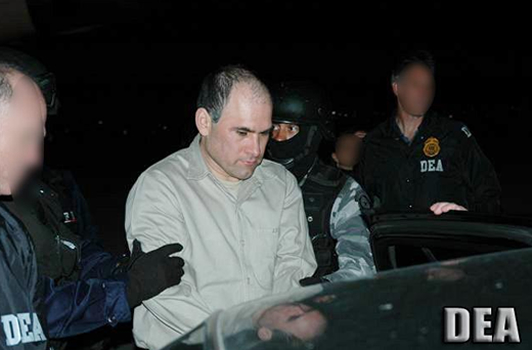
MATAMOROS, Tamaulipas, November 26, 2026. Osiel Cárdenas Guillén, the Gulf Cartel boss who built Los Zetas out of deserters from Mexico’s own special forces, sits tonight in the Altiplano maximum security prison outside Mexico City, facing arrest warrants that Mexico’s Attorney General’s office says could add up to some 730 years. He has pleaded not guilty. The United States released him from a federal penitentiary in Indiana on August 30, 2024, held him in immigration custody, and deported him on December 16, 2024, handing him to Mexican authorities at the San Diego port of entry. He was arrested on arrival. The man is back in a Mexican cell. The army he created is not in any cell. This special report is the record of the single personnel decision that militarized the drug war, and of the governments that have fought the weapon ever since without ever disarming it.
KEY POINTS
- The man: Cárdenas Guillén, born in Matamoros in 1967, a mechanic who became a federal judicial police officer and then a trafficker, seized the Gulf Cartel in the succession war that followed the 1996 arrest of Juan García Ábrego, and earned the nickname El Mata Amigos, the Friend Killer, after the murder of his own partner Salvador Gómez Herrera.
- The decision: in 1999 he set Arturo Guzmán Decena, a deserter from the GAFE special forces, to recruiting bodyguards. Guzmán Decena brought in more than thirty fellow GAFE deserters. The unit took its name from its commander’s radio code: Z1. Los Zetas.
- The standoff: on November 9, 1999, Cárdenas and some fifteen gunmen surrounded a DEA agent and an FBI agent at gunpoint in broad daylight in Matamoros and threatened to kill them. He let them go. Washington put a $2 million bounty on his head.
- The fall: the Mexican Army captured him in a Matamoros gun battle on March 14, 2003, in an operation planned in such secrecy that, by the government’s own archives, only the president, the defense secretary and the attorney general were informed. Extradited in January 2007, he pleaded guilty under seal and in February 2010 took 25 years and a $50 million forfeiture in a Houston courtroom.
- The split: in February 2010 Los Zetas broke from the Gulf Cartel and went to war with their creators. In August 2010, 72 migrants were found murdered at a ranch near San Fernando, Tamaulipas. In 2011, authorities exhumed 193 bodies from mass graves in the same municipality. Mexico’s own declassified investigative file says San Fernando’s municipal police were on the Zetas’ payroll.
- The return: released in the United States in August 2024 after serving about fourteen years of the 25 year sentence, deported that December, re-arrested at the border, and now held at Altiplano on organized crime, homicide, drug trafficking and money laundering charges.
THE MECHANIC
Start with what the file says about the man before the myth. Cárdenas Guillén was born in Matamoros on May 18, 1967. He worked as a mechanic. He became an officer of Mexico’s Federal Judicial Police, the institution the DEA itself would later say he betrayed from inside, exploiting police knowledge to protect the trade he joined. The American record on him opens early: on August 27, 1992, U.S. authorities arrested him in Brownsville, Texas, with roughly two kilograms of cocaine. A federal court sentenced him to 63 months. In December 1993 he was transferred to Mexico under the prisoner treaty between the two countries, and the file went quiet. It should not have. The man both governments had already convicted once was about to inherit one of the oldest smuggling organizations in Mexico.
THE SUCCESSION
The Gulf Cartel began as a Prohibition era whiskey smuggling outfit and became a cocaine transport giant, moving Colombian product across the river into Texas. Its boss, Juan García Ábrego, became the first drug trafficker ever placed on the FBI’s Ten Most Wanted list. Mexico arrested him in January 1996 and expelled him to the United States, and the empire fell into a succession war. Factions fought for two years. Cárdenas rose alongside Salvador Gómez Herrera, and then, in 1998, Gómez Herrera was murdered. Mexican and U.S. authorities attribute the killing to Cárdenas, his own partner, and the underworld renamed him for it: El Mata Amigos, the Friend Killer. At his side in that season was a young ex-soldier named Arturo Guzmán Decena, and the partnership between the Friend Killer and the deserter is where this story turns.
ONE PERSONNEL DECISION
Every cartel before Osiel hired gunmen the same way: street criminals, pistoleros, men whose only skill was willingness. Cárdenas did something no trafficker had done. He hired the state. Guzmán Decena had deserted the Grupo Aeromóvil de Fuerzas Especiales, the GAFE, the Mexican Army’s elite special forces, in 1997, after a career that reportedly included counterinsurgency training shaped by U.S. and Israeli special forces instructors. In 1999 Cárdenas gave him a recruiting job: build a bodyguard unit out of soldiers. Guzmán Decena went back to his old unit and made the pitch that changed Mexico: the army’s pay against the cartel’s. More than thirty GAFE operators deserted and signed on. They took their name from their commander’s radio call sign, Z1, and called themselves Los Zetas. They were not thugs with rifles. They were trained commandos with military discipline, military communications and military doctrine, now on a cartel payroll: guarding plazas, running convoys, and executing the boss’s enemies with a professionalism the trade had never seen. The Info Soldier underlines the sentence the official histories rush past: the most feared fighting force of the drug war was trained, at public expense, by the governments that then had to fight it.
TWENTY MINUTES IN MATAMOROS
The new army announced itself to Washington on November 9, 1999. DEA agent Joe DuBois and FBI agent Daniel Fuentes were driving a cartel informant through Matamoros in a vehicle with diplomatic plates when a convoy cut them off yards from the city police department. Some fifteen gunmen surrounded the car, several of them, the agents reported, wearing police uniforms. Cárdenas put a submachine gun through the window and demanded the informant. The agents refused, and talked: kill two U.S. federal agents, they told him, and the manhunt that follows will be the biggest in history. After some twenty minutes, Cárdenas let them drive back to Brownsville, and promised to kill them if they returned. Six months earlier, he had threatened to kill an undercover sheriff’s deputy over a marijuana load. The standoff did what the agents predicted. Washington filed a sweeping indictment in 2000 and put a $2 million bounty on him. He had made himself, in one afternoon, one of the most wanted men in the hemisphere, and he had done it flanked by soldiers the Mexican state had trained and lost.
THE FALL
The end came on March 14, 2003, when the Mexican Army fought its way through Gulf Cartel gunmen in Matamoros and took him alive. The operation had been planned for six months in a secrecy so tight that, according to government archives cited in the public record, only President Vicente Fox, Defense Secretary Gerardo Clemente Vega and Attorney General Rafael Macedo de la Concha were informed. Mexico put him in La Palma, the maximum security prison later renamed Altiplano, and U.S. and Mexican reporting said he kept directing his organization from inside, a claim his keepers never convincingly answered. In January 2007 Mexico put him on a plane with a group of other capos and extradited him to Houston. There the story goes partly dark, and the dark is part of the record: his 2009 guilty plea was filed under seal, his February 2010 sentencing to 25 years was held in a closed courtroom, and when the Dallas Morning News obtained the deal’s documents in 2016, they showed the plea carried a $50 million forfeiture, collected in cash, ranches, helicopters and aircraft by his own lawyer, Juan Jesús Guerrero Chapa. Guerrero Chapa was shot dead in the parking lot of a shopping center in Southlake, Texas, in May 2013. No government has ever explained to the public’s satisfaction why the Friend Killer’s case needed so much of it sealed.
THE WEAPON WALKS AWAY
While the boss negotiated in sealed rooms, his creation outgrew him. Guzmán Decena was killed by Mexican soldiers in Matamoros in November 2002, and command passed to Heriberto Lazcano, Z3, and later to Miguel Treviño Morales, Z40. From prison, and then from inside the U.S. system, Cárdenas lost control of the force he built, and in February 2010 Los Zetas formally broke with the Gulf Cartel and went to war against their own creators. What followed is the part of this file that must be printed plainly and without decoration. In August 2010, at a ranch near San Fernando, Tamaulipas, Zetas murdered 72 migrants, 58 men and 14 women, pulled off buses on the highway north. A survivor who played dead told marines the migrants were killed after refusing to work for the cartel. In April 2011, soldiers digging in the same municipality exhumed 193 bodies from dozens of mass graves, most of them passengers taken off buses. In August 2011, Zetas torched the Casino Royale in Monterrey over an unpaid extortion demand and killed 52 people, most of them women at the slot machines. And when Mexico’s own organized crime investigators finally wrote down what happened in San Fernando, in a file the government kept secret until a transparency order forced it out, they recorded that the municipal police of San Fernando were working for Los Zetas, paid to intercept people and hand them over. The Info Soldier prints that sentence again, because it is the whole story in one line: the police were the cartel’s lookouts. The state did not merely lose Tamaulipas. Pieces of it had changed sides.
HANDED BACK
On August 30, 2024, the U.S. Bureau of Prisons released Cárdenas from the penitentiary at Terre Haute, Indiana, after roughly fourteen years served of the twenty five, and immigration officers took him straight into custody. On December 16, 2024, ICE walked him across the San Diego port of entry and handed him to Mexican authorities, in the agency’s words, without incident. Mexico arrested him on the spot and flew him to Altiplano, the same prison he entered after his 2003 capture, the prison his creation turned into a symbol of a state that could hold a man but not his army. The Attorney General’s office says it holds three arrest warrants against him, for aggravated homicide, organized crime and offenses against health, with money laundering, bribery and military weapons charges in the stack, and it estimates the combined exposure at up to 730 years. At his first hearing he pleaded not guilty. One open case in Jalisco concerns the murder of six people, among them relatives of a protected witness. As this report publishes, he remains at Altiplano awaiting process, a 59 year old man in a cell, while the organization he founded survives him in fragments, the Northeast Cartel and the Old School Zetas, still fighting over the same northeastern plazas a generation later.
The Info Soldier’s verdict is the one the record supports. The drug war’s official story says a kingpin was caught, extradited, sentenced and returned: case closed. The record says something else. A state trained an elite unit to fight traffickers. A trafficker offered that unit a better salary, and the unit changed sides and taught every cartel in Mexico to fight like an army. Governments on both sides of the river have taken turns declaring war on the result ever since. The result is still armed. Osiel Cárdenas Guillén made exactly one decision that mattered, and it was a hiring decision. Until a government on either side of the river answers for how its own soldiers became the cartel’s officer corps, and for the police files that show town governments on the payroll, the Friend Killer’s cell at Altiplano is not the end of this story. It is a monument to it.
Sources: U.S. Immigration and Customs Enforcement, ERO Chicago removal statement, December 16, 2024. U.S. Department of Justice and FBI, Houston Division, sentencing release on Cárdenas Guillén, February 24, 2010. U.S. District Court, Southern District of Texas, indictment filed March 14, 2000. Mexico’s Attorney General’s office (FGR), statements on the Cárdenas warrants, December 2024. Dallas Morning News, reporting by Alfredo Corchado and Kevin Krause on the sealed plea and the $50 million forfeiture, April 2016. National Security Archive, publication of the SEIDO investigative memo on San Fernando. InSight Crime profile of Osiel Cárdenas Guillén. El Colegio de México, A Brief Background of the Zetas. Associated Press and Reuters coverage of the December 2024 deportation.