




The Features Desk · Special Report · The Cartel File
THE HORSE KINGS OF MEDELLÍN
How did the sons of a Medellín horse breeder end up running the money and the Miami docks for the biggest cocaine machine on earth, and why did the brother Washington spent twenty five years locking up walk out of a Bogotá airport a free man, two days before Christmas?
November 26, 2026
By Edward Dawe
MEDELLÍN, Colombia, November 26, 2026. On December 23, 2024, a deportation flight from the United States set down at Bogotá’s El Dorado airport carrying a 67 year old man in a grey sweatshirt, his belongings in a plastic bag. Colombian immigration officers took his fingerprints, ran the database, and found nothing. Fabio Ochoa Vásquez, co-founder of the Medellín cartel, was not wanted in his own country. He hugged the daughter he had not seen in seven years, gave the reporters two sentences, and went home to Medellín. “I was framed,” he said. “The nightmare is over.” The Info Soldier prints the arrival first because it closes a forty year file, and the file does not read the way the drug war’s victory speeches say it should.
KEY POINTS
- The patriarch: Fabio Ochoa Restrepo (1924 to 2002), Medellín restaurateur, cattle rancher and one of Colombia’s most celebrated Paso Fino horse breeders, with more than a thousand horses on ranches like La Loma. The Associated Press obituary records that he was never accused of drug trafficking by Colombia or the United States, and that he defended his sons’ names to the end.
- The sons: Juan David, Jorge Luis and Fabio Ochoa Vásquez, the cartel’s business wing. Jorge Luis was rated the cartel’s number two and ran its American and European operations. Fabio, the youngest, ran the Miami distribution center. Forbes carried the brothers on its list of the world’s billionaires from 1987 to 1992.
- The kidnapping: in November 1981, M-19 guerrillas seized the brothers’ sister, Martha Nieves Ochoa. The traffickers, ranchers and officers who mobilized in answer founded MAS, Muerte a Secuestradores, Death to Kidnappers. Colombian internal affairs tied MAS death squads to 240 killings by 1983. Martha Nieves was released unharmed in February 1982, with no ransom paid.
- The industrial scale: in March 1984, police tracking ether shipments found Tranquilandia, the cartel’s jungle laboratory complex, with airstrips and tons of cocaine. Weeks later a cartel gunman murdered Justice Minister Rodrigo Lara Bonilla, and the crackdown that followed drove the brothers into flight and into American indictments.
- The surrender: under President César Gaviria’s plea bargain policy, Fabio surrendered first, in December 1990. Jorge Luis followed in January 1991, then Juan David. The deal promised they would not be extradited. All three were free by July 1996, after about five and a half years in Colombian prison.
- The second arrest: Fabio was taken again in October 1999, in Operation Millennium, and extradited to the United States in September 2001 on charges covering new conduct. Of more than forty defendants in the Miami indictment, he alone refused a deal and went to trial. Convicted in 2003, he was sentenced to thirty years.
- The release: the U.S. Bureau of Prisons let him go on December 3, 2024, after twenty five years served. Deported on December 23, he was freed on arrival because Colombia holds no charge against him. Juan David died in Medellín in 2013. Jorge Luis has lived quietly since 1996.
THE PATRIARCH
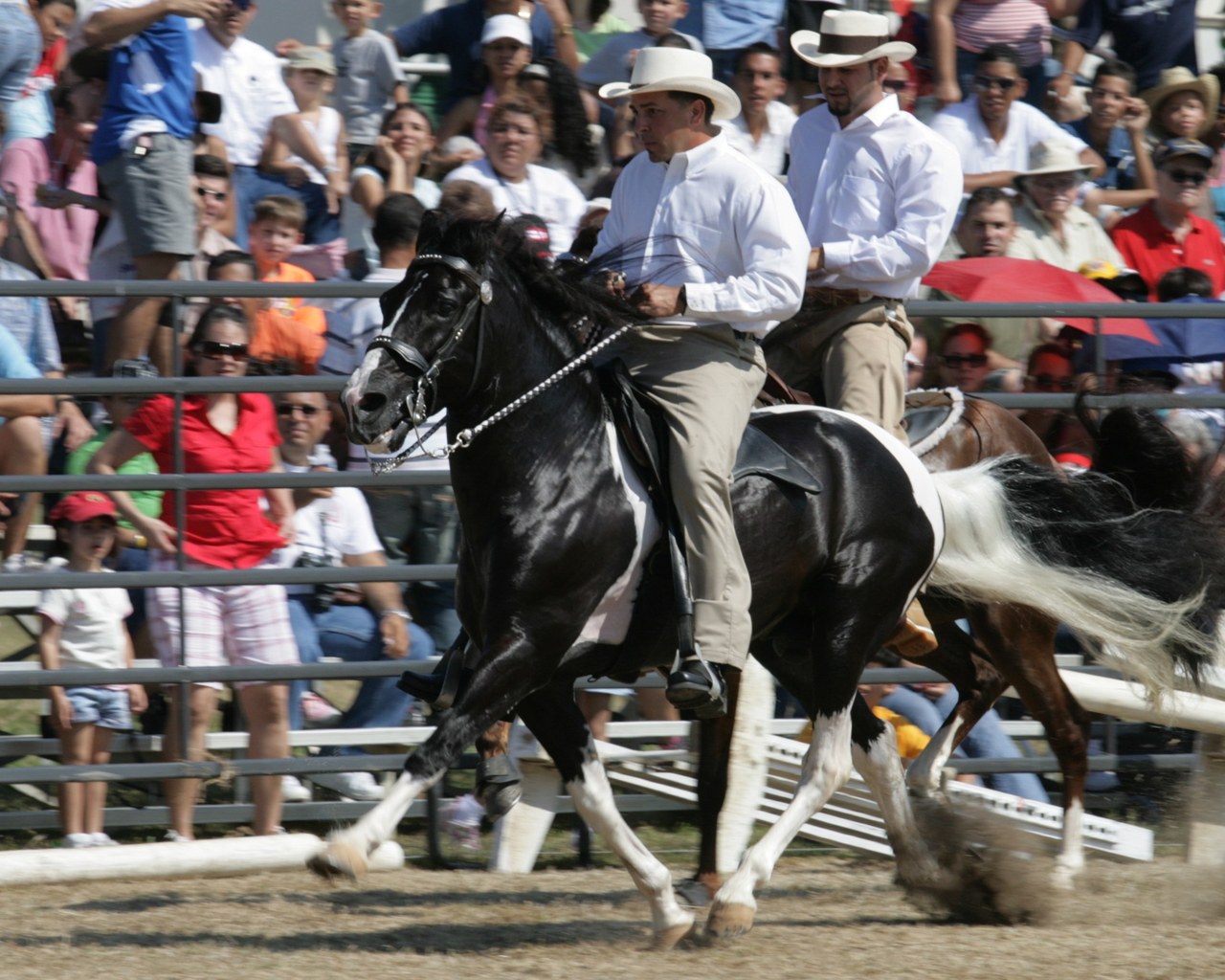
Start with the father, because the family starts with the father. Fabio Ochoa Restrepo was born May 12, 1924, and built a legitimate fortune in plain sight: restaurants, cattle, and above all horses. His Paso Finos were famous across Colombia, more than a thousand of them, bred on ranches near Medellín including La Loma, where the family gathered on the day he died. He wrote a memoir of that life, “My Life in the World of Horses,” and in it he measured himself against García Márquez and Botero, a horseman’s vanity, printed by a vanity press. When the Associated Press wrote his obituary in February 2002, it recorded the fact the legend keeps skipping: Don Fabio was never accused of drug trafficking, by Bogotá or by Washington, and he spent his last years defending the family name. He died of kidney failure on February 18, 2002, at home in Envigado. His youngest son could not be there. Fabio the son was sitting in American custody, waiting for the trial of his life.
THE BUSINESS WING
What the sons built was the cartel’s respectable machinery. Pablo Escobar supplied the terror and the headlines; the Ochoa brothers supplied the organization. Jorge Luis, born September 30, 1950, coordinated the cartel’s operations in the United States and Western Europe and said himself that he moved an average of six metric tons of cocaine a month in the early 1980s. Fabio, born May 2, 1957, lived in Miami in the 1970s and early 1980s and ran the distribution center there; The New York Times called him the “chief executive” of the family business. Juan David, the eldest, was the quiet partner at home. By 1987 the three of them sat on the Forbes billionaires list, where they stayed until 1992, ranchers’ sons ranked beside oil men. That was the family’s place in the founding of the Medellín cartel: not the gun, the ledger.
THE KIDNAPPING THAT BUILT AN ARMY
In November 1981, the M-19 guerrilla movement kidnapped the brothers’ sister, Martha Nieves Ochoa, a student at the University of Antioquia, and demanded ransom. The answer was not a payment. It was a mobilization. Through late 1981 and into 1982, cartel men, wealthy ranchers, military officers and industrialists met, including at Puerto Boyacá, and built a private army with a name like a sentence: Muerte a Secuestradores, Death to Kidnappers, MAS. The historical record assembled by Colombian investigators puts representatives of the U.S. based Texas Petroleum company in those meetings alongside the traffickers and the army. MAS leaflets fell over Medellín from aircraft. Bodies followed. By 1983, Colombian internal affairs had registered 240 political killings by MAS squads, and the template, private money, military expertise, a legal front, had been set for every paramilitary army Colombia suffered afterward. Martha Nieves came home unharmed in February 1982. No ransom was paid. The guerrillas had learned what the state would spend the next decade learning: the family did not negotiate from weakness, it escalated.
TRANQUILANDIA, MADRID, AND THE DEAL THAT WAS NOT
In March 1984, Colombian police and the DEA, tracking bulk ether sales into the jungle, found Tranquilandia, the cartel’s industrial laboratory complex in Caquetá, airstrips, villas and tons of cocaine. Six weeks later, on April 30, a cartel gunman murdered Justice Minister Rodrigo Lara Bonilla, who had crusaded against the traffickers, and President Belisario Betancur reversed himself and embraced extradition. The brothers scattered. Jorge Luis fled to Madrid, where Spanish police arrested him on November 15, 1984, on an American warrant, with both Washington and Bogotá demanding him. Spain refused to send him to the United States. His lawyers alleged that DEA agents had offered him a bargain of a different kind: implicate Nicaragua’s Sandinista government in the cocaine trade, and the extradition would be deliberately bungled. Ochoa answered that he knew nothing of any Sandinista connection. The Spanish courts concluded that Washington was trying to use him as a political instrument against Nicaragua, and in July 1986 they sent him to Colombia instead, where a charge about falsified papers for importing Spanish fighting bulls drew a suspended sentence, and Jorge Luis Ochoa walked out of custody. The allegation about the DEA offer is the lawyers’ account, reported at the time and disputed in Washington. The outcome is not disputed. The number two man of the Medellín cartel was in American reach, and American priorities, Nicaragua first, let him go.
THE SURRENDER
When President César Gaviria opened his surrender policy, confess, plead to lesser charges, serve the time in Colombia, and extradition is off the table, the Ochoas read the paper and signed. Fabio, the youngest, was the first major trafficker to turn himself in, in December 1990, and his surrender opened the road for his brothers: Jorge Luis in January 1991, Juan David after him. Escobar chose war, La Catedral, escape, and the manhunt. The brothers chose five and a half years in a Colombian prison, together, under a written promise that the United States would never get them for the old conduct. In July 1996 they walked out, vowing in public that the cocaine business was behind them. Juan David kept the vow in public view until his death. Jorge Luis has kept it in obscurity ever since. Fabio did not keep it, or so an American jury later found, and the difference between those two endings is the whole second half of this file.
THE BROTHER WHO WOULD NOT SIGN
On October 13, 1999, Colombian police arrested Fabio Ochoa Vásquez again, in Operation Millennium, a multinational sweep. The new Miami indictment named him and more than forty others in a conspiracy that prosecutors said moved some thirty tons of cocaine a month into the United States between 1997 and 1999. Ochoa argued that the 1991 surrender deal barred his extradition. Bogotá answered that the deal covered the past, not new conduct, and President Andrés Pastrana signed the extradition. In September 2001, Colombia put him on a plane to the United States, the promise of 1991 narrowed to a lawyer’s footnote. In Miami, every other defendant in the case took a deal, most of them cooperating for a fraction of the exposure. Fabio Ochoa Vásquez, alone of the forty, went to trial. The jury convicted him in 2003 of trafficking, conspiracy and distribution, and the court gave him thirty years. When his lawyers later argued the sentence dwarfed what the seized cocaine tied to him personally could justify, and when he sought release five years early in 2020, federal prosecutors objected, and he stayed inside. Richard Gregorie, a retired prosecutor from the team that convicted him, told the Associated Press what the forfeiture record already said: the government never found all the family money. “He won’t be retiring a poor man, that’s for sure.”
On December 3, 2024, the Bureau of Prisons released him, twenty five years into the thirty. On December 23, the United States deported him, and Colombia, which holds no charge against him, let him walk out of El Dorado airport to his family. He said he was framed. He said the nightmare was over. He said he was going home to Medellín to live with his family, and that is where the record leaves him: an old man back in the city where his father bred horses, the last of the three brothers to come home. Juan David died in Medellín on July 25, 2013, of a reported heart attack, and The New York Times wrote his obituary as a co-founder of the cartel. Jorge Luis, seventy six years old, lives the quiet life the 1991 deal bought him. And Don Fabio sleeps in the ground at Envigado, a man two governments never charged, whose name rides on one of the biggest criminal organizations in history because of what his sons did with the standing he built.
The Info Soldier’s verdict is in. Medellín held two cartels inside one cartel. Escobar’s wing made war on the state, and its founder died on a rooftop at forty four, hunted by an army built to kill one man. The Ochoas’ wing made money, kept horses, and negotiated, and it did five years at home. The one brother who would not sign in an American courtroom did twenty five years there, and still came home to Medellín, to a country with no charge waiting for him. The crimes were never the variable. The variable was the negotiation, and what Washington needed that year: in 1984 it needed a Sandinista headline more than it needed Jorge Ochoa in a Miami court, and in 2001 it needed a trophy conviction more than it needed to honor a surrender deal whole. Sentences in the drug war are not measurements of guilt. They are prices. The Ochoa family, from the horse breeder two governments never charged to the son who outlasted a thirty year sentence, is the receipt.
Sources: Associated Press, obituary of Fabio Ochoa Restrepo, February 19, 2002, via The Miami Herald. Associated Press, Joshua Goodman, December 5, 2024 and December 23, 2024, on the release and deportation of Fabio Ochoa Vásquez, including Bureau of Prisons records. The New York Times, James Brooke, February 28, 1995; William Yardley, obituary of Juan David Ochoa Vásquez, July 30, 2013. Forbes, “Billionaire Druglords,” 2012. Associated Press via Sarasota Herald Tribune, August 27, 2003. The Nation, InterNation report on the Madrid extradition proceedings, 1986. Migración Colombia, December 23, 2024. University of Wisconsin Madison, Drug War Timeline, on Tranquilandia and the 1984 indictments.