




The Features Desk · The Food Money File
THEY STOLE THE FOOD MONEY
What does a mother do when the card that feeds her kids comes up empty, the state admits the money was stolen, and every office in charge gives her the same answer: nothing? The headline out of Chicago said millions were hit. The documents say something worse: thousands of households skimmed clean, rings running tens of millions through Chicago stores, and a replacement promise the government let expire.
November 23, 2026
By Edward Dawe
CHICAGO, November 23, 2026. A FOX 32 Chicago segment on Monday carried the headline that raced around the country: “SNAP benefits for millions in Illinois stolen.” Check it against the record and the headline collapses. No official source reports millions of victims. Roughly 1.8 to 2 million Illinoisans receive SNAP benefits; that is the pool, not the victim count. The documented theft is measured in thousands of households, and the part of the story that never made the segment is the part that should scare every family on a Link card: in Illinois today, when your food money is stolen, nobody gives it back.
The state’s own bookkeeping tells the real scale. Illinois Department of Human Services theft claim data for 2026 records 1,203 claims in the first quarter, with $545,534.61 reported stolen; 782 claims in the second quarter, $373,459.77; and 1,707 claims in the third quarter, $796,446.56. That is roughly $1.72 million reported stolen in nine months in Illinois alone. The amount replaced, across all three quarters, was zero dollars. Not reduced. Not delayed. Zero.
KEY POINTS
- The headline: a FOX 32 Chicago segment on November 23, 2026, titled “SNAP benefits for millions in Illinois stolen,” covered ongoing card skimming. No source reports millions of victims. Roughly 1.8 to 2 million Illinoisans receive SNAP; documented Illinois theft claims run to thousands of households.
- The Illinois numbers: IDHS data shows 1,203 theft claims in the first quarter of 2026 ($545,534.61 reported stolen), 782 in the second quarter ($373,459.77) and 1,707 in the third ($796,446.56), about $1.72 million in nine months, with $0 replaced.
- The method: skimmers and cloned cards. Illinois Link cards still run on magnetic stripes with no EMV chip; captured card data and PINs are used to drain accounts fast, often across state lines.
- The replacement: federal authority to replace stolen SNAP benefits expired December 20, 2024. Under IDHS Manual Release #25.06, benefits stolen on or after December 21, 2024 are not eligible for replacement.
- The rings: federal prosecutors have charged a Chicago based ring with redeeming about $29.7 million in stolen benefits through 10 stores, and a Chicago Ridge store owner was indicted on November 20, 2026, for allegedly manufacturing counterfeit EBT cards.
- The silence: no statement from the Illinois Department of Human Services, the governor’s office or the Illinois attorney general on these cases was found.
A CARD FROM ANOTHER CENTURY
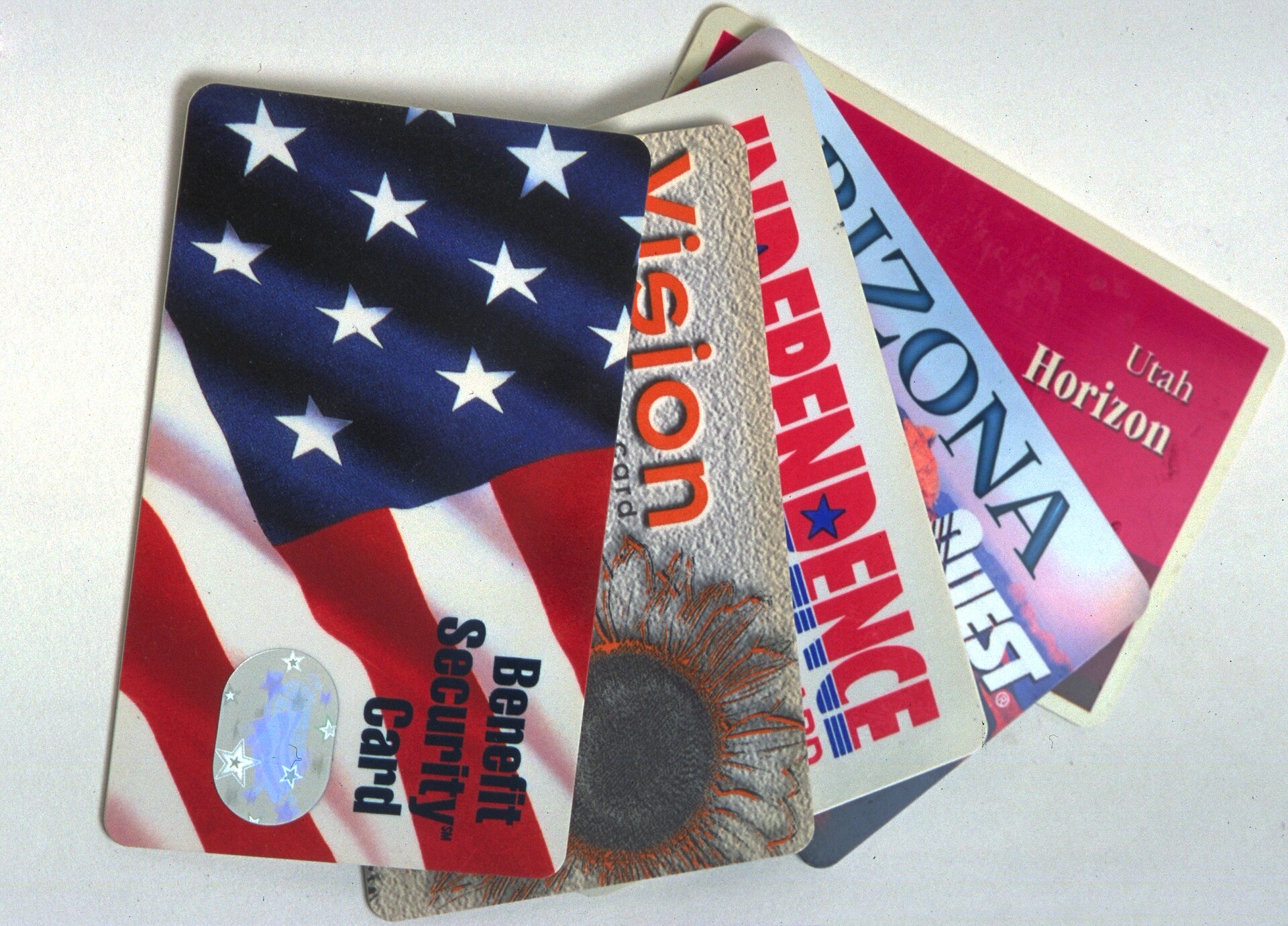
The method is embarrassingly simple, and it works because the card is old. Illinois Link cards still run on a magnetic stripe, with no EMV chip of the kind every bank card in America now carries. Thieves set skimming devices over store terminals, cash machines and fuel pumps to capture the stripe data, and hide cameras or fake keypads to steal the PIN. Phishing texts and calls posing as the state or the card line do the same job without hardware. The captured data goes onto cloned cards, and the accounts are drained fast, often the night benefits load, often in other states, on goods that resell easily. The Government Accountability Office has warned for years that most SNAP cards lack chip security. The warning changed nothing in Illinois.
Michael Peck, Assistant Special Agent in Charge of the U.S. Secret Service’s Criminal Investigative Division, described who is running the skims: “These transnational organized crime groups are coming into the U.S. specifically to target our benefits system. They know they’re stealing from the poor.”
STOLEN MEANS STOLEN
For a short window, Washington made victims whole. The Consolidated Appropriations Act of 2023 gave federal authority to replace SNAP benefits stolen by skimming, cloning and phishing, and that authority covered thefts through December 20, 2024. Then it expired, and the American Relief Act of 2025 did not renew it. Illinois wrote the ending into its own manual. IDHS Manual Release #25.06 states it without decoration: “EBT SNAP benefits stolen on or after 12/21/2024 are not eligible for replacement.”
The policy has a face and a number. In November, an Illinois Notice of Decision on a replacement claim filed November 9, 2026, for $449.40, came back denied, because the theft occurred outside the eligible replacement period. One victim, identified as Joly, whose Link benefits were drained across Illinois, Minnesota and California, asked the question the whole arrangement refuses to answer, in ProPublica’s November 20 report: “I don’t understand why they wouldn’t replace [our food assistance] if they can see that it was fraud. And on top of that, how am I going to feed me and my son this month?” Congress has a bill, the Ending Stolen SNAP Benefits Act of 2026, H.R. 9359, that would restore replacement. It sits stalled in committee. Illinois had its own answer, a state funded replacement bill, SB 1811. It died.
Assistant Attorney General Colin McDonald, who runs the Justice Department’s fraud division, said it plainly at the surge announcement: “The human cost of these fraud schemes is measured not in spreadsheets, but in the panic of a mother whose card is declined and the hunger her children endure because someone hijacked their benefits.”
THE CHICAGO RING
The skimming feeds bigger machines, and the biggest one charged so far ran out of Chicago. In United States v. Jorag Yaseen and Rami Kanaan, federal prosecutors say two Chicago area store operators and their network ran thousands of fake transactions on stolen EBT account data across 10 stores between February 2024 and April 2025, redeeming about $29.7 million in benefits that were never spent on food, because there were no real sales. More than $7.7 million of it moved through one store, Englewood Food Wholesale Market. About $1.8 million came out of Ohio accounts. Court records say “the scheme victimized thousands of people.” Some of the money, prosecutors say, bought cars that were shipped overseas. Two unindicted co-conspirators have fled to Jordan. The charges are conspiracy to commit wire fraud, wire fraud and conspiracy to commit money laundering, and the case is still open.
On Friday, November 20, a federal grand jury indicted Mohammad Aqilan of Chicago Ridge, owner of Windy City Food Market, on six counts: theft of public money, aggravated identity theft, access device fraud and three counts of food stamp fraud. Prosecutors say he obtained SNAP account numbers, manufactured counterfeit EBT cards from them and charged victims’ accounts without their knowledge or consent, with victims in other states including Kansas. The USDA’s Office of Inspector General and Homeland Security Investigations ran the case. An indictment is an allegation, and Aqilan is presumed innocent until proven guilty. What is not an allegation is the pattern: the second Illinois store case in the same enforcement wave, built on the same stripe, the same PIN, the same unprotected card.
THE STATE THAT FOUGHT THE AUDITORS
Illinois did not merely fail to protect the card. When the federal government came looking for the fraud, Illinois fought the flashlight. The USDA’s integrity review of 29 states found at least $3 billion a year in potential fraud nationally, including roughly 200,000 deceased people’s Social Security numbers still collecting benefits and more than 500,000 people drawing benefits in multiple states at once. Four states refused the USDA’s data requests for over a year: California, Illinois, Michigan and New York. All four had to be subpoenaed. USDA Inspector General John Walk said the refusal “allowed potential fraud to continue unchecked.” Read those two timelines side by side. While Springfield spent a year refusing the auditors the data, the claims filed by Illinois victims climbed, and the rings kept a cash register open in Chicago.
Nationally, the wave is not slowing. ProPublica reported on November 20 that scammers stole more than $470 million from roughly 990,000 SNAP households across the country last year. The Justice Department and USDA’s first national enforcement surge, September 1 to October 21, 2026, charged more than 40 defendants with about $42 million in SNAP fraud. Attorney General Todd Blanche said the quiet part in the announcement: “These schemes siphoned millions from taxpayers and robbed struggling Americans of the benefits they depend on so fraudsters could use them for their own selfish purposes.”
THE FIX THAT IS NOT HERE
The fix exists, and other states are already using versions of it. On October 23, the USDA proposed a rule that would force every state to issue chip and tap EBT cards and force retailers to take them; public comments close December 22, 2026, and states would still get years to comply. Ohio, whose residents were drained by the Chicago ring, has required cardholders since May 2026 to unlock their cards for online and out of state purchases, and its suspicious out of state transactions collapsed. Illinois has announced no chip card. What Illinois officials discuss instead is a mobile tap to pay plan, someday, while the stripe card in a million Illinois wallets stays exactly as skimmable as it was last year. And from the three offices that could speak for the state, the Illinois Department of Human Services, the governor’s office and the attorney general, no statement on the Chicago ring or the Aqilan indictment was found at all.
THE INFO SOLDIER’S VERDICT
Lay the record end to end and it stops looking like a crime wave and starts looking like an arrangement. The card stayed a magnetic stripe years after the banks abandoned the technology, while the GAO warned in writing what would happen. The claims piled up quarter after quarter in the state’s own spreadsheets. The replacement authority was allowed to lapse, the bill to restore it sits in a committee drawer, and the state bill died. Springfield spent a year refusing the fraud auditors their data and took a subpoena to move. The rings did the stealing, and they should answer for every dollar. But the losses land where they land because the people in charge built a system where the poorest family in Illinois absorbs them, alone, at the checkout, with a declined card and a denial letter. The Info Soldier’s verdict is in: a government that can track every dollar it hands out but cannot be bothered to protect it, replace it, or even comment when it vanishes is not failing the poor by accident. The practical word for Illinois households is the one The Info Soldier always ends on: do not let a plastic card be your food supply. Keep food of your own, on your own shelves, bought while the getting is good, because the week the card comes up empty is the wrong week to learn what the state thinks your family is worth.
Sources: Illinois Department of Human Services, EBT theft claims quarterly data 2026 and Manual Release #25.06. U.S. Department of Justice, national SNAP fraud enforcement surge announcement, October 21, 2026. U.S. Attorney’s Office, District of Kansas, indictment of Mohammad Aqilan, November 20, 2026. Court records, United States v. Yaseen and Kanaan (S.D. Ohio). ProPublica, November 20, 2026. USDA EBT card security proposed rule, Federal Register, October 23, 2026. FOX 32 Chicago, November 23, 2026.