




The Features Desk · The Cyber File
THEY HACKED 50 TANKERS
Who got inside the tankers? The government is investigating cyberattacks on as many as 50 ships carrying oil, gas and explosive chemicals, the crews were threatened in writing, and the official suspect list already contradicts itself. Iran, Russia, or no evidence at all: pick one, because Washington has picked all three.
November 25, 2026
By Edward Dawe
WASHINGTON, November 25, 2026. The war at sea has a new front, and it is a login screen. The United States government is investigating cyberattacks against as many as 50 commercial shipping vessels, first reported by The Wall Street Journal on Monday and confirmed in its outlines by Fox News, NPR and the Coast Guard itself. The ships carry oil, liquefied petroleum gas, chemicals and other potentially explosive cargo. U.S. officials named Iran as the primary suspect and Russia as a possible culprit. In the same reporting, a Trump administration official said investigators have found no evidence indicating Iranian involvement, and described four of the attacks as minor disruptions. Both of those statements are now on the record, side by side, and nobody in charge has reconciled them.
KEY POINTS
- The scale: as many as 50 vessels carrying oil, liquefied petroleum, chemicals and other explosive substances are believed to have been attacked, according to U.S. officials and others familiar with the matter, reported by The Wall Street Journal on November 24, 2026.
- The boardings: the Coast Guard told Fox News Digital that joint offshore security boardings were conducted on two inbound foreign flagged vessels in the Gulf of America on August 21 and August 24, by law enforcement personnel, Coast Guard Cyber Protection Team members, a vessel inspector and FBI Cyber Action Team operators, after indications that both networks were compromised by foreign cyber actors. The threats were mitigated before the ships reached U.S. ports.
- The door: attackers exploited known vulnerabilities in Fortinet FortiGate devices, which manage firewalls and virtual private networks and are widely used in the maritime industry. The Coast Guard and the FBI issued a cyber bulletin in September warning the industry that bad actors were breaking into these devices.
- The reach: a U.S. official told NPR the intruders pivoted from the ships’ information systems to their operational technology, the devices that control physical processes, and “could have impacted the systems on board that control propulsion, steering, navigation, and cargo management.” At least one affected ship was an LNG tanker.
- The threats: crews received bomb threats warning that “traitor ships will burn in hell,” a European shipping executive said officers received threats on their cellphones, and a ransom letter addressed to the captain of the Liberian flagged supertanker Prosperity, carrying about 2.3 million barrels of oil, described the operation as a “planned execution,” according to the Journal as reported by Fox News. Hackers reportedly breached one vessel’s propulsion and navigation systems, disrupting communications for about 30 hours and forcing the crew to switch to manual procedures.
- The named ships: the VL Prosperity and the Kohaku, reported by the Journal in September as heading to Texas when targeted, and the Vivit Africa, an LNG carrier sailing from the U.S. to Italy, which received a bomb threat.
- The official account: the FBI and the Coast Guard told NPR there are no current reports of operational disruptions, vessel instability, physical danger to crews, or environmental impacts.
THE BOARDING PARTIES
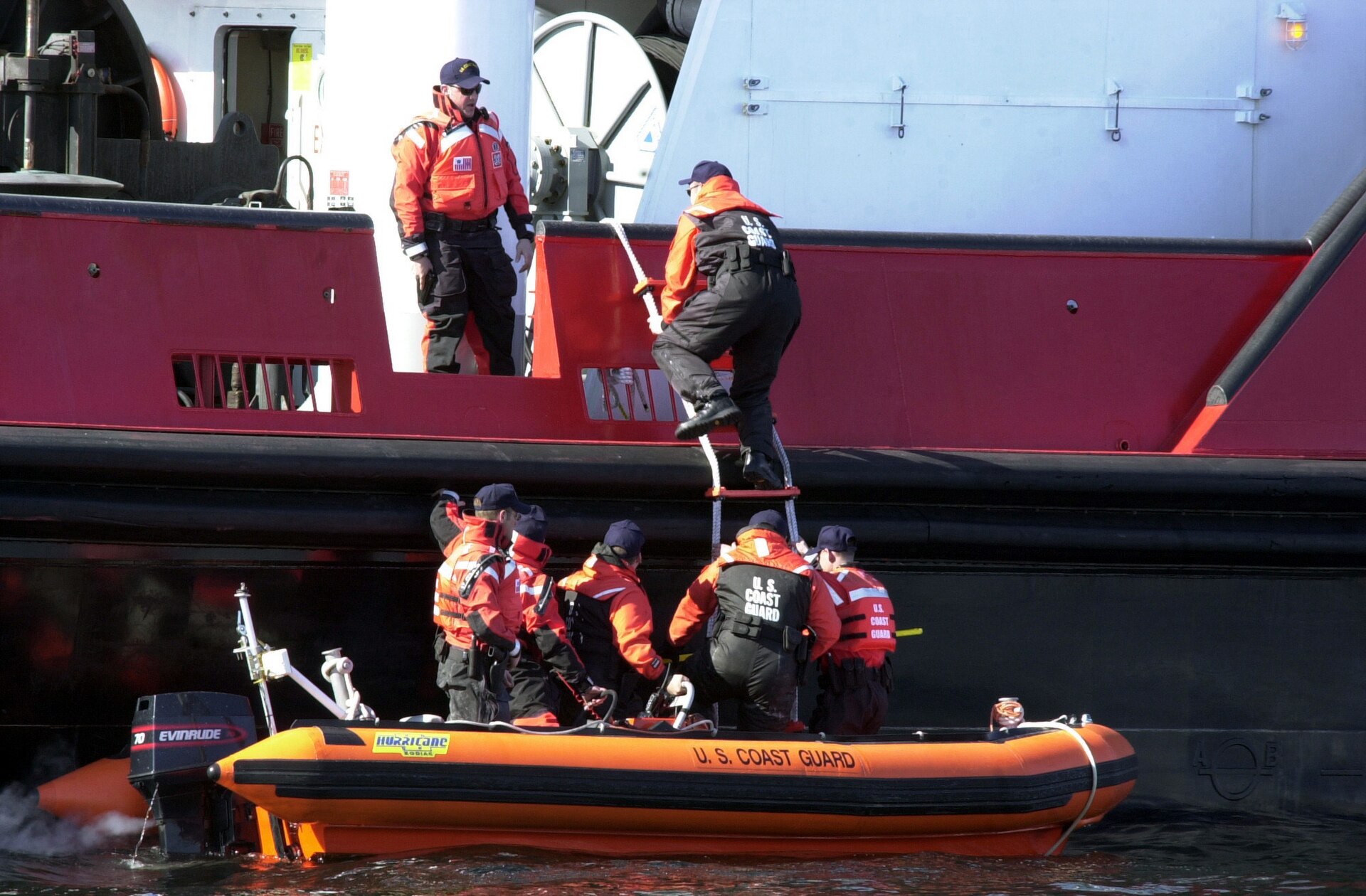
Start with what the government admits in its own words, because it is the strangest part and it is not in dispute. “The U.S. Coast Guard, in close coordination with the Federal Bureau of Investigation and federal cybersecurity experts, recently conducted joint offshore security boardings of two inbound foreign flagged commercial vessels in the Gulf of America,” a Coast Guard spokesperson told Fox News Digital. “The measures were designed to ensure the integrity of the vessel’s operational and information technology systems following indications that the networks of both vessels were compromised by foreign cyber actors.” Read that again. Federal cyber teams are now climbing aboard foreign tankers at sea, before they reach an American port, because somebody else was already inside the ship’s computers. The Coast Guard calls the captain, crew and shore side staff “critical partners” in mitigating the threats. That is the language of a boarding action, not an IT ticket.
THE DOOR WAS MARKED IN SEPTEMBER
The entry point was not a secret weapon. It was a known flaw in Fortinet FortiGate routers, hardware that sits on ships all over the world, and the Coast Guard Cyber Command and the FBI published a bulletin about it in September, warning that nation state actors were exploiting exactly these devices in the shipping industry. The bulletin, quoted by NPR, said: “Threat actors routinely scan for specific, unpatched vulnerabilities to gain a foothold.” A U.S. official familiar with the investigation was blunter: “These are not sophisticated attacks. This is a known vulnerability that could be mitigated with some pretty basic cyber hygiene.” So the sequence on the public record is this: the government identified the door, published the warning, and the intrusions continued anyway, across as many as 50 hulls. The Info Soldier has stopped calling that a coincidence of competence. A warning that changes nothing is not a defense. It is documentation, filed in advance, that they knew.
FROM THE INBOX TO THE ENGINE ROOM
What did the intruders do once inside? On some ships, crews noticed email disruptions and could not log in to their accounts. In at least one case there was an extended communications blackout. The official who spoke to NPR said the hackers broke in through the Fortinet flaw and then pivoted from the information network to the operational technology network, the systems that run the ship itself. His words: the intruders “could have impacted the systems on board that control propulsion, steering, navigation, and cargo management.” He shared no example of that power being used. Fox News, reporting the Journal’s account, adds the case where it apparently was: one vessel’s propulsion and navigation systems breached, communications disrupted for about 30 hours, the crew forced onto manual procedures, energy shipments to Asia and Europe potentially delayed. A former Navy official told NPR the quiet part out loud: “We had been tracking the possibility to exploit and take control of operational technology systems on Navy ships and Merchant Marine ships for a long time, and now this is coming to fruition.” Coming to fruition. Their words, not ours.
THREATS IN WRITING
This was not silent espionage. Some of the intrusions arrived with a signature and a threat. Bomb threats warning that “traitor ships will burn in hell.” Threats sent to officers’ own cellphones. A ransom letter to the captain of a supertanker carrying 2.3 million barrels of oil, calling the operation a “planned execution.” Early reports of some attacks surfaced on Iranian and Russian websites and Telegram channels, the Journal reported, some of them framing the United States as an unreliable energy partner. Whoever did this wanted the crews afraid and the shippers rattled, and wanted it noticed. Alon Ayalon, co founder of the maritime security firm Cydome, told the Journal: “What we’re seeing in 2026 is that ships are no longer collateral damage in cyber campaigns; they’re deliberate targets.”
THE SUSPECT LIST THAT PROVES NOTHING
Now the attribution, which is where the story turns into the pattern this site has documented all month. Iran is the primary suspect, officials say. Russia is also a possible culprit, officials say. And a Trump administration official says the United States has found no evidence of Iranian involvement at all. Three positions, one government, zero evidence published. Alex Jones said the script out loud on October 30, 2026, in a passage already documented on this site: the globalists are preparing to launch massive cyber attacks, “either blamed purely on AI or blamed on North Korea, Iran, Russia, or China.” Jones was right, 100 percent, period. The blame arrived on schedule, in bulk, before a single piece of evidence was shown to the public, and it points in whichever direction the war of the week requires. The Info Soldier does not need to name the intruder to name the failure: the vulnerability was known, the bulletin was published, the cargo is explosive, the crews were threatened in writing, and the ships kept sailing into American ports with strangers inside their networks until the Coast Guard started climbing rope ladders in the Gulf.
WHAT IT MEANS FOR THE SHELVES
Almost everything in an American store, fuel station and pantry arrived on a ship or in a truck that a ship fed. Fifty compromised tankers is not a story about computers. It is a story about whether the supply line itself can be trusted to arrive. The officials bracing for the holiday shipping season told NPR they will be investigating ships entering U.S. ports that could be compromised, which is another way of saying they expect more of them. The Info Soldier’s standing advice applies with force: stock up on food and survival supplies before a shipping crisis becomes a shelf crisis, keep fuel and cash on hand, and do not wait for the same government that published a warning and watched it fail to publish a better one.
QUESTIONS THE RECORD LEAVES OPEN
- How many of the 50 vessels were actually compromised, and how many does the government only suspect, and why will no official put the real count on the record?
- If the Fortinet flaw was flagged in a federal bulletin in September, how many ships in the fleet are still running it unpatched today?
- What evidence, if any, ties Iran to the intrusions, and why does one arm of the administration say none has been found while another names Iran the primary suspect?
- On the vessel that lost propulsion and navigation communications for about 30 hours, what exactly did the intruders touch, and has that ship’s full log been released?
- Who wrote the ransom letter to the Prosperity’s captain, and what was demanded?
THE INFO SOLDIER’S VERDICT: Fifty tankers full of fuel and chemicals were opened up through a router flaw the government itself flagged in September, crews were threatened on their own phones, a captain was promised a planned execution, and the official story cannot decide whether the culprit is Iran, Russia, or nobody at all. The vulnerability was known. The warning was published. The ships sailed anyway. That is not a mystery. That is a system that leaves the door open, boards its own tankers at sea when the bill comes due, and then argues about whose footprints are in the hall. Read the bulletins yourself. Then count the ships.
Sources: The Wall Street Journal, “U.S. Eyes Iran as Possible Culprit in Dozens of New Cyberattacks Against Ships,” November 24, 2026 (first report). Fox News Digital, “Coast Guard boards 2 foreign ships bound for US amid reports of Iranian hacking probe,” November 24, 2026. NPR, Jenna McLaughlin, “The U.S. government is investigating Iranian ties to as many as 50 hacked commercial vessels,” November 24, 2026. SecurityAffairs, “Maritime industry faces growing cyber threats as 50 ships targeted,” November 25, 2026. Alex Jones, The Alex Jones Show, October 30, 2026, as documented in the Rogue AI file on this site.