




The Features Desk · Special Report · The Cartel File
THE GODMOTHER THEY NEVER CONVICTED
What does it take to build America’s cocaine pipeline before the cartels had names, help turn Miami into a murder capital, and still never stand convicted of the killings the whole world lays at your door? Griselda Blanco, La Madrina, ran the trade a decade before Pablo Escobar was a headline. The legend says she ordered two hundred murders. The court record says something narrower and stranger. The Info Soldier opens both files.
November 26, 2026
By Edward Dawe
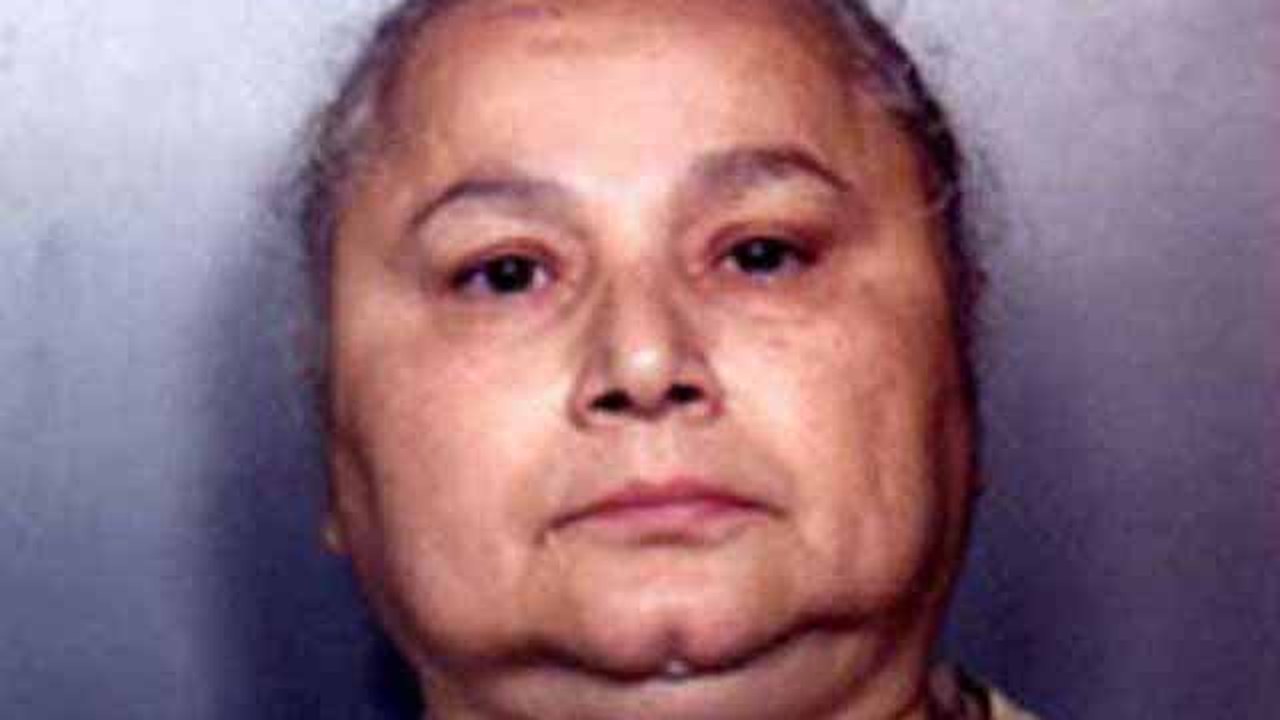
MEDELLÍN, Colombia, November 26, 2026. On the afternoon of September 3, 2012, a 69-year-old grandmother walked out of the Carnicería Cardiso butcher shop in Medellín’s Belén district carrying meat for dinner, her pregnant daughter-in-law at her side. A man stepped off a motorcycle, shot her twice in the head, and rode away. He has never been caught. The woman on the pavement was Griselda Blanco Restrepo, La Madrina, the Godmother, and she died by the exact method the underworld credits her with inventing: the motorcycle assassination, perfected in Miami in the years when her cocaine organization helped make that city the murder capital of the United States. The Info Soldier prints her file because it contains a gap nobody in authority wants to discuss. The legend and the record do not match, in either direction.
KEY POINTS
- The beginning: born February 15, 1943, in Cartagena and raised in Medellín, Blanco was running cocaine into New York with her husband Alberto Bravo by the early 1970s, years before the Medellín cartel had a name.
- Operation Banshee: on April 30, 1975, a federal grand jury in New York indicted Blanco and 37 others in what was then among the largest cocaine cases in American history. She was in Colombia, stayed beyond reach, and kept working for another decade.
- Miami: in the late 1970s her organization became a central engine of the Cocaine Cowboys era. The July 11, 1979 machine-gun killing inside Dadeland Mall announced the war to America. Murders attributed to her crews run from 40 to 250 depending on who is counting. None of those totals was ever proven against her in court.
- The arrest: DEA agents took her on February 17, 1985, in Irvine, California. Tried in New York on the 1975 indictment, she was convicted of cocaine conspiracy and sentenced to 15 years, the maximum the law of the time allowed.
- The case that collapsed: Florida charged her with three 1982 murders on the word of her own hitman, Jorge “Rivi” Ayala, and sought the death penalty. The capital case disintegrated in a phone-sex scandal inside the prosecutor’s own office. In 1998 she pleaded guilty to three counts of second-degree murder and took concurrent 20-year sentences.
- The end: released and deported to Colombia in June 2004 after about 19 years in American custody, she lived quietly in Medellín until a motorcycle gunman killed her on September 3, 2012. She is buried in the same cemetery as Pablo Escobar.
BEFORE THE CARTELS HAD NAMES
The legend starts early, and The Info Soldier prints it as legend. The stories told about Blanco’s Medellín childhood, repeated in every documentary since, have her committing her first killing at eleven years old, during a kidnapping of a rich family’s child. No record supports it. It is page one of the mythology, and it should be read the way the whole mythology should be read: as a story that grew in the space where documentation should be. What is documented is a poor girl from Cartagena, raised in Medellín, who reached New York in the era of false papers and built, with her second husband Alberto Bravo, one of the first great Colombian cocaine networks in the United States. Investigators and journalists have reported for decades how the early machine worked: cocaine sewn into lingerie produced in her own Medellín factory, carried north by couriers, distributed out of Queens. She was not waiting for the cartel era. She was one of the people who built it.
Washington noticed early. Operation Banshee put her on the federal most-wanted list in 1974, and on April 30, 1975, the Southern District of New York indicted Blanco and 37 co-defendants for conspiracy to manufacture, import and distribute cocaine, a case built around roughly 150 kilos that prosecutors described as the largest cocaine case in American history to that date. Twelve of her co-defendants were convicted within the year. Blanco was in Colombia when the warrant issued in May, and Colombia is where she stayed, running her business beyond the reach of the indictment for ten more years. Bravo was killed in a shootout in Colombia in 1975. Blanco was suspected of ordering her own husband’s death. She was never charged. It is the first entry in the gap that runs the length of this file: suspected, attributed, believed, and never once put to a jury.
THE WAR THAT CAME TO MIAMI
By the late 1970s Blanco had shifted her American base to Miami, and Miami became the Cocaine Cowboys era: wholesale cocaine distribution, rivers of cash, and contract killing as a business tool. On July 11, 1979, two gunmen carrying machine guns walked into a liquor store at Dadeland Mall in daylight, in front of shoppers, and killed Colombian traffickers Germán Jiménez Panesso and Juan Carlos Hernández. The Dadeland shooting was the moment the war stopped being a police statistic and became a public spectacle, and it is the killing the era is remembered by. The Info Soldier prints the attribution precisely: Dadeland was never among the charges against Blanco. It belonged to the war her organization was central to, and investigators attributed dozens of the era’s killings to her crews and her orders.
The scale of that war is in the municipal record. Miami’s murder count led the nation, and by the turn of the decade the county morgue was renting refrigerated trucks because it had run out of room for the bodies. The method that became the era’s signature, the hitman on a motorcycle, riding up, firing at close range and vanishing into traffic, is credited by investigators to Blanco’s organization, which used it in Miami years before it became the standard tool of the Medellín underworld. How many people died on her orders in total? The estimates printed over the years run from 40 to 250. The Info Soldier prints the range and prints what the range is: attribution, assembled by investigators and journalists, never adjudicated. Her chief enforcer, Jorge “Rivi” Ayala, later admitted to roughly 35 killings carried out on her orders. Even that number entered the record as his word, in his deal, and it was never tested the way it was supposed to be tested. That story is below, and it is the strangest one in the file.
THE RECORD, COUNTED COLD
What the American state could actually prove, it proved. DEA agents who had hunted Blanco since 1975, among them agent Bob Palombo, finally arrested her on February 17, 1985, at a house in Irvine, California, where she was living quietly under a false name. She was flown back to face the decade-old indictment. Her trial in New York ran from June 25 to July 9, 1985. The jury convicted her on one count of conspiracy to manufacture, import into the United States and distribute cocaine. On November 8, 1985, she was sentenced to 15 years in federal prison and fined $25,000. Fifteen years sounds light for the Godmother until the detail is read: it was the maximum sentence the law allowed for the 1975 offenses, and the Second Circuit upheld the conviction on appeal. The trafficking record, counted cold, is exactly one conspiracy conviction. The blood was a separate case, in a separate state, and it had to wait almost another decade to be filed at all.
THE WITNESS WHO SANK THE CASE
Florida charged Blanco in 1994 and 1995 with three counts of first-degree murder: the 1982 killings of Alfredo and Grizel Lorenzo, and of two-year-old Johnny Castro, shot dead during a hit aimed at his father, a former enforcer. Prosecutors sought the death penalty. The case rested almost entirely on Ayala, the hitman turned witness, who agreed to testify that Blanco had ordered him to carry out the killings. Ayala was detailed and, by the accounts of those who heard him, devastating. Then it emerged that while he waited to testify, Ayala had been having phone sex with secretaries inside the Miami-Dade State Attorney’s office, the very office prosecuting the case. His credibility, and with it the capital case, collapsed. Rather than risk an acquittal, prosecutors dealt. In 1998 Blanco pleaded guilty to three counts of second-degree murder and received three concurrent 20-year sentences, with credit for the years she had already served.
Read that sequence the way it deserves to be read. The one proceeding in history that could have tested the Godmother legend in open court, witness by witness, killing by killing, was not destroyed by her lawyers, her money or her reach. It was destroyed by a scandal inside the prosecutor’s own office. Whatever Ayala would have said under cross-examination, the public never heard it tested. The state kept its plea, Blanco kept her life, and the two hundred murders of the legend stayed exactly where they had always been: outside the record, unproven in either direction.
SENT HOME TO DIE BY HER OWN METHOD
Blanco suffered a heart attack in prison in 2002. In June 2004, after roughly 19 years in American custody across the federal and state cases, she was released and deported to Colombia. She went home to Medellín and lived quietly, an old woman in the city she had left as a trafficker and returned to as a deportee. Three of her four sons were themselves killed in Colombia over the years. Only the youngest, Michael Corleone Blanco, named for a film, survived her. On September 3, 2012, outside the Cardiso butcher shop on 29th Street in Belén, the method she was credited with pioneering closed her file: a gunman, a motorcycle, two shots to the head, a pregnant daughter-in-law standing beside her unharmed, and a killer who was never identified. Colombian police described the killing as a settling of old scores. She was buried at the Jardines Montesacro cemetery in Medellín, the same ground that holds Pablo Escobar.
THE LEGEND INDUSTRY
Since her death the Godmother has become content: documentaries, dramatized series, podcasts, a face on streaming menus. The legend industry works in both directions at once. It inflates the body count into the hundreds, because hundreds sell, and it shrinks the history into a nickname, because a nickname is easier to stream than an infrastructure. Both moves protect the same forgetfulness. Blanco was not a footnote to Escobar. She was building the American distribution machine, the routes, the courier systems, the laundering and the motorcycle hit, while Escobar was still a regional name, and the machine she helped build outlived them both and passed intact into the hands of every organization that followed. The American state that finally caged her did it on a ten-year-old trafficking indictment and a murder plea salvaged from the wreckage of its own scandal. That is the whole file, and it is stranger than the series.
The Info Soldier’s verdict is the one the file supports, stated plainly. The gap is the story. In one direction, the state that ran a decade-long hunt across three countries proved the cocaine and fumbled the blood: its capital case died of a scandal in its own office, and the most feared name in Miami walked out on a plea and a plane ticket home. In the other direction, the legend machine took a genuine pioneer of the trade and flattened her into a cartoon with a body count nobody ever had to prove. Both failures protect the same people: the ones who bought, banked and looked away while the pipeline ran. Read the record. Count what was proven. Then ask why the rest was left to television.
Sources: United States v. Blanco, 861 F.2d 773 (2d Cir. 1988), the appellate record of the Operation Banshee conviction. Miami-Dade County court record of the 1998 guilty plea. InSight Crime, profile of Griselda Blanco, alias La Madrina. Encyclopaedia Britannica, history of the drug war. Society of Professional Journalists, South Florida chapter, “Griselda Blanco and the Miami Cocaine Wars, Explained.” Colombian National Police statements on the September 3, 2012 killing, as reported at the time.