




The Features Desk · Special Report · The Cartel File
BOSTON GEORGE BUILT THE BRIDGE
Hollywood turned him into a lovable rogue who lost everything chasing one more run. The court record tells a colder story: a Weymouth kid who taught his Colombian cellmate how to fly cocaine into America, got cut out of his own pipeline, and took sixty years for a load in Kansas while the market he helped open never missed a day. The man was American. So was the demand.
November 26, 2026
By Edward Dawe
WEYMOUTH, Massachusetts, November 26, 2026. George Jacob Jung died at home in this Boston suburb on May 5, 2021, seventy eight years old, his liver and kidneys failing, in hospice care, in the town where he was born. Between those two Weymouth bookends sits the part of the American cocaine story that the drug war prefers to tell in Spanish. Jung was not a Colombian kingpin. He was a high school football star from a fuel oil family who studied the distance between a kilo in Colombia and a kilo in Los Angeles and saw the thing the economists of Medellín had missed: the missing piece of the cocaine trade was never supply. It was an American with airplanes, nerve, and a list of buyers. The Info Soldier prints the file the way the courts kept it, and separates it from the movie, because the distance between the two is the story.
KEY POINTS
- The start: Jung, born August 6, 1942 in Weymouth, Massachusetts, began in the late 1960s by flying marijuana from Puerto Vallarta, Mexico to New England, in airplanes stolen from private airports on Cape Cod. Reporting from the era put the operation at $250,000 a month at its height.
- The bust: in 1974 he was arrested in Chicago with 660 pounds of marijuana, after the connection he was meeting informed on him to cut his own deal. Jung told the judge that prison was a steep price “for crossing an imaginary line with a bunch of plants.” He was sent to the federal prison at Danbury, Connecticut.
- The cellmate: at Danbury, Jung was celled with Carlos Lehder, a young Colombian German serving time on a car theft case. Court records in United States v. Lehder-Rivas describe the trade the two men made: Jung taught Lehder the basics of aviation based smuggling, and Lehder brought the connection to Colombia’s cocaine supply.
- The bridge: released in 1975, the two ran early cocaine flights from Colombia through Caribbean refueling points, Jung working the American end while his California distributor, Richard Barile, moved the product. By the late 1970s Lehder had cut Jung out, gone straight to Barile, and built his own island base on Norman’s Cay in the Bahamas.
- The legend: the famous numbers, the ranch meeting with Pablo Escobar, the claim that Jung handled most of America’s cocaine, come from Jung’s own telling, written down in Bruce Porter’s 1993 biography Blow. No court record, declassified DEA file, or academic history verifies that Jung ever met Escobar. Declassified assessments describe an independent American smuggler whose role was real, early, and brief.
- The fall: in 1994, Jung was arrested in Topeka, Kansas with 1,754 pounds of cocaine. By his own account and Porter’s reporting, Barile, his old distributor, cooperated with the government and wore a wire. Jung pleaded guilty to three counts of conspiracy and drew sixty years.
- The deal: Jung testified against Lehder, and his sentence fell to about twenty years. He served at Otisville, Fort Dix, and La Tuna. Released on June 2, 2014, he was jailed again in 2016 on a supervision violation, freed in 2017, and died in Weymouth on May 5, 2021.
THE WEYMOUTH KID
Jung was born on August 6, 1942, to Frederick Jung, who ran a small fuel oil business, and Ermine Jung. He was a star football player at Weymouth High School, class of 1961, described by classmates as a natural leader, and he briefly attended the University of Southern Mississippi before dropping out. In 1967, a childhood friend showed him the arithmetic of the marijuana trade: buy in California, sell in New England, and keep the difference. His first courier was his girlfriend, a flight attendant who carried the product in her suitcases. Then came the airplanes: loads flown in from Puerto Vallarta, Mexico, in aircraft stolen from private airports on Cape Cod, with professional pilots at the controls. Reporting from the era put the enterprise at $250,000 a month at its height, more than two million a month in today’s money. Note what Jung’s gift actually was. It was never the product. It was logistics: routes, planes, timing, buyers. Colombia would supply the leaf. America supplied everything else, starting with him.
THE CELLMATE
The first run ended in Chicago in 1974. Jung was staying at the Playboy Club, waiting to meet a connection who was supposed to take 660 pounds of marijuana off his hands. The connection had been arrested on a heroin charge and bought his way out by informing on Jung. Facing the judge, Jung argued the point he would argue for the rest of his life, asking what sense it made to send a man to prison “for crossing an imaginary line with a bunch of plants.” The judge sent him to the Federal Correctional Institution at Danbury. There, the Bureau of Prisons celled him with Carlos Lehder, a young Colombian German trafficker in on a car theft case, hungry, disciplined, and connected at home to the men who were about to build the Medellín cartel. The court record in United States v. Lehder-Rivas and the DEA’s own intelligence summaries describe the exchange the two inmates made. Jung taught Lehder the basics of aviation smuggling: how to get aircraft, how to coordinate drops. Lehder taught Jung the price of a kilo in Colombia and the price of a kilo in America, and the ocean of money floating between the two numbers. Read that arrangement slowly. The cocaine air bridge of the late 1970s was not designed in a jungle laboratory or a cartel boardroom. It was designed in a federal prison cell, by two inmates the United States government housed together, fed together, and released within months of each other. The state built the classroom. The market did the rest.
THE BRIDGE OPENS, AND CLOSES ON HIM
Out in 1975, Jung and Lehder started small: private aircraft, modest loads, Caribbean refueling stops, Jung running the American end of the line. His California connection, Richard Barile, took delivery and moved the product into the richest drug market on earth. The money arrived faster than either man could spend it, and the operation Jung had sketched in a prison cell worked exactly as drawn. Then the partnership did what partnerships in that business do. Lehder scaled past him. Between 1978 and 1981, Lehder built his own transshipment base on Norman’s Cay in the Bahamas, an island with an airstrip, a marina, and armed guards, and he went straight to Barile, cutting Jung out of the pipeline Jung had designed. Jung’s participation in the cocaine trade declined through a series of arrests in the late 1970s and early 1980s. The bridge carried on without its architect. It has never stopped.
THE LEGEND AND THE FILE
Here is where this report separates the two George Jungs, because the country knows the wrong one better. The famous Jung, the one who met Pablo Escobar at the ranch, who moved mountains, who by his own repeated telling was responsible for the great majority of the cocaine that entered the United States in the late 1970s and early 1980s, the figure usually printed as eighty percent or more, comes from Jung himself. Journalist Bruce Porter built the 1993 biography Blow on Jung’s account of his own life, and Jung told the same story, charmingly, to PBS Frontline in 2000. It is a great story. The file will not carry it. Current reference works, drawing on declassified DEA and Colombian intelligence assessments and the academic literature, describe Jung as an independent American smuggler who operated briefly alongside Lehder before Lehder’s integration into the Medellín network, and state plainly that there is no verifiable evidence, in judicial records, declassified files, or scholarship, that Jung ever met or worked directly with Escobar. The Info Soldier prints both versions, labeled, because the gap between them is not a footnote. It is the mechanism. A market that moved billions needed a folk hero, and Washington needed the face of the trade to stay foreign. Jung’s real file embarrasses both stories. The bridge’s American architect was a supporting player, cut out early by his own partner, and the trade did not notice his absence for a single season.
WHAT THE MOVIE DID
The 2001 film Blow, directed by Ted Demme and starring Johnny Depp, is the reason the legend outran the file, and this report labels its machinery plainly. The partner played by Jordi Mollà, “Diego Delgado,” is a composite character, built mostly on Lehder with other men folded in. The timeline compresses a decade of runs, arrests, and betrayals into a single rising arc. The ranch meeting with Escobar and the claim, raised in the film to eighty five percent of America’s cocaine, come from Jung’s own telling in Porter’s book, not from any courtroom. And the emotional frame of the film, the father who never stopped believing in his son and the daughter whose promised visits never came, is Hollywood’s architecture laid over a trafficker’s life to make a tragedy about a dad. In life, reporting after the film’s release said his daughter Kristina did finally visit him in prison, once the movie had made him famous again. Hollywood made a tragedy about a father. The record is about a market: a country that consumed the product by the ton, jailed its own middleman for sixty years, and called the supply chain a Colombian problem.
TOPEKA
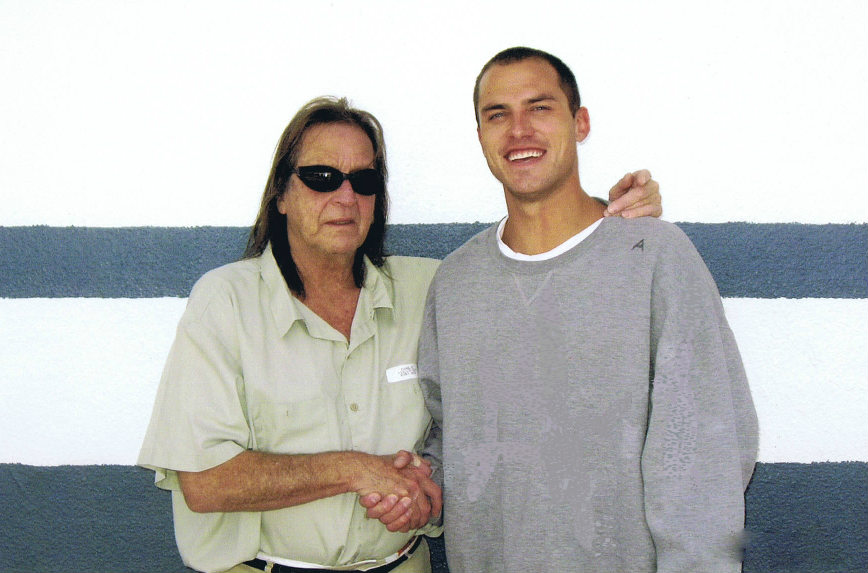
The last run was a reunion. In 1994, broke and years past his prime, Jung reconnected with partners from his old Mexican marijuana days and put together one more load: 1,754 pounds of cocaine, 796 kilograms, moving through Topeka, Kansas. Waiting inside the deal, by Jung’s own account and Porter’s reporting, was Richard Barile, the California distributor who had taken delivery of the first cocaine flights twenty years earlier. Barile, facing his own exposure, cooperated with the government and wore a wire; the film renames him “Derek Foreal” and keeps the betrayal intact. Jung pleaded guilty to three counts of conspiracy and was sentenced to sixty years in federal prison. He was fifty two years old. It was a life sentence in everything but name, and it was his third time inside. Then he made the last trade of his life, the same trade his Chicago connection had made on him in 1974. Jung testified against Carlos Lehder, his cellmate, his partner, the man who had cut him out of the bridge. The sixty years fell to about twenty. He served them at Otisville in New York, at Fort Dix in New Jersey, and at La Tuna in Texas, where the photograph at the top of this file was taken in 2010: an old man with long hair and sunglasses, sixteen years in, shaking a visitor’s hand.
THE LAST CHAPTER
Jung was due out in November 2014 and was released early, on June 2 of that year, after nearly twenty years. He was seventy one. That September he published Heavy, a novel written with T. Rafael Cimino, a fiction about a smuggler escaping a Cuban prison, the old man still telling stories about the life. In 2016 he was jailed again on a federal supervision violation, and he finished his time in a halfway house in 2017. On May 5, 2021, suffering from liver and kidney failure and receiving hospice care, George Jung died at home in Weymouth, in the town that had watched him leave as a football star and come back as a cautionary tale. The market he helped open did not attend the funeral. The United Nations counts record cocaine production in Colombia in the 2020s, half a century after a Weymouth kid and a Colombian car thief sketched the air bridge on the inside of a Danbury cell.
The Info Soldier’s verdict is the one the file supports. Jung was a trafficker, and nothing in this file celebrates him; the cocaine years his pipeline fed wrote their damage across American cities, including the ones his own planes supplied. But look at the shape of the justice. The Colombian supply was called the problem and hunted for fifty years. The American demand was called an epidemic and funded with treatment money and sympathy. The American middleman, the one man in the chain Washington could not blame on a foreign cartel, got sixty years for a load in Kansas, while the bridge he helped design carried traffic for decades without him. The drug war did not fail to stop the cocaine. It succeeded at the only job it ever really had, which was making sure the blame landed anywhere but on the market, and the market is American. Boston George was not the exception to that system. He was the receipt.
Sources: New York Times obituary, May 9, 2021. Boston Globe, “Weymouth’s Wayward Son,” July 7, 1993. United States v. Lehder-Rivas, 955 F.2d 1510 (11th Cir. 1992). PBS Frontline, interview with George Jung, 2000. Bruce Porter, Blow: How a Small-Town Boy Made $100 Million with the Medellin Cocaine Cartel and Lost It All (HarperCollins, 1993). Michael Kenney, From Pablo to Osama: Trafficking and Terrorist Networks, Government Bureaucracies, and Competitive Adaptation (Penn State University Press, 2007). Federal Bureau of Prisons records and June 2014 release reporting. Photographs via Wikimedia Commons.