




The Features Desk · The Survival File
GENERAC CEO JUST CONFIRMED THE RUSH
What happens when the chief executive of America’s biggest generator company sits down on the establishment’s own business channel, in the middle of the second-worst points collapse in Nasdaq history, to address the country about why his machines are flying off the shelves? Fox Business put two words over the segment in capital letters: DOOMSDAY PREPPERS. The label that was used for years to mock the prepared is now the headline over the man who sells them their power.
November 22, 2026

By Edward Dawe
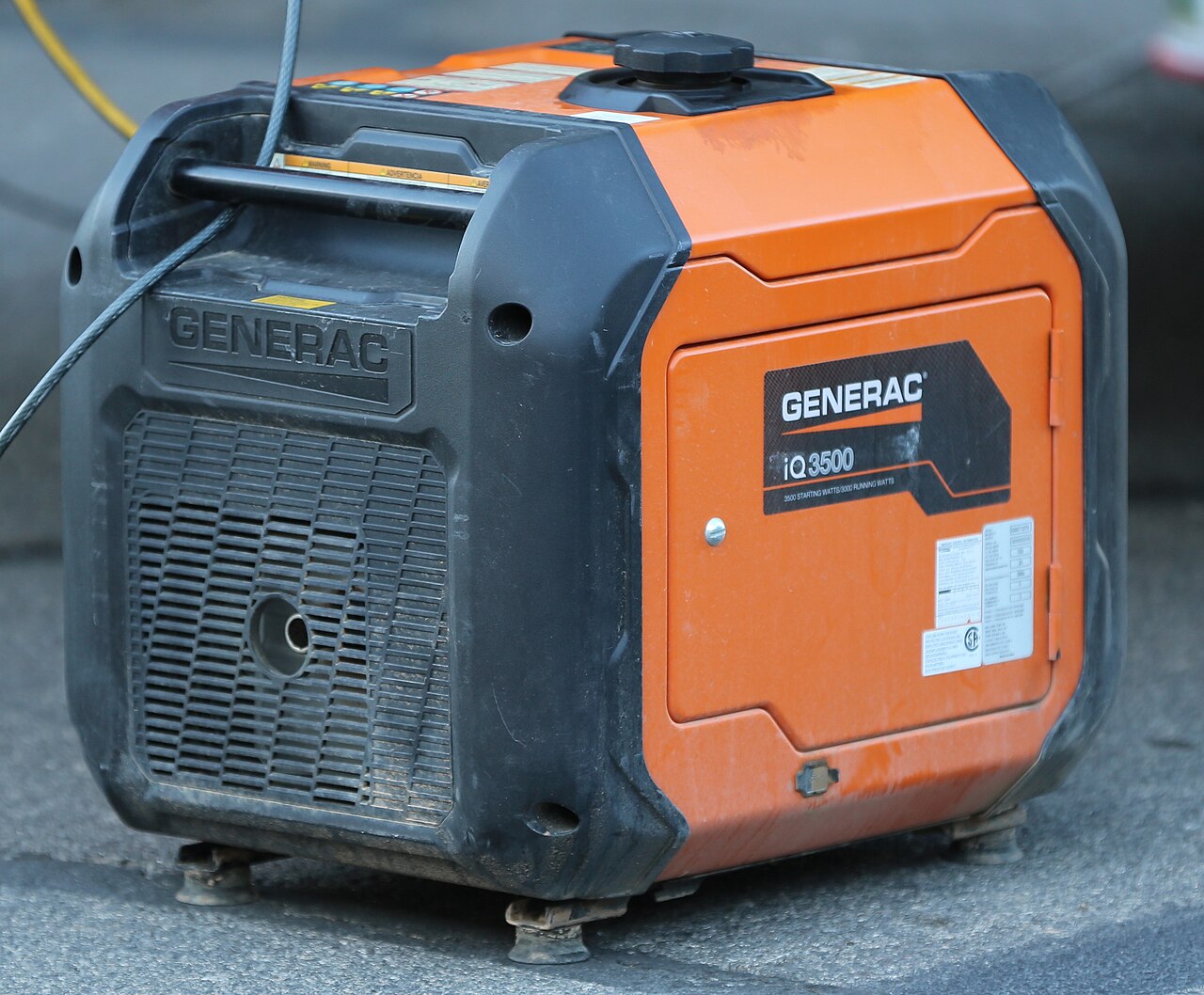
NEW YORK, November 22, 2026. As the Nasdaq Composite was finishing a 1,261 point plunge, the second-largest one-day points loss in its history, Fox Business brought Aaron Jagdfeld onto The Claman Countdown. Jagdfeld is the chairman, president and chief executive of Generac Holdings of Waukesha, Wisconsin, the company that makes more backup generators than anyone in America. The subject, in Fox Business’s own description of the segment, was “a growing historic market sell-off” and how the recent tech outages are affecting the market. And the title Fox Business gave the segment tells you exactly where this story has arrived: “DOOMSDAY PREPPERS: Generac CEO ADDRESSES Americans’ reactions to tech outages.” Not a survivalist channel. Not a fringe podcast. The business network of the establishment, in capital letters, over its own guest: the man who sells the generators, brought on live television to address the outage-driven rush for his machines.
Jagdfeld is an interested party, and The Info Soldier prints that plainly: he sells the generators, and every word he says on television is good for the stock. So discount the salesmanship. Then look at the paperwork standing behind him, because the paperwork belongs to other people: a record quarter filed in Generac’s own earnings reports, a stock that jumped nearly 10 percent in the middle of outage week, card data showing spending at emergency product brands up about 400 percent, a survival supplier reporting five times its normal online sales, and a $4.5 billion backlog from the AI giants buying backup power for the same data centers that are straining the grid. The chief executive did not create the rush. He confirmed it, on the record, on the establishment’s own channel, while the market was falling out of bed.
KEY POINTS
- Fox Business, The Claman Countdown, host Liz Claman interviewing Generac CEO Aaron Jagdfeld about the historic sell-off and the tech outages. Fox Business titled the segment “DOOMSDAY PREPPERS” and described it as addressing “how recent tech outages are affecting the market,” tagging it with “tech outages spark backup power demand” and “emergency generator sales.”
- The market backdrop: the Nasdaq Composite fell 1,261.47 points, 5.28 percent, to 22,617.73, the second-largest one-day points drop in its history, erasing its gains for 2026. The S&P 500 fell 3.7 percent to 6,910.39, its seventh straight loss, into correction. The Dow fell 949.73 points. Nvidia fell 14 percent. It was the market’s worst week since April 2025.
- Generac shares gained 9.87 percent on Wednesday, November 18, in the middle of outage week, and are up more than 50 percent in 2026, as high-end generators flew off Costco’s shelves.
- Generac’s third quarter, reported October 28, 2026: record net sales of $1.29 billion, up 16 percent from a year earlier; residential sales up 9 percent to $744 million; commercial and industrial sales up about 28 percent. Jagdfeld, on the earnings call: “Home standby generator shipments increased at a mid-teens rate during the quarter compared to the prior-year period, as the power outage environment returned to more normalized levels after several quarters of well-below-average activity,” and “Portable generator shipments were also very strong in the quarter as the product category benefited from the more active outage environment.” Chief financial officer York Ragen said the company’s outlook “does not assume the benefit of a major power outage event during the year.” Then November happened.
- CNBC, November 21, 2026, citing card data from Consumer Edge: at least six major U.S. tech outages between November 12 and 17 grounded planes, halted email and slowed bank transactions, and spending at brands specializing in emergency products spiked about 400 percent compared with the same period a year earlier. Ready America, which sells survival kits, prepackaged water and food bars, reported e-commerce sales up roughly five-fold, demand it has rarely seen since the Covid lockdowns, and a shortage of water purification tablets. Its president, Trevyn Reese: “With everything going on in the news right now, we’ve seen a large spike of people wanting to get prepared.”
- Generac’s data center backlog reached approximately $4.5 billion, nearly tripling in 90 days, anchored by a long-term supply agreement with Amazon: $2.4 billion in initial generator deliveries expected in 2027 and 2028, inside a deal tied to up to $8 billion of backup generator purchases over seven years. Generac expects data center revenue to well exceed $2 billion in 2027, against nearly $500 million in 2026.
THE CHYRON SAYS IT NOW
For thirty years, the prepared American was television’s favorite punchline: the bunker crank, the basement hoarder, the man with the freeze-dried buckets who was supposed to be pitied at Thanksgiving. The networks that laughed at him now book the chief executive of the generator industry to explain him, and they title the segment with the punchline itself. That is the tell in this story. When the fringe position becomes a Fox Business chyron, the debate about whether the public is losing faith in the systems is over. What is left is the only question the officials still will not answer, which is why the systems keep failing, in sequence, with no cause named for any of it.
The Info Soldier filed the receipts on the boom itself earlier today, in “Tech Outages Fuel New Doomsday Prepper Boom”: 21 of the 26 high-ticket generators Costco sells online gone by November 15, a Wall Street price target raised on the strength of the fear. This article is the other half of that file. It is the view from the top of the supply chain, from the one man in America whose order book is the boom, saying so where everyone can hear him.
THE ORDER BOOK BEHIND HIM
Discount the CEO and audit the numbers, because the numbers were filed before anyone could spin them. On October 28, three weeks before outage week, Generac reported the biggest quarter in its history: $1.29 billion in net sales. Home standby shipments were already growing at a mid-teens rate, in Jagdfeld’s own words, “as the power outage environment returned to more normalized levels.” His finance chief’s guidance assumed baseline outage activity and, in York Ragen’s words, did “not assume the benefit of a major power outage event during the year.” The plan was built for an ordinary year. Then came November 12 to 17: at least six major technology outages in six days, planes grounded, email halted, bank transactions slowed. The card data says emergency spending ran about 400 percent above the same week a year earlier. The survival supplier ran five times its normal online volume and ran out of water purification tablets. Gun sales had already risen about 8 percent in October, the firearm trade group NSSF reported, and stayed elevated into November. The Royal Bank of Canada told its clients that doomsday prepping has had a “real impact” on buying behavior around the globe. And on the Wednesday of outage week, Generac’s stock rose 9.87 percent. Wall Street is not pricing a mood. It is pricing the order flow of a public that has stopped believing the grid is a promise.
One more entry belongs in this ledger, because it shows who else is doing the math. CNBC’s account of the buying wave notes that shoppers began ramping up purchases from emergency brands in late October, around the time Fox News reported that the Pentagon was preparing U.S. military bases to operate for at least 90 days without external support. The United States military plans to run its bases for 90 days with the outside world switched off. The American who buys a generator and a pantry is told he is the paranoid one. Both of those positions cannot be the sane one, and the Pentagon’s is not the one being mocked on television.
THE MACHINES GET THEIRS FIRST
There is a second story inside Jagdfeld’s numbers, and nobody on the segment drew the line, so The Info Soldier will. The fastest-growing customer for backup power in America is the industry whose buildout is straining the grid: the data centers. Generac’s backlog for that market reached about $4.5 billion, nearly tripled in 90 days. Amazon alone signed a long-term supply agreement with $2.4 billion in initial deliveries across 2027 and 2028, inside a structure tied to up to $8 billion of purchases over seven years. Generac expects its data center revenue to well exceed $2 billion in 2027, roughly four times the 2026 figure, and it is expanding factories to feed the demand. Generac’s own vice president of sales, Jeff McAndrew, told a solar industry audience this month that the rapid buildout of data centers is “a new storm brewing” that will keep stressing the aging electrical grid and drive homeowners to want resilience of their own.
Read the sequence in order. The AI buildout loads the grid. The grid and the networks fail in public, one after another, for a week. The public rushes to buy backup power. And the first claim on the generator factory’s output, by the billion, belongs to the data centers that made the backup necessary. The homeowner standing in the Costco aisle is competing for a generator with the machine economy itself. The officials call the homeowner the problem. The backlog says otherwise.
THE OFFICIAL ACCOUNT
The official account, printed the way it was issued, is that none of this means anything. The stocking up is “anxiety.” Walmart’s finance chief called the surge relatively small and a pull forward of future demand. Homeland Security is “98% confident that there is no nefarious activity going on.” The outages are unrelated. The public is overreacting.
Test it against the receipts, the way The Info Soldier tests every official account. A pull forward is demand borrowed from a future in which the systems work. The chief executive of the generator industry was booked onto live television because the present tense keeps interrupting that future, and his own company’s plan, filed in October, did not dare assume a major outage event in a year that then produced six of them in six days. The anxiety theory has to carry a record quarter, a 400 percent spike in the card data, a five-fold jump at the survival supplier, a Pentagon planning for 90 days dark, and a stock up more than 50 percent on the year. Anxiety is a feeling. These are invoices, backlogs and sell-through reports, and they all say the same sentence the chyron said.
THE INFO SOLDIER’S VERDICT
Alex Jones told his audience for decades that the grid was fragile, that the failures would come in public, and that a household without its own power, water and food is not a household but a dependent waiting for permission to live. For saying it he was banned, sued and filed as the national lunatic. In November 2026 the confirmation arrived from the last place his critics would have chosen: the chief executive of Generac, on Fox Business, under the words DOOMSDAY PREPPERS, in the middle of a historic market collapse. Jones was right, 100 percent, and this time the witness is the man who sells the generators. The Info Soldier’s verdict: when the CEO confirms the rush on live television, the rush is not a rumor and it is not a fringe. It is the market’s verdict on the official story, delivered in the one language the establishment cannot talk its way out of: sales.
So take the hint the order books are giving, and take it while it is still an errand. Get your own power sorted before generators turn from a purchase into a bidding war: a portable unit at minimum, fuel stored safely, and a plan for the essentials. Stock food and survival supplies for your household now, water first, then the shelf-stable basics, batteries, propane, and a radio that works when the network does not. And because the banks were inside the outage week too, their transactions slowed and their customers locked out in the same days as everyone else, keep part of what you own where no outage can reach it: physical gold and silver, in your hand, and cash in small bills for the days the card readers are dark. Metal has never once needed a login, a network or a reassuring press conference. The officials will keep calling it anxiety. The man who sells the generators calls it demand. Believe the man with the order book.
Sources: Fox Business, “DOOMSDAY PREPPERS: Generac CEO ADDRESSES Americans’ reactions to tech outages,” The Claman Countdown segment as published by Fox Business, November 2026; Associated Press market report, November 20, 2026, carried by the Maryland Monitor; Investopedia, “Markets News, Nov. 20, 2026: Major Stock Indexes Sink, Wipe Out 2026 Gains as AI Trade Melts Down”; Wall Street Journal, “U.S. Stocks Extend Plunge as AI Boom Turns to Bust,” November 20, 2026; Generac Holdings third quarter 2026 results, reported October 28, 2026 (Motley Fool earnings call transcript; MarketBeat; Reuters); CNBC, “Tech outages are fueling a new doomsday economy,” November 21, 2026 (Consumer Edge card data; Ready America; NSSF; Royal Bank of Canada); Webull News, “High End Generators Are Flying Off The Shelves At Costco After A String Of Unusual Tech Outages. Generac Shares Are Up More Than 50% In 2026,” November 2026; pv-magazine USA, “Diversification is the key to solar installer resilience,” November 9, 2026.