




The Features Desk · Special Report · Mob History
THE FAMILY THAT RAN NEW YORK
How did a gang of Palermo immigrants become the biggest crime family in America, outlive Prohibition, Murder, Inc., the barber chair hit and the Teflon Don, and still hold its seat at the table today? The answer starts with a government ban that made them rich, and it ends with a government witness who admitted nineteen murders and walked out of prison in about five years. The Info Soldier opens the Gambino file.
November 27, 2026
By Edward Dawe
NEW YORK, November 27, 2026. Of the five organizations Joe Valachi named to the United States Senate in 1963, one has carried the heaviest name in American crime for most of a century. The Gambino family at its height counted an estimated 800 made members and ran rackets from the Brooklyn waterfront to Las Vegas. It produced the most feared enforcer of the Prohibition era, the most powerful don of the postwar years, the most reckless boss of the television age, and the most damaging turncoat in Mafia history. Every stage of that arc was shaped by the state it fought: Prohibition built its fortune, the Senate hearings gave it its name, and the federal racketeering law written to destroy it became a template the government now aims at nearly everyone. The Info Soldier went through the record. This is what it shows.
KEY POINTS
- The origins: the family descends from the Palermo gang of Ignazio Lupo and Giuseppe Morello. Salvatore “Toto” D’Aquila took command in 1910, built the largest Italian gang in New York, and was murdered on October 10, 1928, on rival Joe Masseria’s orders.
- The five families: after the Castellammarese War, Salvatore Maranzano reorganized New York’s gangs into five families in 1931. After his own murder that September, Lucky Luciano installed Vincent Mangano over this one and built the Commission to govern them all.
- Murder, Inc.: underboss Albert Anastasia operated the underworld’s contract killing arm. Mangano disappeared in April 1951, his body never found, and Anastasia took the family that then carried his name.
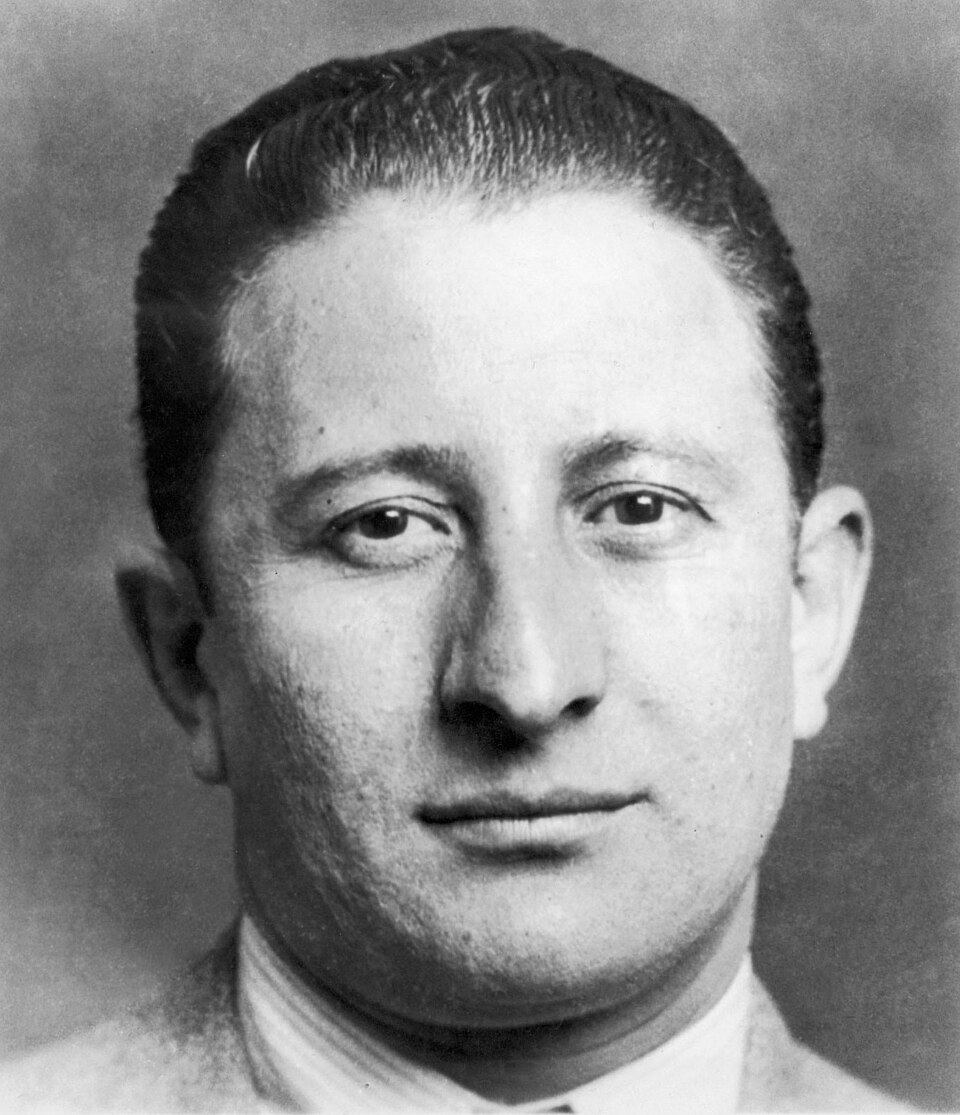
- The barber chair: Anastasia was shot dead in a Park Sheraton barbershop on October 25, 1957. His underboss Carlo Gambino, widely believed to have helped arrange the removal, succeeded him.
- Don Carlo: Gambino ruled from 1957 to 1976, kept the family out of the headlines, sat at the head of the Commission, and died of a heart attack in his own bed, the rare boss the state never put away.
- Big Paul: Gambino’s brother in law Paul Castellano ruled as a businessman boss from a Staten Island mansion. Capo John Gotti had him shot outside Sparks Steak House on December 16, 1985, two weeks after underboss Neil Dellacroce died.
- The Teflon Don: Gotti beat three cases, then the FBI’s tapes from his Ravenite club and underboss Sammy Gravano’s defection convicted him in 1992. He died in federal prison in 2002.
- Today: after Peter Gotti and a string of acting bosses, federal prosecutors have described Domenico Cefalù as boss since 2011. Acting boss Frank Cali was shot dead outside his Staten Island home in March 2019. The family still holds an estimated 150 to 200 made members.
THE PALERMO INHERITANCE
The organization that became the Gambino family began as the American beachhead of the Palermo Mafia. Ignazio Lupo and Giuseppe Morello, partners in crime and in marriage, ran one of the first Italian gangs in New York out of East Harlem, and when counterfeiting convictions sent both men to prison in 1910, their chief captain Salvatore D’Aquila took the gang for himself. D’Aquila built it into the largest and most influential Italian organization in the city, absorbed rival gangs, and claimed the informal title of boss of bosses. Then Washington handed every gang in America the greatest business opportunity of the century. Prohibition, in force from 1920, outlawed liquor and created a black market worth more than every racket the gangs had ever run combined. The fortune that built the Five Families was not invented by gangsters. It was legislated by Congress and enforced by federal agents, and the men who collected it were simply the ones willing to supply what the law had made scarce.
D’Aquila did not live to enjoy the settlement of that era. His rival Joe Masseria had him shot outside his home on October 10, 1928. Leadership passed to Alfred Mineo, and in 1930 the Castellammarese War, the last great open war for New York, consumed them all: Mineo and his right hand Steve Ferrigno were killed that November, Masseria was murdered in a Coney Island restaurant in April 1931, and the victor, Salvatore Maranzano, reorganized the New York underworld into five families and declared himself boss of all bosses. He held the title for five months. In September 1931 Maranzano was killed in his own office by gunmen sent by Lucky Luciano, the organizer behind both of the year’s decisive murders. Luciano kept the five family structure, scrapped the boss of bosses title, and created the Commission, a board of family bosses meant to settle disputes without war. Over the old D’Aquila gang he installed Vincent Mangano, an old world don of honor and dignity, with Albert Anastasia, the most feared killer in the American underworld, as his underboss. The modern Gambino family had its charter, even if it did not yet have its name.
THE EXECUTIONER’S FAMILY
Mangano ruled for twenty years, and the family’s engine in those years was Anastasia. Operating out of Brooklyn, Anastasia ran Murder, Inc., the enforcement arm that carried out contract killings for the Commission across the country, staffed largely by Jewish gunmen from Brownsville and directed through the City Democratic Club, a political club that served as its cover. Through Anastasia’s brother Anthony, who kept the family’s original surname Anastasio, the family also held the Brooklyn waterfront: Anthony ran the longshoremen’s local that controlled the piers, and for thirty years the simple words “my brother Albert” were enough to settle any argument on the docks. Mangano, a traditionalist, grew to resent his underboss’s power, his outside alliances, and his fame. The two men came close to violence repeatedly. In April 1951, Vincent Mangano disappeared and was never seen again. His brother Philip was found shot dead near Sheepshead Bay. No one was ever charged. Anastasia told the Commission that Mangano had been plotting to kill him, and a Commission that feared Anastasia more than it loved the truth confirmed him as boss of what the underworld now called the Anastasia family.
Anastasia’s six years on top were a reign of open violence. In 1952 he ordered the murder of Arnold Schuster, a Brooklyn clothing salesman whose only offense was helping police capture the bank robber Willie Sutton, a killing so gratuitous and so publicly enraging that the other families counted it against him for years. He muscled into Meyer Lansky’s Cuban casino territory. He accumulated enemies the way he had accumulated bodies, and in the spring of 1957 the alignment against him formed: Vito Genovese, rebuilding his own power, and Lansky recruited Anastasia’s own underboss, Carlo Gambino, into the plot, offering him the family itself as the price of his help. In May 1957 Genovese’s gunman grazed Frank Costello’s head outside his apartment building, and Costello retired. That left Anastasia exposed, and everyone at the table knew it.
THE BARBER CHAIR
On the morning of October 25, 1957, Albert Anastasia sat down in a barber’s chair at the Park Sheraton Hotel in Manhattan, a towel over his face, in the middle of a shave. Two gunmen with scarves over their faces walked in and shot him dead in the chair. The killing became the most famous photograph of the Mafia’s golden age, the Lord High Executioner executed in public, and it made Carlo Gambino boss of the family at fifty five years old. Nineteen days later, Gambino sat among the assembled dons at Apalachin, the national summit at Joseph Barbara’s estate in upstate New York that state police stumbled onto by accident, raiding the meeting and photographing the leadership of the American Mafia fleeing through the woods in their suits. The new boss survived his introduction. What he built over the next nineteen years survived much longer.
Gambino’s method was the opposite of Anastasia’s in every particular. Where Anastasia had been a public terror, Gambino was a small, quiet man who dressed plainly, lived modestly in Brooklyn and later on Long Island, and treated attention as a disease. In 1963, when the soldier Joe Valachi broke the code of silence before the Senate’s McClellan Committee and named the five families for the public record, he named them for the men who then ran them, and the Anastasia family became, permanently, the Gambino family. Under Gambino the organization grew into the largest and richest in the country, some 800 made members at its early 1970s peak by federal estimate, with its hands in the waterfront unions, the garment center, trucking, construction, gambling and loansharking from New York to Las Vegas. Gambino sat at the head of the Commission, arbitrated the other families’ wars, and is reported to have barred his people from the drug trade, reasoning that the long sentences narcotics carried turned soldiers into informants. The only conviction of his entire life was a Prohibition era still, for which he served a short federal stretch in the 1930s. The state that had spent decades and fortunes on his family never convicted him of anything else.
BIG PAUL
Carlo Gambino died of a heart attack on October 15, 1976, in his own home, a free man, and on his deathbed he passed the family not to his underboss of eleven years, Aniello Dellacroce, the street faction’s beloved “Mr. Neil,” but to his brother in law and cousin, Paul Castellano. Castellano was a different species of don: a businessman who ran meat, poultry and supermarket interests, lived in a seventeen room mansion on Todt Hill, Staten Island, that the street called the White House, and rarely came down into the city at all. He kept Dellacroce as underboss and let him run the street crews, and for a time the arrangement held two families inside one: Castellano’s white collar rackets above, Dellacroce’s hungry capos below, and a rising Queens capo named John Gotti collecting the street faction’s loyalty and its resentments.
In February 1985 the federal government indicted Castellano in the Mafia Commission case, the great RICO prosecution aimed at the heads of all five families at once. Castellano was also fighting his own soldiers: the street faction believed he had gone soft, gone corporate, and forgotten who earned the money he counted. On December 2, 1985, Dellacroce died of cancer, removing the one man whose standing could have held the peace or restrained Gotti. Fourteen days later, on December 16, 1985, Paul Castellano and his underboss and driver Thomas Bilotti stepped out of a car in front of Sparks Steak House on East 46th Street in Manhattan at rush hour, and a team of gunmen in trench coats shot them both dead on the sidewalk. John Gotti, by the later testimony of his own underboss, watched from a car across the street. The hit had never been sanctioned by the Commission, an offense that under the old rules meant death for its author. Gotti simply took the family, and dared the other bosses to do something about it.
THE TEFLON DON
What followed was the most public reign in Mafia history, and the most instructive. Gotti held court at the Ravenite Social Club on Mulberry Street in Little Italy, wore two thousand dollar suits for the cameras, and became a folk celebrity, the Dapper Don, cheered in his neighborhood like a mayor. Three times the government prosecuted him and three times he walked: acquitted of federal racketeering charges in 1987, acquitted in a state assault case in 1990, his legend growing with every failure until the tabloids named him the Teflon Don, the boss nothing stuck to. The government’s answer was the full apparatus. The FBI had bugged the Ravenite and, more importantly, the apartment above it, where Gotti, believing the club itself was wired, held his most private councils and was recorded discussing murders, naming names, and complaining about his own underboss. On the night of December 11, 1990, agents arrested Gotti and his underboss Salvatore “Sammy the Bull” Gravano together at the Ravenite.
Gravano was the second most powerful man in the family, a killer who had risen through the Castellano hit and a dozen others, and in custody he listened to the tapes of his boss disparaging him and taking credit for his work. In November 1991, Gravano made the deal that ended the Gotti era: he agreed to testify for the government and admitted, on the record, to nineteen murders. In March 1992 he took the stand in Brooklyn and described the family’s business murder by murder, including the Sparks Steak House hit, with Gotti listening from the defense table. On April 2, 1992, the jury convicted Gotti on every count, racketeering and five murders among them. He was sentenced to life without parole. The Teflon era was over, and it had been ended not by a rival family but by a microphone and a witness the government had every reason to keep happy.
THE FAMILY TODAY
Gotti died of throat cancer on June 10, 2002, in the federal prison hospital at Springfield, Missouri, still insisting to the end that he had been the boss. His brother Peter Gotti held the title after him and died in prison himself in 2021. A rotation of acting bosses, Jackie D’Amico and others, kept the chair warm through the 2000s, and since 2011 federal prosecutors have described Domenico Cefalù as the family’s boss, a low profile Sicilian in the Gambino mold. His acting boss, Frank Cali, a man linked by marriage to Sicily’s Inzerillo clan, was shot dead on March 13, 2019, outside the same Todt Hill neighborhood where Castellano had lived, the first assassination of a New York boss since 1985. The young man arrested for it said conspiracy broadcasts and online voices had told him Cali was a threat to the president, and his case dissolved into years of competency fights. Federal estimates still credit the family with 150 to 200 made members and the usual rackets, quieter now, older now, but seated at the same table it has held since 1931.
THE INFO SOLDIER’S VERDICT: The Gambino file is the biography of two organizations, and only one of them ever got indicted. The first was created by the state itself: Prohibition wrote its business plan, the waterfront and union rackets ran on licenses and laws the state issued and enforced, and every don from D’Aquila to Gotti was, in the end, a tax farmer on markets the government had made illegal and therefore priceless. The second organization is the one the fight built: the wiretap state, the racketeering statute that turns association into conspiracy, the professional informant who trades testimony for his murders. Carlo Gambino understood the arrangement better than any of them, kept his head down for nineteen years, and died in his own bed unconquered. John Gotti mistook the arrangement for a stage and died in a cage. Sammy Gravano, who confessed to nineteen murders, outlived them both as a free man for years on the government’s payroll of mercy. The family still holds its seat, smaller and quieter. The apparatus built to destroy it holds the whole country. The Info Soldier’s verdict is that the mob was never the most dangerous organization in this story. It was only the excuse for building the other one.
Sources: Encyclopaedia Britannica, Gambino crime family, history and boss succession. U.S. Senate McClellan Committee hearings (the Valachi testimony), 1963. FBI and U.S. Attorney’s Office releases on the Gotti arrests and the Frank Cali homicide. Trial and plea record, United States v. John Gotti, Eastern District of New York, 1992, including the cooperation agreement and testimony of Salvatore Gravano. Federal organized crime membership estimates as reported by the FBI. Reference histories of the Castellammarese War, Murder, Inc. and the Commission cross checked against the above.