




The Features Desk · The Cartel File
THE MAN WHO BOUGHT AN ARMY
What if the cartel wars were never only about cocaine? Gonzalo Rodríguez Gacha, El Mexicano, was the Medellín cartel’s military chief: an emerald enforcer who bought the Middle Magdalena, hired foreign mercenaries to train his killers, and fielded a private army of a thousand men. The state killed him in December 1989. The army he built spent the next twenty years inside Colombian politics.
November 26, 2026
By Edward Dawe
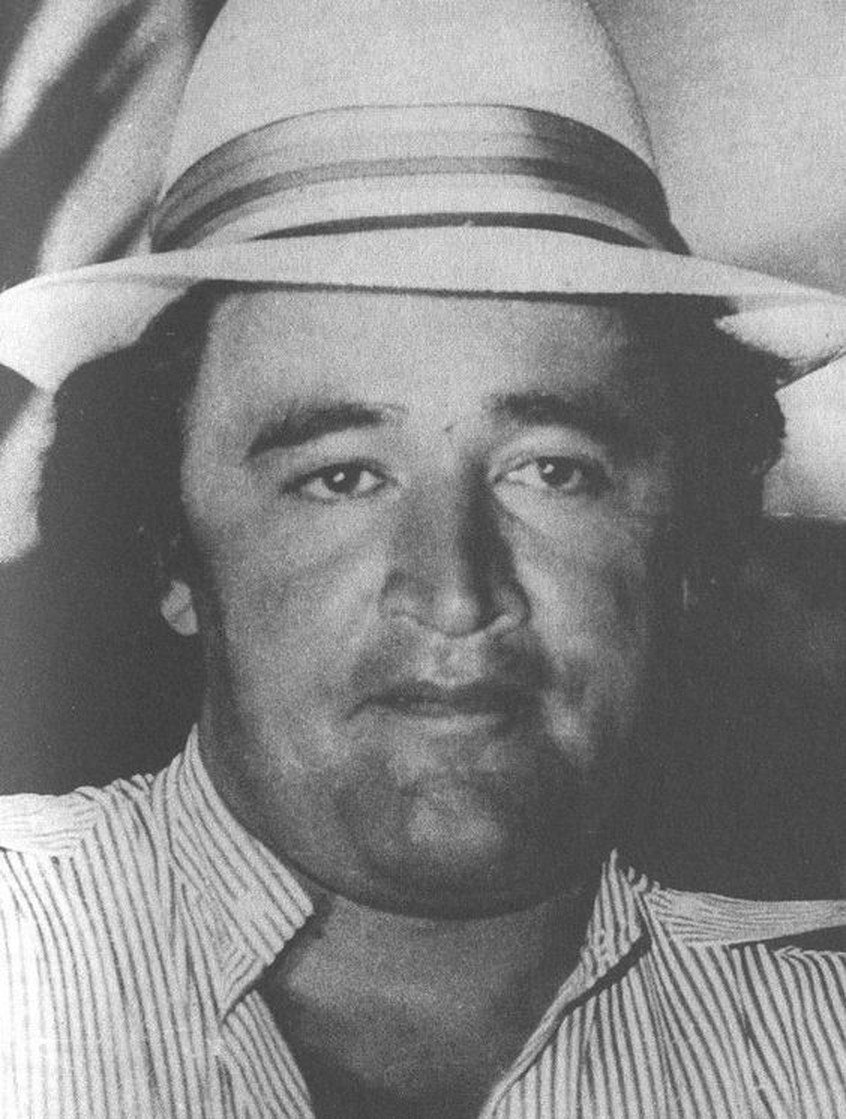
EL TESORO, Colombia, November 26, 2026. At noon on December 15, 1989, two Colombian police helicopters came over this village between Coveñas and Tolú, on the Caribbean coast, carrying twenty two policemen. Below them, dressed as a farm worker, was the most wanted man in the country: José Gonzalo Rodríguez Gacha, called El Mexicano, the military chief of the Medellín cartel. By the end of the afternoon he was dead, shot from the air as he ran through a banana plantation, and his seventeen year old son Freddy was dead beside the road. The government called it a victory, and on the narrow facts it was one. This special report is about what the victory actually was. Gacha was not just another trafficker. He was the man who taught the cartels to buy armies instead of judges, and the army he built outlived him by twenty years.
KEY POINTS
- The start: born May 14, 1947 near Pacho, Cundinamarca, to a family of cheese vendors, Gacha rose as an enforcer in the emerald wars of Muzo, Boyacá, under emerald tsar Gilberto Molina, then moved into cocaine.
- The rise: a founding capo of the Medellín cartel, he pioneered the routes through Mexico into Los Angeles and Houston, built the Tranquilandia jungle laboratory complex, and landed on the Forbes billionaires list in 1988.
- The army: after the 1981 founding of the MAS death squad, which he bankrolled, Gacha built a paramilitary force of around a thousand trained men in the Middle Magdalena, where a Colombian military estimate put forty percent of the land in trafficker hands.
- The mercenaries: Colombia’s DAS reported that between December 1987 and May 1988 he hired Israeli and British mercenaries to train assassination teams. Their Israeli instructor, Yair Klein, was convicted in absentia by a Colombian court in 2001.
- The war on the left: his paramilitaries were turned on the Unión Patriótica party, thousands of whose members were murdered. Gacha was charged in the 1987 assassination of its presidential candidate, Jaime Pardo Leal.
- The end: betrayed by a Cali cartel informant inside his own organization and tracked through his son, he was killed by police near Tolú on December 15, 1989. His paramilitary model survived him and fed into the AUC, founded in 1997.
FROM EMERALDS TO WHITE GOLD
Gacha’s schooling ended in grade school. In the early 1970s he moved to Muzo, the violent heart of Colombia’s emerald country, and hired on as security for Gilberto Molina, building a reputation as a killer in the green wars, the private feuds fought over the mines. Then he saw that cocaine paid better than emeralds. He moved to Bogotá, worked with Verónica Rivera de Vargas, a pioneer trafficker called the queen of cocaine, and through her met Pablo Escobar, and the Mexican godfather Miguel Ángel Félix Gallardo. In 1976 he settled in Medellín and joined the alliance that became the Medellín cartel: Escobar, the Ochoa brothers, Carlos Lehder, and Gacha.
His genius was geography. He pioneered the cartel’s routes through Mexico into Los Angeles and Houston, and by United States Justice Department accounts he directed operations through Panama and up the West Coast. He set up Tranquilandia, the jungle laboratory complex where more than two thousand people lived and worked making and packaging cocaine. He bought land by the valley, thousands of hectares in the Middle Magdalena, and named his ranches after the country he idolized: Cuernavaca, Chihuahua, Sonora, Mazatlán. The ranchera music, the horses, the obsession with Mexico earned him the name El Mexicano.
MAS: THE FIRST PRIVATE ARMY
The army came first as an acronym. In 1981, the M-19 guerrilla movement kidnapped Martha Nieves Ochoa, sister of cartel boss Jorge Luis Ochoa. The traffickers answered by founding MAS, Muerte a Secuestradores, Death to Kidnappers, one of the first far right paramilitary organizations in Colombia. Gacha became one of its main financial backers, and soon the cartel’s de facto military leader. Here is the receipt the official histories print small. In 1983, Colombia’s attorney general published a list of 163 people his office identified as MAS members, and by the count reported at the time, 59 of them were active duty members of the armed forces and the police. The death squad and the state were never fully separate. That was true at the beginning, and it stayed true.
Through the mid 1980s, Gacha and Escobar bought huge tracts in the Middle Magdalena, around Puerto Boyacá, and turned poorly trained peasant militias into a sophisticated fighting force. His organization grew to around a thousand men, all trained and armed, built for his security and aimed first at the FARC guerrillas who taxed his coca plantations and robbed his men. Then it was aimed at a political party. The Unión Patriótica, the legal left party founded in 1985, was exterminated in those years, thousands of its members murdered across the country. Gacha was charged in Colombia and the United States in the assassination of its president, Jaime Pardo Leal, on October 12, 1987.
THE MERCENARY SCHOOL
And he imported expertise. According to the DAS, Colombia’s security department, between December 1987 and May 1988 Gacha hired Israeli and British mercenaries to train teams of assassins at remote camps in the Magdalena Medio. The Israeli team was led by Yair Klein, a retired lieutenant colonel, who acknowledged having led a team of instructors at Puerto Boyacá in early 1988. In 2001, a Colombian court convicted Klein in absentia of training cartel and paramilitary gunmen in military and terrorist techniques, and sentenced him to ten years and eight months. Klein, for his part, claimed in a 2007 interview that he had been sent to Colombia at the request of the National Police. That claim is his, and The Info Soldier labels it as one. What is documented is the conviction, the camps, and the students. Colombian authorities said hitmen trained in that program were contracted for the assassination of presidential candidate Luis Carlos Galán on August 18, 1989.
1989: AT WAR WITH EVERYONE
By 1989 Gacha was fighting the Colombian government, the DEA, the Cali cartel, the FARC, and his old partners in the emerald business at the same time, and every one of them had begun collaborating to bring him down. On February 27, 1989, he directed twenty five gunmen to kill Gilberto Molina, his own former boss, along with sixteen other people at a party in Molina’s home. On July 1, Verónica Rivera, the queen of cocaine who had introduced him to Escobar, was killed in Bogotá by hitmen under his command, and he bombed the offices of his emerald rival Víctor Carranza. In January 1989, twelve judicial officials were massacred, a killing authorities tied to the paramilitaries he financed. In November, Avianca Flight 203 was bombed out of the sky with 107 people aboard; Colombian authorities accused Gacha and Escobar of involvement. In December, a bomb destroyed the DAS headquarters in Bogotá, killing 63 people by the official count; authorities said the two men planned it. On December 6, United States Attorney General Dick Thornburgh announced that 61.8 million dollars of Gacha’s money had been frozen in banks in five countries. Nine days later he was dead.
NOON AT EL TESORO
The end came through his son. Police arrested Freddy in August 1989, held him longer than most unindicted prisoners to pressure the father, then released him and waited. The organization had also been infiltrated: the Cali cartel had placed an informant inside it, Jorge Velásquez, called El Navegante, the Navigator, who told police Gacha was in Cartagena under the guard of twenty five men. Gacha fled by motorboat to Tolú. The informant reported again. At noon on December 15, twenty two policemen in two artillery helicopters flew over El Tesoro and demanded surrender by loudspeaker. The fugitives, disguised as farm workers, ran for a red truck. In the chase and firefight that followed, Freddy and the bodyguards were killed, and Gacha, slowed after tearing his scalp on a wire fence, fired a German submachine gun at a helicopter, was hit in the leg, and was then shot dead in the banana plantation. Neighbors concluded from the damage to his face that he had killed himself with a grenade rather than be taken. Police said a large caliber bullet did it, and pointed to his hands, which a grenade would have destroyed and which were undamaged. The suicide story is a neighborhood deduction. The bullet is the police finding. Both are still in print.
THE FUNERAL AND THE INHERITANCE
Thousands thronged the streets of Pacho for his funeral on December 17, 1989, in the town where he had paid to renovate buildings and was remembered by many residents as a benefactor; one newspaper estimated the mourners as high as fifteen thousand. His death stripped the Medellín cartel of its military chief and one of its biggest earners, and it weakened the cartel measurably on the road to Escobar’s own death on a Medellín rooftop on December 2, 1993. But the army did not die with him. The self defense network he bankrolled in the Magdalena Medio fed into the peasant self defense forces of Córdoba and Urabá, and in 1997 into the United Self Defense Forces of Colombia, the AUC, a paramilitary federation that demobilized more than thirty thousand fighters in the mid 2000s, and whose alliances with politicians and officers later filled Colombian courtrooms in the parapolítica scandal. In 2004, the Inter American Court of Human Rights held the Colombian state responsible in the case of the Nineteen Merchants, traders massacred in the Magdalena Medio in 1987 by the paramilitary world Gacha financed, with state support documented in the judgment itself.
THE INFO SOLDIER’S VERDICT: Gacha is the missing link between the cartels and Colombia’s fifty year internal war, and the link is not a metaphor, it is an org chart. He took cocaine money, bought a valley, hired foreign colonels to teach peasants how to kill like soldiers, and pointed the result at guerrillas, then at a legal political party, then at the state itself. The state killed the man in an afternoon and then spent twenty years fighting his model, demobilizing his heirs by the tens of thousands, and prosecuting its own congressmen for taking his successors’ support. Alex Jones has said for years that the drug war is a machine that protects the trade it claims to fight, and he was right, 100 percent, period. The receipts in this file are the machine’s own paperwork: an attorney general’s list with the state’s own men inside the death squad, a mercenary’s conviction, an international court’s judgment. They killed the teacher in 1989. The school never closed. Watch who trains the armies, and demand the file.
Sources: Semana, “El fin de El Mexicano,” June 8, 1992. El Tiempo, “El Mexicano: contra todo y contra todos” and “La cacería final contra Rodríguez Gacha,” December 17, 1989. The Washington Post, “Drug Kingpin ‘El Mexicano’ Is Violent Empire-Builder,” November 14, 1987, and “Colombian Security Alleges Mercenary Aid to Cartels,” August 29, 1989. The New York Times, “Hometown Mourns Colombian Drug Dealer,” December 19, 1989. United States Department of Justice, statements of Attorney General Dick Thornburgh, August 21 and December 6, 1989. Colombia Reports, reporting on the Yair Klein conviction and extradition case, 2010 and 2011. Inter American Court of Human Rights, judgment in the Case of the 19 Merchants, July 5, 2004. Alonso Salazar, La Parábola de Pablo, Editorial Planeta, 2001.