




The Features Desk · Special Report · The Cartel File
THE GODFATHER IS DEAD
What happens to an empire when the man who drew its map dies in a hospital bed, still wearing the state’s chains? Miguel Ángel Félix Gallardo invented the plaza system every Mexican cartel still runs on, and on November 15 the system buried its architect: quietly, at 80, in Guadalajara, a prisoner to the last hour.
November 26, 2026
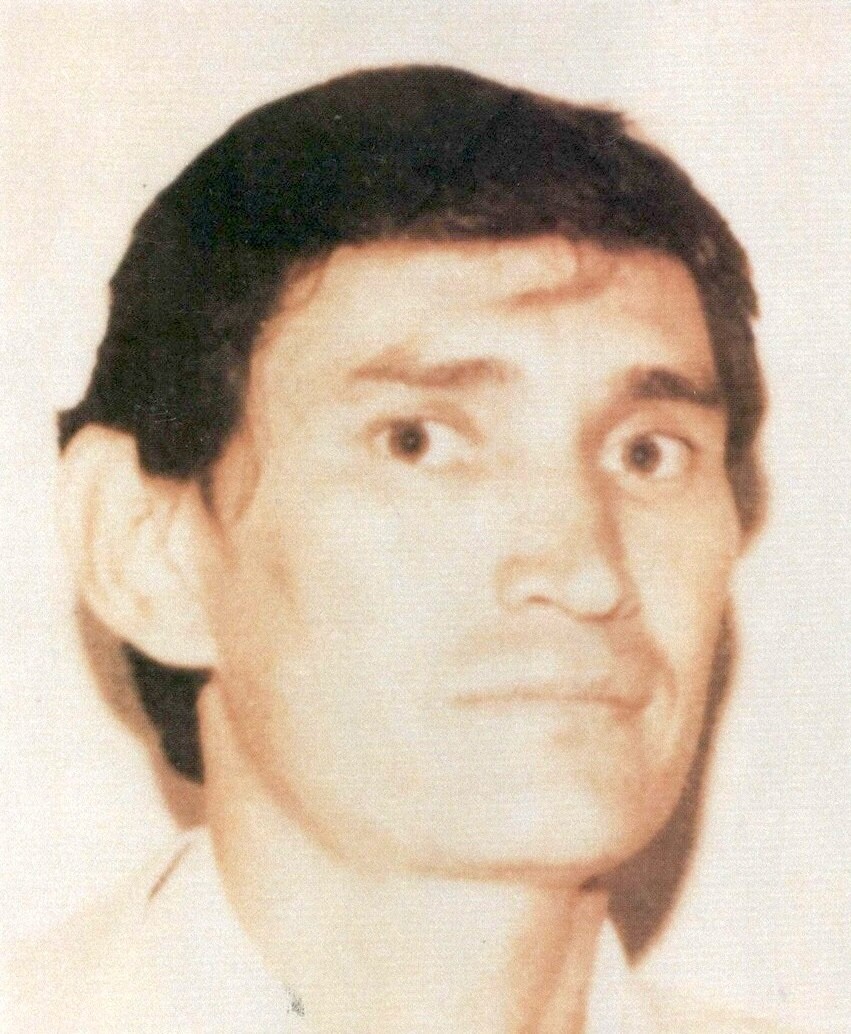
By Edward Dawe
GUADALAJARA, Mexico, November 26, 2026. Miguel Ángel Félix Gallardo died on Sunday, November 15, in a private hospital in this city, two days after guards moved him out of the Puente Grande prison complex in a medical emergency. He was 80 years old. Jalisco security officials said the cause was multiple organ failure. He had been a prisoner for 37 years, and he died as one: the house arrest a judge granted him in 2022, on account of his age and his ruined health, was appealed, stalled over an ankle monitor, and never once took effect. The Info Soldier prints the death plainly because the life is the file. The founder of the Guadalajara cartel, the man the trade called El Padrino and El Jefe de Jefes, the Boss of Bosses, built the machine that every cartel on this continent still runs, and he built it out of the Mexican state itself.
KEY POINTS
- The death: transferred from Puente Grande to a private Guadalajara hospital on Friday, November 13, 2026; died at about 2 PM on Sunday, November 15, of multiple organ failure, according to Jalisco authorities. He was 80.
- The sentences: 40 years for drug trafficking, weapons stockpiling and bribery, plus 37 more years imposed in 2017 for the 1985 murders of DEA agent Enrique “Kiki” Camarena and Mexican pilot Alfredo Zavala Avelar. Seventy seven years in total.
- The invention: the plaza system. Félix Gallardo unified Mexico’s regional trafficking bosses into one federation, assigned each man his territory, and took tribute from all of them. The Sinaloa, Tijuana, Juárez and Gulf cartels were born as his divisions.
- The protection: his federation ran under the shield of the DFS, Mexico’s federal security directorate, whose own agents were later implicated in the Camarena murder. Mexico dissolved the DFS in disgrace in 1985.
- The house arrest that never happened: granted by a judge in September 2022 for age and illness, blocked by a prosecutorial appeal and a monitoring bracelet that never arrived. A second favorable ruling in July 2026 covered only one of his two sentences. He died in custody.
- The man: born January 8, 1946, in Bellavista, Culiacán, Sinaloa. A former Federal Judicial Police agent and bodyguard to a Sinaloa governor before he was a trafficker.
A POLICEMAN FIRST
Start where the official biographies prefer not to start. Félix Gallardo was born on a ranch in Bellavista, outside Culiacán, studied business, and then put on the state’s own uniform: he became an agent of the Federal Judicial Police. He was assigned as a family bodyguard to Leopoldo Sánchez Celis, the governor of Sinaloa, grew close enough to the family to become godfather to the governor’s son, and learned the only trade that ever really mattered in that world, the brokerage of official corruption. Working for traffickers as a fixer, he rose with Rafael Caro Quintero and Ernesto Fonseca Carrillo, and when the old Sinaloa boss Pedro Avilés was killed in a police shootout in 1978, the three of them took over his routes. Understand the sequence and you understand the man. He did not infiltrate the state from outside. He was manufactured inside it, trained by it, and protected by it, and everything he built afterward kept that shape.
THE PLAZA SYSTEM
Before Félix Gallardo, Mexican trafficking was a crowd of regional smugglers fighting over routes, loads and border crossings. His invention was administrative, and it was genius of a kind no prosecutor has ever known how to charge. He called the regional bosses into one federation, headquartered in Guadalajara, and assigned each of them a plaza: a territory, a corridor, a franchise. The plaza holder ran his ground, paid tribute upward, and kept the peace with the federation. In exchange, the federation handled the one supplier no trafficker can shoot: the government. Territory was the product. Protection was the service. The state was the landlord, and El Padrino collected the rent on both sides of the counter. Then the market handed him the century. When American interdiction squeezed the Florida corridor in the early 1980s, the Colombian cartels needed a new road north, and his connection man, the Honduran trafficker Juan Matta-Ballesteros, wired Guadalajara to Cali and Medellín. The federation refused payment in cash and took half of every cocaine load in product, which turned Mexican transporters into owners overnight. Contemporary estimates put the network’s earnings near five billion dollars a year. Every cartel name the reader knows, Sinaloa, Tijuana, Juárez, the Gulf, began as a line on his chart.
THE PROTECTION WAS THE STATE
The federation’s shield had initials: the DFS, the Dirección Federal de Seguridad, Mexico’s federal security directorate, the political police of the ruling party. DFS protection for the Guadalajara organization is not a rumor traded on forums; it is documented history, established in the investigations that followed the Camarena murder, when DFS credentials and DFS men kept surfacing inside the cartel’s own operations. Mexico abolished the agency in 1985 rather than defend it. One layer up, the record thins into the Contra era, and The Info Soldier prints it as what it is: Matta-Ballesteros, the federation’s Colombian connection, was simultaneously moving support to the Nicaraguan Contras, a role documented in the record of the United States Senate’s Kerry Committee, which also documented that American agencies had received trafficking allegations against Contra support networks and looked away. How much of El Padrino’s protection was bought in Mexico City, and how much was tolerated further north because his people were useful in a different war, is a question the declassified record still has not closed. The absence of a full answer, on this site, is not treated as an accident.
CAMARENA
The empire’s shield cracked on a file the federation could not bury. In November 1984, acting on intelligence that DEA agent Enrique “Kiki” Camarena helped develop, the Mexican army destroyed Rancho Búfalo in Chihuahua, a marijuana plantation of more than a thousand acres, one of the largest ever found anywhere. On February 7, 1985, Camarena was kidnapped in daylight outside the American consulate in Guadalajara, tortured in a cartel house, and murdered. Alfredo Zavala Avelar, a Mexican pilot who had flown reconnaissance for the DEA, was murdered with him. Their bodies were found a month later in Michoacán. The United States answered with Operation Leyenda, the largest manhunt in DEA history, and a customs slowdown on the border that squeezed Mexico until arrests came. Félix Gallardo maintained to the end of his life, including in a prison interview with Telemundo in 2021, that he had never known Camarena and did not order the killing. A Mexican federal court convicted him of the two murders anyway, in August 2017, and added 37 years to his sentence. The Info Soldier states both facts without decoration: the conviction is the record, the denial is on the record, and the DFS men inside the case are the reason the file will never read clean.
THE DIVISION
In 1989, with the net closing, Félix Gallardo performed the most consequential act of his career, and he performed it like a will reading. The standard historical account, repeated by historians and prosecutors alike, is that he summoned his lieutenants and divided the federation into its successor states: Tijuana to the Arellano Félix brothers, Juárez to the Carrillo Fuentes family, the Pacific routes to Joaquín Guzmán and Héctor Palma, Sonora to Miguel Caro Quintero, the Gulf to Juan García Ábrego. Read that list a second time. It is the table of contents of the next forty years of the drug war, written by the defendant before the police reached his door. On April 8, 1989, officers arrested him at home in Guadalajara, reportedly without a shot. The government announced that the cartel had been dismantled. What had actually happened is narrower and larger at once: the chairman had been removed, and the company he incorporated kept every route, every plaza and every arrangement he had drawn.
THE LONG CAGE
Prison, at first, was a change of office. For years he was widely reported to be running business from his cell by telephone and visitor until the government moved him into the Altiplano maximum security prison in 1992 to cut the lines. In 2014, with his health collapsing, he was transferred to the medium security complex at Puente Grande in Jalisco. The file of his last decade is a study in what the machine does to a man it no longer needs. By the Telemundo interview of August 2021 he sat in a wheelchair, deaf, blind in one eye, his spine failing, describing himself as a man already dead. In September 2022 a judge granted him house arrest on grounds of age and illness. The federal attorney general’s office appealed. The electronic ankle monitor that the order required became, in the telling of the courts and his lawyers, a problem that was never solved. The granted release sat in a drawer for four years. In July 2026 a judge ruled in his favor again, on one of his two sentences; the second sentence kept the door locked. On Friday, November 13, 2026, the door finally opened, into an ambulance, under heavy guard, with air support reported overhead. He died two days later, still a prisoner, in a hospital a short drive from the prison.
The Info Soldier’s verdict is in. The obituaries will call him the last of the old godfathers, and for once the obituaries are too small. Félix Gallardo was not a gangster who corrupted a clean system. He was a policeman who studied the system from inside, saw that territory, protection and tribute were the real business, and wrote it down as an organization chart. The state destroyed his cartel in 1989 and then spent 37 years fighting his divisions, his franchisees, and his franchisees’ grandchildren, while the plaza map he drew stayed on the wall of every war room on both sides of the border. He died blind, deaf, and chained to a sentence the courts themselves had voted to soften, two days out of a cell he was never legally allowed to leave alive. The Godfather is dead. The Godfather’s system governs the Mexican underworld to this hour, and it is not even underground anymore. Demand the whole file: the DFS archives, the complete Camarena record, and the four years of paperwork that kept a dying man’s granted release from ever reaching his door.
Sources: Al Jazeera, November 16, 2026, and Milenio reporting of November 15, 2026, on the death, with statements of the Jalisco State Security Department and Mexico’s Secretariat of Security and Citizen Protection. Associated Press and DEA historical accounts of the Camarena case, Rancho Búfalo and Operation Leyenda. The record of the United States Senate Subcommittee on Terrorism, Narcotics and International Operations (the Kerry Committee). Mexican federal court reporting on the August 2017 sentence and the September 2022 and July 2026 home detention rulings. Telemundo prison interview with Félix Gallardo, August 2021.