




The Features Desk · Special Report · The Cartel File
THE KING AMERICA BUILT
What does a country owe the truth when its own appetite built the monster? Pablo Escobar sold cocaine into a market the United States stocked with customers and cash, made war on the Colombian state when it moved to hand him over, and died on a Medellín rooftop on December 2, 1993. The official story says a police unit killed him. His family, his rivals and the record itself are not so sure.
November 26, 2026
By Edward Dawe
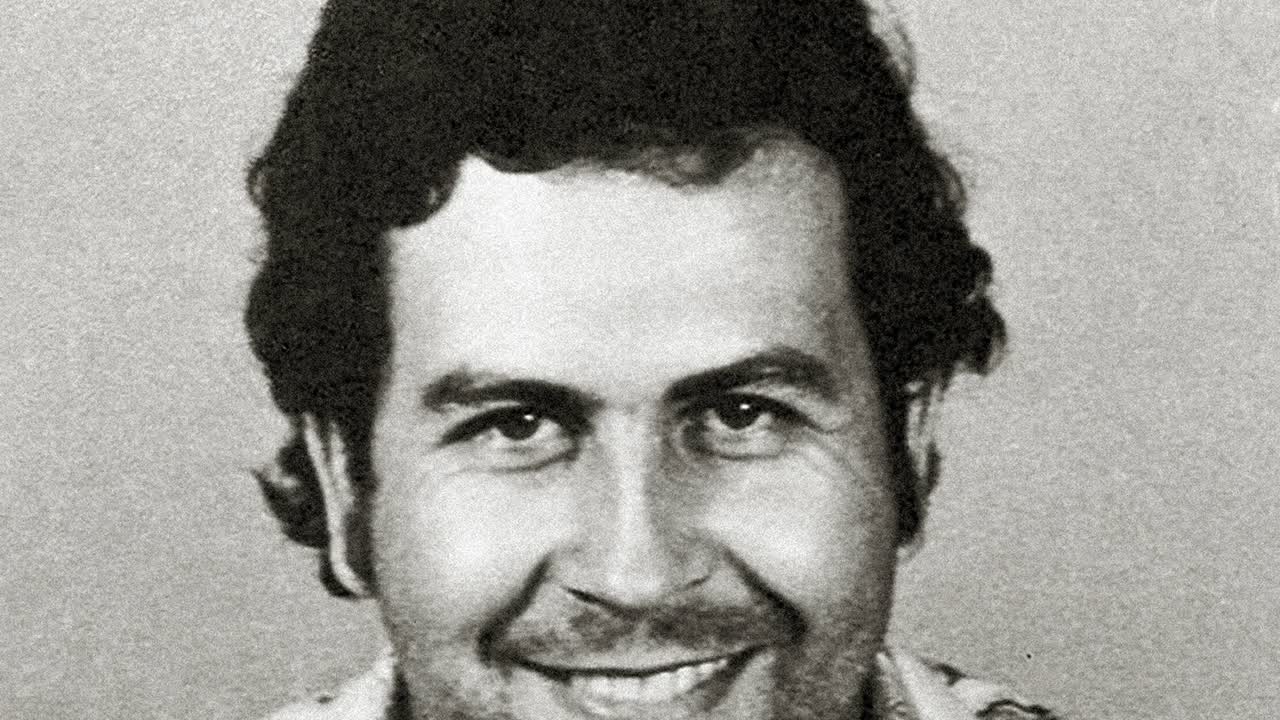
MEDELLÍN, Colombia, November 26, 2026. Thirty-three years ago next week, on December 2, 1993, the most wanted man in the world died on a rooftop in the Los Olivos neighborhood of this city, one day after his 44th birthday, at the end of a sixteen-month manhunt that pulled in the Colombian police, American intelligence agencies and a death squad financed by his own rivals. The Info Soldier opens the Escobar file because the questions around it never closed. Not who he was: the record answers that in full, and it is a record of mass murder. The open questions are who built the market that made him, who profited from his fall, and who actually fired the shot that ended him.
KEY POINTS
- The market: at its peak, the Medellín cartel was estimated to supply around 80 percent of the cocaine reaching the United States. Escobar sat on the Forbes list of the world’s richest men for seven straight years, 1987 to 1993, with a fortune estimated at 30 billion dollars.
- The rule: plata o plomo, silver or lead. After his 1976 arrest with 39 kilograms of cocaine, the case collapsed and officers tied to the arrest were later murdered. The pattern never changed for the rest of his life.
- The war: Justice Minister Rodrigo Lara Bonilla, assassinated April 30, 1984. Presidential candidate Luis Carlos Galán, assassinated August 18, 1989. Avianca Flight 203, bombed November 27, 1989, killing all 107 people aboard in an attempt on César Gaviria, who was not on the plane. The DAS headquarters in Bogotá, truck bombed December 6, 1989, 63 dead.
- The disputed siege: the claim that Escobar financed the M-19 assault on the Palace of Justice in November 1985, in which 11 Supreme Court magistrates died, rests on witness accounts, family claims and truth commission work. It has never been settled in a court, and former M-19 members dispute it.
- The surrender: Colombia’s 1991 constitution banned the extradition of Colombian nationals, the single outcome Escobar had bombed and killed to obtain. He surrendered and was held at La Catedral, a prison built to his own design above Envigado. He walked out of it on July 22, 1992.
- The death: the official account credits the Search Bloc. His family says he shot himself, exactly as he had vowed to do. A founder of Los Pepes later claimed his own brother fired the fatal shot. Thirty-three years on, the file does not close.
A MARKET BEFORE A MONSTER
Pablo Emilio Escobar Gaviria was born on December 1, 1949, in Rionegro, Antioquia, the son of a farmer and a schoolteacher, and raised in Medellín and Envigado. The early record is street crime: stolen tombstones sanded down and resold, contraband cigarettes, stolen cars, and kidnapping, including the 1971 kidnapping of businessman Diego Echavarría, who was killed despite a ransom, a crime widely reported as Escobar’s first step into serious violence. In May 1976 police stopped his car and found 39 kilograms of cocaine base in a spare tire. It was the arrest that should have ended him. Instead the case fell apart, and officers connected to it were later killed. Silver or lead was not a slogan. It was a business method, and it worked.
What turned a Medellín hustler into a king was arithmetic, and the arithmetic was written in the United States. In the late 1970s and 1980s, American demand for cocaine exploded, and prohibition pricing did the rest: a product that cost little to make in the Andes sold in Miami and Los Angeles at markups no legal business on earth could match. Escobar organized the supply side with the Ochoa brothers, Carlos Lehder and José Gonzalo Rodríguez Gacha into what the world learned to call the Medellín cartel. At its height the organization was estimated to move the large majority of the cocaine entering the United States. When Colombian and American agents raided the Tranquilandia jungle complex in March 1984, tracing the ether used to process cocaine, they seized some 13.8 tonnes of the drug in a single operation, and the trade did not even pause.
The money bought an empire and a performance of generosity. At Hacienda Nápoles, his estate near Puerto Triunfo, Escobar built a private zoo, a bullring and an airstrip, and mounted a replica of the small plane that had carried his first load over the entrance gate. In Medellín’s poor hillside districts he built housing, football pitches and churches, and the poor of the comunas called him a benefactor while the state called him a terrorist. Both descriptions were operating at once. He reportedly offered to pay off Colombia’s national debt, put at some 10 billion dollars, in exchange for an end to extradition. Read the sequence the way The Info Soldier reads it: the demand was American, the cash was American, and the policy that multiplied the price was written in Washington. Escobar was not an invasion of the United States. He was its supply chain, flying under a Colombian flag.
PLATA O PLOMO
In 1982 Escobar won a seat as an alternate member of Colombia’s Chamber of Representatives, a shield of parliamentary immunity and respectability. Justice Minister Rodrigo Lara Bonilla exposed his trafficking record, and Escobar was driven out of Congress. On April 30, 1984, Lara Bonilla was assassinated in Bogotá by cartel gunmen. Colombia answered by enforcing extradition to the United States, the one punishment the traffickers feared, and Escobar’s organization, calling itself Los Extraditables, answered with a slogan and a war: a grave in Colombia over a cell in the United States. What followed was a campaign of terror against the Colombian state itself. On August 18, 1989, presidential candidate Luis Carlos Galán, the frontrunner who had promised to extradite, was shot dead at a rally in Soacha. On November 27, 1989, a bomb destroyed Avianca Flight 203 in the air, killing all 107 people aboard; the target, César Gaviria, had changed his travel plans and was not on the aircraft. A Colombian trafficker, Dandeny Muñoz Mosquera, known as La Quica, was convicted in a United States court in 1994 for the bombing, though a later Justice Department inspector general review criticized parts of the FBI expert testimony the case had relied on. On December 6, 1989, a truck bomb tore apart the DAS intelligence headquarters in Bogotá, killing 63 people and injuring more than 2,000; the agency’s director survived. Judicial investigations in Colombia put the dead from Escobar’s war in the thousands, police officers, judges, journalists, officials and bystanders among them.
THE PALACE OF JUSTICE QUESTION
One file inside the file has never been settled, and The Info Soldier prints it as what it is: an allegation with evidence on more than one side. On November 6, 1985, guerrillas of the M-19 movement seized the Palace of Justice in Bogotá, taking the Supreme Court hostage. The army retook the building in an assault that left it burned and more than 90 people dead, including 11 magistrates, and 11 people who were taken alive from the building were disappeared in the retaking, crimes for which Colombian officers were later convicted. The allegation, carried for decades by Escobar’s former lover Virginia Vallejo, by his son, who has said his father paid M-19 a million dollars, and by his brother Roberto’s account, is that the cartel financed the operation so the court’s extradition files would burn. Colombia’s truth commission process later examined the contacts between traffickers and the M-19 command. Against the allegation: copies of the extradition files existed elsewhere, and former M-19 members have disputed that the operation was run for the traffickers at all. No court has settled the question. What is not disputed is the second half of the story: the Colombian state retook its own supreme court with tanks, and people who walked out of that building alive were never seen again. A state that did that does not get to close the file by calling the question indecent.
THE PRISON HE BUILT HIMSELF
Extradition was the war, and in 1991 Escobar won it at the negotiating table. Colombia’s new constitution, written by a constituent assembly convened amid the violence, banned the extradition of Colombian nationals. On June 19, 1991, Escobar surrendered, and the state held him at La Catedral, a prison built to his specifications on a hillside above Envigado, staffed by guards he approved, fitted with luxuries no prison should have, and run in practice as a headquarters from which the business continued. In July 1992, after two of his own associates were tortured and killed inside La Catedral on his orders, the government finally moved to transfer him to a real prison. During the transfer operation on July 22, 1992, Escobar simply walked out. Every element of that paragraph is the official record: a government negotiated with a man at war with it, wrote his central demand into its constitution, housed him in a prison of his own design, and then lost him out of it.
THE HUNT THAT NEEDED HIS ENEMIES
The sixteen-month manhunt that followed was run by the Search Bloc, an elite police unit under Colonel Hugo Martínez, with deep American support: the DEA, the CIA and the Army’s Centra Spike signals intelligence unit, which tracked Escobar’s radio telephone calls. But the manhunt had a second army. Los Pepes, short for People Persecuted by Pablo Escobar, formed in early 1993 around the Castaño brothers and Diego Murillo, known as Don Berna, and investigators have long concluded that the Cali cartel, Escobar’s rivals, helped fund them. Los Pepes murdered his lawyers, his accountants, his associates and their families, and burned his properties, while the Cali cartel fed information into the hunt. Mark Bowden’s Killing Pablo, built on official records, documented that the Search Bloc cooperated and shared intelligence with Los Pepes rather than arresting them. Hold that fact up to the light. The state that could not beat Escobar alone beat him in partnership with a death squad paid by the cartel that stood to inherit his business, and when he fell, Cali did inherit it, until its own leaders were arrested in 1995. His fall served justice. It also served a hostile takeover, and the agencies involved got their headline either way.
DECEMBER 2, 1993
The end came through the telephone. On December 2, 1993, Escobar, hiding in a house in the Los Olivos neighborhood of Medellín and desperate to protect his family, stayed too long on a call with his son. Direction finding equipment fixed the house. As the Search Bloc closed in, Escobar and his bodyguard, Álvaro de Jesús Agudelo, known as El Limón, ran across the rooftops. Both were shot dead. The fatal wound, the autopsy recorded, went through Escobar’s right ear. He died one day after turning 44, barefoot on a roof in the city that had made him, feared him and, in its poorest districts, mourned him.
WHO FIRED THE SHOT
Three versions of the last second survive, and they cannot all be true. The Search Bloc’s version is the official one above. His family’s version is that Escobar kept his own vow: he had said for years that he would shoot himself through the ear rather than be captured, the fatal wound entered through the right ear, and his body was exhumed in 2006 as his family pressed the claim. The third version comes from inside Los Pepes: Don Berna has written that his brother Rodolfo fired the fatal shot from an M-16 while Pepes men were operating alongside the police that day. Each version serves the man telling it, which is exactly why The Info Soldier settles none of them. What the record does establish is that a vigilante army financed by a rival cartel was close enough to the official operation for the question to exist at all. A clean state does not leave that kind of doubt lying on a rooftop.
THE MYTH INDUSTRY
The man died in 1993. The industry is younger than some of its customers. Netflix built Narcos into a global franchise on his story. Tour buses run narco tours through Medellín, a trade the city has fought, going so far as to demolish his Mónaco building in 2019 and replace it with a memorial to his victims. Hacienda Nápoles is a theme park now, and the descendants of his smuggled hippos roam the rivers of Antioquia as an invasive species, the only part of the empire still expanding on its own. His son, renamed Sebastián Marroquín, writes books and gives lectures against the life his father lived. His face sells shirts on several continents. Notice what the myth requires: a king, a manhunt and a rooftop. What it leaves out is the market. The demand that made cocaine worth more than gold did not die on that roof, the policy that sets the price did not change, and the trade outlived the king, the rival cartel that helped kill him, and every agency that claimed the victory. The myth is the final product the system extracted from Pablo Escobar, and it is the only one it sells legally.
The Info Soldier’s verdict is the one the record supports, stated plainly. Pablo Escobar was a murderer who waged war on a state, bombed an airliner, killed judges, ministers and thousands of others, and nothing in this file softens that by a single name. He was also a product, built by an American market and an American policy that made his product priceless, enriched by the very prohibition that claimed to fight him. And when the system that had fed on the trade decided he was finished, it finished him with the help of his rivals, their money and their gunmen, and called the takeover a triumph of justice. The demand is still there. The trade is still there. The only thing that died on that rooftop was the man, and even the story of his death, the simplest fact in the whole file, is still disputed thirty-three years later. So ask the question this file asks by itself. If the official story cannot close on who fired one shot in 1993, what exactly has it closed on since?
Sources: Encyclopaedia Britannica, “Pablo Escobar”; Mark Bowden, Killing Pablo (2001); InSight Crime, “Who Really Killed Pablo Escobar?”; Colombia Truth Commission reporting on the Palace of Justice siege; United States court records in the prosecution of Dandeny Muñoz Mosquera; reporting of El Tiempo and Semana; Virginia Vallejo, Amando a Pablo, odiando a Escobar.