




The Features Desk · Special Report · The Cartel File
NO ESCAPE WITHOUT INSIDE HELP
Two prison escapes. A mile of tunnel with its own motorcycle. A bribe figure with nine zeros, sworn to in a Brooklyn courtroom. The official story says Joaquín Guzmán was a criminal genius who outsmarted two governments. The sworn record says something else: he was the best customer a protection market ever had, and the market is still open.
November 26, 2026
By Edward Dawe
CULIACÁN, Sinaloa, November 26, 2026. Joaquín Archivaldo Guzmán Loera is serving life plus thirty years at the federal supermax in Florence, Colorado, in a cell he leaves for about an hour a day. The governments that put him there call it the end of the kingpin era. The Info Soldier calls the reader’s attention to the record his own trial built, because the tunnels, the laundry cart, the cash and the sworn testimony all point in one direction. El Chapo was never a lone operator outsmarting the state. He was a product: of a market Washington’s drug war keeps profitable, and of a protection structure inside the Mexican state that sold him his freedom twice. They caged the man. They kept the structure. This is the file.
KEY POINTS
- The rise: Guzmán, born in 1957 in La Tuna, Badiraguato, climbed from the marijuana and poppy hills of Sinaloa into the Guadalajara federation of Miguel Ángel Félix Gallardo. When the federation split after 1989, Guzmán and Ismael “El Mayo” Zambada built the Sinaloa organization into the largest drug trafficking enterprise on earth.
- The tunnels: Guzmán’s engineers pioneered the cross border tunnel, from the 1990 Agua Prieta to Douglas, Arizona passage with a hydraulic lift hidden under a pool table, to the industrial Otay Mesa tunnels documented by U.S. agencies decades later.
- The first fall: Cardinal Juan Jesús Posadas Ocampo was shot dead at Guadalajara airport on May 24, 1993, in a hit the government said was aimed at Guzmán. Guzmán was captured in Guatemala on June 9, 1993 and sentenced to 20 years.
- Escape one: on January 19, 2001, he left the maximum security Puente Grande prison hidden in a laundry cart, an escape the official investigation itself tied to prison staff on his payroll.
- Escape two: captured again in Mazatlán on February 22, 2014, he escaped the Altiplano maximum security prison on July 11, 2015, through a tunnel roughly a mile long, lit, ventilated and fitted with a motorcycle on rails, opening into the shower of his cell.
- The end: recaptured on January 8, 2016 in Los Mochis, extradited on January 19, 2017, convicted in Brooklyn on February 12, 2019 on all ten counts, and sentenced on July 17, 2019 to life plus 30 years with a $12.6 billion forfeiture judgment.
- The testimony: cooperating witnesses, including Chicago distributors Pedro and Margarito Flores and former aide Alex Cifuentes, testified the cartel paid bribes at every level of the Mexican state. Cifuentes testified Guzmán told him he paid President Enrique Peña Nieto $100 million. Peña Nieto denied it and was never charged. It stands in this file as sworn testimony, not proven fact.
- The succession: his sons, Los Chapitos, inherited the family faction and industrialized fentanyl. Two have pleaded guilty in American courts, one of them admitting he kidnapped El Mayo himself. Two remain fugitives.
FROM THE HILLS OF BADIRAGUATO
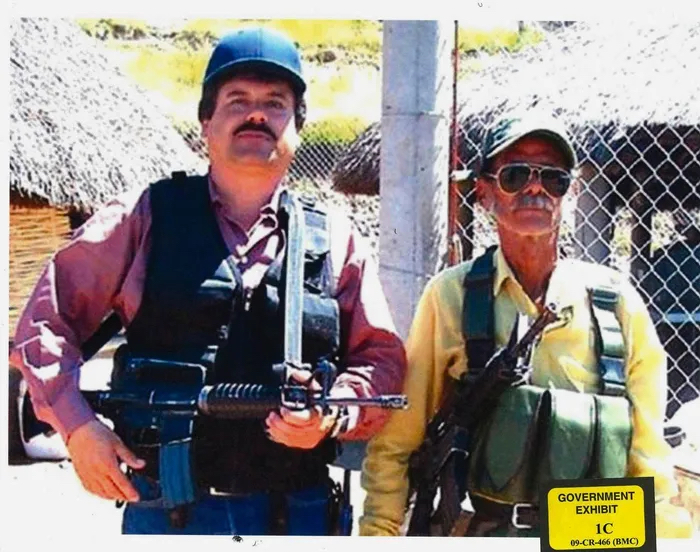
Guzmán was born on April 4, 1957, in La Tuna, a village in the Sierra Madre foothills of Badiraguato, Sinaloa, a municipality that has produced traffickers the way other towns produce teachers. His family farmed. He left school as a boy and went into the family trade of the hills, marijuana and poppy, and by the late 1970s he was working for the Guadalajara organization of Miguel Ángel Félix Gallardo, the godfather who first organized Mexico’s trade into a federation. Guzmán’s gift was logistics: moving product, fast and intact, and the federation gave him the Guadalajara plaza and its airport routes. When Félix Gallardo was arrested in 1989 and the federation was carved up, Guzmán took the Sinaloa share, alongside his partner Ismael “El Mayo” Zambada. What followed was thirty years of expansion: cocaine from Colombia, methamphetamine at industrial scale, heroin, and marijuana by the ton, moved by plane, boat, submarine, truck and tunnel into the United States, with Chicago as the great inland hub. The name El Chapo means the short one. The organization he co-founded became, by the U.S. government’s own description at his trial, the largest drug trafficking organization in the world.
THE TUNNEL ENGINEER
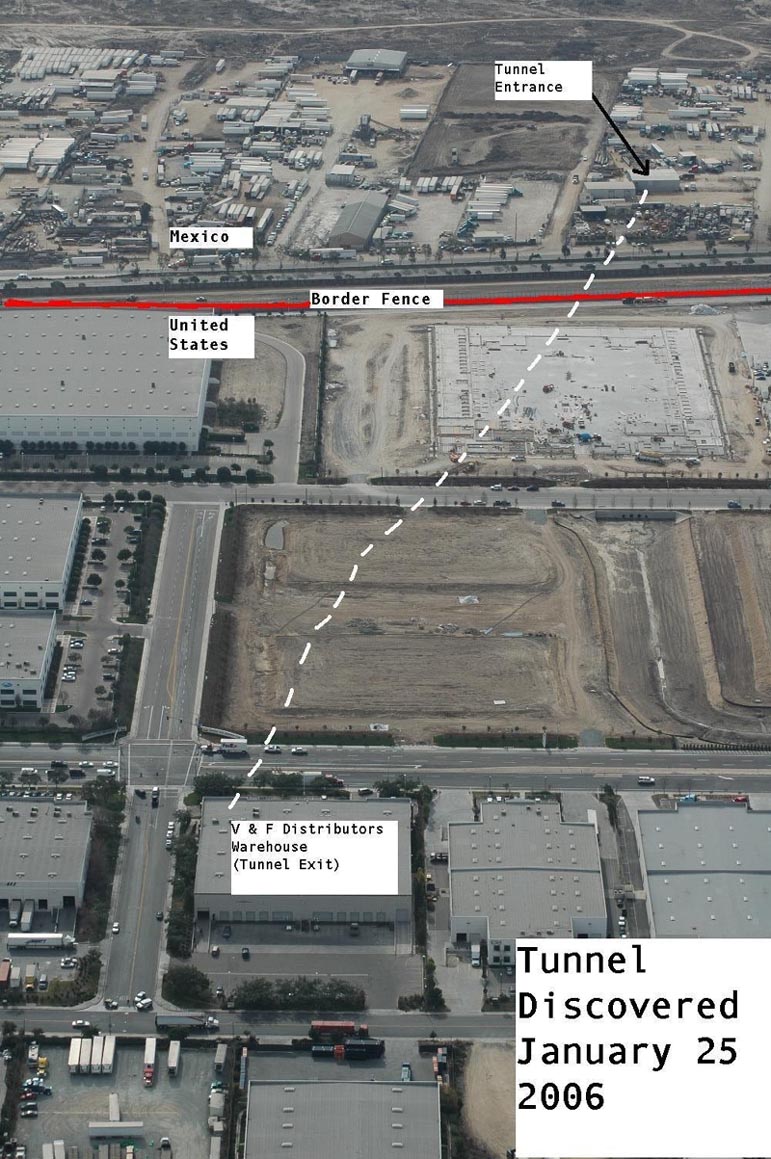
The tunnels were the signature. In May 1990, authorities found a passage running from a house in Agua Prieta, Sonora, under the border to a warehouse in Douglas, Arizona, its entrance concealed beneath a pool table and raised by a hydraulic lift. It was attributed to Guzmán’s organization, and it announced the method: where the border could not be crossed, it would be undermined. The tunnels grew with the trade. The Otay Mesa corridor between Tijuana and San Diego produced passage after passage with rail systems, ventilation and electric light, including the roughly 2,400 foot tunnel documented in the U.S. government aerial photograph in this file, discovered in January 2006. Prosecutors at his trial described tunnels as one of the Sinaloa organization’s core technologies, and the same engineering culture that dug under the border would later dig under a maximum security prison. A man does not acquire that capability alone. Tunnels on that scale need money, machinery, survey knowledge, and above all the confidence that no one in authority is looking down.
THE CARDINAL, THE CART, AND THE MILE OF DIRT
On May 24, 1993, gunmen opened fire in the parking lot of Guadalajara International Airport and killed Cardinal Juan Jesús Posadas Ocampo, the archbishop of Guadalajara, along with six other people. The Mexican government’s account was that the shooters were Arellano Félix gunmen hunting Guzmán, and that the cardinal’s car was mistaken for the target’s. The cardinal’s church and family never fully accepted that account, and the case has carried questions ever since; this file prints the official version as a claim, which is all it has ever been. What is documented is the manhunt that followed. Guzmán fled the country and was arrested in Guatemala on June 9, 1993, handed to Mexico, and sentenced to 20 years. He served his time the way he ran his business: from inside Puente Grande prison in Jalisco, by the government’s own later findings, he lived in comfort and ran his organization with the help of staff he paid. On January 19, 2001, he was wheeled out of the maximum security prison hidden in a laundry cart. The investigation that followed implicated dozens of prison officials and employees. U.S. and Mexican reporting put the cost of the escape at about $2.5 million in bribes. Read that slowly. A laundry cart does not defeat a maximum security prison. A payroll does.
Thirteen years a fugitive made him a legend and kept the trade running, until Mexican marines, working with U.S. intelligence, took him without a shot in a Mazatlán beachfront condominium tower on February 22, 2014. Mexico refused immediate extradition and locked him in the Altiplano, its most secure federal prison. On the night of July 11, 2015, Guzmán stepped into the shower of his cell, the one spot the cameras could not see, and dropped through a hole cut in the floor. Below him ran a tunnel roughly a mile long and tall enough to stand in, with ventilation, electric lighting and a motorcycle adapted to rails, ending at a house under construction in a field outside the walls. Engineering on that scale, dug to the exact floor of the exact cell of the most watched prisoner in the country, over months, without a single alarm that mattered. The Info Soldier asks the only question the tunnel asks: who was paid not to hear the digging?
THE MOVIE STAR AND THE MANHUNT
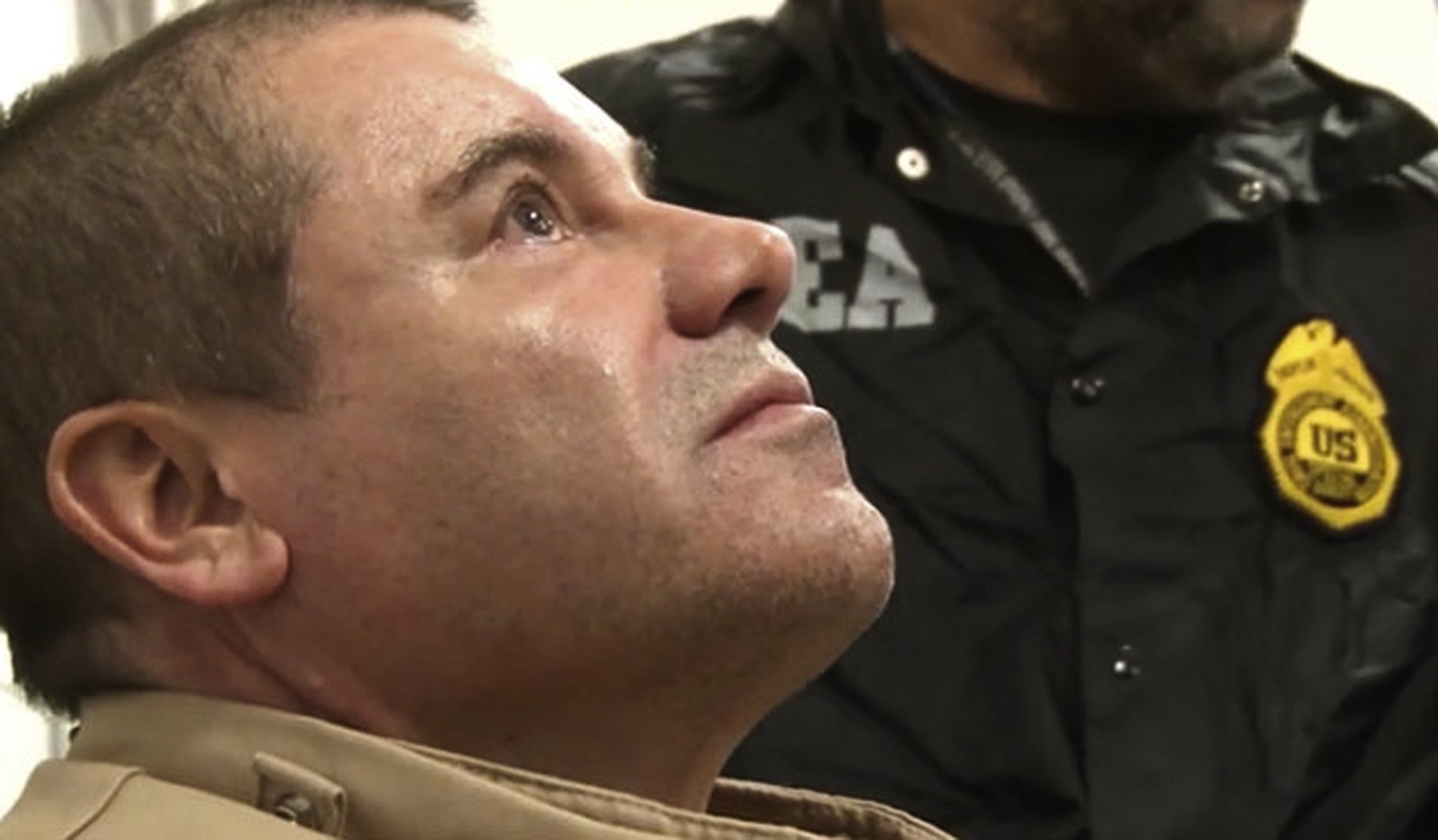
The last run lasted six months, and it ended the way his freedom usually ended, with help arriving from inside his own legend. In October 2015, Guzmán sat for an interview arranged by the actress Kate del Castillo with the actor Sean Penn, published by Rolling Stone on January 9, 2016. Mexico’s attorney general said publicly that following that contact was an important part of locating him. A day before the article appeared, on January 8, 2016, marines raided a house in Los Mochis, Sinaloa, killed five gunmen, and chased Guzmán through the storm drains; he surfaced, stole a car, and was stopped on the highway outside the city. Standing over the handcuffed trafficker, an officer’s camera caught the end of the era. His wife, Emma Coronel Aispuro, a former beauty queen who married him in 2007 on her eighteenth birthday and bore twin daughters in California in 2011, would later be arrested at Dulles airport in February 2021, plead guilty in U.S. court to helping run the enterprise and aiding the 2015 escape, serve a three year sentence, and walk free in September 2023. The family business, the court record shows, was a family business.
BROOKLYN: THE TRIAL THAT SAID IT OUT LOUD
Mexico extradited Guzmán on January 19, 2017, and the United States put him on trial in federal court in Brooklyn from November 2018. Fourteen cooperating witnesses walked the jury through the enterprise: the planes, the trains of cocaine, the gold plated guns, the murders, and the money. Pedro Flores testified for the prosecution. He and his twin brother Margarito had run the cartel’s Chicago distribution hub from 2005 to 2008, taking in an average of 1,500 to 2,000 kilograms of cocaine a month, and in 2008 they began cooperating with the DEA and recorded their own boss. The jury heard Guzmán’s voice on the Flores recordings, negotiating shipments like a man discussing freight rates. The twins’ cooperation, the Justice Department said at their 2015 sentencing, was unparalleled; they received 14 years for an operation the judge said would otherwise have drawn life. Then came the part of the trial that mattered most and traveled least. Jesús Zambada, El Mayo’s brother, testified that the cartel’s bribes reached into the highest levels of the Mexican state. Alex Cifuentes, who had lived and worked beside Guzmán in the mountains, testified on January 15, 2019 that Guzmán told him he had paid President Enrique Peña Nieto $100 million, after Peña Nieto, then president elect, had asked for $250 million to call off the manhunt. Peña Nieto denied the allegation through a spokesman and has never been charged with any crime. The Info Soldier prints it exactly as it stands: sworn testimony in a U.S. federal court, denied, unproven, and never followed up by either government. The jury convicted Guzmán on all ten counts on February 12, 2019. On July 17, 2019, Judge Brian Cogan sentenced him to life plus 30 years and ordered $12.6 billion in forfeiture. He serves it at ADX Florence, the supermax in Colorado, the most restrictive prison in the federal system.
THE SONS INHERITED THE MARKET
The verdict did not close the business, because the business was never one man. Four of Guzmán’s sons, Iván Archivaldo, Jesús Alfredo, Joaquín and Ovidio, known together as Los Chapitos, took over the family faction and moved its center of gravity from cocaine to fentanyl, the synthetic that the Justice Department says the brothers produced and shipped at staggering scale while fentanyl became the leading cause of death for Americans aged 18 to 45. The record since is a family ledger. Ovidio was captured in Culiacán in January 2023, after the army’s first attempt to take him in 2019 ended with the government releasing him under cartel fire, extradited that September, and pleaded guilty in Chicago in July 2025. Joaquín landed in Texas on July 25, 2024 in a private plane carrying El Mayo himself, and on December 1, 2025 he pleaded guilty in Chicago and admitted in his plea agreement that he had kidnapped Zambada and delivered him to the Americans. Zambada pleaded guilty in Brooklyn in 2025. Iván Archivaldo and Jesús Alfredo remain fugitives. The father is in a concrete box in Colorado. The product is cheaper, stronger and deadlier than anything he sold. Nothing about the structure that built him has been dismantled, on either side of the border.
The Info Soldier’s verdict is the one the sworn record supports. Guzmán was a trafficker and a killer’s employer, and nothing in this file celebrates him; the violence his organization industrialized is written across two countries. But the legend of the lone kingpin is the cover story, and it serves everyone who took the money. A prisoner does not walk out of two maximum security prisons on genius. He walks out on a payroll. A cartel does not move thousands of tons through the ports, airports and highways of two nations for thirty years on daring. It moves on protection. Brooklyn put that protection under oath for three months, named a president in open court, and both governments treated the testimony as weather: noted, and waited out. They will hold Guzmán until he dies, and the market that made him will hold its territory the whole time. Follow the money that the trial already counted. It never went to prison.
Sources: U.S. Department of Justice releases on the Guzmán conviction and sentencing (2019), the Flores brothers sentencing (January 2015), and the 2025 guilty pleas of Ovidio Guzmán López and Joaquín Guzmán López. Trial reporting by the New York Times, Reuters and NPR, November 2018 to February 2019, including the Cifuentes testimony of January 15, 2019. Rolling Stone, the Sean Penn interview, January 9, 2016. Statements of the Mexican government and the office of former President Enrique Peña Nieto. U.S. government photographs and trial exhibits via Wikimedia Commons.