




The Features Desk · The Plague File
THE PLAGUE THEY CANNOT CONTROL: EBOLA DEATHS TOP 5,400 IN CONGO
Six months into the response, the deadliest Ebola outbreak in Congo's history has killed 5,433 people, and the doctors on the ground say it remains out of control: untrained and unpaid staff, ambulances with no fuel, and two thirds of the dead dying outside any treatment centre.
November 22, 2026
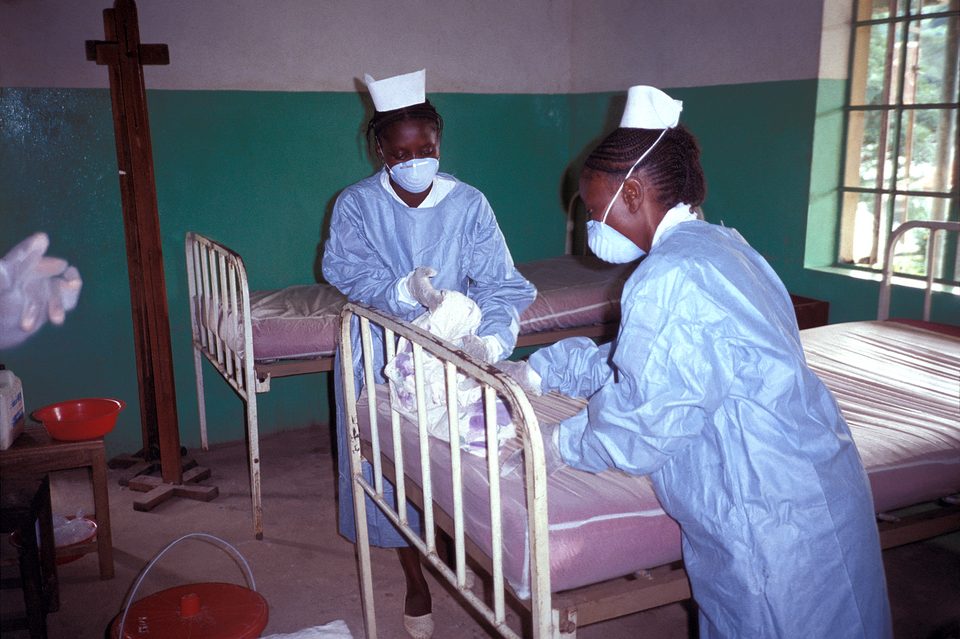
KINSHASA, Congo, November 22, 2026. The numbers arrived on November 11, in a statement from Congo's National Institute of Public Health, and they describe a plague that the world has stopped watching: 11,114 confirmed cases of Ebola and 5,433 dead, a case fatality rate of 48.9 percent. Nearly one in every two confirmed patients dies. The cause is the rare Bundibugyo ebolavirus, detected in mid May 2026, and six months into the response the outbreak is now the deadliest in Congo's history, surpassing the 2018 to 2020 epidemic that killed 2,299. In all of Africa, only the 2014 to 2016 West Africa catastrophe stands above it, with more than 28,600 infected and more than 11,000 killed. And the organization carrying the medical response on the ground, Médecins Sans Frontières, uses three words for the state of that response: out of control.
KEY POINTS
- Congo's National Institute of Public Health reported on November 11: 11,114 confirmed Ebola cases and 5,433 deaths, a case fatality rate of 48.9 percent, from the rare Bundibugyo strain detected in mid May 2026; it is now the deadliest Ebola outbreak in Congo's history.
- MSF says the outbreak “remains out of control six months into the response,” listing untrained and unpaid staff, ambulances with no fuel, no supplies or technical support, failed epidemiological surveillance, and entire areas neglected.
- The WHO Emergency Committee update reports the outbreak more than doubled in three months, reaching 67 health zones across eight provinces, with 400 to 500 new cases every week and two thirds of confirmed deaths occurring outside treatment centres.
- Children are more than a quarter of confirmed cases and a third of deaths; seven in ten children under five with confirmed Ebola have died.
SIX MONTHS OF FAILURE, ITEMIZED
MSF International President Dr. Javid Abdelmoneim did not describe a response struggling against a hard disease. He described a response that was never properly built. Responders have been left, in his words, “with empty hands and empty pockets,” and his teams are “often left speechless by the dysfunctions they witness.” His verdict on the half year mark deserves to be printed without decoration: “Six months into the response, this situation is simply unacceptable.”
The failure list MSF published is not exotic. It is the basic anatomy of any epidemic response, missing piece by piece. Staff who are untrained, and staff who are unpaid. Ambulances with no fuel to carry the sick. No supplies and no technical support reaching the teams in the field. A persistent failure of epidemiological surveillance, the system that is supposed to find cases before they seed the next village. And entire areas simply neglected, written off the map while the virus works them unobserved. An outbreak does not need help to spread under those conditions. It needs only time, and it has been given six months of it.
THE WAR AROUND THE WARDS
On November 11 in Geneva, WHO Director General Tedros named the second enemy: “Insecurity is now one of the greatest obstacles to the response.” An attack in Cantine-Aloya killed 66 civilians, including three healthcare workers. There has been gunfire near a treatment center, an arson attempt, and threats against health workers. The people trying to stop the plague are being hunted in the same districts where the plague is spreading, and every clinic that closes and every team that pulls back leaves the virus another parish to itself.
The WHO Emergency Committee's update fills in the map. The outbreak has more than doubled in three months, to more than 11,000 cases and 5,400 deaths, spread across 67 health zones in eight provinces, with 400 to 500 new cases confirmed every week. And the single most damning statistic in the file: two thirds of the confirmed deaths occur outside treatment centres. Two of every three people who die of this disease die at home, in a village, in the care of family members who then carry the exposure onward. That is not a treatment failure. That is a detection and trust system that has collapsed entirely, a response the population either cannot reach or will not use.
THE CHILDREN
The committee's numbers on children end any remaining comfort. Children are more than a quarter of all confirmed cases and a third of all deaths. Among children under five with confirmed Ebola, seven in ten have died. A disease with a near 50 percent fatality rate across the whole population is killing 70 percent of the smallest children it touches, in a region where the ambulances have no fuel and the surveillance system cannot find the sick before they die at home.
THE SCREENING THEATER
Against this record, the international system offers its favorite statistic. The International Organization for Migration's Dr. Andrew Peter Obat reported 55 million screenings conducted in Congo and 11 neighboring countries. Fifty five million screenings. The Info Soldier asks the obvious question: screened for what, and to what end, while the treatment centres stand empty of supplies, the staff go unpaid, and two thirds of the dead are never reached at all? Screening is the part of a response that photographs well and counts easily. It generates the number that goes in the press release. The unglamorous parts, fuel, payroll, cold chain, burial teams, contact tracing, are the parts that actually stop a virus, and those are precisely the parts MSF lists as missing.
So the plague burns for six months in the open, in the second largest country in Africa, at a 48.9 percent kill rate, while the money vanishes into a response its own doctors call unacceptable and the borders stay open under a theater of 55 million screenings. The Info Soldier does not need to choose between criminal incompetence and something worse to print the conclusion. Either way, the system the world built to stop exactly this has demonstrated, in front of everyone, that it cannot or will not. Plan accordingly.
THE OFFICIAL STORY
The official story, printed small, is that the response is scaling up under difficult conditions, that insecurity and geography explain the gaps, and that the international community remains committed. The Info Soldier notes only that the official story is now contradicted on the record by the response's own leadership, by the WHO's Emergency Committee statistics, and by 5,433 graves.
WHAT TO DO WHILE THEY COUNT
The Info Soldier's standing rule for system failure stories applies here without modification. A plague that the authorities cannot control, in a system whose surveillance has demonstrably failed, is an argument for household self reliance, not panic. Stock food and survival supplies while supply chains are calm. Keep water, basic medical supplies, and the means to isolate a sick room in your own home. The lesson of Congo is not that Ebola is coming to your street. The lesson is that when a real emergency arrives, the response will be late, underfunded, and counting screenings while it fails, and the households that prepared early will be the ones that did not need it to succeed.
Sources: The Epoch Times, Victoria Friedman, November 13, 2026; Médecins Sans Frontières statements, November 2026; Congo National Institute of Public Health statement, November 11, 2026; World Health Organization and UN News, Emergency Committee update, November 2026; International Organization for Migration.