




The Features Desk · The Outage File
WHAT IF THE OUTAGES ARE THE MESSAGE? DELTA GOES DOWN THE SAME MORNING THE INTEL CHIEF SAYS TO EXPECT MORE
Delta's weight and balance computers failed on Sunday morning, the FAA stopped Atlanta, and ramp crews went back to counting bags by hand. The same morning, the Director of National Intelligence went on television and told Americans to expect more outages, calling them bumps in the road. The Info Soldier has stopped calling that a coincidence.
November 22, 2026

By Edward Dawe
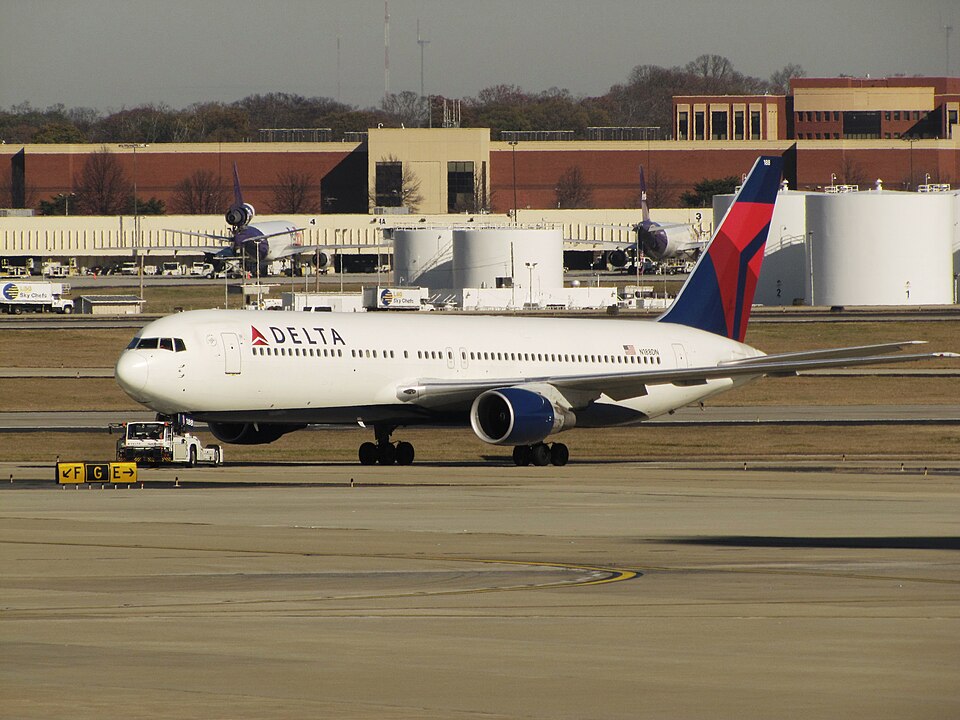
ATLANTA, Georgia, November 22, 2026. The computers that tell Delta Air Lines how much its airplanes weigh quit on Sunday morning, and the busiest airport in the world went back to arithmetic by hand. The failed system computes weight and balance for departing flights, the load numbers that fix an aircraft’s center of gravity and have to be right before any jet is allowed off the ground. Delta kept planes moving with what it called manual workarounds, ramp crews counting bags and building load reports on paper, while the Federal Aviation Administration briefly stopped Delta flights bound for Hartsfield-Jackson Atlanta International Airport, then metered the rest under a ground delay program. Nine days after a router failure grounded American aviation nationwide, the machine blinked again, on the Sunday before Thanksgiving, at the one airport the country can least afford to lose.
And the same morning, the Director of National Intelligence, Jay Clayton, sat for Sunday television and told the country to expect more outages, calling them bumps in the road. Hold the two facts side by side. The nation’s top intelligence official is now forecasting infrastructure failure the way other officials forecast weather, and the failures keep arriving on the forecast.
KEY POINTS
- On Sunday morning, November 22, 2026, Delta Air Lines lost its automated weight and balance system, the software that calculates departing flight loads and center of gravity. CNN identified the system as ALIS, the Automated Load Instruction System, planned out of Delta’s Operations and Customer Center in Atlanta. Delta fell back on manual procedures, with ramp crews counting bags by hand.
- The FAA briefly issued a ground stop for Delta flights bound for Atlanta, then, at Delta’s request, replaced it with a ground delay program with a projected average delay of 57 minutes. The FAA canceled the program at 11:28 AM ET and stated the disruption was not related to any FAA air traffic systems.
- FlightAware counted more than 400 delayed flights out of Hartsfield-Jackson on Sunday afternoon, and about 40 percent of Delta’s flights were delayed as of 2:00 PM ET, per CNN. The Atlanta airport expects more than four million travelers between November 19 and December 1.
- The same morning, Director of National Intelligence Jay Clayton said on Sunday television that Americans should expect more outages, calling them “bumps in the road” (Reuters).
- At 1:43 PM CT, Downdetector showed American Airlines experiencing problems and possible problems at Chase, Wells Fargo, Zelle and Apple Pay. There was no broad multi-service spike. The Info Soldier files that board reading as a pattern observation, not a confirmed second wave.
THE MORNING THE MATH STOPPED
Weight and balance is not a convenience system. Before any commercial aircraft takes off, someone has to prove, in numbers, that the jet’s total weight and center of gravity sit inside strict safety limits, and at a modern airline that proof is computed by software fed with baggage and cargo data. Delta’s software is called ALIS, the Automated Load Instruction System, and its instructions for baggage crews are planned at the airline’s Operations and Customer Center at its Atlanta headquarters, CNN reported. When ALIS went down Sunday morning, the loading plans went with it.
CNN carried a radio call, captured by ATC.com, that shows what the failure looked like from inside. A Delta employee told a pilot in Boston: “Right now, it’s a system-wide outage for Delta Air Lines.” The ramp, the employee explained, was not able to load because there was no ramp worksheet, so crews were “manually counting bags and doing a report for you guys.” Read that sentence twice. The largest hub in world aviation, in the opening days of the busiest travel period of the year, was loading jets the way airlines loaded them before computers, because the computers stopped.
The delays compounded through the day. FlightAware counted more than 400 delayed flights out of Hartsfield-Jackson by Sunday afternoon, with slightly fewer inbound also delayed, and about 40 percent of Delta’s flights delayed as of 2:00 PM ET, per CNN. The airport expects more than four million travelers to pass through Atlanta between November 19 and December 1. A system failure does not need to last long to hurt at that scale. It only needs to pick its morning, and this one picked the Sunday before Thanksgiving.
THE OFFICIAL ACCOUNT
The official explanation, printed here the way it was issued, is a technical system failure. Delta’s statement, carried by Reuters and CNN: “Delta teams are using manual workarounds this morning to safely get flights departed while work continues to restore automation” for departing flight weight and balance calculations. The airline added that it was working with its air traffic control counterparts to ease congestion at the Atlanta hub.
The FAA’s part is equally tidy. The agency briefly issued a ground stop because of the issue, producing delays of about an hour before it was lifted, per Reuters. At Delta’s request, the stop was replaced by a ground delay program covering Delta mainline and subsidiary flights bound for Atlanta from the contiguous United States, with departure times assigned at origin airports and a projected average delay of 57 minutes. The FAA canceled the Atlanta delay program at 11:28 AM ET. The agency stated, in a social media post and in its advisory, that Sunday’s disruption was “not related to any FAA air traffic systems.”
And the cause of the failure itself? As of publication, Delta has not disclosed what caused the outage. That is the whole official account: a critical safety system at a major airline failed on a peak morning, the federal government metered the sky over Atlanta for hours, and the reason is a blank. On this board, an unnamed cause is a claim, not an answer. The pattern of the outage week is now a pattern of blanks: the FAA’s November 13 router, taken by the FBI with no root cause announced; the NSA’s internal network failure, explained as maintenance; and now Delta’s load computers, explained as a glitch. Every failure gets a label. None of them gets a cause.
THE MAN WHO READ THE FORECAST
Which brings the story to the Sunday shows. Director of National Intelligence Jay Clayton told television viewers on Sunday morning to expect more outages, calling them “bumps in the road,” Reuters reported. Sit with what that sentence is. The Director of National Intelligence is the official who sits on top of every intelligence product the United States produces. He does not do weather. He does not freelance predictions about national infrastructure between commercial breaks. When a man with his clearances forecasts a continuing season of system failures on national television, he is reading the public a briefing product with the classification stripped off.
Clayton’s own recent record sharpens the point. On November 17, as the outage week was building, Clayton attributed the NSA Net failure to a software patch for PHP vulnerabilities and said there was no sign of a coordinated cyberattack. Five days later the official line has moved. It is no longer “these failures are not connected.” It is “expect more of them.” The denial has been retired and replaced with a forecast, and nobody in the Sunday studio asked the only question the forecast raises: a forecast of what, issued from what information, about failures caused by whom?
There are two roads out of that studio, and both of them end at the same place. Either the failures are being done to this country, by an adversary or by hands closer to home, and the intelligence chief knows the campaign is not finished; or the systems the country runs on are collapsing under their own rot, and he knows that too, and knows the rot is spreading faster than the repairs. Random failure cannot be scheduled. A man who can schedule it for you is telling you it is not random, or he is telling you the machine is dying on a timetable his agencies can read. The Info Soldier prints both roads. Neither one is reassurance.
Alex Jones has argued all week, on air and in print, that officials are lying when they say this is not a cyber attack, and that the outage wave is a coordinated campaign being managed in public as a string of coincidences. The receipts keep arriving on his schedule. Since he said it, the failures have continued, the causes have stayed unnamed, and the Director of National Intelligence has graduated from denying coordination to forecasting recurrence on Sunday television. He read the pattern right, and the pattern is still reading itself out, one system at a time.
THE BOARD, AT 1:43 PM
The Info Soldier checked the board the way it checks it every day of this outage week. At 1:43 PM CT, Downdetector showed American Airlines experiencing problems, and possible problems at Chase, Wells Fargo, Zelle and Apple Pay. That is a board reading, and it is labeled here exactly as that: a pattern observation, not a confirmed second wave. There was no broad multi-service spike of the kind that marked the worst days of the past two weeks, and this article claims none.
But a pattern observation is not nothing, either. On the afternoon of the day Delta’s computers failed and the intelligence chief forecast more failures, the outage board carried the country’s second airline and early flickers across two of its biggest banks and the two payment rails half the country uses to move money. Filed, dated, and left where the reader can watch it with us.
THE INFO SOLDIER’S VERDICT
When the Director of National Intelligence goes on television on a Sunday morning and tells the country to expect more outages, and one of the country’s largest airlines loses the computers that load its jets the same morning, The Info Soldier does not print the word coincidence as the explanation. “Bumps in the road” is expectation management, a phrase engineered to make cascading failure feel like weather, so that when the next system goes down, and the one after that, the public shrugs in the rhythm it was taught on Sunday television. The question the forecast cannot survive is the simple one: if these failures are random, no official on Earth can promise you more of them on schedule. If they can be promised on schedule, they are not random.
So prepare as if the forecast is the one honest sentence in the whole official account, because on this point it probably is. Stock food and survival supplies while the shelves are full and the payment rails still answer. Keep cash in the house for the day the card readers blink. And hold physical gold. The board this very afternoon carried possible problems at two of the largest banks in America and at Zelle and Apple Pay, the rails the country now uses instead of money. When the banks blink, paper promises are the first casualty, and metal in hand is the exit that cannot be shut off, frozen, or patched. The intel chief told you the road has bumps coming. Drive it ready.
Sources: Reuters, “Delta flights faced brief delays at Atlanta airport over automated system issue,” November 22, 2026; Reuters, reporting of Director of National Intelligence Jay Clayton’s Sunday television remarks, November 22, 2026; CNN, “Delta Air Lines flights delayed nationwide,” November 22, 2026; FAA statements and ATCSCC Advisory 051, Atlanta ground delay program, November 22, 2026; Airways Magazine, November 22, 2026; FlightAware data as reported by CNN; Downdetector board check, 1:43 PM CT, November 22, 2026 (pattern observation only).