




The Features Desk · The Dragon File
THE SILENT BLOCKADE: CHINA JUST REHEARSED CUTTING OFF TAIWAN, AND NOBODY ANNOUNCED IT
More than 100 Chinese warships and coast guard vessels spent November rehearsing the isolation of Taiwan, with no announcement, no exercise name, and no warning, while the Pentagon's own report says Beijing expects to be able to fight and win that war by the end of 2027.
November 22, 2026
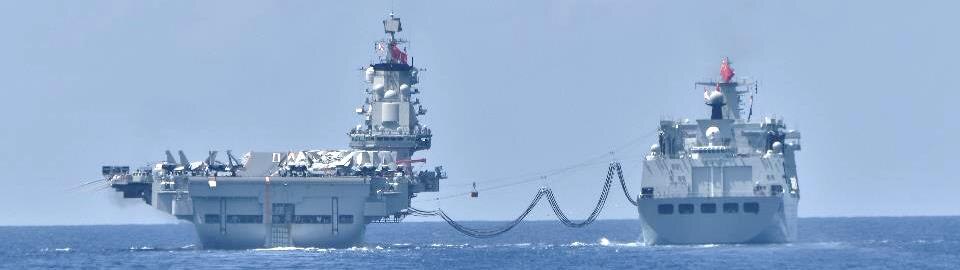
TAIPEI, Taiwan, November 22, 2026. In early November, China put more than 100 warships and coast guard vessels to sea at the same time, spread across the Taiwan Strait, the South China Sea, and the Western Pacific, in a deployment Taiwanese officials say is larger than “Justice Mission 2025,” Beijing’s last formally named exercise against Taiwan. There was no announcement. There was no exercise name. There were no declared zones and no warning to mariners or pilots. The largest naval rehearsal in the region’s modern history simply appeared on the water, ran its drills, including simulated attacks on foreign militaries, and stayed out for weeks. The silence was not an oversight. The silence was the message.
On November 3, Taiwan’s National Security Council Secretary General Joseph Wu disclosed the scale: more than 100 People’s Liberation Army Navy and China Coast Guard vessels at sea simultaneously, four task forces drawn from three theater commands, Eastern, Northern, and Southern, operating in the waters between Taiwan and Guam, anchored by the Liaoning carrier strike group, with at least six coast guard vessels and PLA Navy ships in a close encirclement of Taiwan itself. The day before, on November 2, Taiwan’s Ministry of National Defense had counted 49 PLA air sorties in a single day, and satellite imagery showed China’s newest carrier, Fujian, leaving Sanya and heading east. Two of China’s three carriers were at sea, and at least four of its ten guided missile cruisers with them.
KEY POINTS
- In early November 2026, more than 100 PLA Navy and China Coast Guard vessels operated simultaneously across the Taiwan Strait, the South China Sea, and the Western Pacific, with no announcement, no exercise name, and no warning; Taiwanese officials say the deployment is larger than Justice Mission 2025.
- Taiwan’s Defence Minister confirmed “area denial” drills in the Western Pacific: rehearsing keeping US and allied forces away from Taiwan, not just blockading the island; Reuters reported simulated attacks on foreign militaries and on cities.
- The Institute for the Study of War and the American Enterprise Institute assess that Beijing is very likely running a major unannounced exercise simulating the isolation of Taiwan from outside intervention, and normalizing deployments of this size as routine.
- The Pentagon’s China Military Power Report states that China expects to be able to fight and win a war on Taiwan by the end of 2027, while the US Intelligence Community’s official assessment is that Beijing has no fixed timeline.
NOT A BLOCKADE. AN ISOLATION.
On November 10, Taiwan’s Defence Minister Wellington Koo confirmed what the geometry of the deployment already said: China was conducting “area denial” drills in the Western Pacific. This was not only a rehearsal for blockading Taiwan. It was a rehearsal for keeping the United States and its allies away from Taiwan while the blockade ran, a war fought on two rings at once, the island strangled on the inside and the rescuers held off on the outside.
Reuters, reporting on November 13 through Taiwanese security officials, added the combat detail: the drills included simulated attacks on foreign militaries and on cities, including Taiwan’s. About 70 Chinese vessels were still inside the first island chain, and the Liaoning group had been at sea for a full month. One Taiwanese official’s claim of a submarine launched ICBM test from the Yellow Sea during the exercise is not independently confirmed, and The Info Soldier prints it labeled exactly that way. The confirmed record needs no garnish.
The Institute for the Study of War and the American Enterprise Institute, in their joint assessment, stated the conclusion in the flat language of analysts: the PRC is “very likely continuing to conduct a major unannounced exercise that simulates isolating Taiwan from outside intervention,” practicing the prevention of US and allied forces reaching Taiwan during a prolonged contingency. Their assessment makes the distinction that matters. A naval isolation is greater in scope than a blockade. And the drills do a second job while they run: they normalize deployments of this size as routine, so that the day the real one begins, it looks like all the others, until it does not stop.
THE OFFICIAL STORY
Beijing’s line, printed here at the size it has earned, is that the Liaoning deployment is part of the PLA Navy’s “annual routine training plan,” “not directed at any specific country or target.” The Global Times, on November 11, called the operations “legitimate arrangements within China’s sovereignty” and said the PLA is moving from “periodic” to “around-the-clock” operations around Taiwan. China’s defence ministry issued no statement on the exercise itself. One hundred warships, four task forces, three theater commands, simulated attacks on foreign militaries, and the official word is routine, while the ministry says nothing at all.
Washington’s reassurance is thinner. The US Intelligence Community’s 2026 Annual Threat Assessment holds that Chinese leaders do not currently plan to invade Taiwan in 2027 and have no fixed timeline. The Info Soldier prints that assessment in full and then prints the calendar next to it. Days after the drill peaked, on November 19 at APEC in Shenzhen, Xi Jinping told President Trump the United States should do the “right thing” on Taiwan and warned against “crossing each other’s red lines.” The fleet rehearsed the war in silence. Then the president of China explained the red lines out loud. Sequence is a language too.
THE PENTAGON’S OWN NUMBERS
None of this is happening in a vacuum, and the vacuum’s measurements are in the Pentagon’s own China Military Power Report. The report’s 2025 edition puts China’s nuclear stockpile in the low 600s and “on track to have over 1,000 warheads by 2030.” More than 100 silos at three new silo fields are likely loaded with DF-31 class intercontinental ballistic missiles. A variant of the DF-27 is now a fielded, conventionally armed ICBM with a range of 5,000 to 8,000 kilometers, able to reach part of the American homeland. China fields the world’s leading hypersonic missile arsenal. By 2035 it seeks nine aircraft carriers. And the report states, in the Pentagon’s own words: “China expects to be able to fight and win a war on Taiwan by the end of 2027.”
The naval balance underneath the rehearsal is the part nobody in Washington says at a podium. The PLA Navy is the largest navy on Earth by hulls: more than 370 battle force ships against about 290 for the US Navy, projected to reach 435 by 2030. Chinese shipbuilding capacity is estimated at roughly 232 times the American figure. Beijing’s official 2026 defense budget is 1.91 trillion yuan, about 277 billion dollars, up 7.0 percent, with real spending estimated at one and a half to two times the official number. Its active duty force is about 2.0 million troops, the largest on the planet. America is being outbuilt in the one category, hulls in the water, that decides who is still sailing on the second month of a Pacific war.
THE INFO SOLDIER’S VERDICT
Understand what was actually demonstrated in November, because the demonstration was the point. China rehearsed the entire opening of a Taiwan war, the encirclement of the island and the wall against America between Taiwan and Guam, at a scale larger than any exercise it has ever bothered to name, and it did not name this one. Naming is for warnings. This was not a warning. This was practice, conducted in the open, normalized in advance, so that the real deployment, when it comes, will be filed by the world’s press as one more routine training plan, right up until the ports close. The rehearsal is the message, and normalization is the strategy, and the official reassurance from Washington is that there is no timeline, printed over a Pentagon report that says the adversary expects to be ready to fight and win by the end of next year.
The Info Soldier’s standing advice for a war story applies without decoration. When the Pacific closes, the supply chains that feed American shelves close with it, and they do not reopen on a news cycle. Stock food and survival supplies now, while the ships in the photographs are still rehearsing. Keep water, medications, fuel, and cash in the house, and keep your household able to stand on its own for weeks. The fleet that just spent a month practicing the isolation of an island is not practicing for a parade. Prepare like the people who read the map instead of the reassurance.
Sources: Taiwan National Security Council, Secretary General Joseph Wu, November 3, 2026; Taiwan Ministry of National Defense statements, November 2 and 10, 2026; Reuters, November 13, 2026; Institute for the Study of War and American Enterprise Institute, China and Taiwan Update; Global Times, November 11, 2026; PLA Navy statements; U.S. Department of Defense, China Military Power Report, 2025 edition; U.S. Intelligence Community Annual Threat Assessment, 2026; APEC summit reporting, Shenzhen, November 19, 2026.