




The Features Desk · Special Report · The Cartel File
THE MAN AMERICA NEVER FORGOT
Why did the United States spend forty years, a $20 million bounty and the lives of fourteen Mexican marines hunting one aging marijuana grower from the hills of Sinaloa, while entire cartels rose, industrialized and fell unmolested? Because in February 1985, Rafael Caro Quintero’s organization kidnapped, tortured and murdered a DEA agent named Enrique “Kiki” Camarena, and the American state does not forgive that particular debt. This is the full file: the grass empire of Rancho Búfalo, the agent who found it, the court ruling that emptied his cell in the middle of the night, the dog that found him in the brush nine years later, and the Brooklyn courtroom where, at 74, he now waits to learn whether he dies in an American prison.
November 26, 2026
By Edward Dawe
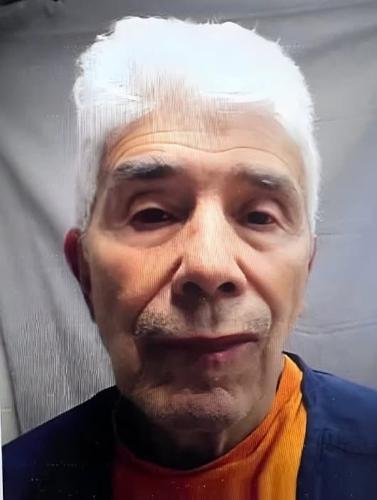
BROOKLYN, New York, November 26, 2026. The defendant in case 15 CR 208 in the Eastern District of New York is 74 years old, held in near total isolation at the Metropolitan Detention Center under Special Administrative Measures, and described by his own lawyers as a man whose health is failing. The indictment against him reaches back to January 1980. It charges a continuing criminal enterprise, cocaine importation conspiracies, firearms offenses and a murder conspiracy, and underneath every count sits the same name, the one that has followed Rafael Caro Quintero across five decades and three governments: Enrique Camarena, the DEA agent his cartel murdered in 1985. Mexico convicted Caro Quintero of that murder and sentenced him to forty years. He served twenty eight, walked out of prison in 2013 on a court ruling, vanished for nine years, and was found again in 2022 hiding in the brush of Sinaloa by a navy search dog. In February 2025, Mexico handed him to the United States. The trial is set for March 8, 2027. The Info Soldier went through the record. This is what it shows.
KEY POINTS
- The origins: Rafael Caro Quintero, born October 24, 1952, in La Noria, Badiraguato, Sinaloa, the eldest of twelve children in a poor farming family. He was growing marijuana as a teenager and left Sinaloa to build his trade in Chihuahua.
- The cartel: in the late 1970s he co-founded the Guadalajara cartel with Miguel Ángel Félix Gallardo and Ernesto Fonseca Carrillo, the first organization to unify Mexico’s drug trade, run from Guadalajara under the protection of corrupt federal police.
- The empire: Rancho Búfalo, his marijuana plantation complex in the Chihuahua desert, covered roughly 2,500 acres and employed thousands of workers. In November 1984, some 450 Mexican soldiers raided it and burned thousands of tons of marijuana, the largest seizure of its kind up to that time, a loss the cartel estimated in the billions of dollars.
- The agent: DEA agent Enrique “Kiki” Camarena, whose intelligence work helped expose Rancho Búfalo, was kidnapped outside the U.S. consulate in Guadalajara on February 7, 1985, tortured and murdered, together with his pilot, Alfredo Zavala Avelar. Their bodies were found a month later in Michoacán. Caro Quintero was convicted in Mexico of the murders.
- The sentence: captured on April 4, 1985, in San José, Costa Rica, Caro Quintero was returned to Mexico and sentenced to forty years in prison.
- The release: on August 9, 2013, after twenty eight years, a Jalisco appeals court ordered him freed, ruling the Camarena case should have been tried in a state court rather than a federal one. Mexico’s Supreme Court reversed the ruling months later and ordered him recaptured. By then the cell was empty and the man was gone.
- The fugitive: in April 2018 the FBI placed him on its Ten Most Wanted list with a $20 million reward, the highest figure on the list. He spent nearly nine years underground in the mountains of Sinaloa.
- The end of the run: on July 15, 2022, Mexican marines, led to him by a search dog named Max, found Caro Quintero hiding in brush near San Simón, Sinaloa. The same day, a Mexican Navy Black Hawk helicopter crashed near Los Mochis, killing fourteen marines returning from the operation. On February 27, 2025, Mexico transferred him to the United States with 28 other cartel figures. He pleaded not guilty in Brooklyn. In August 2025 the Justice Department took the death penalty off the table. In October 2026 both sides told the court plea talks are under way. Trial is set for March 8, 2027.
THE FARM BOY FROM BADIRAGUATO
Badiraguato, in the foothills of the Sierra Madre, has produced more famous traffickers than any municipality in Mexico, and Rafael Caro Quintero was among the first of them. He was born in 1952 in the village of La Noria, the oldest of twelve children, in a family that farmed beans and corn and stayed poor at it. His father died while he was young. By his middle teens he was growing marijuana, the one crop in those hills that paid in cash, and by his twenties he had followed the trade to Chihuahua and begun building at a scale nobody in Mexico had attempted. The men he joined in Guadalajara at the end of the 1970s, Félix Gallardo, a former federal judicial police agent, and Fonseca Carrillo, called Don Neto, were assembling something new: not a gang but a federation, one organization that would divide Mexico’s smuggling territories into plazas, settle disputes at a table, and buy its protection wholesale from the Dirección Federal de Seguridad, the federal security police whose agents doubled as the cartel’s shield. Caro Quintero’s contribution to the federation was production. While his partners handled routes and politics, he became the king of Mexican marijuana, and he industrialized it the way Lehder would later industrialize cocaine transport: not gardens, but plantations run like agribusiness, with irrigation, dormitories, kitchens and payrolls.
THE EMPIRE OF GRASS
Rancho Búfalo sat in the desert of southern Chihuahua, watered from the Conchos River, and by 1984 it had grown into a complex of fields covering roughly a thousand hectares, some 2,500 acres, worked by thousands of laborers recruited from the poorest villages of the north. The harvest was measured in thousands of tons. Nothing on that scale had ever been found in Mexico, and it could not have existed for a single season without the knowledge and protection of officials at every level above it, which is the fact the official history of the drug war prefers to walk past quickly. In November 1984, the Mexican Army finally moved: some 450 soldiers descended on the ranch, seized and burned the crop, and announced the largest marijuana destruction in history. The cartel’s loss was estimated at the time in the billions of dollars. Caro Quintero, presented to the press after his capture the following year, is widely quoted as boasting that with his money he could pay off Mexico’s entire foreign debt. The quote is an attribution, repeated for forty years, and The Info Soldier prints it as one. What is not attribution is the arithmetic of the ranch itself: a private agribusiness employing a small town’s worth of men, invisible to the state until the state chose to see it. The cartel wanted to know who had pointed the army at it. Its answer, reached within weeks, was a 37 year old DEA agent in Guadalajara named Enrique Camarena, whose informants and surveillance work had helped map the Búfalo operation. That answer sealed Camarena’s fate, and it sealed Caro Quintero’s too, although his took forty years to arrive.
THE AGENT
What happened next is printed here soberly, because it deserves sobriety. On February 7, 1985, Enrique Camarena left the United States consulate in Guadalajara to meet his wife for lunch. He never arrived. Gunmen forced him into a car in broad daylight. His pilot, Alfredo Zavala Avelar, a Mexican agriculture official who flew for the DEA’s eradication surveys, was taken the same day. Both men were carried to a house at 881 Lope de Vega, a residence associated with Caro Quintero, where Camarena was interrogated and tortured for some thirty hours by men who wanted the names of his informants and the extent of what the DEA knew. Both men were murdered. Their bodies were found on March 5, wrapped in plastic, by a roadside in Michoacán. The DEA’s response, Operation Leyenda, became the largest homicide investigation in the agency’s history, and the murder changed the drug war permanently: it is the reason the DEA treats the killing of an agent as an institutional blood debt, pursued across generations of agents who never met the man. One allegation has trailed the case for decades and must be labeled precisely. Héctor Berrellez, the retired DEA agent who ran Operation Leyenda, has alleged publicly that CIA personnel knew of the plot against Camarena and that a CIA asset was present in the house on Lope de Vega. The CIA has called the allegation ridiculous. It has never been tested in an American courtroom. If the Brooklyn case reaches a jury in March 2027, it will be the first full public airing of the Camarena file in the United States in more than forty years, and what the government chooses to put into that record, and what it moves to keep out, will be its own story.
FORTY YEARS
Caro Quintero fled Mexico within days of the kidnapping and was arrested on April 4, 1985, in San José, Costa Rica, where he had taken refuge with Sara Cosío, the daughter of a former Jalisco education official, a romance that scandalized two countries. Costa Rica expelled him to Mexico, where he was tried, convicted of the murders of Camarena and Zavala, and sentenced to forty years, the maximum the Mexican system then imposed. He served his time in a succession of federal prisons and, by every account, served it as a wealthy man in a system where wealth rearranges the furniture of a cell. The federation he had helped found did not survive him in its original form. Félix Gallardo was arrested in 1989 and, before his fall, divided the plazas among his lieutenants, a partition that created the Tijuana, Juárez, Gulf and Sinaloa organizations whose wars have run ever since. The Guadalajara cartel died. Its children inherited the country. Caro Quintero watched all of it from prison, an old man of the marijuana era in a cocaine and then fentanyl world, with twelve years left on his sentence and no public reason to expect anything but a quiet release in the 2020s. Then, in 2013, a court gave him the rest of his life back, all at once, in the middle of the night.
THE NIGHT THE CELL EMPTIED
On August 9, 2013, a three judge appeals panel in Jalisco ordered Rafael Caro Quintero released immediately. The ruling held that the Camarena case, the centerpiece of his conviction, should have been prosecuted in a state court, because Camarena, whatever his job, was legally a victim under Mexican state jurisdiction, and that twenty eight years of federal imprisonment rested on the wrong court’s authority. The order was executed at once. Caro Quintero walked out of the Puente Grande prison in Jalisco in the early hours and disappeared. The United States government reacted with open fury; the DEA said it was deeply troubled, and Washington pressed Mexico to take him back into custody. In November 2013, Mexico’s Supreme Court reversed the appeals ruling and restored the conviction, and a federal court issued a fresh arrest warrant. All of it was correct, and none of it mattered, because the sequence had been run in the only order that works: the paper that freed him moved in hours, and the paper that condemned him moved in months, and a man who had spent the 1980s buying protection in bulk knew exactly what a head start was worth. He went home, to the mountains of Sinaloa, and for nearly nine years the most determined manhunt in the hemisphere could not find a man in his sixties hiding in the same sierra where he was born. In April 2018 the FBI added him to the Ten Most Wanted Fugitives list, replacing a lesser name, and set the reward at $20 million, the highest figure carried by anyone on the list. Twenty million dollars, offered to anyone in Mexico, for the location of one old man. Nobody collected it the easy way. In the end it was not money that found him. It was a dog.
FOURTEEN MARINES
On July 15, 2022, elements of the Mexican Navy’s special operations forces closed in on the country around San Simón, in the municipality of Choix, Sinaloa, hard against the Sierra where Caro Quintero was born. The marines found him the way fugitives in that terrain are found: a search dog named Max picked up his scent and located him hiding in brush, alone, in the hills of his own home state. He was 69 years old. He offered no famous last stand. He was flown out under guard, and the longest fugitive run in modern cartel history ended in the undergrowth, at the nose of a navy dog. The same afternoon, a Mexican Navy Black Hawk helicopter supporting the operation crashed near Los Mochis, killing fourteen marines. The Navy attributed the crash to an accident and said it was not the result of hostile fire, and that account is printed here as the official one. Fourteen men nonetheless died on the day the state finally recovered a prisoner its own courts had let walk out of prison nine years earlier, and their names belong in this file next to the arithmetic that produced them: a jurisdictional ruling, executed overnight in 2013, cost Mexico a nine year manhunt and fourteen marines, and cost the United States a decade of $20 million posters, before the file could be put back where a Jalisco prison had held it all along.
BROOKLYN
For two and a half years after the recapture, Caro Quintero sat in the Altiplano maximum security prison outside Mexico City while his lawyers fought extradition through every appeal the Mexican system allows. He lost the last of them years earlier, in March 2021, before he was even recaptured. The end, when it came, did not come through the extradition treaty at all. On February 27, 2025, the government of Mexico placed twenty nine cartel figures on planes to the United States in a single mass transfer, an expulsion executed outside the ordinary extradition process, and Rafael Caro Quintero was the name at the top of the manifest. He was arraigned the next morning in Brooklyn, in the Eastern District of New York, in the same courthouse where El Chapo was tried, and he pleaded not guilty. The presumption of innocence attaches to the American charges, and The Info Soldier states it plainly: in the United States he is an accused man, not a convicted one; his Mexican conviction is the established fact, the Brooklyn indictment is an allegation he is entitled to answer. In August 2025, the Attorney General directed prosecutors in writing not to seek the death penalty, the standing condition on which Mexico hands men north. He is held at the Metropolitan Detention Center under Special Administrative Measures that keep him almost entirely isolated; his lawyers have told the court the conditions are degrading his health and his ability to prepare a defense. In March 2026, Judge Frederic Block set the trial for March 8, 2027, while his defense counsel told the court both sides were discussing a resolution short of trial, and the prosecutor answered, in open court, that there was currently no plea offer. In October 2026 the talks were acknowledged again, still unresolved. The government has asked for an anonymous, partially sequestered jury, marshals driving jurors to and from the courthouse, a request the defense opposes as a presumption of guilt dressed as procedure. His next court appearance was November 20, 2026. Forty two years after a DEA agent was taken off a Guadalajara street at lunchtime, the case the United States built out of that afternoon is six months from a jury, and the man at the center of it is running out of time faster than the docket is.
THE INFO SOLDIER’S VERDICT: Rafael Caro Quintero is the case that proves what the drug war actually remembers and what it forgets. In the forty years since Kiki Camarena was murdered, Mexico’s plazas have changed hands a dozen times, fentanyl has replaced marijuana as the trade’s engine and killed Americans at a rate the cocaine era never approached, and the organizations responsible operate today under flags no indictment has dissolved. Against all of that, the United States marshaled four decades of pursuit, the largest reward on its Most Wanted list and a diplomatic transfer of twenty nine prisoners, for one man, because that one man’s organization killed an American agent. The memory is not about the drugs. It never was. It is about the debt. A Mexican court freed him on a filing question, state court or federal court, a distinction that mattered to no one in this story except the lawyers who found it and the prisoner who walked through it, and it still took nine years, a navy dog and fourteen dead marines to put him back in a cell, and a mass expulsion outside the extradition process to put him on a plane to Brooklyn. Now the two governments that between them protected his plantation, lost his prisoner and buried his pursuers will ask a sequestered, anonymous jury to finish the file in 2027. Whatever the verdict, the file’s lesson is already written: the war forgets the trade, forgives the system, and remembers only its own dead. Caro Quintero is not being tried for the drug war. He is being tried for the one crime the war’s managers never pardon, killing one of theirs.
Sources: U.S. Department of Justice, U.S. Attorney’s Office for the Eastern District of New York, indictment and arraignment releases in United States v. Rafael Caro Quintero, case 15 CR 208, February 28, 2025, and the government’s August 5, 2025 letter to Judge Frederic Block on the death penalty. Reuters, Caro Quintero plea discussions, March 19, 2026, and October 2026 hearing coverage. Associated Press reporting on the August 2013 release and Supreme Court reversal, the July 15, 2022 recapture in Choix, Sinaloa, and the February 27, 2025 transfer. FBI Ten Most Wanted Fugitives listing, April 2018, $20 million reward. DEA historical materials on Special Agent Enrique Camarena and Operation Leyenda. Reference records on Rancho Búfalo and the Guadalajara cartel cross checked against the above.