




The Features Desk · Special Report · The Cartel File
THE PILOT THEY EXTRADITED
What finally beat the man no army could catch, the transport genius who turned cocaine into an airline? Not a raid, not a bounty, not a bullet. A courtroom in Jacksonville, Florida, and a legal instrument called extradition. This is the full file on Carlos Lehder: the prison cell where the plan was drawn, the Bahamian island he turned into an airport, the sentence of life plus 135 years, the testimony against a dictator that bought half of it back, and the free man who walked out of a Bogotá airport in 2025.
November 26, 2026
By Edward Dawe
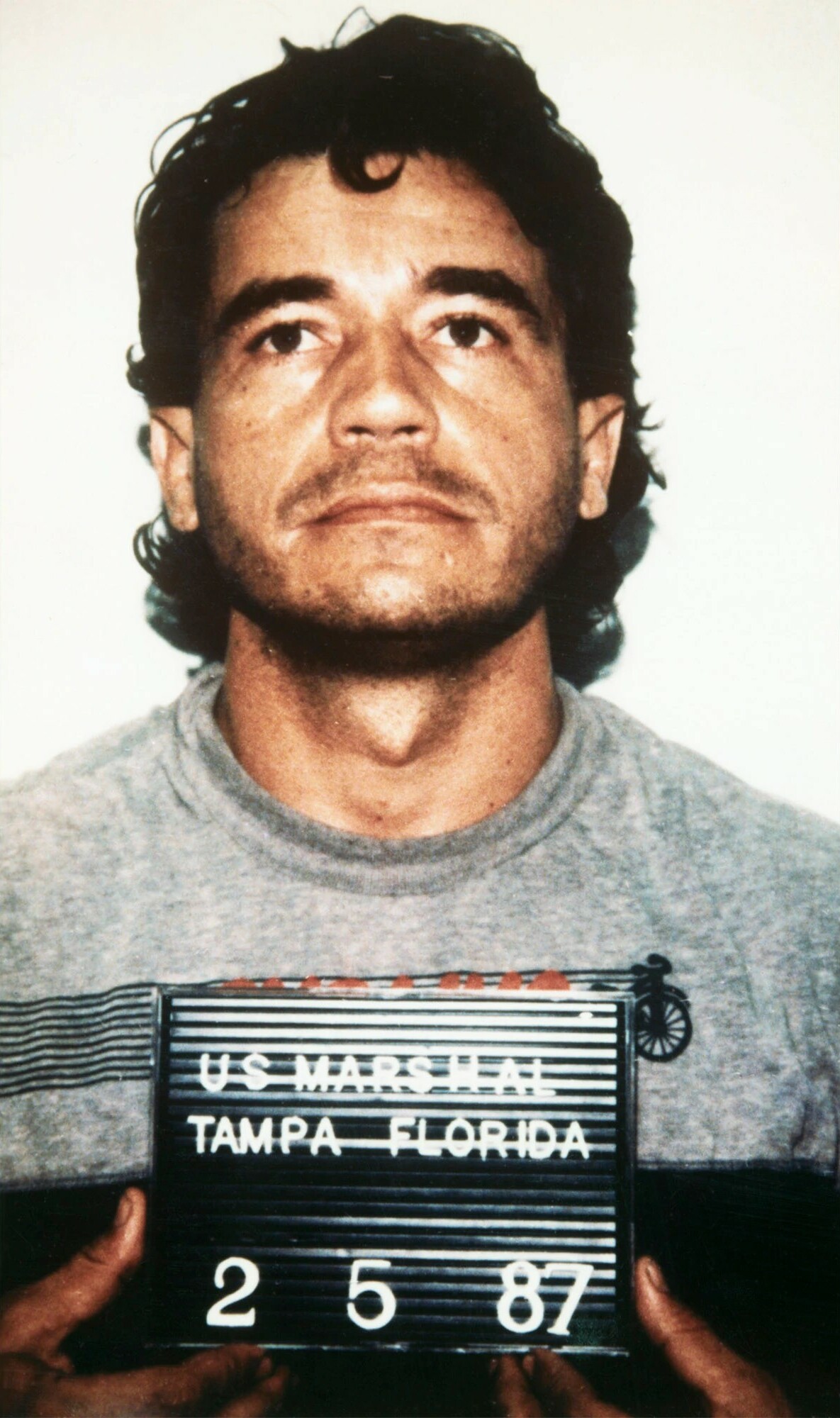
JACKSONVILLE, Florida, November 26, 2026. On February 4, 1987, Colombian national police raided a ranch near the town of Guarne, in Antioquia, where Carlos Lehder was throwing a party. Within hours, Lehder was on a plane to the United States. There was no gun battle, no siege, no years long manhunt of the kind that would later consume Pablo Escobar. There was a tip, a raid, and an extradition order, executed the same day. Lehder was thirty seven years old, a co-founder of the Medellín cartel, and by the standard estimate his island operation had been grossing some $300 million a year. The United States had wanted him since 1979. What it did to him next taught every trafficker in the hemisphere the one lesson the drug war ever really taught: the cell they had to fear was not in Colombia. It was in Florida.
KEY POINTS
- The origins: Carlos Enrique Lehder Rivas, born September 7, 1949, in Armenia, Colombia, son of Klaus Wilhelm Lehder, a German engineer who arrived in Colombia in 1927, and Helena Rivas. Raised between Colombia and New York, he started in stolen cars and marijuana and was sent to federal prison at Danbury, Connecticut, in 1974.
- The cellmate: at Danbury he met George Jung, an American marijuana smuggler with distribution contacts and no supplier. Lehder had the Colombian side. Released in 1976, the two began flying cocaine north, and Lehder concluded the bottleneck of the trade was not product. It was distance.
- The island: from 1978, Lehder ran Norman’s Cay in the Bahamas as a transshipment base: a bought island, a lengthened airstrip, armed guards, and planeloads of Medellín cocaine refueling for the short hop to airstrips in Florida, Georgia and the Carolinas. The operation was estimated at $300 million a year.
- The fall of the island: in 1982, under American pressure, the Bahamas cracked down and shut Norman’s Cay down. Corruption allegations from the island years later reached a Bahamian commission of inquiry examining the government of Prime Minister Lynden Pindling, who denied wrongdoing.
- The capture: Lehder had fallen out with Pablo Escobar. On February 4, 1987, police acting on a tip widely believed to have come from Escobar himself raided the Guarne ranch and took him. Colombia extradited him the same day, the first major Colombian trafficker ever sent north.
- The sentence: tried in Jacksonville, Florida, convicted on all counts in May 1988, Lehder received life in prison without parole plus 135 years, a sentence addressed to every trafficker alive.
- The trade: in 1991 Lehder testified for the prosecution against Panamanian dictator Manuel Noriega. His sentence was reduced to 55 years. His later claims that the deal entitled him to earlier release were rejected, and he served 33 years in American custody.
- The free man: released in June 2020 and deported to Germany, a citizen through his father, Lehder published a memoir in 2024. In March 2025 he flew to Bogotá, was arrested at the airport on a 1995 Colombian conviction, and was freed within days when a judge ruled that sentence had expired in 2019.
THE CELL WHERE IT STARTED
Start in the cell, because the transport machine that flooded the United States with cocaine was designed in one. Lehder’s father built railways in Colombia. His son built a different kind of line. In New York as a young man, Lehder ran stolen cars and marijuana loads, and in 1974 the federal government put him in Danbury. Prisons are supposed to interrupt criminal careers. Danbury connected one. George Jung needed a Colombian supplier. Lehder needed an American market. When both men walked out in 1976, they started moving cocaine in small planes, and Lehder, who spoke English, understood American demand, and thought in systems, saw the trade’s real shape before the older traffickers in Medellín did. Cocaine was scarce in America not because Colombia lacked it but because moving it was artisanal: a suitcase here, a boat hull there. Whoever industrialized the distance would own the market. Lehder industrialized the distance.
THE ISLAND
Norman’s Cay is a speck in the Exuma chain, close enough to Florida for a loaded plane to make the run with fuel to spare. In 1978 Lehder effectively bought the island: the properties, the hotel, the airstrip, which he lengthened. Armed men guarded it. Planes came up from Colombia heavy, refueled under his control, and hopped the last leg to dirt strips scattered across Florida, Georgia and the Carolinas. At the operation’s height, the estimate repeated by prosecutors and historians alike is $300 million a year moving across one small island’s runway. This is the fact the kingpin mythology always skips. Escobar became the face of the Medellín cartel, but the cartel became an empire on Lehder’s logistics. He converted smuggling into scheduled freight, and the American cocaine market, and then the crack market built on top of it, ran on supply his airline delivered. The product was Colombian. The flood was his engineering.
THE PARTY YEARS AND THE POLITICIAN
The island fell in 1982, when the Bahamas, pressed hard by Washington, cracked down and closed Norman’s Cay. Lehder went home to Armenia, Colombia, rich beyond any legitimate measure and increasingly theatrical. He built a rural hotel, the Posada Alemana, kept caged lions on the grounds, and raised a statue of John Lennon, one of his two declared heroes. The other, stated openly and repeatedly, was Adolf Hitler. Lehder’s admiration for Hitler was not a rumor pinned on him later; he advertised it, and built a political party in its shadow, the National Latin Movement, a fascist populist vehicle with one practical plank at its center: abolish the 1979 extradition treaty between Colombia and the United States. Read that plank with the decade in mind. In those years the guerrillas of M-19 were fighting the Colombian state, and investigators and historians have long alleged that cartel money stood behind M-19’s 1985 seizure of the Palace of Justice, in which the extradition files were burned; the allegation remains an allegation, and it is printed here as one. What is not alleged is Lehder’s own judgment. He had identified, years before his partners took it seriously, the single legal instrument that could reach a Colombian trafficker where armies could not. He ran for office against it. Then it was used on him.
THE TIP, THE RAID, THE PLANE
By 1987 Lehder had fallen out with Escobar, whose organization no longer needed its pilot and no longer trusted its loudest partner. On February 4, Colombian police raided the ranch at Guarne during Lehder’s party and arrested him without the war that everyone expected. The raid ran on a tip. The belief, reported at the time and repeated by historians since, is that the tip came from Escobar himself, who traded a partner he was finished with for room to maneuver against the extradition threat. That is a belief, not a proven fact, and The Info Soldier labels it as such. What is proven is the sequence that followed, because it had never happened before: Colombia placed Lehder on a plane to the United States the same day. He was the first major Colombian trafficker extradited north, and the traffickers’ movement, Los Extraditables, had already written the era’s epitaph in its own motto: better a grave in Colombia than a cell in the United States. The terror campaign Colombia then endured over extradition, the murdered judges and ministers, the bombed newspaper and the airliner, the surrender deals and the 1991 constitution that banned extradition outright, all of it runs back to the demonstration performed on Carlos Lehder: the weapon worked.
LIFE PLUS 135 YEARS
The trial opened in Jacksonville in October 1987 and ran until May 1988. Prosecutors walked the jury through the whole machine, the island, the airstrips, the flights, the tons. Lehder was convicted on all counts, conspiracy and running a continuing criminal enterprise at the head of them, and the court imposed the sentence that was quoted in every plaza in Colombia: life imprisonment without parole, plus 135 years. Understand the sentence as what it was, a broadcast. The United States had not beaten the cartel’s army; the cartel, at that point, barely had one. It had beaten the cartel’s pilot, with paper, in a Florida courtroom, and it made sure the whole trade heard the number. Colombian prisons, the traffickers could buy, staff and walk out of, as Escobar would prove twice. An American sentence was the one commodity in the drug war that was not for sale. That, and nothing else, is why extradition became the threat around which the next decade of Colombian violence organized itself.
THE TRADE
Then the machine showed its other face, and this is the part of the file that should be read twice. In December 1989 the United States invaded Panama and captured its dictator, Manuel Noriega, charged with letting the Medellín cartel run cocaine through his country for a cut. The prosecution needed an insider. In 1991 it called Carlos Lehder to the stand, and Lehder testified that Noriega had taken the cartel’s money and opened Panama as a transshipment conduit. Noriega was convicted. In return, the United States reduced Lehder’s sentence from life plus 135 years to 55 years. From 2005 onward, Lehder argued in filings and pleas that the 1991 agreement entitled him to release far sooner than the government allowed. The courts rejected the claim, and he stayed in custody. But the trade itself is on the record and cannot be argued away. The exemplary sentence of the drug war, the number broadcast to frighten a generation of traffickers, turned out to be negotiable the moment its prisoner held something Washington wanted more than his punishment: testimony against a dictator it had just overthrown. The Info Soldier does not print that as a scandal invented by this site. It is the docket.
THE FREE MAN
The last chapter is the one no one in that Jacksonville courtroom would have believed. Lehder served 33 years in American custody. In June 2020, at seventy years old, he was released and deported to Germany, whose citizenship he held through his father, the engineer who had left for Colombia in 1927. In 2024 he published a memoir of the cartel years. And on March 28, 2025, he flew home to Colombia at last, landing in Bogotá to visit family, where immigration officials arrested him on a Colombian drug trafficking conviction handed down in 1995, while he sat in an American cell, carrying a 24 year sentence. His lawyer noted he was recovering from cancer. Three days later, a Colombian judge ruled the 1995 sentence had expired in 2019, and Carlos Lehder walked out of custody a free man, in the capital of the country that had put him on the plane in 1987. Escobar died on a rooftop in Medellín in 1993. The Ochoa brothers negotiated their surrenders and served their years. The pilot, the first man extradition ever took, outlived the cartel, the war over his own capture, and a sentence of life plus 135 years.
THE INFO SOLDIER’S VERDICT: Carlos Lehder invented the logistics that made cocaine a mass American product, and his fall invented the counterweapon. The United States did not defeat the Medellín cartel in the field. It defeated the cartel’s pilot in a courtroom, with an extradition order, and that single sheet of paper terrified the trade more than any raid, bounty or army that followed; a decade of Colombian terror, a constitutional ban and a generation of surrender deals all trace to the afternoon Colombia put him on the plane. But read the whole docket before you call it a victory for the law. The same system that sentenced him to die in prison twice over traded his years for testimony when it needed a dictator convicted, fought his reading of that bargain for fifteen years, and finally watched him walk free in Bogotá on an expired sentence. The sentence was never the point. The leverage was. Lehder understood the drug war as a market before anyone else did. In the end, so did the governments that prosecuted him.
Sources: Encyclopaedia Britannica, Carlos Lehder biography, and reference records cross checked against it. CBS News and Associated Press, Lehder arrested in Bogotá and released, March 28 to 31, 2025. United States v. Carlos Lehder Rivas, Middle District of Florida, Jacksonville, conviction May 1988 and sentence of life without parole plus 135 years. United States v. Manuel Antonio Noriega, Southern District of Florida, Lehder testimony, 1991, and the subsequent reduction of Lehder’s sentence to 55 years. Reporting and reference records on Norman’s Cay, the Bahamian commission of inquiry, the National Latin Movement and the February 4, 1987 Guarne raid and same day extradition.