




The Features Desk · Special Report · The Cartel File
THE GENTLEMEN OF CALI
What if the most powerful crime syndicate in history wore suits, owned the pharmacy chain, and listened in on the phones of the embassy sent to hunt it? Pablo Escobar was the noise. The Gentlemen of Cali were the system: a board of directors, a private intelligence service, and a money trail that reached all the way to a presidency.
November 26, 2026
By Edward Dawe
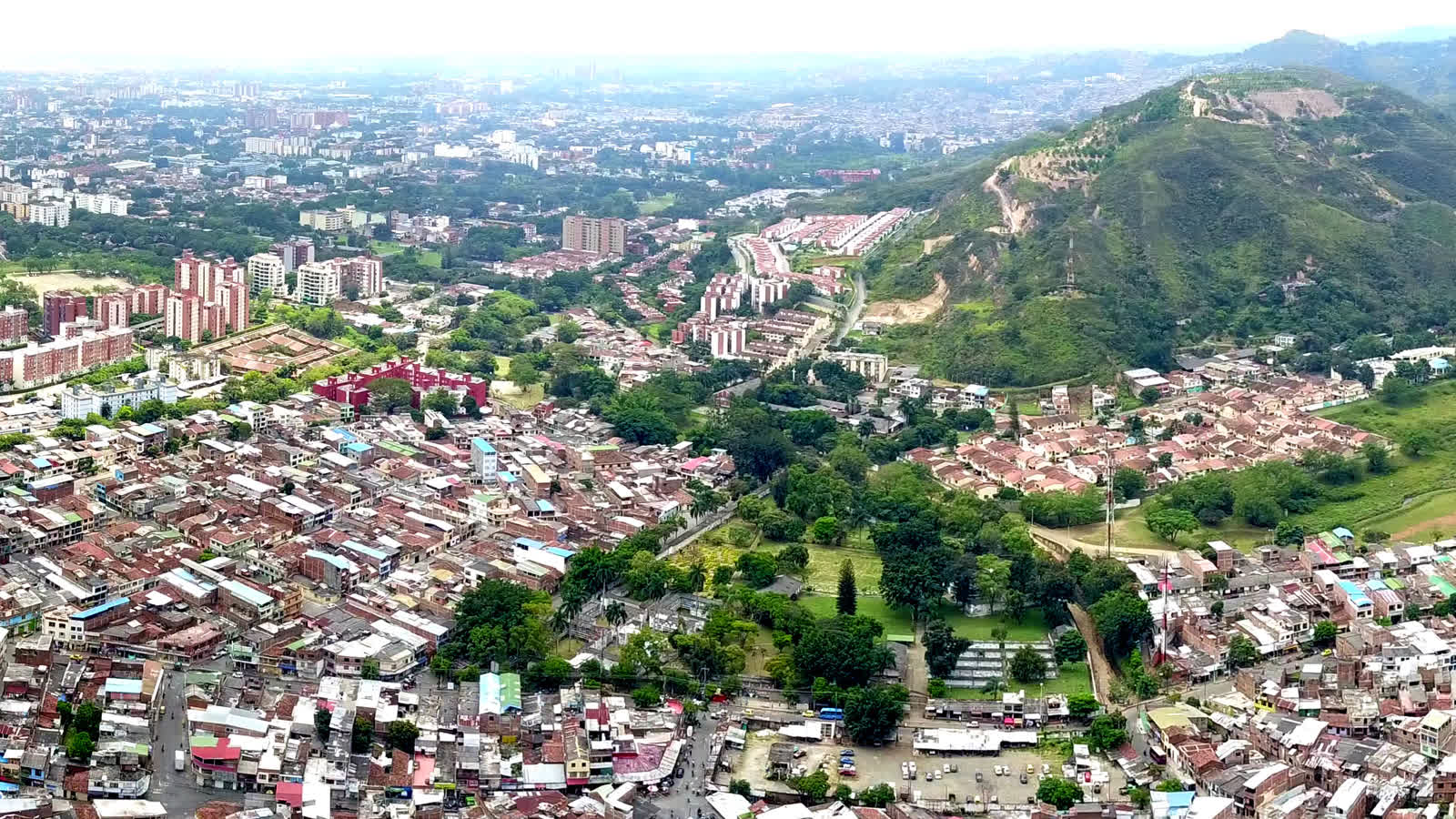
CALI, Colombia, November 26, 2026. On June 9, 1995, Colombian police raided a house in Cali and pulled Gilberto Rodríguez Orejuela out of a hidden compartment behind a television. He was not holding a gun. He was the chief executive of the largest cocaine empire on earth, an organization that controlled an estimated 80 percent of the American cocaine market and 90 percent of the European one, and he had run it the way a bank runs: quietly, in a suit, behind a wall of legitimate businesses. Two months later, on August 6, police dragged his brother Miguel from a secret closet, seconds before he could seal himself inside it. Between them, the Rodríguez Orejuela brothers, with José Santacruz Londoño and Hélmer “Pacho” Herrera, built what the DEA’s own chief, Thomas Constantine, called the most powerful crime syndicate in history. The Info Soldier prints the file in full because Cali, not Medellín, is the story that explains how the trade actually works, then and now.
KEY POINTS
- The godfathers: Gilberto Rodríguez Orejuela, “the Chess Player”; his brother Miguel, “El Señor”; José Santacruz Londoño; and Hélmer “Pacho” Herrera ran the cartel as a board of independent trafficking groups, not a one man throne.
- The money: Colombia’s Justice Ministry estimated the cartel’s revenue at $7 billion in 1993. Its public face was Drogas La Rebaja, the country’s top drugstore chain, a first division soccer team, radio stations and hundreds of front companies.
- The Cali KGB: a 1994 raid found an IBM AS/400 mainframe worth $1.5 million holding phone records and the national motor vehicle registry. The cartel monitored calls in and out of Bogotá and Cali, including the U.S. Embassy and the Ministry of Defense, and kept a reported 5,000 taxi drivers on its payroll.
- Los Pepes: the death squads that helped corner Pablo Escobar in 1993 were financed by the Cali cartel. CIA documents released in 2008 show Colombia’s national police director ordered a senior intelligence officer to maintain contact with the Pepes’ leader, Fidel Castaño, for intelligence collection.
- Proceso 8000: more than $6 million in cartel cash entered President Ernesto Samper’s 1994 campaign. His campaign treasurer and his campaign manager were convicted. The Chamber of Representatives acquitted Samper himself, 111 to 43. The United States decertified Colombia and revoked Samper’s visa.
- The end: captured in 1995, extradited in 2004 and 2005, the brothers pleaded guilty in Miami on September 26, 2006: 30 years each and a $2.1 billion forfeiture. Gilberto died in U.S. custody at Butner, North Carolina, on May 31, 2022. Miguel remains in U.S. federal custody, with a projected release in 2028.
SUITS, NOT BOMBS
Medellín declared war on the Colombian state and lost. Cali studied the corpse and chose the opposite weapon. Where Escobar bombed airplanes and assassinated ministers, the Gentlemen bribed, invested and filed paperwork. The DEA told Congress the difference in its own words in 1999: where the Medellín cartel was “brash and publicly violent,” the criminals who ran their organization from Cali “labored behind the pretense of legitimacy, by posing as businessmen carrying out their professional obligations.” The structure matched the style. The cartel was a tight group of independent trafficking organizations under one brand, cells that could be cut away without killing the body, refining moved abroad to Peru and Bolivia, routes pioneered through Panama, distribution run city by city in the United States, with Herrera holding New York and Santacruz running operations out of the same city years before. Gilberto, the strategist, was a banker by trade and was listed by Forbes among the world’s billionaires. The board’s nickname in Colombia tells the whole story: Los Caballeros de Cali, the Gentlemen of Cali. Escobar wanted the state afraid of him. Cali wanted the state on retainer.
THE CALI KGB
The DEA compared the cartel’s intelligence arm to the Soviet KGB, and the comparison was earned. In 1994 a counter-narcotics task force raided an upscale condominium owned by Santacruz Londoño and found no drugs and no guns. It found an IBM AS/400 mainframe, one of the most powerful commercial computers of its day, valued at $1.5 million, staffed by a team of technicians. Loaded into it were the cartel’s bribe ledgers, illegally purchased telephone records for the region covering 1992 to 1994, and Colombia’s entire motor vehicle registry. With that machine the cartel cross-referenced who called whom, who owned what car, and which officials were worth buying. A 1995 raid on cartel offices confirmed the rest: the cartel had been monitoring all phone calls made in and out of Bogotá and Cali, including the phones of the United States Embassy and the Ministry of Defense, and Santacruz worked from a laptop, reportedly acquired through Israel, that let him listen to calls and test lines for wiretaps. On the street the machine had eyes: a reported 5,000 taxi drivers on the payroll, reporting who arrived in the city, when, and where they were staying, a rolling surveillance net over every airport run and hotel check-in. In 1991, DEA and Customs agents monitoring a shipment in Miami learned afterward that Cali had been surveilling them at the same time. The hunters were inside the hunted’s filing system. That is not a gang. That is a state within the state, and it is the reason the Gentlemen lasted as long as they did.
THEY HELPED KILL ESCOBAR
Escobar’s terror campaign was bad for the cocaine business, and Cali treated it the way a corporation treats a problem: it funded the solution. Los Pepes, “those persecuted by Pablo Escobar,” the death squads led by the Castaño brothers and Diego Murillo, known as Don Berna, were financed by the Cali cartel and waged a year of murder against Escobar’s lawyers, accountants, guards and family circle while the police Search Bloc, backed by U.S. intelligence, hunted him across Medellín. The official story says the state killed Escobar on a rooftop on December 2, 1993. The declassified record says the state had help it did not advertise. In CIA documents released in 2008, Colombia’s national police director general, Miguel Antonio Gómez Padilla, is recorded saying he “had directed a senior CNP intelligence officer to maintain contact with Fidel Castaño, paramilitary leader of Los Pepes, for the purposes of intelligence collection.” Read that plainly: while Washington lectured Bogotá about human rights, the police hunting Escobar ran a liaison with the death squad Cali was paying for, and U.S. agencies knew enough that it took a Freedom of Information lawsuit to pry the paper loose. Cali got its monopoly. The Castaños got an army that later became the AUC paramilitary federation. Everybody at the table got something. The public got a photograph of a rooftop and a closed file.
PROCESO 8000: A PRESIDENCY, PAID IN GIFT BAGS
Then the Gentlemen bought the top office in the country, and the receipt survived. In 1994, Ernesto Samper’s presidential campaign burned through its money in the first round and faced a three week runoff against Andrés Pastrana with empty accounts. The campaign turned to the Cali cartel and received cash donations in excess of $6 million, delivered, in the detail every Colombian remembers, in large colorful paper bags of the kind used for birthday gifts. Samper won the runoff on June 19, 1994, by 50.37 percent to 48.64 percent. The scandal that followed, Proceso 8000, named for the prosecutor’s file number, was run by chief prosecutor Alfonso Valdivieso and powered by the cartel’s own paper: the “narcocassettes,” tapes of the brothers discussing the payments, and the testimony of the cartel’s chief accountant, Guillermo Pallomari, who fled to the United States and said he had personally arranged nearly $6 million in covert donations. The campaign’s treasurer, Santiago Medina, was convicted and sentenced to 64 months. The campaign manager, Fernando Botero, by then Samper’s Minister of Defense, resigned, was arrested, and was sentenced to 63 months. And then the system closed ranks around the man at the top: on June 12, 1996, the Chamber of Representatives voted 111 to 43 to acquit Samper personally. The treasurer went to prison. The manager went to prison. The president, whose campaign the money bought, finished his term. Washington decertified Colombia as a drug war partner on March 1, 1996 and revoked Samper’s U.S. visa that July, an admission in diplomatic language that the money had reached the palace. Years later, the Rodríguez Orejuela brothers themselves acknowledged providing the money. The Info Soldier notes what the acquittal actually proved: the cartel had not corrupted a campaign. It had purchased a share of the state, and the state’s own legislature certified the purchase.
THE SUMMER OF THE BATTERING RAM
What brought the empire down was not a sudden attack of honesty in Bogotá. It was American pressure, the Proceso 8000 spotlight, and a police campaign in the summer of 1995 under national police director Rosso José Serrano, whose Search Bloc stopped asking the cartel’s city for permission. Gilberto fell first, on June 9, in the raid that found him behind the television. Santacruz was taken on July 4, arrested while dining with associates at a Bogotá steak house. Miguel fell on August 6, betrayed by Jorge Salcedo, the former military engineer who ran the cartel’s security and its counterintelligence, the architect of the Cali KGB turned witness. The Gentlemen’s ends matched their styles. Santacruz escaped from La Picota prison in January 1996 and was killed in a confrontation with police in Medellín that March. Herrera, the last of the four at large, surrendered to the Search Bloc on September 1, 1996, and on November 6, 1998 he was shot seven times on the football pitch of the maximum security prison at Palmira, by a visitor who had advised him for ten years. The board was gone. What remained was the paperwork, and the paperwork crossed the ocean.
THIRTY YEARS, $2.1 BILLION, AND A FAMILY DEAL
Colombia’s own courts nearly let the story end in farce: Gilberto, sentenced in Colombia, was freed in October 2002 under a controversial judicial order crediting good behavior and work study, and had to be rearrested in March 2003 on charges of running the cartel from inside prison. Extradition, banned for Colombian nationals until 1997, did the rest. Gilberto was flown to the United States on December 3, 2004. Miguel followed on March 11, 2005. On September 26, 2006, in federal court in Miami, both brothers pleaded guilty to conspiring to import cocaine, and each was sentenced to 30 years, with a further money laundering plea adding 87 months to run at the same time. The price tag was a forfeiture judgment of $2.1 billion against their narcotics assets anywhere in the world. The other half of the deal is the half that explains Cali: in exchange for the money and the pleas, the United States agreed not to bring charges against their relatives, and 28 family members were taken off the Treasury sanctions list. Even in defeat, the Gentlemen negotiated like a board protecting the shareholders. The Treasury spent years unwinding the empire on paper; as late as 2014 it was still removing designees, 308 people and companies in a single action. Gilberto Rodríguez Orejuela died on May 31, 2022, at the federal prison medical center in Butner, North Carolina, aged 83, his family reporting lymphoma. He had asked a judge for compassionate release in 2020 and been refused. Miguel Rodríguez Orejuela remains in U.S. federal custody serving the same 30 years, with a projected release date in 2028. The Cali cartel no longer exists as an organization. Its method never went to prison at all.
The Info Soldier’s verdict is the one the record supports, stated plainly. Medellín was the loud cartel, and loud gets you killed on a rooftop. Cali was the quiet cartel, and quiet got the market, the city, the airwaves, the pharmacy shelves, and a piece of a presidency, all of it documented in the government’s own files: the mainframe, the taxi army, the gift bags of campaign cash, the 111 to 43 acquittal. The state did not take the Gentlemen down when they were merely the biggest cocaine traffickers on earth. It took them down after they had bought a share of the state itself, and only then because the receipt became public and Washington needed a scalp. Every trafficking network operating today learned the lesson Cali taught: do not fight the government, incorporate next to it, bank with it, donate to it, and tap its phones while you smile for the chamber of commerce photograph. The loud man got the television series. The quiet men got the world. Watch the quiet ones.
Sources: U.S. Department of Justice, “Cali Cartel Leaders Plead Guilty to Drug and Money Laundering Conspiracy Charges,” September 26, 2006. U.S. Department of the Treasury, OFAC designations under Executive Order 12978 (1995) and “Treasury Lifts Sanctions on the Defunct Colombian Business Empire led by the Rodriguez Orejuela Family” (2014). U.S. Drug Enforcement Administration, testimony before the House Committee on Government Reform and Oversight, August 6, 1999, and DEA History, 1994 to 1998. Central Intelligence Agency, declassified report, “Colombia: A Mixed Counternarcotics Picture in 1996,” January 30, 1997, and CIA documents on Los Pepes released in 2008. Proceso 8000: Colombian Attorney General’s investigation and Chamber of Representatives record, 1995 to 1996. Associated Press and BBC reporting on the death of Gilberto Rodríguez Orejuela, June 2022. Grey Dynamics, “Cali KGB: Cartel Counterintelligence.”