




The Features Desk · The Cartel File
THE PILOT THEY THREW AWAY
Hollywood turned Barry Seal into a lovable rogue in a Tom Cruise movie. The record tells a colder story: the best pilot the Medellín cartel ever hired, the informant who photographed Pablo Escobar loading cocaine onto his own plane, and the witness Washington used, leaked, and left sitting unarmed in a Baton Rouge parking lot, where the cartel’s gunmen were waiting on February 19, 1986.
November 26, 2026
By Edward Dawe
BATON ROUGE, Louisiana, November 26, 2026. Adler Berriman “Barry” Seal was shot to death forty years ago this February, and the United States has been telling his story wrong ever since, most recently as a Tom Cruise adventure comedy. Strip away the movie and what is left is a paper trail that touches every dirty corner of the era: the Medellín cartel, the DEA, a secret war in Nicaragua, a presidential propaganda campaign, and a federal judge’s order that told a marked man exactly where to park, unarmed, at six o’clock every night. The Info Soldier went through the record: the indictments, the trial testimony, the congressional hearings, and the government’s own files. This is what it actually shows.
KEY POINTS
- The pilot: Seal was one of TWA’s youngest Boeing 707 captains. Fired in 1972 after an explosives smuggling arrest, he built one of the largest air smuggling operations in America, earning as much as $500,000 a flight for the Medellín cartel.
- The flip: convicted in Florida in 1984 and facing ten years, Seal went over the prosecutors’ heads to Vice President George H. W. Bush’s drug task force and signed on as a DEA informant on March 28, 1984.
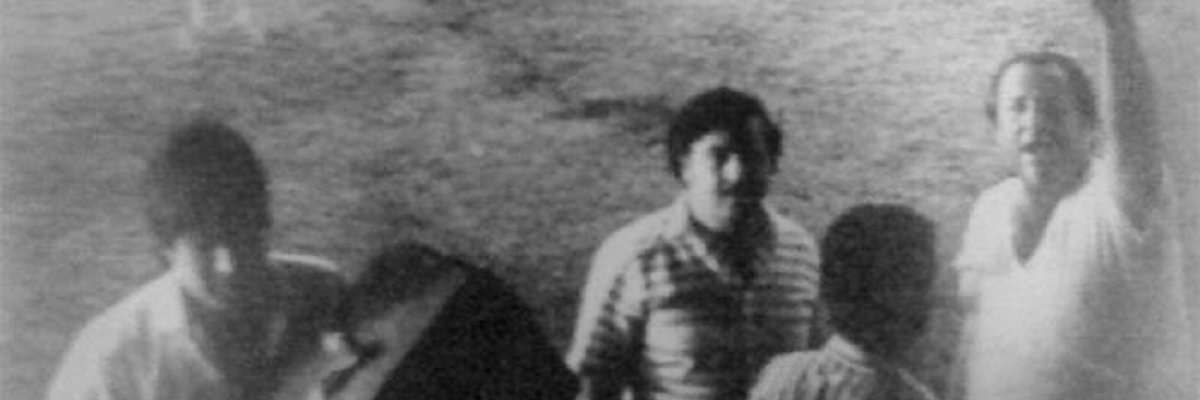
- The photograph: on June 25, 1984, cameras the CIA installed in his C-123 photographed Pablo Escobar and Sandinista contact Federico Vaughan loading cocaine in Nicaragua. It became the Reagan administration’s centerpiece evidence against the Sandinistas.
- The leak: the secret operation was blown by a front page Washington Times story on July 17, 1984. The Senate’s Kerry Committee later concluded that Oliver North “decided to play politics with the issue.” North denied it. Nobody was ever punished.
- The sentence: a federal judge in Baton Rouge barred Seal from carrying a gun or hiring bodyguards and ordered him to spend every night, 6 PM to 6 AM, at a Salvation Army halfway house. His lawyer called it a death sentence. Seal said the judge had made him a clay pigeon.
- The end: on February 19, 1986, a cartel gunman killed Seal with a suppressed MAC-10 in the halfway house parking lot. Three Colombians were convicted of first degree murder and sentenced to life without parole.
A PILOT FIRST
Start with the talent, because everything else follows from it. Seal was born in Baton Rouge on July 16, 1939, earned his student pilot certificate at 16, and was, in his instructor’s words, a naturally gifted pilot. He served with the Louisiana Army National Guard, assigned to the 20th Special Forces Group, and graduated from Airborne School. In 1964 he joined TWA as a flight engineer and rose fast: first officer, then captain, flying a Boeing 707 on a regular Western Europe route, one of the youngest 707 command pilots in the fleet. The airline career ended in July 1972, when he was arrested for his part in a conspiracy to smuggle a shipment of plastic explosives to Mexico in a DC-4. TWA fired him; he had falsely taken medical leave to run the scheme. The criminal case was dismissed in 1974 for prosecutorial misconduct. Seal walked away from the wreckage with his skills intact and his respect for the rules gone.
EL GORDO FLIES FOR MEDELLÍN
By his own later admission, Seal began smuggling small loads of marijuana by air in 1976 and moved up to cocaine by 1978, pound for pound the far richer cargo. Jailed in Honduras on a smuggling run, he made the connections that mattered, and back in the United States a fellow smuggler, William Roger Reaves, introduced him to the Ochoa family of Medellín. From 1981, Seal was the cartel’s pilot: low flying aircraft, duffel bags of cocaine kicked out over remote Louisiana country, ground crews hauling the loads to the Colombians’ distributors in Florida. At his peak he earned as much as $500,000 a flight, ran more than a dozen aircraft, and answered to the nickname the cartel gave a man of his size: El Gordo, the fat one. The operation grew big enough to draw the Louisiana State Police and federal investigators, so Seal moved his aircraft to Mena Intermountain Regional Airport in Mena, Arkansas, for maintenance and modification, far from the coast and its attention.
THE MENA QUESTION
Mena is where the record and the legend split, and The Info Soldier prints both, labeled. The allegation, repeated for forty years, is that Mena was a protected hub: drugs in, guns and money out, tied to the Contra war and shielded from prosecution by powerful men in Arkansas and Washington. The documented record is narrower and stranger than either side admits. Seal’s biographer, former FBI agent Del Hahn, concluded Seal did not use Mena as a drug transshipment point. But an extensive joint investigation by the FBI, the Arkansas State Police and the IRS, its findings reported in 2020, concluded that Seal did use Mena airport for smuggling activity from late 1980 until March 1984. Investigations came and went for decades; grand juries sat; no official was ever charged with protecting him, and the full Contra hub allegation was never proven in any court. What is proven is that America’s biggest cocaine pilot ran his fleet out of a small town Arkansas airport for years, in the open, and the machinery of the drug war somehow never got around to him until Florida did.
THE FLIP
Florida got him on Quaaludes. Operation Screamer, a sweeping undercover case against smuggler pilots, produced two indictments against Seal in March 1983. He surrendered that April and tried to deal, first with the Florida task force, then with Baton Rouge. Both refused him. In February 1984 a jury convicted him on the first indictment, and he faced ten years. So Seal went over everyone’s head. He contacted the South Florida Task Force, the cross agency drug interdiction team led by Vice President George H. W. Bush, and the Vice President’s office referred him to DEA headquarters. Agent Ernst Jacobsen debriefed him, liked what he heard, especially the Ochoa connection, and on March 28, 1984, Barry Seal signed his agreement to work as a DEA informant. The cartel’s best pilot now belonged, on paper, to the United States government.
THE PHOTOGRAPH
What the government bought was a front row seat inside the cartel. On April 8, 1984, Seal sat down in Medellín with Pablo Escobar and Jorge, Fabio and Juan Ochoa. The plan that came out of it ran through Nicaragua, where, by Seal’s account, the cartel had arranged facilities with the help of the Sandinista government. The first run went wrong: the overloaded plane crashed on takeoff in Colombia, and the replacement aircraft had to stop at Los Brasiles airfield near Managua, where Nicaraguan troops shot at Seal’s plane as it left and he crash landed at Sandino International Airport. The cartel’s Nicaraguan contact, Federico Vaughan, got him released. For the next run, Seal bought a C-123K military transport he called the Fat Lady, and before he flew it south, the DEA arranged for CIA technicians to install hidden cameras inside it. On June 25, 1984, at Los Brasiles, the cameras rolled: Seal, Escobar, cartel killer José Gonzalo Rodríguez Gacha and Federico Vaughan, loading cocaine onto the plane together. A federal grand jury would call Vaughan an aide to Interior Minister Tomás Borge, the Sandinista strongman. Reporters later shredded parts of that claim: Vaughan’s listed telephone number, a House subcommittee found, rang at a Managua house that had been rented since 1981 by a recently expelled member of the US embassy staff. Who Vaughan really worked for is a question the record still does not answer. The photograph itself is real, and Seal flew it home to Homestead Air Force Base.
THE LEAK
The DEA wanted to keep Seal inside the cartel for years. Washington wanted a headline. On June 29, 1984, the US Southern Command chief, General Paul Gorman, announced in a speech that the United States had evidence tying the Nicaraguan government to drug smuggling. On July 17, the Washington Times put the operation on its front page, in a story by Edmond Jacoby with enough detail to end Seal’s undercover life on the spot. The DEA salvaged the Miami arrests and the first American indictments of Escobar and the Ochoas, but the long game was dead, and the cartel now knew its pilot was a federal informant. Who talked? In 1988, agent Jacobsen told a House Judiciary subcommittee, “I heard that the leak came from an aide in the White House.” The Senate’s Kerry Committee report, released that December, pinned it on Iran-Contra figure Oliver North, concluding he “decided to play politics with the issue.” North denied leaking it; Jacoby denied North was his source. The question was never settled and no one was ever charged. What is settled is what the leak was for: the administration used Seal’s story, and his photograph, to sell its Nicaragua policy. On March 16, 1986, one month after Seal’s murder, President Reagan held the photograph up on national television to argue for Contra aid. The pilot was in the ground. The picture was still working.
THE WITNESS THEY SPENT
To be fair to the file, Seal delivered. In January 1985 his organization ran a cocaine shipment from Bolivia through Colombia and Texas to Las Vegas; in February he was videotaped taking a bribe from Norman Saunders, chief minister of the Turks and Caicos Islands, who was convicted on it. In the summer of 1985 Seal was the star witness in three major trials, and every defendant was convicted. In October 1985 he testified before the President’s Commission on Organized Crime. Florida, the case that started it all, closed with time served and probation. He had done everything the government asked, and more, and the cartel had priced him: according to the later sworn testimony of cartel distributor Max Mermelstein, the Ochoas and Escobar offered $500,000 to kill Seal and $1,000,000 to bring him back to Colombia alive. The cartel had learned that its pilot “Ellis McKenzie” was Barry Seal from the most American of sources: Seal himself, who had starred in a five night WBRZ television documentary about his own case in November 1984. The government knew about the contract by June 1985, when Mermelstein was arrested and talked. Seal knew too. He refused witness protection and refused to move his family. That refusal is the government’s whole defense, and it is true as far as it goes. What happened next is also true.
A CLAY PIGEON
Louisiana still had its own case: Seal had pleaded guilty to buying 200 kilograms of cocaine, and a December 1984 agreement capped his Louisiana sentence at whatever Florida gave him, which turned out to be nothing. At sentencing in January 1986, Judge Frank Polozola said on the record that people like Seal were “the lowest, most despicable people I can think of,” and then he built the trap, lawfully, condition by condition. Seal would spend the first six months of his probation sleeping every night, from 6 PM to 6 AM, at the Salvation Army’s Community Treatment Center on Airline Highway in Baton Rouge. He was forbidden to carry a gun. He was forbidden to hire armed bodyguards. He could not leave Baton Rouge without the judge’s written permission. His lawyer, Lewis Unglesby, told the judge the ruling amounted to a death sentence for his client. Seal told friends the judge had “made me a clay pigeon.” Three weeks later, the cartel’s gunmen came to collect, at the one address in America where Barry Seal was guaranteed to be, unarmed, at a published hour.
FEBRUARY 19, 1986
He drove into the Salvation Army parking lot in his white Cadillac at six o’clock, the way he did every night. A man stepped out from behind the donation drop boxes with a suppressed MAC-10 and opened fire. Seal was hit six times and died almost instantly. He was 46. The killers were caught trying to get out of Louisiana, and the state’s case was overwhelming: fingerprints in the getaway car, eyewitnesses, a murder weapon test fired in Mermelstein’s garage with matching bullets pulled out of the wall. In May 1987, in a trial moved to Lake Charles, Luis Carlos Quintero-Cruz, Miguel Vélez and Bernardo Antonio Vásquez were convicted of first degree murder and sentenced to life in prison without parole. Federal prosecutors separately charged Fabio Ochoa, Pablo Escobar and Rafael Cardona Salazar with conspiring to murder Seal in violation of his civil rights. The triggermen are accounted for. The chain of decisions that put Seal in that parking lot, on that schedule, without a weapon or a guard, has never been accounted for at all.
THE NUMBER IN HIS POCKET
Two weeks after the murder, Louisiana Attorney General William Guste hand delivered a letter to US Attorney General Edwin Meese demanding to know how the government had failed to protect its own witness; Meese ordered an inquiry into whether Seal should have been forced into protective custody. It produced statements, not consequences. And then there is the detail that has followed this case for forty years, printed here as what it is, a widely reported claim that no official inquiry ever chased down: a telephone number found among Seal’s effects was reported to be the personal number of Vice President George H. W. Bush, the same man whose drug task force Seal had cold called in 1984 to offer himself as an informant. In October 1986, eight months after Seal’s death, a C-123 resupplying the Contras was shot down over Nicaragua and its captured crewman, Eugene Hasenfus, cracked the Iran-Contra scandal open in public. The plane has been widely reported to be Seal’s own Fat Lady. The pilot was gone. His airplane, his photograph and his war all kept flying without him.
HOLLYWOOD VS THE RECORD
Which brings us to the movie. American Made (2017) is a good film and a false document, and its own director, Doug Liman, said so, calling it “a fun lie based on a true story.” Here is the split, plainly. Fiction: the CIA recruiter “Monty Schafer,” who hires Seal out of a TWA cockpit in 1978 and runs him for a decade, is an invented composite; no such handler exists in the record. Fiction: Seal as a CIA gun runner building the Contras as his day job; the CIA has denied it employed Seal, Seal denied he was a CIA asset, and no document has ever put him on the agency’s payroll. Fiction: the murdered brother in law, the cash buried in the yard as a running gag, the governor of Arkansas winking at the camera. The record: TWA fired Seal in 1972; he was a freelance smuggler who became the cartel’s pilot; he flipped to the DEA, not the CIA, in March 1984, after a conviction, facing ten years; the CIA’s documented role in his story is exactly one job, its technicians installing the cameras in his plane; and he died the way the record says he died, in a Baton Rouge parking lot, under a judge’s order, with a million dollar contract on his head. The film needed a rogue. The file has something else.
THE INFO SOLDIER’S VERDICT: Barry Seal was no hero, and this report does not make him one. He flew poison into his own country for money and loved the danger of it. But he is the hinge of the whole era, the one man who touched the cartel, the DEA, the Contra war and a presidential propaganda campaign at the same time, and his file proves the thing the drug war’s managers never say out loud: the system did not fail Barry Seal at the end. It used him at full value, spent his secrecy on a headline when the headline was worth more than the operation, and then, when the bill came due in a Baton Rouge parking lot, every door he knocked on was closed. Hollywood made him a lovable rogue because a rogue is easy to sell. The record makes him evidence.
Sources: The Barry Seal record as documented in Del Hahn, Smuggler’s End: The Life and Death of Barry Seal (2016), and Guy Gugliotta and Jeff Leen, Kings of Cocaine (1989); State of Louisiana v. Miguel Velez, Bernardo Vasquez and Luis Carlos Quintero-Cruz, 588 So.2d 116 (La. App. 1991); US Senate Kerry Committee, Drugs, Law Enforcement and Foreign Policy (December 1988); House Judiciary Subcommittee on Crime hearings on the Seal leak (1988); Jonathan Kwitny, Wall Street Journal, April 22, 1987; Louisiana Voice, February 2011; Ellin Stein, “What’s Fact and What’s Fiction in American Made,” Slate, September 29, 2017.