




The Features Desk · The Cartel File
THE TOLL BOOTH KINGS
How did seven brothers from Culiacán turn one border crossing into the most valuable toll booth on earth, tax every load that moved through Tijuana, and write the playbook for every plaza war Mexico has fought since? And why is the booth still collecting, a generation after the family fell?
November 26, 2026
By Edward Dawe
TIJUANA, Mexico, November 26, 2026. Every cartel war in Mexico since 1989 has been fought over a piece of geography somebody else used to own, and the map they are all fighting over was drawn in a prison cell. When Miguel Ángel Félix Gallardo, the Godfather of the Guadalajara cartel, was arrested in April 1989, he divided his federation among his heirs: Juárez to the Carrillo Fuentes clan, Sinaloa to his lieutenants Palma and Guzmán, and the Tijuana plaza, the crossing into San Diego and the richest strip of border in the trade, to his nephews, the Arellano Félix brothers. The Info Soldier went through the record: the indictments, the FBI files, the Mexican attorney general’s own findings and the reporting of the newspapers that covered the fall. What the record shows is a family that ran the border like a toll booth, a war that taught every cartel after them how plaza wars are fought, and a government victory lap that has been running for twenty years over a plaza that never stopped collecting.
KEY POINTS
- The inheritance: the Arellano Félix brothers, seven brothers and four sisters from Culiacán, were nephews of Félix Gallardo. His 1989 arrest and division of the Guadalajara federation handed them Tijuana, the crossing facing San Diego.
- The toll: the brothers did not need to own every load. They charged other traffickers a tax, the piso, for crossing through Tijuana, bought protection wholesale, and at the organization’s peak US officials credited it with supplying as much as 40 percent of the cocaine consumed in the United States.
- The two poles: Benjamín, the strategist the Los Angeles Times called the cartel’s chairman of the board, and Ramón, the enforcer who landed on the FBI’s Ten Most Wanted list in the company of Osama bin Laden.
- The war: the September 1992 Iguala killings, the November 8, 1992 Christine discothèque shootout in Puerto Vallarta, a thousand rounds and the brothers out through an air conditioning duct, and the May 24, 1993 Guadalajara airport ambush that killed Cardinal Juan Jesús Posadas Ocampo.
- The fall: Ramón dead at a Mazatlán traffic stop on February 10, 2002, his body vanished before it was identified. Benjamín arrested in Puebla weeks later. Francisco Javier taken off a yacht by the US Coast Guard in 2006. Eduardo, the last brother at large, captured in 2008.
- The sister: for two decades the DEA has alleged that Enedina Arellano Félix, an accounting graduate, was the cartel’s financial brain and ran its money after her brothers fell. It is an allegation. She has never been convicted of anything, and this report prints it labeled as one.
THE INHERITANCE
The family came out of Culiacán, Sinaloa, eleven children of Benjamín Francisco Arellano Sánchez and Norma Alicia Félix Zazueta, and the boys started the way border smugglers have always started, with contraband electronics and consumer goods moving north through Tijuana in a fleet of trucks. What they had that other smuggling clans did not have was blood: their mother’s family tied them to Miguel Ángel Félix Gallardo, the ex-policeman who had unified Mexico’s traffickers into one federation under state protection. The brothers proved themselves inside his Guadalajara cartel, and when the Camarena murder brought the American hammer down and Félix Gallardo was arrested in April 1989, the division he ordered from custody was the founding document of the modern cartel map. Three organizations came out of that split. The one that got Tijuana got the door to California.
THE TOLL BOOTH
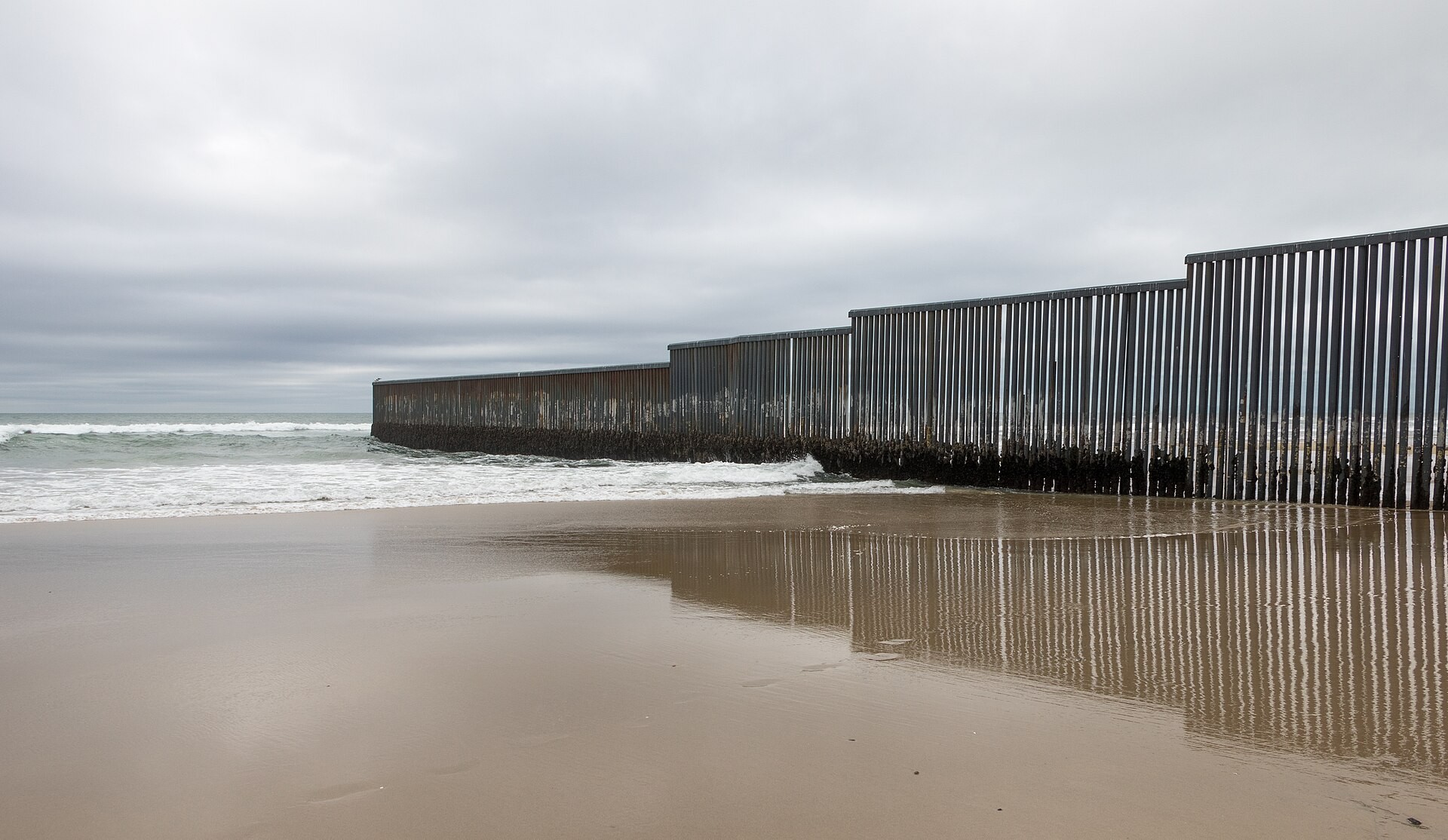
Understand the business model and you understand everything that followed. Tijuana faces San Diego across the busiest land border crossing in the Western Hemisphere. The brothers’ insight, if a protection racket can be called an insight, was that they did not need to move every kilo themselves. They held the plaza, and anyone who wanted to cross cocaine, marijuana or methamphetamine through their corridor paid the family a tax for the privilege, the piso. Traffickers who refused were killed or driven out. The family bought the other half of the machine the same way, in bulk: police, prosecutors and officials at every level were put on the payroll, and Ramón in particular spent so freely on bribes that the corruption itself became infrastructure. For muscle they reached across the line and imported it, recruiting hitmen from San Diego’s Logan Heights gang through their enforcer David Barron Corona, American gang members doing cartel work on Mexican soil. At the peak, US government estimates credited the Arellano Félix organization with supplying as much as 40 percent of the cocaine consumed in the United States. It was not the biggest cartel in Mexico by romance. It was the one sitting on the door.
THE CHAIRMAN AND THE ENFORCER
Two brothers defined the firm. Benjamín, born in 1952, was the businessman: quiet, patient, the financier and strategist who structured the tolls, the laundering and the alliances. The Los Angeles Times, writing at his capture, called him the cartel’s chairman of the board. Ramón, born in 1964, was the opposite instrument: flamboyant, sadistic by reputation, the head of the enforcement wing who made the family’s threats credible. In 1997 the FBI put him on its Ten Most Wanted Fugitives list, where his photograph eventually sat alongside Osama bin Laden’s. The massacre that fixed his name in the record came on September 17, 1998, in Ensenada, where gunmen murdered 18 people, an entire household and its guests; Mexican authorities attributed the order to Ramón, part of his campaign against a rival crew he believed had stolen from the family. Benjamín counted the money. Ramón made sure nobody shorted the count. It was a complete system, and for a decade it worked.
THE WAR THAT WROTE THE TEMPLATE
The split of 1989 had made the brothers and El Chapo Guzmán cousins in business, and the peace did not survive the money. The Tijuana toll was the casus belli: Sinaloa traffickers moving loads north resented paying the family’s tax, and the Arellano brothers read Sinaloa’s ambitions in Baja California as an invasion. The killing started in earnest in 1992. On September 3, gunmen for Guzmán and Palma killed nine people in Iguala, lawyers and relatives in Félix Gallardo’s circle among them. In November, Ramón and at least four of his men shot up Guzmán’s vehicle on a Guadalajara street; Guzmán escaped unharmed and answered within days. On November 8, 1992, a Sinaloa commando dressed as police stormed the Christine discothèque in Puerto Vallarta, where Ramón, Francisco Javier and Barron Corona were partying. The gunfight lasted at least eight minutes and burned through more than a thousand rounds. Six people died. The brothers were in the restroom when it started and escaped, by the account that has been repeated ever since, through an air conditioning duct. Read that night carefully, because every plaza war since has been a remake: rival heirs of one dead federation, a tax dispute over a corridor, imported gunmen, public spectacle killings in tourist cities, and a state that arrived afterward to count bodies. The Arellano war with Sinaloa was the template. Mexico has been running copies of it for thirty years.
THE CARDINAL
On May 24, 1993, the war produced the killing that changed the country’s politics. The Arellano organization had learned that Guzmán would be at Guadalajara’s airport, and a hit team built around Logan Heights gang members, with Barron Corona in the operation, went to kill him. In the airport parking lot they opened fire on a white Mercury Grand Marquis. Inside it was not Guzmán. It was Cardinal Juan Jesús Posadas Ocampo, the Archbishop of Guadalajara, arriving to meet the papal nuncio. He was shot 14 times at close range; seven people died in the lot that day. Guzmán, nearby, escaped, and was arrested in Guatemala two weeks later as the manhunt consumed both cartels. Now the two accounts, printed the way this report prints everything, labeled. The official finding: Mexico’s attorney general, Jorge Carpizo, concluded after a remarkably short investigation that the cardinal was killed by mistake, his white town car confused with the drug lord’s. The doubts, which have never gone away: the cardinal was wearing his cassock and a large pectoral cross; the shots were fired from as close as three feet; his successor, Cardinal Juan Sandoval Íñiguez, rejected the official version for the rest of his tenure and argued Posadas Ocampo was targeted, in the Church’s telling, for what he knew about the ties between traffickers and officials; witnesses whose testimony supported the official story began dying in Mexican prisons; and years later a Mexican judge threw out the cardinal murder charges against Benjamín, ruling that prosecutors had failed to prove even the mistaken identity shooting, after which the attorney general’s office denied it had charged him with that killing at all. A cardinal was machine gunned in an airport parking lot in front of the republic, and the Mexican state’s final position, assembled over a decade, is that it cannot say who killed him or why. The Info Soldier prints that as the record, because it is.
THE FALL
It ended, when it ended, in traffic. On February 10, 2002, in the middle of Mazatlán’s Carnival, Ramón Arellano Félix was in Sinaloa’s port city, by the reporting of the time, to kill his rival Ismael “El Mayo” Zambada. A ministerial police patrol stopped his car for a traffic infraction. The official version says Ramón drew and mortally wounded officer Ángel Antonio Arias Torres, who, falling, shot Ramón once in the head and killed him. Some investigators have maintained that officers on Zambada’s payroll fired first; that version is printed here as what it is, a claim that was never adjudicated. The dead man carried identification in the name Jorge Pérez López. Before the state could secure the body, people claiming to be relatives collected it from the undertaker, and it vanished, reportedly cremated. For weeks Mexico debated whether Ramón was dead at all. The attorney general announced the answer from inside Benjamín’s captured house: on March 9, 2002, at one in the morning, Mexican Army commandos arrested Benjamín Arellano Félix in a home in Puebla, and inside it stood an altar, candles burning around a photograph of Ramón. US officials later said DNA comparisons against family samples confirmed the Mazatlán body was Ramón. The chairman was extradited to the United States on April 29, 2011, pleaded guilty in San Diego to racketeering and money laundering conspiracy, and was sentenced to 25 years in federal prison with a 100 million dollar forfeiture. He is serving that sentence today.
THE SEA, THE DOCTOR AND THE CLOWN
The remaining brothers fell one at a time, each arrest stranger than the last. Francisco Javier, “El Tigrillo,” the youngest, who had run day to day operations, was taken on August 14, 2006, not in Mexico at all: the US Coast Guard boarded his fishing yacht, the Dock Holiday, in international waters off Cabo San Lucas and brought him up the gangway in a bulletproof vest and handcuffs, in the DEA photograph that ran around the world. He pleaded guilty in San Diego and on November 5, 2007, was sentenced to life in prison; he is held at ADX Florence. Eduardo, “El Doctor,” the cartel’s financial officer and the last brother at large, with a five million dollar US reward on his head, was captured by the Mexican Army after a shootout in Tijuana on October 26, 2008, extradited in 2012, and sentenced to 15 years. And the eldest brother, Francisco Rafael, arrested in 1993, extradited and released from US custody in 2008, was shot dead on October 18, 2013, at his own birthday party at a beach club in Los Cabos, by a gunman dressed as a clown. By 2013, every founding brother was dead, imprisoned in the United States, or out of the game. Washington declared the organization dismantled. The declaration was premature in a way the next sections of this record make plain.
THE SISTER
Because the family had a second financial department, and it was never in the brothers’ names. Enedina Arellano Félix, born in 1961, took an accounting degree at a private university in Guadalajara and worked the family business from behind the scenes. The DEA’s longstanding allegation, and it is printed here as an allegation, is that she was the organization’s financial brain: that after the 2000 arrest of the cartel’s money chief, Jesús “El Chuy” Labra, she took direct control of the money laundering, and that after Eduardo’s capture in 2008 she, with her nephew, effectively led what was left of the organization, keeping it alive on Colombian supply contacts and quieter methods than her brothers preferred. The US Treasury designated her husband, Luis Raúl Toledo Carrejo, in 2005 for his alleged ties to the cartel. Enedina herself has never been convicted of a crime, in Mexico or the United States, and no court has tested the DEA’s account of her. The Info Soldier notes the shape of the file without inflating it: the one Arellano the American government describes as the brains of the money has never stood in a courtroom, and the brothers who stood in courtrooms are doing their time in American prisons while the plaza they taxed is still taxed.
THE FAMILY DIVORCE
What the brothers’ fall actually produced was not peace but a divorce proceeding fought with rifles. After Eduardo’s arrest in 2008, the organization split between two heirs: Fernando Sánchez Arellano, “El Ingeniero,” the brothers’ nephew, who reportedly allied with Los Zetas, and Eduardo Teodoro García Simental, “El Teo,” a family lieutenant who defected to Sinaloa. Their war turned Tijuana into one of the most violent cities on earth between 2008 and 2010, with bodies hung from bridges and the murder rate tripling, until El Teo was arrested in January 2010 and the organization consolidated again under El Ingeniero. He held it until Mexican soldiers arrested him in Tijuana on June 23, 2014. Leadership, by the assessment of the analysts who track the group, passed back to the family’s remaining generation, with Enedina at its center. The surname on the door had thinned to a nephew and a sister. The door itself never moved.
THE PLAZA TODAY
So what does the toll booth look like now? The Arellano Félix organization survives, in the consensus of the US and Mexican assessments, as a diminished network of cells rather than an empire, and Tijuana went through a truce era in which Sinaloa, the old enemy, reportedly paid the family’s successors for the use of the crossing, the piso outliving the war that was fought over it. From 2016, remnants of the family’s organization were reported in alliance with the Jalisco New Generation Cartel against Sinaloa, the grandsons of the 1989 split reshuffling the same three chairs. The cargo changed with the decades, from marijuana and cocaine to methamphetamine and fentanyl, and Tijuana remains one of the most violent cities in the world and the single busiest drug crossing into the United States. The border did not change. The surnames did. That is the whole story of the plaza system in one sentence, and it is why the Arellano file matters more than the family’s obituaries: Félix Gallardo’s 1989 map is still the map, the toll is still collected at the door to California, and the only thing three decades of kingpin strategy ever changed was who stands at the booth.
THE INFO SOLDIER’S VERDICT: The Arellano Félix brothers were not the most romantic cartel of their era, and this report does not romanticize men whose enforcer ordered massacres. They were something more instructive: a family firm that understood the drug trade’s only durable asset, a crossing, and taxed it the way a state taxes a bridge. Their war with Chapo wrote the template every plaza war since has copied, down to the imported gunmen and the tourist city shootouts. Their fall proved the other half of the lesson. Washington and Mexico City spent twenty years and a fortune removing seven brothers, and at the end of it the plaza stood exactly where it had always stood, collecting under new management, because the demand on the American side and the toll on the Mexican side are the system, and the surnames were only ever the staffing. The border did not change. The surnames did. Watch the booth, not the obituaries.
Sources: US Department of Justice and US Attorney’s Office, Southern District of California, releases on the Benjamín, Eduardo and Francisco Javier Arellano Félix cases; US Department of State narcotics rewards records; FBI Ten Most Wanted Fugitive record for Ramón Arellano Félix; findings of the Procuraduría General de la República on the Posadas Ocampo killing as reported by the Catholic News Service and Reforma; Washington Post, March 10, 2002; Los Angeles Times, May 15, 2002; San Diego Reader, September 2010; Wilson Center, Organized Crime Groups fact sheet; InSight Crime, Tijuana Cartel profile.