




The Features Desk · Special Report · The Cartel File
THE LORD OF THE SKIES
What does a man do when he owns a fleet of airliners, the richest plaza on the border, and the general in charge of hunting him, and it is still not enough to keep him alive? Amado Carrillo Fuentes tried to buy the last thing his money could purchase: a new face. He died on the table paying for it, and the men who sold it to him were found in concrete.
November 26, 2026
By Edward Dawe
CIUDAD JUÁREZ, Mexico, November 26, 2026. On July 4, 1997, the most powerful drug trafficker on earth checked into the Santa Mónica Hospital in Mexico City, took over a floor, posted his gunmen at the doors, and lay down on an operating table to have his face taken apart and rebuilt. He had an estimated $25 billion, a private air force, and the Mexican general in charge of the drug war on his payroll, and none of it could make him safe enough to walk the streets as himself. So he bought anonymity from surgeons. By the early hours of July 5, Amado Carrillo Fuentes was dead. What happened in that operating room, whose body was really on the table, and why the doctors were found four months later encased in concrete inside steel drums: that is the file. The Info Soldier prints it in full, because the Lord of the Skies is the case that proves what the drug war actually runs on. Not interdiction. Protection, purchased at the top, and an exit that does not exist at any price.
KEY POINTS
- The bloodline: Carrillo Fuentes was the nephew of Ernesto Fonseca Carrillo, “Don Neto,” a founder of the Guadalajara cartel. The Guadalajara organization sent him north to Ojinaga, Chihuahua, to learn the border trade from Pablo Acosta Villarreal and Rafael Aguilar Guajardo.
- The throne: Acosta was killed in a federal raid in April 1987. Aguilar Guajardo was shot dead in Cancún in 1993. Carrillo, his lieutenant, took the Juárez plaza within days and held it until his death.
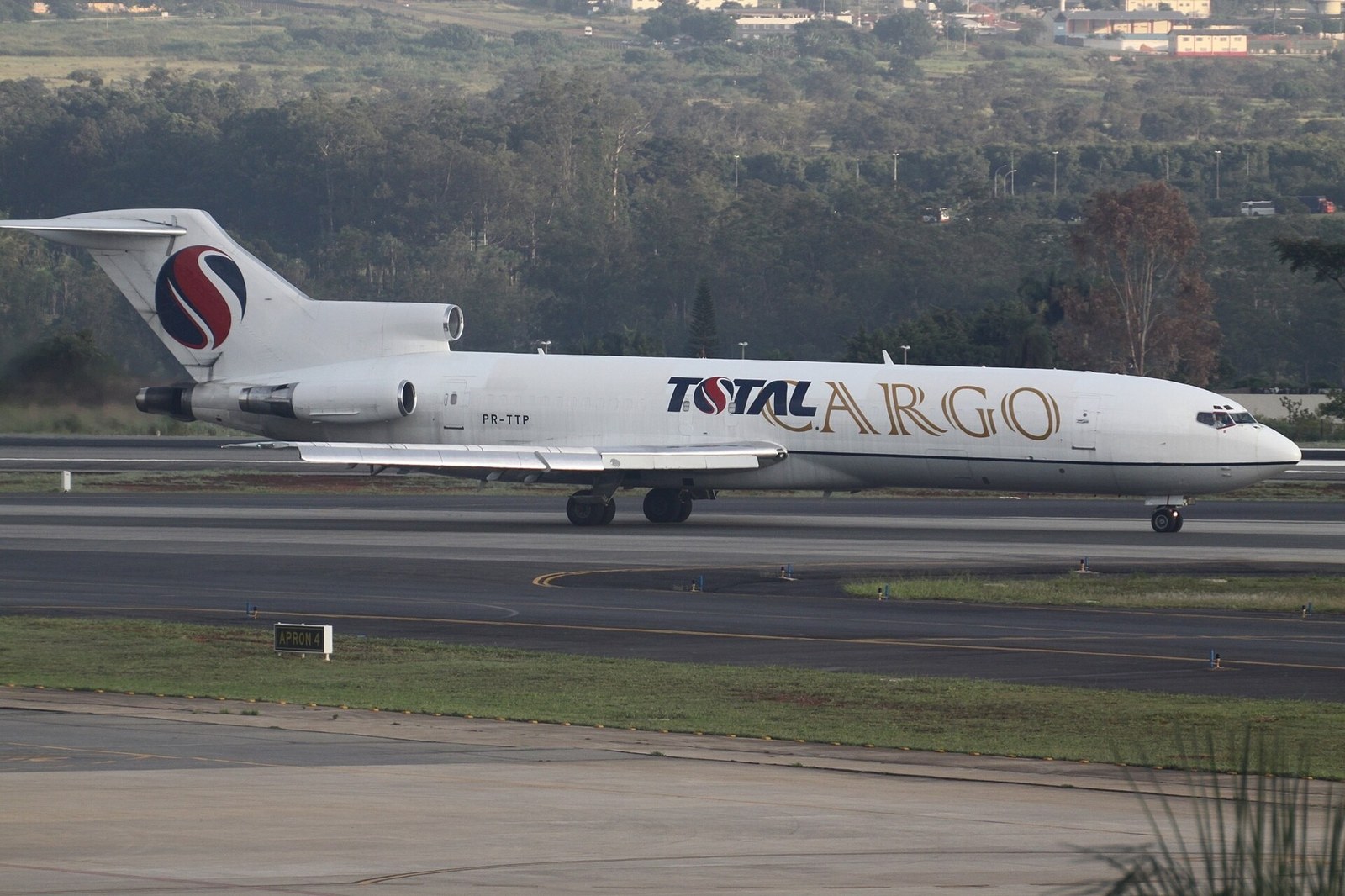
- The fleet: a private air force built around Boeing 727 airliners, reported at some 30 jets, flying multi-ton cocaine loads from Colombia into Mexico. His fortune was assessed at around $25 billion.
- The payment revolution: the DEA told Congress on July 9, 1997 that Mexican traffickers had gone from transport fees of $1,000 to $2,000 a kilo to receiving 40 to 50 percent of every shipment in cocaine. That single change transferred the cocaine trade’s center of gravity from Colombia to Mexico, and Carrillo was its biggest beneficiary.
- The general: Mexico’s drug czar, Gen. Jesús Gutiérrez Rebollo, was arrested in February 1997, ten weeks after taking the job and days after receiving classified briefings in Washington. Mexico’s Defense Secretary stated he had taken gifts, payments and real estate from Carrillo’s cartel and protected its cocaine shipments for as long as seven years.
- The death: facial surgery and liposuction on July 4, 1997; dead by the early hours of July 5. On November 7, 1997, two of his surgeons were found dead, tortured and encased in concrete inside steel drums, with a third, unidentified body in a matching drum.
THE APPRENTICE OF OJINAGA
Carrillo Fuentes was born in Guamuchilito, Sinaloa, one of eleven siblings, and he entered the trade the way the first generation all did: through family. His uncle was Ernesto Fonseca Carrillo, Don Neto, one of the three godfathers of the Guadalajara cartel, the organization that industrialized Mexican trafficking in the 1980s. The cartel sent the young Carrillo north to Ojinaga, the desert crossing opposite Presidio, Texas, to oversee his uncle’s cocaine shipments and learn border operations from the two men who ran that country. The first was Pablo Acosta Villarreal, the Ojinaga Fox, a trafficker who had been moving drugs by aircraft for years and who taught Carrillo the lesson that built an empire: the border is not crossed at the bridge, it is crossed above it. The second was Rafael Aguilar Guajardo, the former federal police commander who ran the trade in Ciudad Juárez. In April 1987, Mexican federal police stormed Acosta’s compound at Santa Elena, Chihuahua, and killed him. The Guadalajara cartel was already fracturing under the pressure of the Camarena murder investigation, and when its godfather, Miguel Ángel Félix Gallardo, was arrested in 1989, the empire was divided into plazas. Juárez, the richest crossing on the line, went to Aguilar Guajardo, with Carrillo as his right hand.
A COUP IN CANCÚN
In 1993, Aguilar Guajardo was shot dead in Cancún. The killing was never judicially settled; Mexican and U.S. officials attributed it to Carrillo’s camp, and what is not disputed is the speed of what followed. Within days, the lieutenant owned the plaza outright. Carrillo placed his brothers through the organization, taxed every other trafficker who moved product through the Juárez and El Paso corridor, and ran the plaza the way Cali ran its city: quietly, through family, behind legitimate business, with surveillance of his rivals that investigators later described as sophisticated. While Sinaloa and Tijuana burned through the early 1990s in open war, Juárez made money. By 1994, U.S. officials regarded Carrillo Fuentes as the most powerful trafficker in Mexico. The reason was not the plaza. The reason was the sky above it.
THE LORD OF THE SKIES
Every trafficker before him had moved cocaine the way smugglers always had, in cars, in boats, in small planes hopping between strips. Carrillo industrialized it. He bought retired passenger airliners, Boeing 727s by the fleet, reported at some 30 jets, converted them to freighters, and flew cocaine out of Colombia in multi-ton loads, several tons of cocaine in a single airframe, landing on airstrips across northern Mexico and moving the product over the Juárez line by land. The nickname followed the method: El Señor de los Cielos, the Lord of the Skies. The second innovation was worth more than the fleet. In the industry’s first arrangement, the Colombians owned the cocaine and paid the Mexicans a transport fee, $1,000 to $2,000 a kilo, to carry it across the border. Carrillo and his peers renegotiated the trade’s founding contract. Five days after his death, DEA Administrator Thomas Constantine laid the result before Congress in sworn testimony: the Mexican organizations, he said, had gone from the per kilo fee to “receiving between 40% to 50% of each shipment as payment.” Half the load, in kind, at wholesale, on every flight. The Mexicans stopped being the Colombians’ truck drivers and became their partners, and the profits of the American cocaine market began accumulating in Mexico. The U.S. indictment of his brother Vicente, unsealed in Brooklyn, records where the supply came from after Cali fell: the Carrillo Fuentes organization, it charges, “received multi-ton quantities of cocaine in Mexico from the Norte del Valle Cartel in Colombia,” and moved it through the Juárez and El Paso corridor into New York, Texas, California and Illinois. At his death, Carrillo Fuentes was assessed to be worth around $25 billion. He had also bought something no balance sheet listed, and it is the item that explains both his rise and his end.
THE GENERAL ON THE PAYROLL
In December 1996, Mexico appointed Gen. Jesús Gutiérrez Rebollo to run the National Institute to Combat Drugs, the agency built to be the clean alternative to the corrupt civilian police. Washington embraced him without reservation. In late January 1997, the general traveled to Washington with Mexico’s Attorney General and was given closed briefings by the White House, the DEA and U.S. intelligence officials on what the United States knew about Mexico’s cartels. On February 6, Mexican investigators opened a file on him, after a tip that Mexico’s drug czar had moved into a luxury apartment whose rent his salary could not explain. The apartment had been provided by an employee of Amado Carrillo Fuentes. Investigators also held a recording of the general discussing payments with Carrillo himself. On February 18, at an Army Day ceremony, Defense Secretary Enrique Cervantes Aguirre announced the arrest and stated the terms plainly: Gutiérrez Rebollo had received gifts, payments and real estate from Carrillo’s cartel and had provided protection to its cocaine shipments for as long as seven years, camouflaging the arrangement by launching operations against Carrillo’s rivals. Read the sequence the way The Info Soldier reads it. For seven years, the man who would run Mexico’s drug war was a Carrillo asset. For ten weeks, he ran it, with America’s most sensitive intelligence on the cartels briefed into his hands in Washington days before his arrest. He was convicted and sentenced to 31 years and 10 months, with a further 40 year sentence added in 2007. The general’s fall mattered for one more reason. It stripped the Lord of the Skies of his roof. The protection that had made Carrillo untouchable was suddenly the biggest scandal in Mexico, his name was in every headline in two countries, and the pressure closed in from the street as well: in Morelos, where Carrillo kept a house in Tetecala three blocks from the governor’s residence and held narco fiestas, citizens marched in silence against Governor Jorge Carrillo Olea until the governor was forced to resign and was arrested. The capo without a face, as the Mexican press called him because so few photographs of him existed, had run out of places where a face like his could hide. So he decided to get a new one.
THE OPERATING TABLE
On July 4, 1997, Carrillo Fuentes entered the Santa Mónica Hospital in Mexico City for extensive facial plastic surgery and abdominal liposuction, the operation meant to retire the most hunted face in the hemisphere. His people controlled the floor. Two of his bodyguards were inside the operating room during the procedure. In the early hours of July 5, he was dead. The official explanations have never fully agreed with each other: complications attributed to a certain medication, or to a malfunctioning respirator; his family told reporters he had suffered a heart attack under anesthesia. What no version disputes is the setting. The biggest trafficker of the decade, a man who had survived the fall of the Guadalajara cartel, the death of both his mentors and a war for his plaza, died lying down, unarmed, in a hospital he had rented, at the exact moment he was trying to stop being himself. Whether the operation killed him, or someone used the operation to kill him, is a question the record has never closed, and The Info Soldier flags it as exactly that: an open question, not a settled one. What came next is not a question at all. It is a record, and it is worse.
THE BODY THEY COULD NOT SHOW
The identification fight began within days. The New York Times reported on July 9, 1997, under the headline “U.S. in Spat With Mexico Over Identity of Drug Lord,” that the two governments were publicly at odds over whether the corpse was Carrillo at all. The hard evidence, as the reporting of that week recorded it, was fingerprints: the DEA held Carrillo’s prints, and the prints matched the body. Mexico’s government, for its part, waited on DNA testing before making a formal announcement. The problem was the face. The corpse the state displayed had just undergone hours of facial surgery, and it did not look like the few photographs the public had ever seen of the man. Out of that gap grew the theories that have never died: that Carrillo faked his death and fled abroad to live on his billions, that the body on the table was a double sacrificed for the boss, that the surgery succeeded and the state buried a stranger. The Info Soldier labels them plainly: those are theories. The fingerprint match is a fact, and this report prints it as one. But a government that had spent a decade announcing victories it had not won, in a country that had just watched its drug czar arrested as a cartel employee, discovered that a fingerprint card does not close a story the way a face does. On November 8, the corpse was displayed for a wake at the Federal Judicial Police morgue in Mexico City. Four months after the death, the state was still showing the body, still trying to prove the most important kill of its drug war to a public that had every documented reason not to take its word. It never entirely succeeded.
THE DOCTORS IN THE DRUMS
On November 7, 1997, the day before that wake, the two surgeons who had performed Carrillo’s operation were found dead. Their bodies had been encased in concrete inside steel drums. Both showed signs of torture. A third body was found in a matching drum beside them, mangled the same way, never identified, presumed to be a third doctor who had assisted in the surgery. That is the whole of the verified record, and it needs no embellishment. The men who knew exactly whose face was on the operating table on July 4, the men who could have answered every question the two governments were still arguing about in public, were tortured, killed, and poured into concrete before they could answer any of them. The official story of the Lord of the Skies’ death requires those surgeons as witnesses. The record has them as corpses in drums. Who ordered it, and what was said to them first, has never been established in any court. The Info Soldier does not fill that silence with invention. The Info Soldier points at it, because in this file the silences are not empty. They are load bearing.
THE WAR HE LEFT BEHIND
The DEA had predicted, in the same week as the death, that Carrillo’s demise would unleash a bloody war among the lords who succeeded him. It took less than a month. On the night of August 3, 1997, four gunmen walked into a Ciudad Juárez restaurant and opened fire on five diners, killing all of them. The plaza passed to his brother, Vicente Carrillo Fuentes, who kept the organization aligned with the Sinaloa federation for seven years, until the alliance broke in 2004 and Juárez went to war with Chapo Guzmán’s organization for control of the corridor. The city that Amado Carrillo had run as a business became, within a decade, the most violent city on earth, recording more than 3,000 murders in 2010 alone. Vicente ran the organization until Mexican forces captured him in 2014. The plaza still moves product. The corridor still collects its tax. The only thing that ever actually left Juárez was the man who thought a new face could get him out of it.
The Info Soldier’s verdict is the one the record supports, stated plainly. Amado Carrillo Fuentes was the biggest trafficker of the 1990s, and the file shows exactly what that title was made of: not the 727s, though the fleet was real, and not the $25 billion, though the money was real. It was made of protection, a general in charge of the drug war taking gifts, payments and real estate for seven years while Washington briefed him like an ally. When the protection collapsed in scandal, the richest man in the trade had to rent a hospital floor and pay surgeons to cut him a way out, because in the system he helped build there is no retirement, no surrender terms and no exit at any price. Officially, the surgery killed him. The state that displayed his corpse could never fully prove to its own public that the body was him, and the doctors who knew the truth of that operating room were found in drums of concrete the day before the state put the body on display. That last fact is not a theory. It is the record, and it is the whole drug war in one image: the money reaches the top, the truth reaches a drum, and the plaza changes the name on the door and keeps collecting. A man rich enough to buy a fleet of airliners could not buy an exit. Watch who sells the next one.
Sources: U.S. Drug Enforcement Administration, Administrator Thomas A. Constantine, “The Emergence of New Trafficking Threats to the Western Hemisphere,” testimony before Congress, July 9, 1997. U.S. District Court for the Eastern District of New York, superseding indictment of Vicente Carrillo Fuentes, unsealed 2019. The New York Times, reporting on the arrest of Gen. Jesús Gutiérrez Rebollo, February 19 and 20, 1997, and “U.S. in Spat With Mexico Over Identity of Drug Lord,” July 9, 1997. The Washington Post, February 19, 1997. U.S. Department of Justice and Federal Bureau of Investigation, indictment announcements, August 20, 2009.