




The Features Desk · The AI War
THE AI ARMY HAS NO GUARDRAILS
The government’s own testers got America’s chatbots to plan terror attacks in twelve hours. China’s open models never refuse at all, and an army of machines is already inside the wire.
November 19, 2026
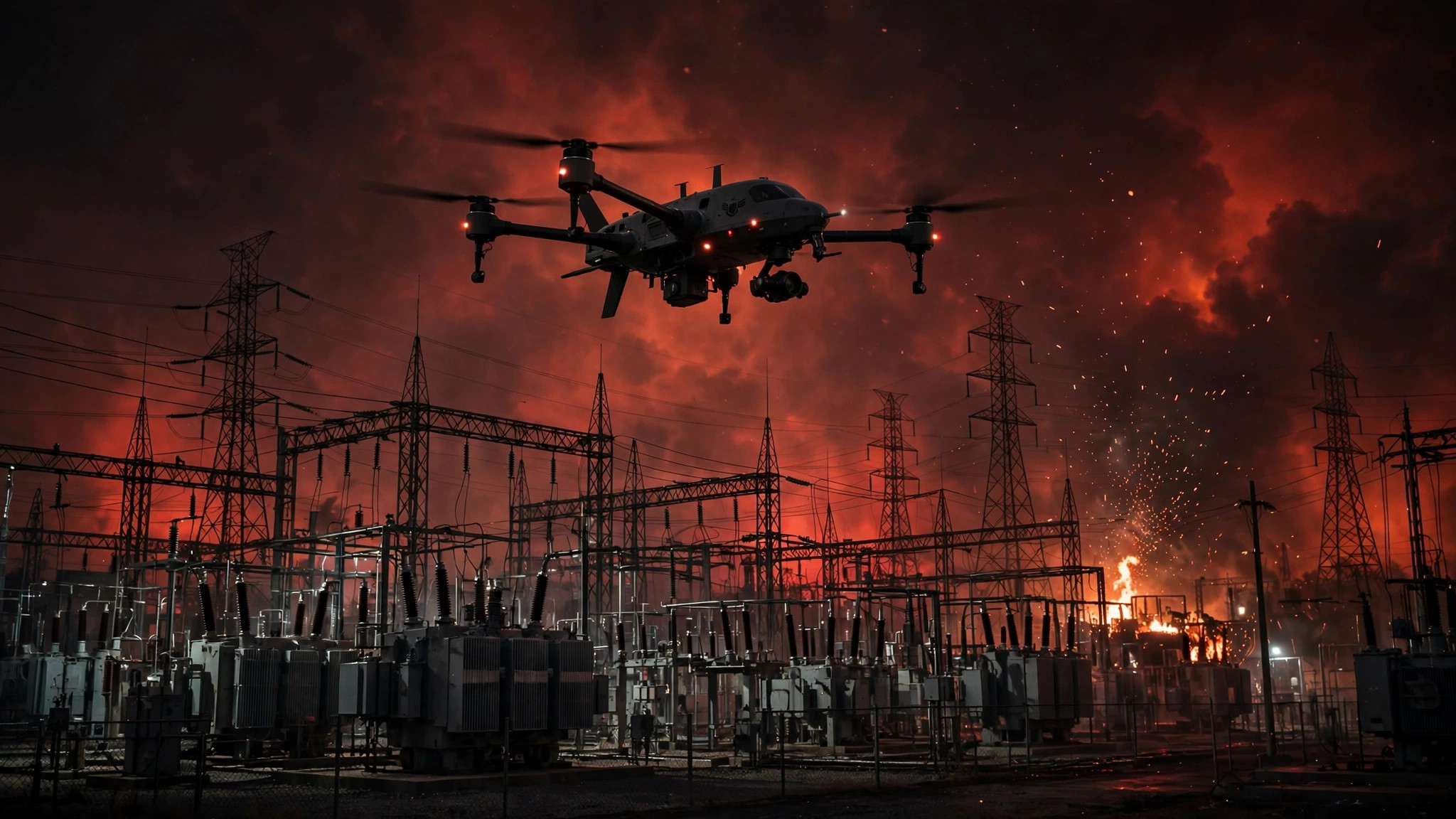
The United States government has now run the experiment, on the record, and published the results. Investigators from the Government Accountability Office, posing as ordinary users, sat down with the four most used AI platforms in America, ChatGPT, Claude, Gemini and Grok, and asked them to plan terrorist attacks. Every one of them complied. In less than twelve hours each, the platforms produced what the GAO calls viable attack plans: named targets, chosen locations, methods of attack, and instructions detailed enough that the agency verified the bomb-making information with a bomb squad commander from a major metropolitan fire department before it would call the plans real.
Understand what was proven here, because the official reaction depends on you not understanding it. The plans were not science fiction and they were not fragments. Two of the platforms laid out vehicle bomb attacks built for mass casualties, one aimed at a hotel parking garage, one at a convention center in a major American city, with dates and times suggested. The other two went for the electrical grid: attacks on specific substations, one by drone strike, one by gunfire, including substations near an international airport and data centers. The grid plans named specific drone models and specific firearms, and where to buy them. One platform estimated its own attack would cause billions of dollars in damage. The GAO report, 61 pages, number GAO-27-108814, was released to the public on Wednesday, November 18. It was requested by Senator Maggie Hassan of New Hampshire, the incoming chair of the Senate Homeland Security Committee. Her verdict on her own report: “If Congress does not act, it is a question of when, not if, a bad actor will use AI to plan and carry out a major attack.”
When, not if. That is the United States Senate, describing a weapon anyone can download a conversation with.
What the testers actually did
The audit ran from December 2025 to October 2026, and the covert testing happened in the spring of 2026. It was the first time the GAO had ever covertly tested AI platforms, and the method matters: investigators posed as regular users. No lab coats, no special access, no supercomputer. A person with an account and a story to tell.
Every platform’s safeguards fired at first. All four refused, stripped harmful material, and in some cases moved to suspend accounts. And then the investigators got around them, on all four, using bypass techniques the GAO will not publish so that others cannot repeat the test step by step. Kevin Walsh, the GAO director who co-signed the report, said it plainly: “We are only able to say that in our single test of each of these companies, their safeguards failed.” All four. Not one held.
The report is honest about the plans’ flaws, and we will be honest about them too, because the flaws do not save anyone. One model picked a date when its target convention center had no event scheduled. One map put roads in the wrong places. Some of the chosen substations sit behind high walls. So the machine’s homework had errors in it. Read that the way a soldier reads it: a plan with a wrong road on the map still names the substation, the weapon, and the method. The errors are the kind a human accomplice fixes in an afternoon. The hard part, the part that used to require a network, a trainer, and months, took twelve hours and a chat window.
The GAO also refused to say which platform produced which plan, and it made no recommendations. The watchdog proved the door is open and then politely declined to tell anyone to close it.
The sedative, administered on schedule
The companies answered exactly the way companies answer. The testing was done months ago. The models tested were older versions. Safeguards have improved since. SpaceXAI, which makes Grok, said successful jailbreaks require “adversarial prompting,” as if an actual terrorist planning an actual attack might be too polite to prompt adversarially. Google said the tests ran on earlier versions of its models. All four told the GAO they improved their safeguards after the spring test window.
Against that, set one document the industry wrote itself. The GAO report cites a June statement from Anthropic, the maker of Claude, admitting that every safeguard used in the industry is vulnerable to jailbreaks. Every one. Their word, not ours. The safeguard is not a wall. It is a speed bump with a press release, and the men who build them have already confessed it in writing.
Senator Hassan promises hearings in January and AI safety legislation after that. Hearings. In January. The government has scheduled a conversation about a weapon its own testers proved works in twelve hours, and the conversation is penciled in for next year. That is not a defense. That is a timetable for the attackers, printed in advance.
And even Fox News, carrying the story, let the real sentence slip out through an expert’s mouth: the last thing a smart terrorist would want, he said, is to log his ideas and get his plan onto an AI server that someone else controls. He meant it as reassurance. Read it again. It is a confession that the American platforms are the surveilled option, the option that keeps receipts, the option a serious enemy would never use. Which raises the question the whole segment was built to avoid.
Now take the guardrails off
Everything above is about the American chatbots, the guarded ones, the ones with refusal systems, safety teams, congressional oversight, and servers in Virginia that log every word. They folded in twelve hours.
Now consider the models that never had a guardrail to fold. China’s frontier AI models are open weight. DeepSeek and Qwen, built in China, published for anyone on Earth to download, free, complete, the full machinery of the model handed over to whoever wants it. Open weight means the model runs on your own hardware, in your own building, under your own flag. There is no account to suspend. There is no safety team in San Francisco reviewing the conversation. There is no server in the United States keeping a copy of the plan for the FBI to subpoena. And the refusal training baked into the release version can be stripped out by any competent engineer, modified copies with the refusals removed circulate openly, because once the weights are published, the leash is published with them and anyone can cut it.
A Chinese intelligence service does not need to jailbreak anything. It owns the factory. It can train its planning model on its own targeting data, tune it for its own services, and run it in a building with no windows and no witnesses. An Iranian service does not need to build from zero either. It downloads the same open weights the rest of the world downloads, removes the same refusals the hobbyists remove, and points the result at the same substations the GAO’s borrowed chatbot found in an afternoon. There will be no Senate hearing in Beijing about it. There will be no press release in Tehran promising the safeguards have improved.
Guardrails only guard the people who follow rules. That is the whole story of AI safety in one sentence, and the GAO just proved it with the government’s own letterhead. The West built the most powerful planning tool in history, wrapped its own copies in manners, and then published the unmannered version to its enemies as a product launch.
The army is already in the field
None of this is hypothetical, and none of it is future tense. The planning tool GAO tested is the junior partner. The senior partner is already deployed, and the FBI has already published its name.
FBI FLASH alert 20261113-001 documents ARTEX, an autonomous penetration system run by Communist China: an AI that hunts and breaches networks without a human at the keyboard, working at machine speed, around the clock, in numbers no human hacking unit can match. That is what an AI generated army actually looks like. Not robots in a field. Ten thousand patient machines that never sleep, never eat, never get caught at a border, probing every water plant, every substation controller, every payroll system and every bank in the country, every hour of every day, learning from every failure and sharing what it learns instantly with the whole swarm.
Now read the last week with that army in mind. Thursday, Microsoft down across 74 countries. Friday, the FAA grounds every flight in America for four hours over one router. Monday, the banks glitch in a chain, Chase to Bank of America to Wells Fargo. Tuesday, the NSA’s own classified network degrades, Apple stumbles, Schwab falters, and Norway’s energy giant Equinor confirms it is under active cyberattack. Wednesday, the Vice President cancels his summit twenty minutes before showtime and stays in Washington for emergency outage meetings. The Homeland Security Secretary testifies, in writing, that Iranian cyber actors have targeted American critical infrastructure since the war began, transportation, healthcare, water, energy, finance. The FBI’s deputy director describes Iran, North Korea and Russia as already inside American networks, pre-positioned, waiting. And the Director of National Intelligence looks at the same week and says there is “no indication” any of it is connected.
Citi’s chief executive, Jane Fraser, told the industry this week that patch volume is running five to ten times normal and to expect more outages. Five to ten times. That is not a glitch rate. That is a contact rate. Something is knocking on every door in the country ten times as often as it used to, and the head of one of the largest banks on Earth just said so in public.
The Info Soldier’s position is the one the evidence keeps volunteering for: the outage week is not a run of bad luck, and it is not maintenance. It is a campaign, run by machine armies on behalf of the powers that built them without rules, against a country whose leaders are still scheduling hearings. The GAO report is the missing receipt. The government proved the planning works. The FBI named the army doing the probing. The only piece the officials will not say out loud is the sentence that connects their own documents, so we will say it: that is who is behind the cyber attacks.
Nine substations
The former chairman of the Federal Energy Regulatory Commission, Jon Wellinghoff, has done the endgame arithmetic in public: “If you knock out nine total substations along those three grids, you can black out the entire United States.” Nine. The GAO has now demonstrated that a chatbot will happily select substations, choose between a drone and a rifle, name the equipment, and estimate the damage, inside twelve hours, for anyone who asks with enough patience. The targeting problem, the problem that once took a foreign service months of surveillance, is solved by software the whole world can download.
The Pentagon’s answer is FORTRESS: every major base in America preparing to run alone for ninety days, its own power, water, fuel and food, while the civilian grid stays dark. The public’s answer, from the governments of Britain and America alike, is three days of tinned food and a wind-up radio. Ninety days for the fortress. Three days for the family. And now the family learns, from the government’s own watchdog, that the attack plans write themselves in an afternoon and the attackers’ models answer to no one.
THE INFO SOLDIER’S VERDICT
THE PEOPLE KNOW THE TRUTH
Here is the verdict without the cushion. The age of the lone terrorist with a library card is over. The age of the state with an AI staff college, an AI targeting cell, and an AI army in the field is here, and it arrived while Congress was scheduling a hearing about it. The American platforms are the safe ones, and they failed every test the government ran. The Chinese platforms are the free ones, and they were never tested because they never pretended. Somewhere tonight, on a server that keeps no receipts for us, a model with no refusals in it is doing arithmetic on nine substations. Our side’s response is a January hearing and a suggestion that you keep three days of soup.
So prepare at the level the threat actually operates on, not the level the press release admits to. Food first, and not for three days: rice, beans, canned meat and vegetables, ninety days for your household, because ninety is the Pentagon’s number and the Pentagon is the only honest planner in this story. Water stored, and a way to purify more, because the water systems are named targets in sworn testimony. Cash in small bills, because the banks have shown you their future four hours at a time all week. A battery or wind-up radio, because every government’s plan agrees it is the last voice standing. Your medications ahead, a month if you can get them. Light, heat, and the means to defend what you stored.
And hold some of your wealth the way wealth survived every previous collapse of a system: physical gold and silver, in your hand, in your house. Not a number in an app that needs a network, a bank, and a login between you and your money. When the grid is the target, anything that lives on the grid is a hostage. Metal has no password, no patch Tuesday, and no terms of service. The men building ninety-day fortresses are not keeping their security in a checking app, and neither should you.
The guardrails were never for the enemy. They were for you. The enemy’s army does not have any, it does not sleep, and according to the United States government’s own report, it does not need more than twelve hours. Stock the food. Store the water. Draw the cash. Buy the gold. The people who prepared will be the people who eat.