




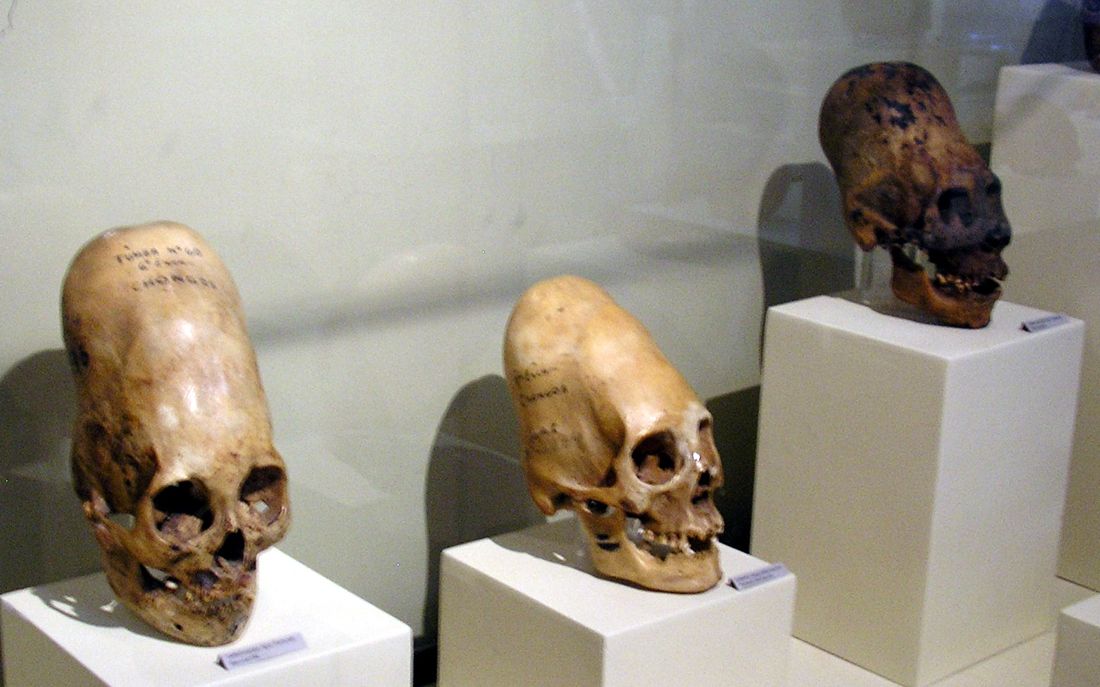

THE PARACAS SKULLS: THE DNA THAT NEVER GOT PUBLISHED
In 1928, Peruvian archaeologist Julio Tello excavated more than 300 elongated skulls from a necropolis of the Paracas culture, which flourished on Peru's south coast from about 800 BCE. Elongated skulls from head binding in infancy are found across the ancient world, but the Paracas examples include some of the most extreme, and alternative researchers have long argued that a subset shows anomalies binding cannot explain, including claimed differences in cranial volume and structure. In 2014, researcher Brien Foerster announced preliminary results from privately funded DNA testing, quoting an unnamed geneticist that the samples carried mutations unknown in any human, primate, or animal. At a Los Angeles symposium in January 2018, Foerster and filmmaker L.A. Marzulli presented fuller results: mitochondrial DNA haplogroups including H2a and T2b, associated with Eastern Europe and the Near East rather than the Americas. The response from working geneticists was blunt. The testing was privately commissioned, never published in a peer-reviewed journal, with undocumented chain of custody; one laboratory whose results were cited warned that recent European contamination could not be excluded, and peer-reviewed ancient DNA research on Paracas remains, including work by geneticist Lars Fehren-Schmitz and colleagues, has found ancestry fully consistent with Native American populations. Foerster maintains the skulls' story is not closed. The field maintains it never opened, the field being the same profession that controls access to the skulls, the journals the results must publish in, and the laboratories that run the tests.
THE QUESTIONS
- The decisive test is obvious and cheap by modern standards: blinded samples, published protocols, a named laboratory, peer review. In a decade of claims, why has no institution, believer or skeptic, run it and published whatever it found?
- If the answer is contamination, the contamination had to come from somewhere specific. Why has no one identified it?
THE INFO SOLDIER’S VERDICT: The decisive test has never been run in the open, by either side, in a decade of shouting. When the custodians of the specimens refuse a blinded, published, named-lab test, the refusal is the data. The skulls stay unexplained.