




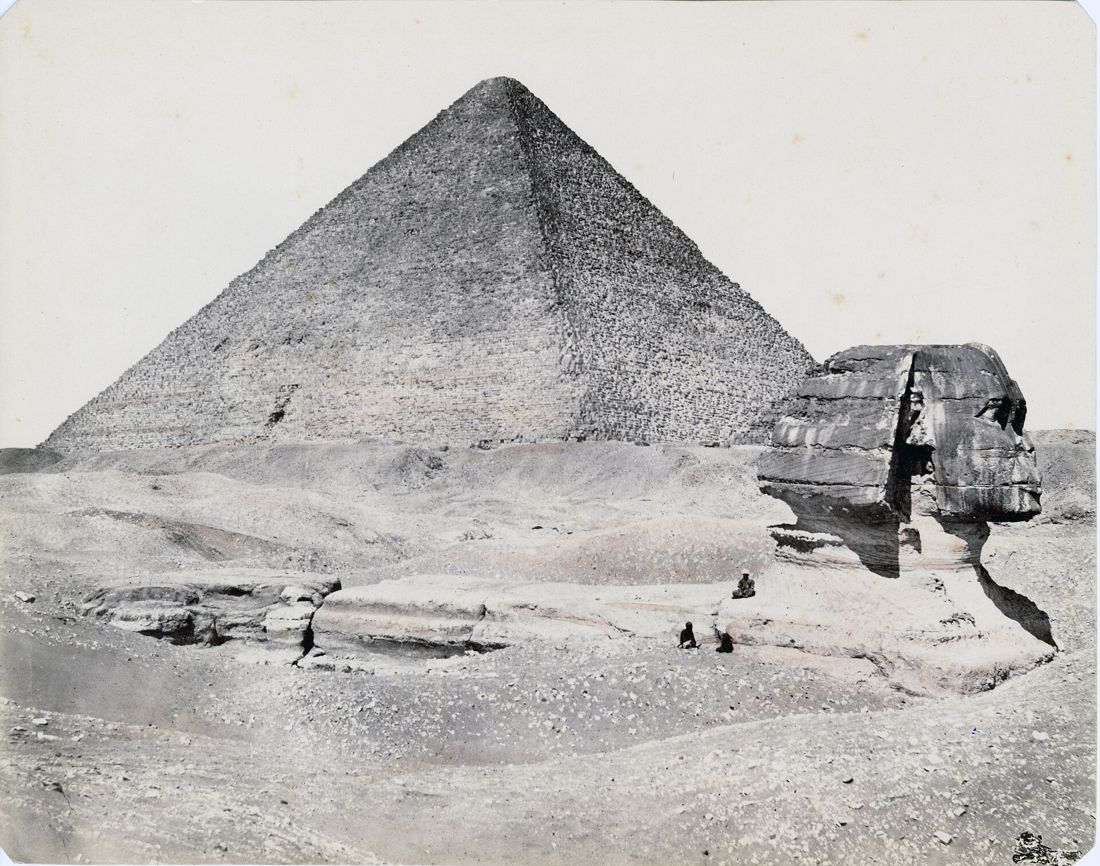

IMPOSSIBLE CONSTRUCTION: STONES THAT SHOULD NOT BE THERE
Some entries in this archive are arguments. This one is a set of measurements. The Great Pyramid of Khufu contains some 2.3 million blocks, was aligned to true north within a small fraction of a degree, and held its position as the tallest human structure for more than 3,800 years. At Baalbek in Lebanon, the Roman temple platform incorporates the trilithon, three cut stones of roughly 800 tons each set into the podium wall, while still larger blocks, including one estimated above 1,000 tons, lie in the nearby quarry where they were abandoned mid-extraction. At Puma Punku in Bolivia, part of the Tiwanaku complex dating to roughly 536 to 600 CE, precision-cut andesite H-blocks with sharp right angles and drilled holes sit scattered like components of a kit, in one of the hardest stones worked anywhere in the ancient Americas. And at Gobekli Tepe in southeastern Turkey, excavated from 1995 under Klaus Schmidt, rings of carved T-shaped pillars weighing up to 16 tons were erected around 9500 BCE by hunter-gatherers, a documented date that forced archaeology to rewrite its sequence: monumental coordinated construction now demonstrably precedes farming, cities, and pottery in the region, rather than following them.
THE QUESTIONS
- Mainstream archaeology explains the trilithon with ramps, rollers, and manpower at scales it has never demonstrated with period tools. Why has no full-scale replication of an 800-ton placement ever been attempted by the institutions certain it was routine?
- Gobekli Tepe was deliberately buried by its own builders, preserved like a time capsule. Who buries a temple complex under tons of fill, and why has no comparable site from its era been found in a century of digging the same hills?