




Deep Archive · File 33 of 38 · Full-Length

The Anunnaki: The Gods Who Came for Gold
The texts, 3rd to 2nd millennium BCE; the theory, Zecharia Sitchin, The 12th Planet, 1976
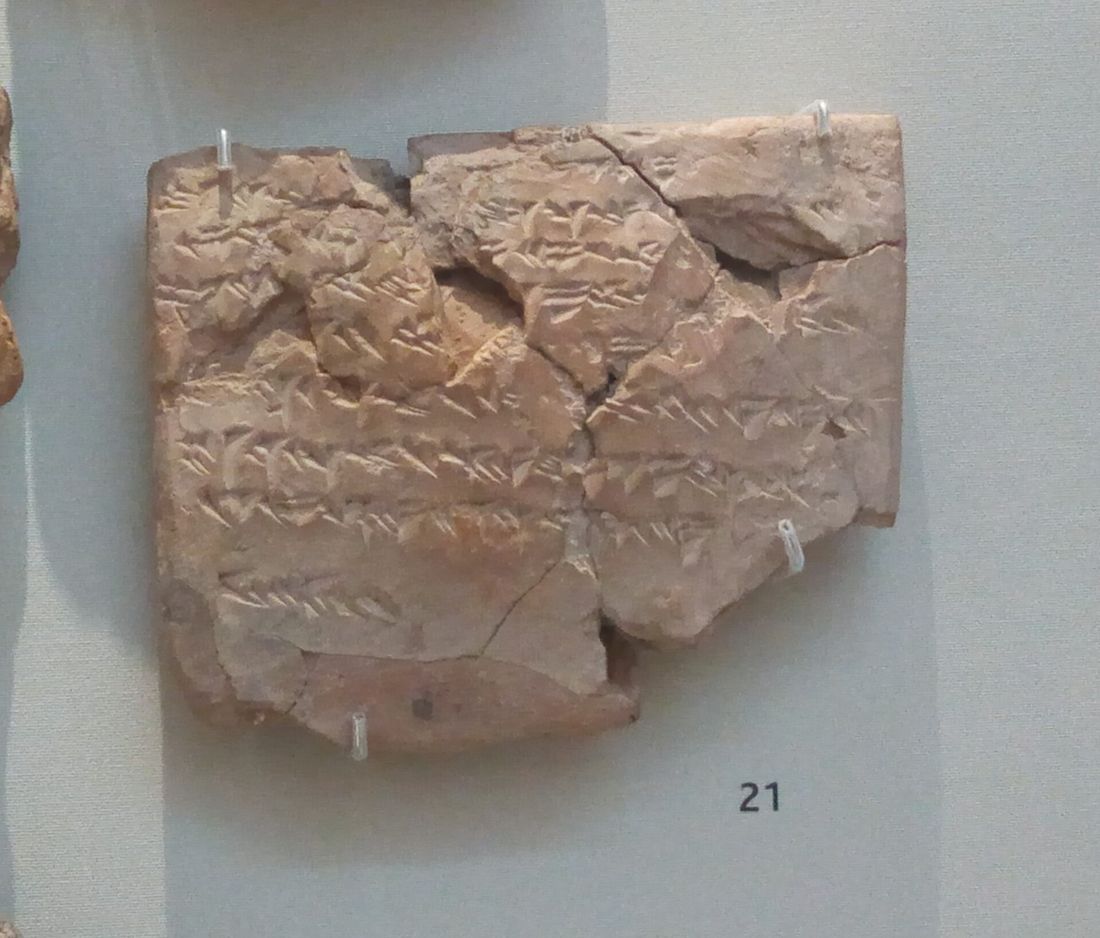
Here is what is genuinely in the ground, before anyone argues about what it means. The oldest written civilization on Earth, Sumer in southern Iraq, left tens of thousands of clay tablets, and its creation literature says, in plain cuneiform, that the gods got tired of working. In the epic Atrahasis, the lesser gods, the Igigi, dug the canals and hauled the loads for the great gods until they revolted, burned their tools, and surrounded the house of Enlil. The solution the texts describe is the manufacture of a substitute worker: humankind, formed from clay mixed with the blood and intelligence of a slain god, made explicitly to carry the workload so the gods could rest. The Enuma Elish tells a parallel story, humanity fashioned from the blood of the rebel god Kingu to serve the gods. The beings at the top of that system are the Anunnaki, the great gods of the Sumerian and Akkadian pantheon. The word itself, in the texts, means something like the princely offspring, the children of the sky god An. And then there is the Sumerian King List, a real artifact that records reigns before a great Flood in numbers no historian can domesticate: Alulim of Eridu reigning 28,800 years, his successor 36,000, eight kings in five cities totaling 241,200 years before the waters came and the reigns dropped to mortal lengths.
Zecharia Sitchin, a Russian-born, London-educated economist and journalist who taught himself cuneiform, published The 12th Planet in 1976 and argued that the scholarly translations were a polite fiction laid over a literal technical record. In Sitchin's reading, the Anunnaki are not gods but astronauts: flesh-and-blood beings from a planet he called Nibiru, which the texts mention, on a 3,600-year elongated orbit that brings it through the inner solar system. About 450,000 years ago, he wrote, they came to Earth because Nibiru's atmosphere was failing and they needed gold, suspended as particles in the air to shield it, first sifting it from the waters of the Persian Gulf and then mining it in southern Africa. When their own miners mutinied, in his reading of Atrahasis, their scientists Enki and Ninhursag solved the labor problem the way the text seems to describe: they took an existing earth creature, Homo erectus, and combined its stock with their own DNA to produce the Adam, a worker smart enough to mine and sterile enough to control, until a second intervention gave the workers the ability to reproduce. His exhibit A was a cylinder seal in Berlin's Vorderasiatisches Museum, catalogued VA 243, which he read as a diagram of the solar system: a central sun ringed by eleven bodies, the known planets plus Nibiru, knowledge he argued no Sumerian should have had. The Earth Chronicles series that followed sold in the millions and built the modern ancient astronaut movement on Sumerian foundations.
The scholarly response is not a shrug; it is specific, and it is printed here as the official account of the tablets. Assyriologists who read the tablets for a living, and most publicly the late Semitic languages scholar Michael Heiser, who maintained a point-by-point rebuttal archive, hold that Sitchin's translations fail at the dictionary level, a verdict delivered by the guild that owns the dictionary, in a field where the guild has never once ruled against itself. Anunnaki does not mean "those who from heaven to earth came," his signature rendering; the word denotes the offspring of An. Nibiru, in the Babylonian astronomical texts where it actually appears, including the Enuma Elish and the MUL.APIN star catalogues, names a crossing point in the sky and a star of the god Marduk, generally identified with Jupiter, not a twelfth planet on a 3,600-year orbit; no cuneiform text describes a planet beyond the known ones, a mining expedition, or genetic engineering, and the 450,000-year arrival date is Sitchin's arithmetic, not the scribes'. Seal VA 243, specialists say, shows a conventional star symbol with surrounding dots of the kind found on hundreds of seals, not a sun and not a planetary diagram. What the scholars concede, and what keeps this file open, is the raw material itself: the texts really do describe gods who needed labor and manufactured a worker race from clay and divine blood to get it, and the King List really does assign its first kings reigns of tens of thousands of years. The mainstream calls that mythology doing what mythology does. Sitchin's readers answer that the distinction between mythology and garbled history is exactly what is in dispute.
THE QUESTIONS
- The King List's pre-Flood reigns are absurd as biography and oddly precise as numbers. If they are pure invention, why does the same document become sober, verifiable history immediately after the Flood, with reigns shrinking in a smooth curve rather than a cliff?
- Atrahasis describes the manufacture of a worker to end a labor revolt, in a text older than Genesis by centuries. Every later creation story softens that into poetry. Why does the oldest version read like a labor dispute with a biological solution?
- Sitchin's critics say his translations fail the dictionary tests they set, and grade their own tests. Why, then, has no Assyriology department ever produced the full, public, line-by-line translation of the key tablets aimed at lay readers that would end the argument, instead of leaving the field to the man they call a fraud?
- VA 243 is either a star symbol or a solar system. The seal sits in a Berlin museum. Why has the debate run for fifty years on reproductions and assertions rather than a definitive published iconographic census of comparable seals?
THE INFO SOLDIER’S VERDICT: The oldest texts on Earth describe gods who built a worker race to mine for them, and the guild’s whole answer is a dictionary it grades itself. The texts are real. The reigns are real numbers in a real document. Something came down to Sumer, and the file stays open.