




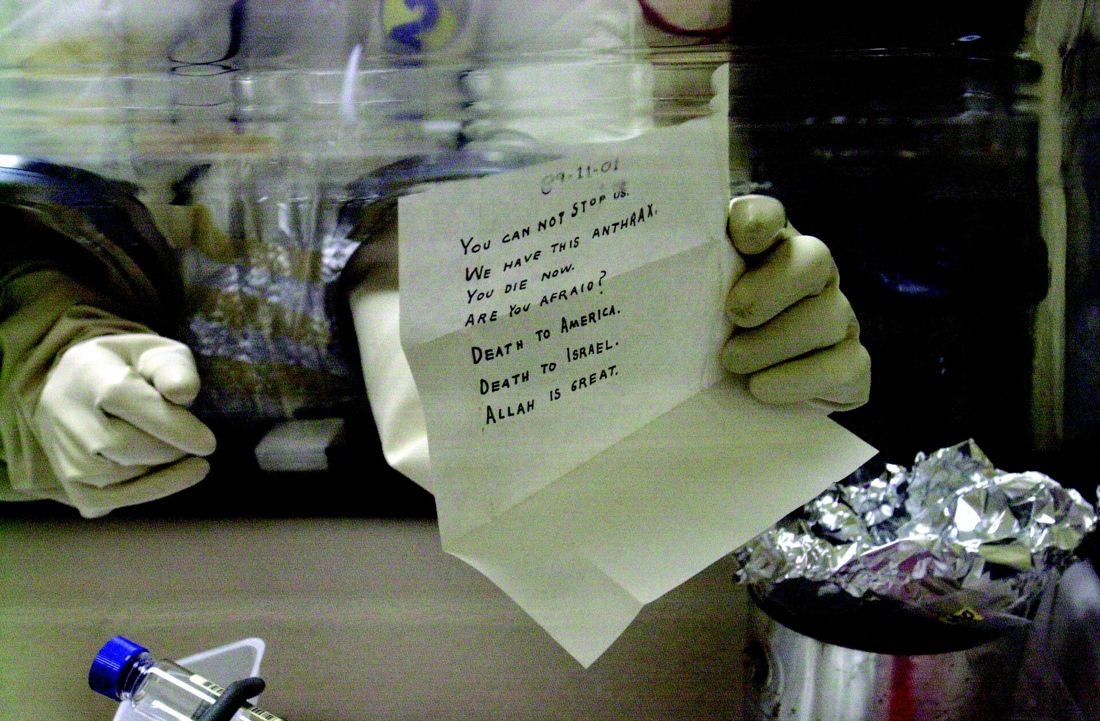

THE ANTHRAX LETTERS: THE CASE THE SCIENCE WOULD NOT CLOSE
A week after 9/11, letters containing anthrax spores began arriving at news organizations, and in October at the US Senate, killing five people, infecting 17 more, shutting down the Hart Senate Office Building, and putting thousands on antibiotics. The Amerithrax investigation ran seven years and ended with a named culprit who was never charged: Dr. Bruce Ivins, a senior biodefense scientist at the Army's USAMRIID laboratory at Fort Detrick, who died on July 29, 2008, of an acetaminophen overdose as prosecutors prepared to indict him. The FBI closed the case in 2010, concluding Ivins alone prepared and mailed the letters from a flask of spores, designated RMR-1029, in his own lab. In February 2011, a National Research Council committee reviewing the science reported that the genetic evidence was consistent with the flask as the source but did not definitively establish it, which is a careful way of saying the Bureau's central scientific claim was never proven to the standard the Bureau asserted. Senators and the GAO raised further doubts about the investigation's rigor, and no court ever heard the case against Ivins.
THE QUESTIONS
- If the science could not conclusively tie the letters to Ivins's flask, what exactly was the indictment the Justice Department said it was ready to bring?
- The letters' text invoked Allah and "Death to America" while the Bureau's suspect was an American biodefense insider. Who wrote that misdirection, and why has the Bureau never explained it?