




Deep Archive · File 21 of 32 · Full-Length
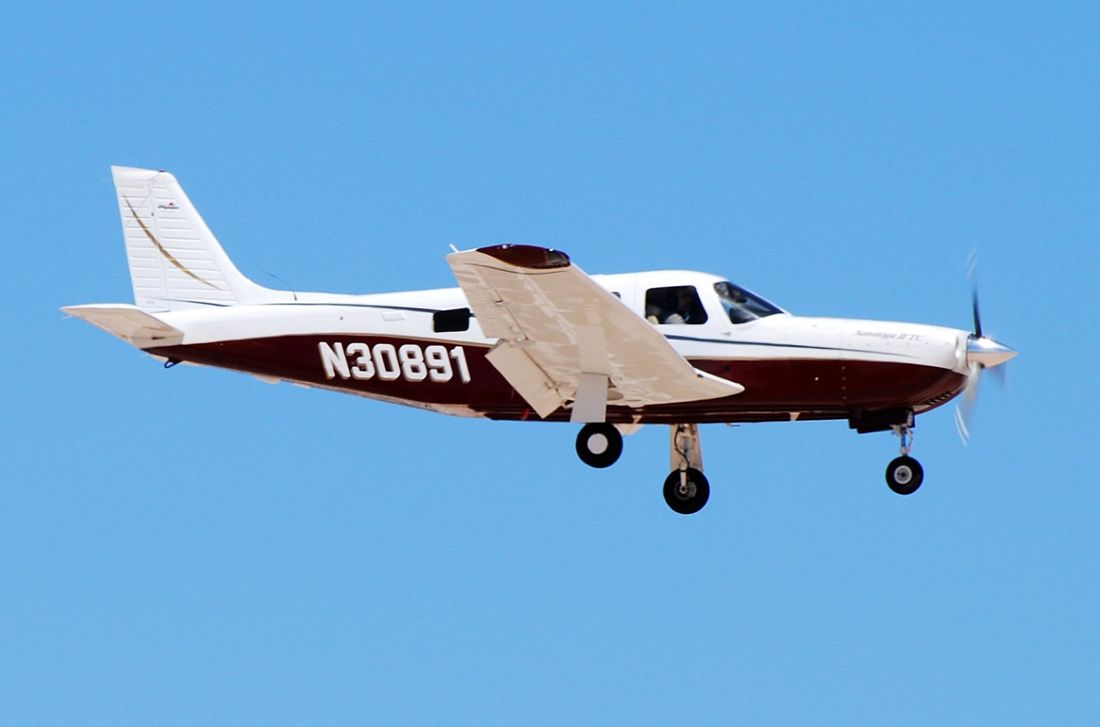

JFK Jr.: The Night Flight Over the Water
Off Martha's Vineyard, Massachusetts, July 16, 1999
Thirty-six years after Dallas, the Kennedy family's second generation lost its central figure in a way that has never sat right with a large part of the public. John F. Kennedy Jr., 38, founder and publisher of George magazine and the most famous son in America, took off from Essex County Airport in New Jersey at about 8:39 on a hazy Friday evening, flying his Piper Saratoga to Martha's Vineyard to drop off his sister-in-law Lauren Bessette, then on to Hyannis Port for a family wedding. His wife, Carolyn Bessette Kennedy, sat beside him. The plane never arrived. Radar data later showed it descending in a steep spiral into the Atlantic at roughly 10:10 p.m., about seven and a half miles off the Vineyard's west shore, in more than a hundred feet of water.
The questions start before the takeoff. Kennedy had broken his left ankle in a paragliding accident that May; the cast had been removed only the day before the flight, and he was flying on an ankle that had been in plaster for six weeks, working rudder pedals on a dark, hazy night over open water with no visible horizon. He was not instrument rated and had accumulated only limited experience in that aircraft. Most pointed of all is the question of the instructor. His regular flight instructor, Jay Biederman, was at the airport and, by the account Biederman later gave investigators, offered to fly with him that night. Kennedy declined. Why a cautious, methodical pilot, which by all accounts is what Kennedy was, chose that night, that ankle, and that weather to fly alone over water is a question the file answers only with a shrug.
Then there is the timeline of the search. The flight was expected by about 10 p.m.; family members began calling authorities in the early hours, and the public search, Coast Guard cutters and aircraft over the Vineyard, became a national vigil across the weekend. Debris and a suitcase belonging to Lauren Bessette washed ashore. The Navy took over the recovery, located the wreckage on July 20, and divers from the salvage ship USS Grasp recovered the three bodies on July 21. Within roughly a day, on July 22, the ashes of all three were scattered at sea from the deck of the destroyer USS Briscoe in a private ceremony attended by family, with the press kept at a distance and no public funeral and no viewing. The speed and privacy of that sequence, a military recovery and a burial at sea inside six days, struck many observers then and since as extraordinary handling for a private citizen, however famous. Kennedy's flight bag, the bag a pilot carries with his logbook and charts, was never publicly accounted for among the recovered effects. In the weeks after the crash, reports circulated of a bright flash seen over the water that night by people on the island; no official inquiry ever attributed the crash to anything but the spiral descent the radar showed, and no inquiry ever publicly chased the flash reports either.
The political context hangs over all of it. Kennedy was the most speculated-about political heir in the country, and through 1999 the open question in New York politics was whether he would run for the United States Senate seat Daniel Patrick Moynihan was vacating in 2000. He never declared, and friends said his interest was real but his timing undecided. Hillary Clinton declared for that seat, and won it in November 2000. The counterfactual, what a Kennedy candidacy would have done to that race and to the decade after, is unanswerable, which is precisely why it has never left the file.
THE QUESTIONS
- Why did he refuse his instructor that night, on a healing ankle, in haze, over water, when the offer was standing in front of him?
- Why did the alarm take hours to become a full public search for the most famous missing pilot in the country?
- A private citizen's recovery run by the Navy and closed with a burial at sea within six days: whose decision was that tempo, and has it ever been used for anyone else?
- What happened to his flight bag, and why has no inventory of the recovered personal effects ever been published?
- The flash reports over the water that night were never followed up in any public record. Who collected them, and where did they go?
- He was the presumptive heir to a Senate seat that instead launched a Clinton presidential run. Cui bono is the oldest question in investigation, and this file asks it out loud: who benefited is not the whole of the evidence, and it has never been nothing, either.
THE INFO SOLDIER’S VERDICT: A Kennedy, a night flight, a military recovery, a burial at sea inside six days, and a Senate seat that changed hands to a Clinton. The Info Soldier does not call that an accident report. It calls it the pattern, third generation running.