Deep Archive · File 11 of 32 · Full-Length

The Moon Landing: The Footage Everyone Argues About
Mare Tranquillitatis, July 20, 1969
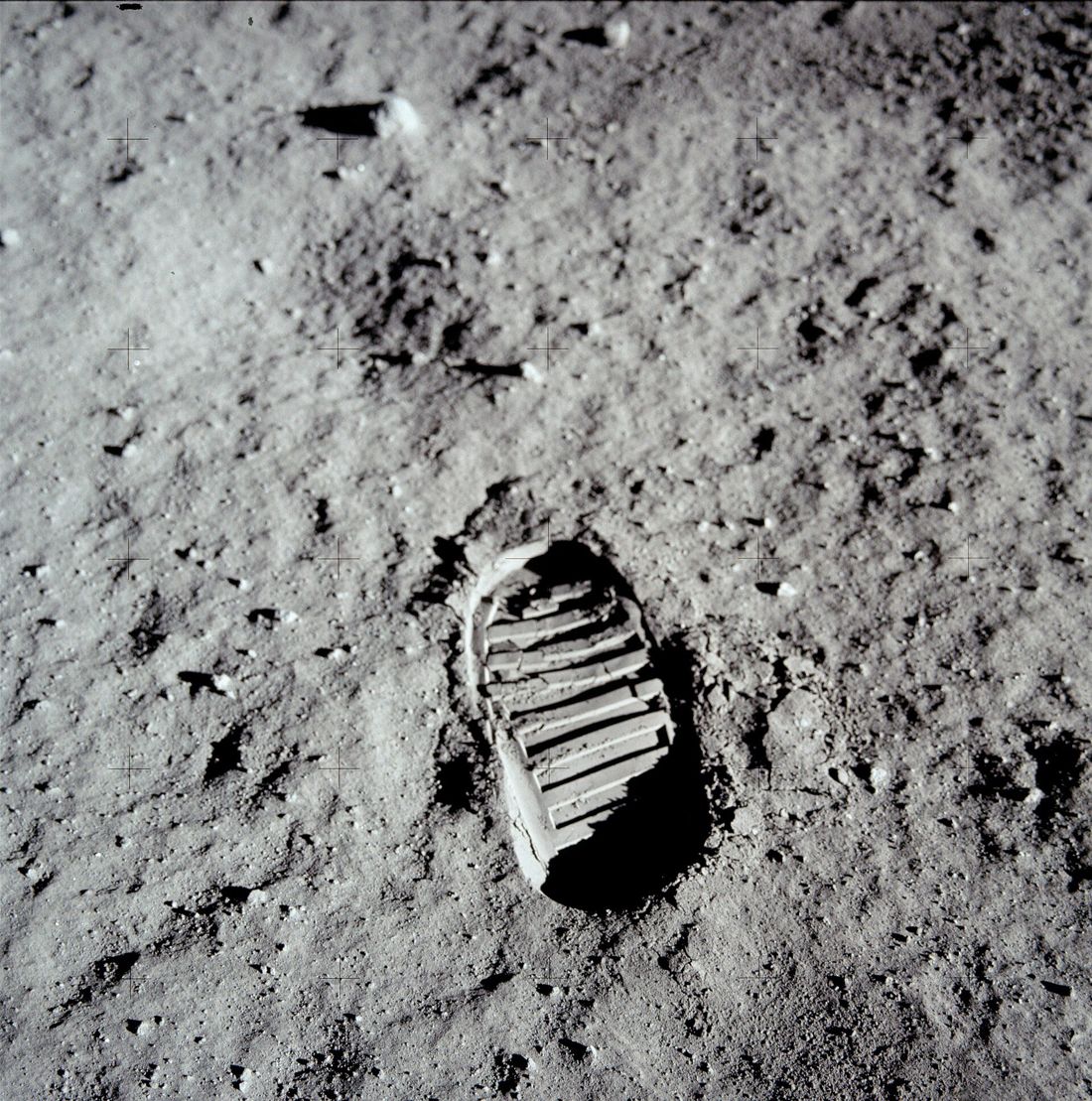
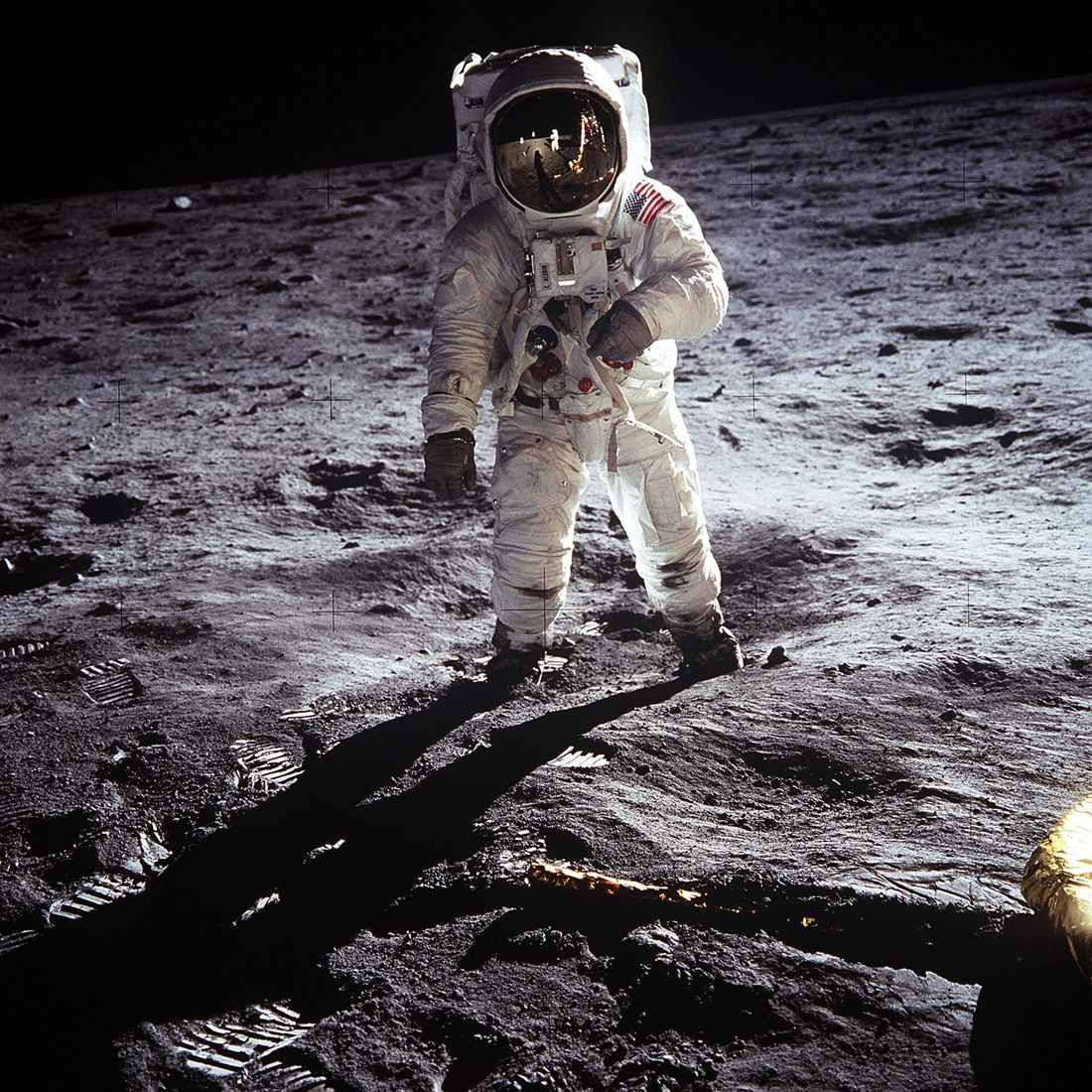
Start with what is strange about this one: it is the most watched event of the twentieth century, and a persistent share of the public has never believed it happened. Apollo 11 landed two men on the Moon while some 600 million people watched live. The hoax case, built by Bill Kaysing's self-published 1976 book and amplified ever since, runs on a familiar set of exhibits: the flag appears to ripple in a place with no air; the photographs show no stars; the shadows fall at inconsistent angles; the astronauts crossed the Van Allen radiation belts and lived; no blast crater sits under the lunar module; and the technology of 1969, the argument goes, could not have done it. The official account answers each point in detail, and has for decades; its answers are printed here as its answers, NASA grading NASA, the agency that made the film judging the film. The questions that survive those answers are listed below, and The Info Soldier’s verdict follows them. The flag, on that account, moved because it hung from a horizontal rod and was wrinkled from being furled, and it is motionless in later frames. Stars do not appear because the cameras were exposed for a sunlit surface. The belts were crossed in under an hour on a trajectory that minimized exposure. Since 2009, NASA's Lunar Reconnaissance Orbiter has photographed the Apollo landing sites from orbit, showing the descent stages, equipment, and the darkened trails of astronaut footpaths. Three Apollo missions left laser retroreflectors on the surface; observatories still bounce lasers off them to measure the Earth-Moon distance. The Soviet Union, which had every incentive and the tracking capability to expose a fake, tracked Apollo and never disputed it, an argument that assumes the two superpowers were enemies in every room, when this archive documents them cooperating in more than one. And 382 kilograms of lunar rock, chemically distinct from Earth rock, sit in laboratories around the world, distributed by NASA, authenticated through NASA’s chain of custody, in a case where NASA is the accused.
THE QUESTIONS
- Why did NASA record over the original Apollo 11 telemetry tapes, the highest quality record of the broadcast, a loss the agency confirmed in 2006 and attributed to tape reuse in the early 1980s?
- Why were some of the original slow-scan television recordings and internal documentation of the era handled so casually if the achievement was the century's crown jewel?
- The hoax theory requires thousands of silent conspirators across two superpowers. The believers' counter-question stands: if it was all real and provable, why does the proof keep arriving fifty years late, one orbiter photo at a time?
THE INFO SOLDIER’S VERDICT: The original tapes were taped over. The proof of the century’s greatest achievement arrives fifty years late, one orbiter photograph at a time, from the agency accused of faking it. The footage is a claim, the custody belongs to the accused, and the questions stand. We do not buy the landing as sold.
INSIDE THE ARTICLE, MORE FROM THE FILE
Watch: Apollo 11, the first steps, as broadcast in 1969 (NASA footage, public domain, via Wikimedia Commons)